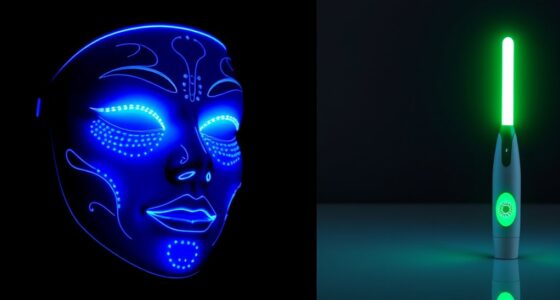

You should avoid using an LED mask if you have sensitive skin, active skin conditions, or open wounds, as it may cause irritation or worsen issues. People taking photosensitive medications or with conditions like lupus or porphyria should skip it too, since light exposure can trigger adverse reactions. Also, those with eye concerns need to wear protection and follow safety tips. Staying informed helps guarantee safe use; learning more can guide you toward the right decision.
Key Takeaways
- Avoid use if you have active skin infections, open wounds, rashes, or compromised skin to prevent worsening conditions.
- Do not use if you are pregnant, have lupus, or porphyria, as these conditions increase photosensitivity risks.
- Discontinue use if you experience irritation, redness, or allergic reactions during or after treatment.
- Individuals taking photosensitizing medications like antibiotics or retinoids should avoid LED masks unless advised by a healthcare professional.
- Avoid looking directly at the LED light and use protective eyewear to prevent eye damage or irritation.

While LED masks are generally safe and effective for skincare, certain individuals should exercise caution or avoid their use altogether. Understanding LED mask contraindications is vital to prevent adverse reactions and guarantee safe treatment. If you have sensitive skin or known skin sensitivity concerns, you need to be especially careful. LED light therapy can sometimes trigger irritation, redness, or allergic responses in these individuals. It’s wise to start with a short session and observe how your skin reacts before committing to regular use. If you notice any discomfort, discontinue use immediately and consult a dermatologist.
People with active skin infections, open wounds, or rashes shouldn’t use LED masks until their skin fully heals. Applying LED therapy over compromised skin can aggravate the condition, delay healing, or cause further irritation. Additionally, if you have a history of photosensitivity or are taking medications that increase your skin’s sensitivity to light, you should avoid LED masks unless approved by your healthcare provider. Certain medications, such as antibiotics, retinoids, or topical acne treatments, can make your skin more vulnerable to light-induced reactions. Always check the labels of your skincare products and discuss any medications with your doctor before using an LED mask.
Avoid LED masks if you have skin infections, wounds, or rashes until fully healed.
Individuals with pre-existing conditions like lupus or porphyria are strongly advised against using LED light therapy. These conditions can make your skin more susceptible to photosensitivity, and exposure to LED light could worsen symptoms or cause severe reactions. Pregnant women should also exercise caution and consult a healthcare professional before using an LED mask. Although there’s limited research on safety during pregnancy, it’s better to be cautious, especially if you have concerns about hormonal changes affecting your skin.
Lastly, if you have any eye conditions or wear contact lenses, you should avoid looking directly at the LED light source. Many masks come with eye protection, but it’s essential to follow manufacturer instructions carefully. People with eye issues should consult their ophthalmologist before use, as intense or prolonged exposure could affect their vision or exacerbate existing eye problems. Overall, while LED masks are safe for most, understanding these contraindications and skin sensitivity concerns helps you use them responsibly, guaranteeing you get the benefits without risking adverse effects. When in doubt, always seek professional advice to tailor treatments that suit your individual skin needs.

wavytalk Red Light Therapy Mask for Face, Glow Time LED Face Mask Light Therapy for Anti-Fine Line, Acne, Skin Rejuvenation with Red, Near-Infrared Light, Blue and Amber Light Therapy (White)
- Clinically Proven Results in 28 Days: Reduces breakouts, fine lines, boosts radiance
- 3-in-1 Light Therapy Modes: Targets wrinkles, acne, dull skin
- Full-Face Coverage with Medical-Grade Power: 456 LED chips, consistent, even treatment
As an affiliate, we earn on qualifying purchases.
As an affiliate, we earn on qualifying purchases.
Frequently Asked Questions
Can Pregnant Women Safely Use LED Masks?
Pregnant women should avoid using LED masks due to pregnancy safety concerns and potential hormonal effects. The safety of LED therapy during pregnancy hasn’t been well established, so it’s best to consult your healthcare provider before trying it. Hormonal changes during pregnancy can make your skin more sensitive, and certain light wavelengths might affect you differently. Prioritize your health and your baby’s well-being by seeking professional advice first.
Are LED Masks Suitable for Teenagers or Children?
Think of teen skin as a delicate garden, requiring gentle care to thrive. LED masks aren’t always suitable for teenagers or children, especially if their skin is sensitive or prone to reactions. Teen skin sensitivity varies like weather, so using LED masks without proper guidance can risk irritation. For children’s skincare safety, consult a dermatologist first, as their skin needs gentle, age-appropriate treatments, not equipment designed for adult skin.
How Does LED Therapy Interact With Skincare Medications?
You should be cautious with LED therapy if you’re using skincare medications. Medication interactions can increase your skin’s sensitivity, making it more prone to irritation or adverse reactions. It’s best to consult your dermatologist before starting LED treatments, especially if you’re on medications like retinoids, antibiotics, or photosensitive drugs. They can advise whether your medication regimen might influence your skin’s response to LED therapy and ensure safe, effective results.
What Should I Do if I Experience Skin Irritation?
If you experience skin irritation, stop using the LED mask immediately. Assess whether you have a skin allergy or product sensitivity, as these can cause discomfort. Rinse your face with cool water, apply a gentle moisturizer, and avoid harsh products. If irritation persists, consult a dermatologist to determine if your skin allergy or sensitivity requires further treatment. Always listen to your skin and adjust your skincare routine accordingly.
Can LED Masks Be Used Alongside Other Facial Treatments?
You can use LED masks alongside other facial treatments, but it’s vital to take into account combination skincare and treatment scheduling. Always space out treatments to avoid irritation and guarantee effectiveness. For example, avoid doing chemical peels or microdermabrasion immediately before or after LED sessions. Consult your dermatologist or skincare professional to create a personalized plan, ensuring safe integration of LED therapy with your existing skincare routine.
Conclusion
Just like you wouldn’t wear shoes that hurt your feet, you shouldn’t use an LED mask if you fall into contraindicated categories. I once recommended a friend with sensitive skin, only for her to experience redness—reminding me how ignoring warnings can lead to setbacks. Always check the contraindications; your skin’s health is precious. When in doubt, consult a professional. Protect your skin like you would protect your most valuable treasure—because, in the end, it’s worth it.