
To compare mask comfort without wearing them all day, focus on key factors like breathability, material durability, and user feedback. Check product descriptions for airflow features and fabric composition to predict how comfortable and resilient the mask will be over time. Look for airflow testing results and reviews to gain insights from real users. These steps help you choose a comfortable mask efficiently—stick with us to discover more tips for smart comparison.

Get wellness gear delivered free with Prime
- Fast, free delivery on millions of items
- Prime Video, Amazon Music and more included
- Member-only deals all year
Key Takeaways
- Review product descriptions for breathable fabric layers and airflow testing results.
- Check material composition to assess durability and comfort potential.
- Read user reviews for real-world comfort and irritation experiences.
- Compare fabric types like cotton or synthetic blends for breathability and resilience.
- Consider mask features like multiple layers and snug fit without tightness for extended wear.

When choosing a mask, comfort can make all the difference in whether you wear it consistently and correctly. Instead of spending hours testing masks in person, you can evaluate their comfort through key factors without the need to wear them all day. One of the most important aspects to consider is breathability factors. A mask with good breathability allows air to flow easily, reducing stuffiness and making it easier to breathe, especially during extended wear. Look for masks made from lightweight fabrics or those designed with multiple layers that promote airflow. If a mask feels suffocating or causes you to wheeze, it’s unlikely you’ll stick with it long-term.
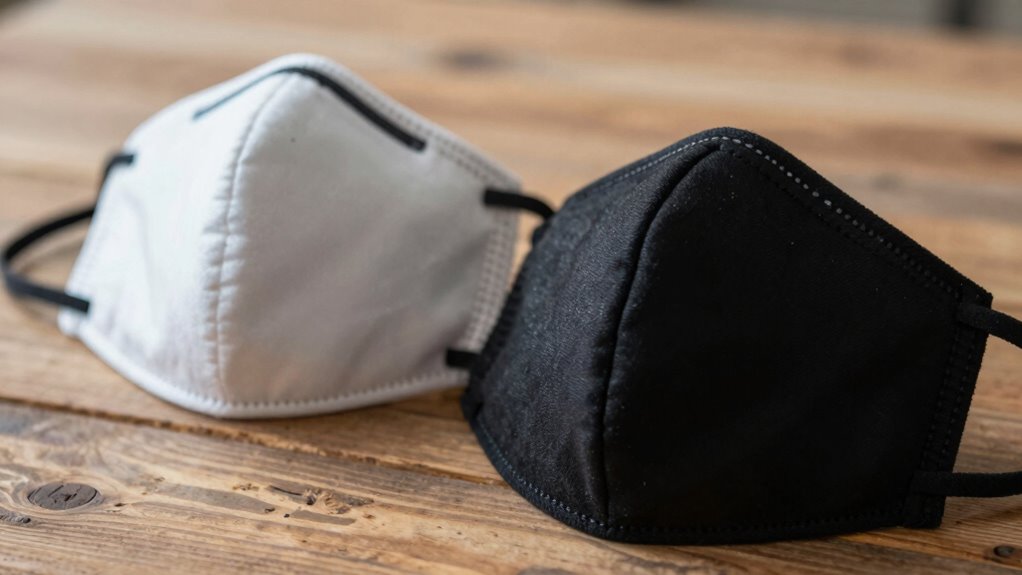
Material durability also plays a critical role in comfort. You want a mask that maintains its shape and integrity after multiple washes or prolonged use. Masks made from durable materials tend to be more comfortable because they don’t shift or slide around as much, which can cause irritation or constant readjustment. Strong fabrics like tightly woven cotton or specialized synthetic blends often provide the perfect balance between softness and resilience. When evaluating a mask’s material durability, consider how it responds to washing—can it withstand regular cleaning without losing its form or comfort? A well-made mask keeps its structure, fitting snugly without being tight, and remains comfortable over time.
To compare masks efficiently, look for product descriptions that detail breathability factors and material durability. Many brands now include specific information about fabric composition and testing results related to airflow, which can help you assess its airflow testing outcomes. This allows you to make an informed choice before even trying the mask on. Additionally, reviews can offer insights into real-world comfort, revealing whether users experienced irritation, difficulty breathing, or discomfort after hours of wear. Recognizing the importance of material durability in the design helps ensure your mask remains comfortable and effective over time.
Understanding the fabric composition can also give you clues about how the mask will perform in terms of breathability and durability, aiding your decision-making process.
Products Worth Considering

BowFlex Results Series 552 SelectTech Adjustable Dumbbell

Therabody SleepMask Blackout Eye Mask with Vibration

Levoit Vital 100S-P Air Purifier with Washable Pre-Filter
As an affiliate, we earn on qualifying purchases.
Frequently Asked Questions
How Do Different Mask Materials Affect Comfort?
Different mask materials considerably impact your comfort. Breathable fabrics like cotton and silk often feel softer and allow better airflow, making them more comfortable for extended wear. In contrast, synthetic materials like polyester may cause irritation or trap heat, reducing comfort. To make an effective comfort comparison, consider how each material interacts with your skin, breathability, and moisture-wicking ability, helping you choose the best mask for your needs without prolonged testing.
Can Mask Fit Influence Comfort Levels Significantly?
Imagine your face as a unique landscape, where the mask fit acts as the bridge connecting comfort and irritation. Yes, mask fit influences comfort levels markedly, especially considering your face shape. A proper fit ensures the mask stays snug without pinching or slipping, and the mask material adapts smoothly to your contours. When these elements align, you’ll notice a remarkable difference in comfort, making your mask-wearing experience more bearable.
Are There Specific Features That Improve Mask Comfort?
Yes, certain features can make masks more comfortable. Look for adjustable ear loops and soft, breathable fabrics to reduce irritation. Choosing masks with stretchable material and a snug but not tight fit helps, too. Fashion trends and color options allow you to pick stylish masks that match your wardrobe, making comfort and style go hand in hand. Prioritizing these features guarantees you stay comfortable without sacrificing your personal style.
How Does Mask Breathability Impact Overall Comfort?
Breathability greatly impacts your overall comfort by reducing discomfort from moisture buildup and mask scent. When a mask allows air to flow freely, it keeps your face dry and minimizes the chance of unpleasant smells from trapped sweat or breath. If breathability is poor, you might feel stuffy or sweaty quickly, making it harder to wear the mask comfortably all day. Look for masks with breathable fabrics to stay fresher and more comfortable.
Do Mask Designs Vary for Different Face Shapes?
Yes, mask designs vary for different face shapes to guarantee ideal face shape compatibility. You’ll find styles like contoured masks, adjustable ear straps, and nose bridges that better fit various face structures. Choosing the right mask style for your face shape helps improve comfort, breathability, and seal, making it easier to wear masks for longer periods. Always look for masks that specifically cater to your face shape for the best fit.
Conclusion
Think of comparing mask comfort like choosing the right shoes for a long walk. You wouldn’t pick the ones that pinch or slip off after a few steps. Instead, you test each pair, feeling which supports you best without causing pain. Similarly, finding your perfect mask isn’t about wearing it all day blindly. It’s about discovering the one that fits seamlessly into your life, making each step comfortable and confident, no matter how long the journey.