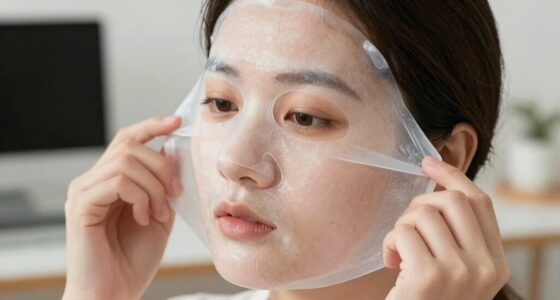
Face and neck masks feel like a separate skincare category because they deliver concentrated, targeted ingredients directly to areas needing extra care. They offer a more intense treatment compared to daily cleansers or moisturizers, often producing noticeable results after just one use. Proper application and specific ingredients make them uniquely powerful for improving skin texture, tone, and firmness. If you want to discover how to maximize their benefits, keep exploring what makes these masks a must-have in your routine.

Get wellness gear delivered free with Prime
- Fast, free delivery on millions of items
- Prime Video, Amazon Music and more included
- Member-only deals all year
Key Takeaways
- Masks deliver concentrated, targeted ingredients that provide immediate visible results, differentiating them from regular skincare products.
- Proper application techniques and contact time maximize their effectiveness, creating a specialized treatment experience.
- They focus on specific skin concerns with potent ingredients like peptides or clay, making them more treatment-oriented.
- Masks often involve a thicker, more intensive formulation, requiring different application and removal methods.
- The combination of potent ingredients and precise application elevates masks into a distinct skincare category for targeted results.

Masks for face and neck offer targeted skincare benefits that can improve your complexion and promote a more youthful appearance. You might think of them as just an extra step in your routine, but they truly feel like a different category entirely because of how they transform your skin. Unlike daily cleansers or moisturizers, masks deliver concentrated doses of skincare ingredients directly to your skin, creating a noticeable difference after just one use. This concentrated exposure is what makes masks so powerful—they’re designed to penetrate deeply and work more intensively, giving your skin a boost that regular products can’t match.
Masks deliver concentrated skincare benefits, transforming your skin with deeper, more effective results after just one use.
When you apply a mask, the application techniques matter just as much as the ingredients inside. Proper mask application involves more than slapping it on your face and neck; it requires a clean canvas, typically achieved by cleansing thoroughly beforehand. Using gentle, circular motions to spread the mask ensures an even layer, maximizing contact with your skin. If you’re using a mask that’s thick or clay-based, a spatula can help achieve a smooth, uniform coating, preventing waste and guaranteeing the skincare ingredients reach every inch of your face and neck. Applying a thin, even layer allows the mask to work effectively without feeling heavy or uncomfortable, which is key to a pleasant experience and best possible results.
The skincare ingredients in these masks are carefully selected for their targeted benefits. For example, hydrating masks often contain hyaluronic acid, which plumps and moisturizes, while clay masks focus on absorbing excess oil and impurities with ingredients like kaolin or bentonite. Anti-aging masks might include peptides or antioxidants like vitamin C to stimulate collagen production and fight free radicals. The richness of these ingredients is what makes masks feel like a category apart—they’re formulated to deliver a potent punch of skincare benefits in a single application. Additionally, the use of concentrated ingredients enhances the effectiveness of masks, setting them apart from everyday skincare products. When you follow mask instructions precisely, including the recommended application time, you’re securing that these ingredients have enough contact time to work their magic.
In short, masks for face and neck feel like a different category because they combine potent skincare ingredients with precise application techniques. This combination elevates your skincare routine from simple maintenance to targeted treatment, allowing your skin to absorb concentrated ingredients and respond more noticeably. It’s this focused approach that makes masks a must-have for anyone serious about enhancing their skin’s texture, tone, and firmness. When you understand how to properly apply masks and select the right ingredients, you’re accessing the full potential of this skincare step—experience the difference for yourself.
Products Worth Considering

Therabody SleepMask Blackout Eye Mask with Vibration

Garmin Forerunner 965 GPS Running and Triathlon Smartwatch, 47 mm, Black/Powder Gray

Garmin Forerunner 265S Running Smartwatch, 42mm, Whitestone/Neo Tropic
As an affiliate, we earn on qualifying purchases.
Frequently Asked Questions
Are Face Masks Safe for Sensitive Skin?
Yes, face masks can be safe for sensitive skin if you choose the right ingredients. Look for masks with natural ingredients that soothe and calm, avoiding harsh chemicals and strong chemical exfoliants that can irritate. Always patch-test first, and opt for masks formulated specifically for sensitive skin types. Using gentle, natural ingredients helps reduce irritation and keeps your skin comfortable during and after treatment.
How Often Should I Use Face and Neck Masks?
Think of your skin as a garden needing careful tending. You should use face and neck masks 1-3 times a week, like watering plants. Focus on ingredient combinations that suit your skin type, and follow proper mask application techniques to maximize benefits. Overdoing it can cause irritation, so listen to your skin’s signals. Regular, mindful use helps your skin flourish, revealing healthier, more radiant results.
Can Masks Help With Deep Wrinkles?
Masks can help reduce deep wrinkles by delivering targeted anti-aging benefits directly to your skin. Look for masks with effective ingredients like retinoids, peptides, or hyaluronic acid, which boost collagen production and improve skin elasticity. While masks won’t completely erase deep wrinkles, consistent use enhances your skin’s overall appearance, making wrinkles less noticeable over time. Remember, combining masks with a good skincare routine maximizes their anti-aging benefits.
What’s the Best Mask for Oily Skin?
You should try a clay mask for oily skin. It’s great for pore cleansing and oil control, helping to absorb excess sebum and reduce shine. Clay masks also tighten pores and refresh your skin, making them ideal for oily, acne-prone skin. Look for ingredients like kaolin or bentonite, which are proven to regulate oil production and keep your skin matte longer.
Do Face and Neck Masks Actually Improve Circulation?
Yes, face and neck masks can improve circulation by stimulating blood flow, which enhances skin liveliness. When you apply these masks, the massage-like action and ingredients promote better blood circulation, delivering oxygen and nutrients to your skin cells. This increased blood flow can lead to a healthier, more radiant appearance, making your skin look more energized and youthful. So, incorporating masks into your routine can genuinely boost your skin’s vitality.
Conclusion
So, when you reach for that face mask versus a neck treatment, you’re not just choosing different skincare tools—you’re exploring a domain of distinct needs and sensations. Think of your face as the radiant sun and your neck as the gentle moon, each demanding its own care to shine and soothe. Embrace these differences like a master artist, blending shades with purpose, to reveal a harmony that’s truly radiant from your skin’s core to its edges.