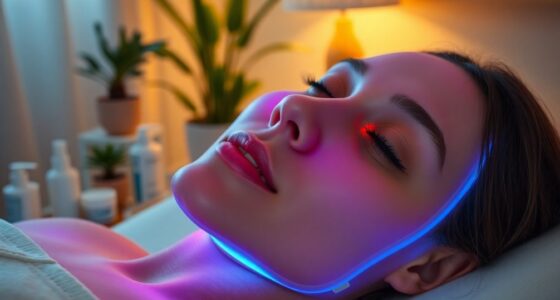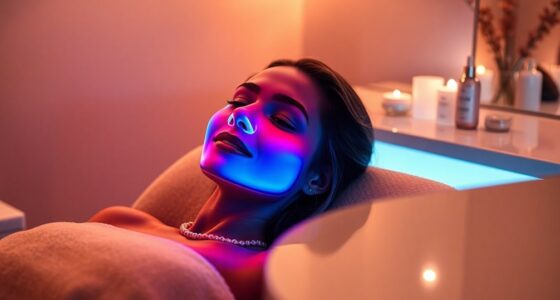
To minimize irritation when starting an LED mask routine, begin with a patch test on a small skin area. Keep sessions short—around 10-15 minutes—and use lower light settings. Space out treatments at least 48 hours apart and monitor your skin for redness or discomfort. Make certain your skin is well-hydrated and free of harsh products. Sticking to these gentle steps helps protect your skin while still seeing progress—learn more about customizing your routine for best results.

Get wellness gear delivered free — and shop member deals
- Fast, free delivery on millions of items
- Access to Prime Big Deal Days deals on October 6–7
- Prime Video, Amazon Music and more included
Key Takeaways
- Conduct a patch test before initial use and avoid applying on irritated or broken skin.
- Start with low light intensity and short sessions (10-15 minutes) to minimize sensitivity.
- Use the mask 3 times a week, ensuring at least 48 hours between sessions for skin recovery.
- Keep skin well-hydrated and cleanse thoroughly before each session to reduce irritation.
- Monitor skin response closely, stop immediately if irritation or discomfort occurs, and adjust routine accordingly.
LED facial mask for sensitive skin
As an affiliate, we earn on qualifying purchases.
As an affiliate, we earn on qualifying purchases.
What You Need to Know Before Using Your LED Mask

Before you start using your LED mask, it’s important to understand how it works and what to expect. Device safety is key to preventing skin irritation or other issues, so always follow the manufacturer’s instructions. If you have sensitive skin, you should be aware that LED therapy can cause reactions like redness or mild discomfort, especially if used improperly. Check for any skin sensitivity before your first session by doing a patch test on a small area. Avoid using the mask if you notice unusual irritation or if your skin is broken or inflamed. Ensuring proper device safety and understanding your skin’s sensitivity will help you get the most benefits from your LED mask while minimizing risks. Additionally, using basic DIY safety tips can help prevent accidental injuries during your skincare routine. Being aware of projector technology like LED versus other types can also help you understand what features are safest and most effective for your skin. It’s also helpful to familiarize yourself with device safety protocols to ensure safe usage during each session. Always consider skin compatibility and consult with a dermatologist if you have concerns about how your skin might react.
How to Prepare Your Skin for Safe LED Therapy
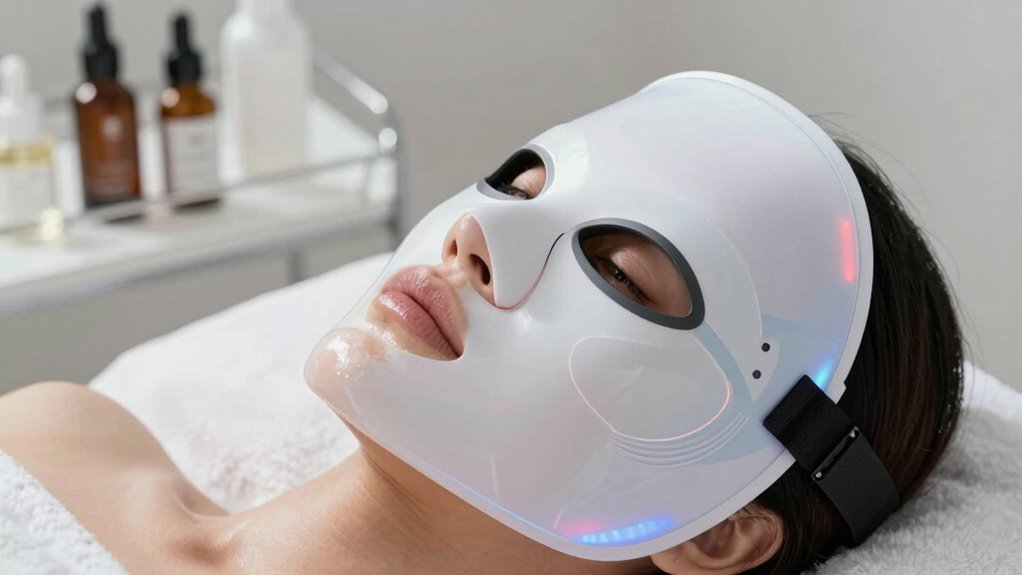
Properly preparing your skin guarantees you get the best results and minimize the risk of irritation. Start by ensuring your skin is well-hydrated, as hydrated skin responds better to LED therapy and reduces sensitivity. Avoid using harsh or incompatible products that could cause adverse reactions; stick to gentle, compatible skincare. Before treatment, cleanse your face thoroughly to remove dirt, oil, and makeup, which can interfere with the LED’s effectiveness. Pat your skin dry gently—avoid rubbing—to maintain its barrier. If you’re using any active ingredients, confirm they’re safe for LED sessions or wait until after your treatment. Proper skin prep creates a clean, balanced surface, maximizing benefits while keeping irritation at bay. Additionally, understanding regional flavors and skincare insights can help you choose products that complement your skin type and enhance your LED therapy experience. Being aware of factors that impact indoor air quality can also support overall skin health, especially when considering microplastics and dust in your environment. For optimal results, consider environmental factors that influence skin sensitivity and health during your LED routine. Incorporating air quality considerations into your skincare routine can further protect your skin from environmental stressors.
How to Start With Gentle, Short LED Sessions
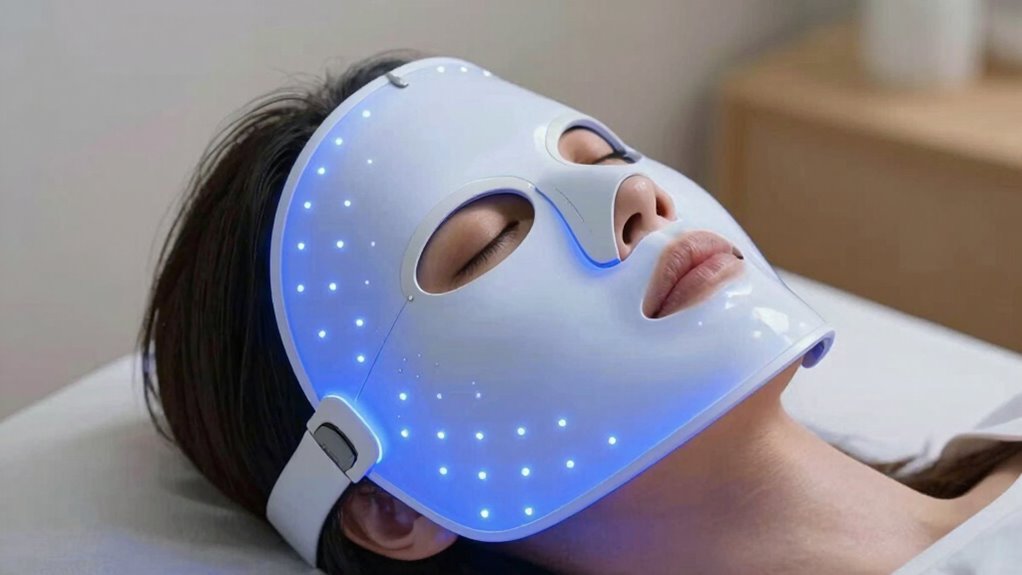
Starting with gentle, short LED sessions allows your skin to gradually adapt to the treatment. Choose a mask design that covers only your face initially, minimizing potential irritation. Modern LED technology offers various wavelengths suited for sensitive skin, so start with lower settings and shorter durations. This approach helps prevent overstimulation and gives your skin time to adjust. Keep sessions brief—around 10 to 15 minutes—and increase gradually as your skin becomes more comfortable. Pay attention to how your skin responds after each session, and avoid overdoing it. Using a mask designed for beginners ensures you benefit from safe, effective LED therapy without risking irritation or discomfort. Patience and consistency are key to integrating LED treatments into your skincare routine smoothly.
How to Choose the Right Settings and Frequency for Your Skin
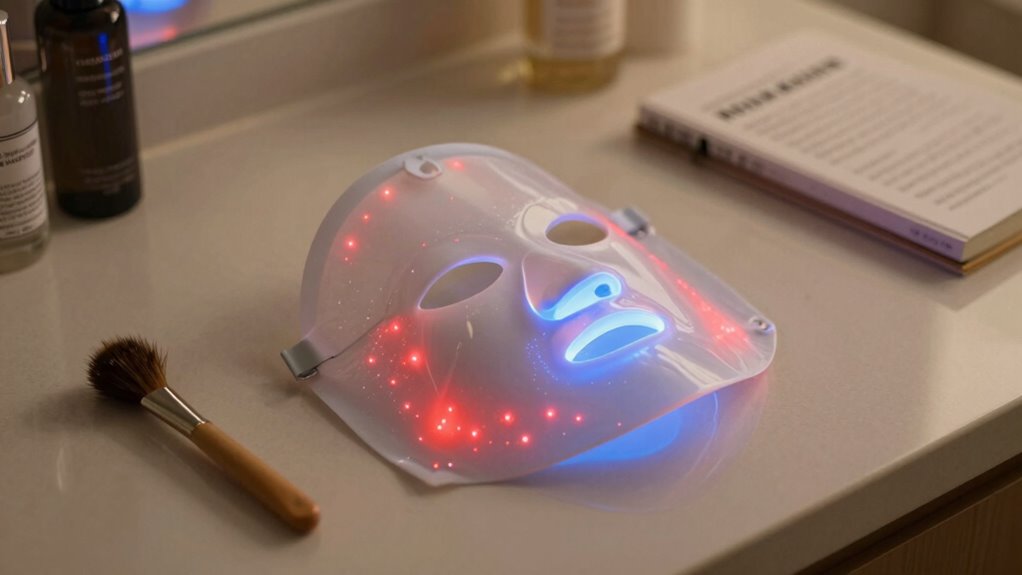
To get the best results, you need to find the right light intensity and treatment schedule for your skin. Pay attention to how your skin responds and adjust the settings accordingly. Remember, everyone’s skin reacts differently, so personalizing your routine is key. Incorporating Free Floating techniques can help create a more comfortable and adaptable treatment experience.
Optimal Light Intensity
Choosing the right light intensity for your LED mask is essential to achieve effective results without causing discomfort. Start with a low setting and gradually increase as your skin adapts. Proper light calibration helps prevent irritation, especially for sensitive skin. Always ensure device hygiene before use to avoid infections that can worsen irritation. Incorporating cycling safety tips into your routine can also help you monitor your skin’s response and adjust accordingly. Regularly monitoring skin response is crucial for safe treatment. Refer to this guide for ideal light intensity:
| Skin Type | Recommended Intensity | Notes |
|---|---|---|
| Sensitive | Low (10-20%) | Increase slowly over days |
| Normal | Medium (30-50%) | Listen to your skin’s response |
| Oily/Acne-prone | Medium-High (50-70%) | Adjust if irritation occurs |
Being aware of skin sensitivity can help you tailor your LED therapy more effectively. Adjust settings based on your comfort, and avoid overexposure. Proper light calibration and device hygiene are key for safe, effective treatments.
Ideal Treatment Frequency
Selecting the right treatment frequency helps guarantee your LED mask delivers safe and effective results without overtaxing your skin. To determine your ideal treatment frequency, consider your skin tolerance and response to initial sessions. Start with shorter, less frequent treatments and gradually increase as your skin adapts. Keep these points in mind:
- Begin with 3 sessions per week and monitor your skin’s response.
- Adjust frequency based on any irritation or redness.
- Allow at least 48 hours between treatments for recovery.
- Increase sessions gradually, respecting your skin’s tolerance.
- Remember that understanding your skin’s signals is crucial for avoiding overuse and ensuring optimal results.
- Incorporating proper firewood handling techniques can also help maintain your skin’s health by reducing environmental stressors and promoting overall well-being.
- Consistently tracking your skin’s progress can help you fine-tune your treatment plan over time. Recognizing your skin’s reactive cues can further aid in customizing your routine.
Understanding your skin’s signals is key to avoiding overuse. Consistent but moderate treatment helps optimize benefits while minimizing irritation. Always listen to your skin, and don’t rush the process.
Personal Skin Response
Ever wonder how to tailor your LED mask sessions to your skin’s unique needs? The key is paying attention to your skin sensitivity and how it reacts after each session. If you notice increased redness or irritation, reduce the treatment duration or frequency to support irritation management. Start with lower settings and gradually increase as your skin builds tolerance. Keep a skincare journal to track your responses and adjust accordingly. Listen to your skin—if it feels calm and comfortable, you’re on the right track. Remember, every skin type reacts differently, so personalized adjustments are essential. By observing your skin’s response, you can find the perfect balance of LED therapy that minimizes irritation while maximizing benefits. Understanding your skin’s sensitivity levels can help optimize your routine and prevent adverse reactions, especially when considering vetted skin-safe practices for different skin types. Additionally, being aware of skin reaction patterns can guide you in tailoring the frequency and intensity of treatments to suit your individual needs. Incorporating knowledge about individual skin responses allows for safer and more effective LED sessions tailored to your unique skin. Recognizing early signs of irritation can help you intervene promptly and avoid more serious skin issues.
How to Watch for Skin Reactions and Know If It’s Working
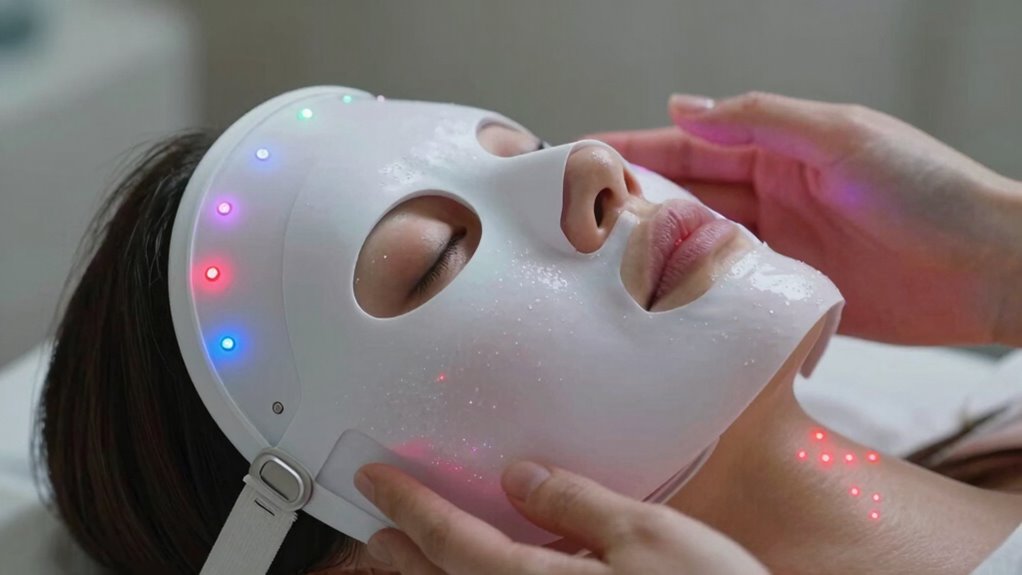
When using an LED mask for the first time, it’s important to pay close attention to how your skin reacts. Watch for signs of skin sensitivity or irritation signs, which indicate your skin’s response. To determine if it’s working, consider these points:
Pay close attention to your skin’s reaction when using an LED mask for the first time.
- Reduced redness or inflammation over time
- Smoother, more even skin tone
- Increased glow and brightness
- No persistent irritation or discomfort
If you notice irritation signs like itching, burning, or excessive dryness, stop use immediately. Mild redness may be normal initially, but it should subside quickly. Regularly monitor your skin’s response, and adjust your routine if needed. Recognizing these cues helps ensure your skin benefits from the LED therapy without adverse effects.
Common Mistakes Beginners Make With LED Masks

Many beginners overlook common pitfalls that can hinder their LED mask results or cause skin issues. One major mistake is overuse risks—using the mask too often or for too long can lead to irritation or sensitivity. Stick to the recommended schedule to avoid damaging your skin. Proper device maintenance not only prolongs the lifespan of your equipment but also ensures consistent treatment quality. Another frequent error is improper placement; if the mask isn’t positioned correctly, you won’t get even coverage, reducing effectiveness and possibly causing uneven skin tone. Make sure the LED lights directly target your problem areas without gaps. Avoid rushing through sessions or extending treatment time beyond guidelines. Taking these precautions helps prevent irritation and guarantees you get the most benefit from your LED mask while keeping your skin safe and healthy. Additionally, understanding LED light therapy and following safety instructions can further reduce the risk of adverse effects. Being aware of treatment guidelines can help you tailor your routine for optimal results, especially when considering proper device maintenance to ensure your equipment functions correctly and safely.
Tips for Staying Consistent and Achieving Results
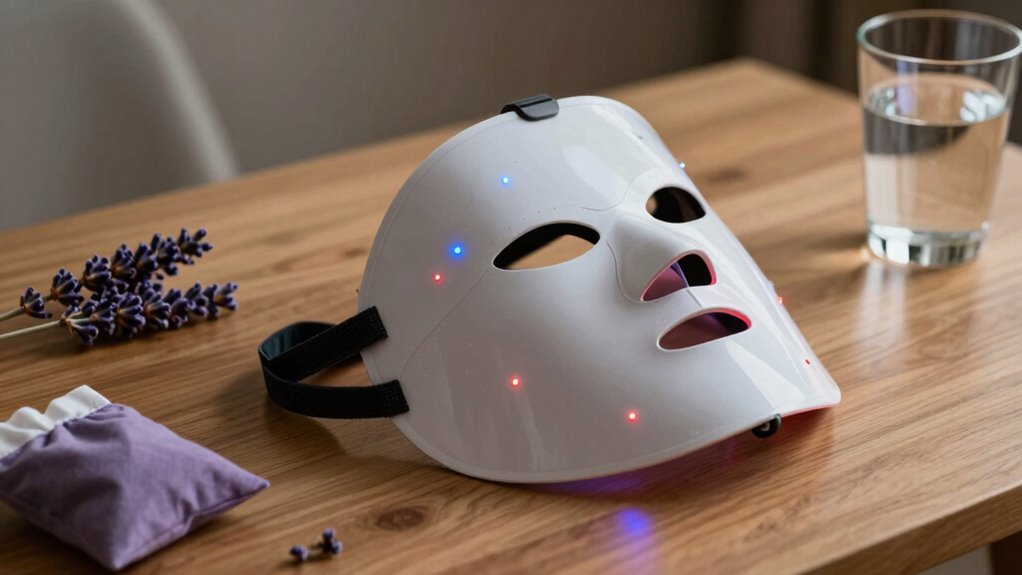
To see real results, you need to stay consistent with your LED mask routine. Establish a set schedule and stick to it, so your skin gets used to the treatment. Tracking your progress helps you stay motivated and adjust your routine for better outcomes.
Establish a Routine
Creating a consistent LED mask routine is vital to seeing real results. To avoid falling for skincare myths, stick to your routine and don’t overdo it. Consistency helps your skin adapt without irritation. Remember, proper device maintenance is essential—clean your mask after every use to prevent bacteria buildup. Here are four tips to establish a solid routine:
- Set a specific time each day to use your LED mask.
- Follow the manufacturer’s instructions for duration and frequency.
- Avoid skipping days to build a habit.
- Be patient—results take time, and rushing can cause irritation.
Sticking to these steps ensures you stay on track, and your skin benefits from a predictable, effective routine.
Track Your Progress
Keeping track of your progress helps you stay motivated and guarantees your efforts with the LED mask pay off. Regular tracking progress allows you to observe how your skin responds over time, making it easier to identify improvements or signs of irritation. Conducting simple skin assessment sessions after each use can reveal changes in texture, tone, or redness. Consider keeping a skincare journal or taking weekly photos to document your results objectively. This practice helps you stay consistent and adjust your routine if needed. Remember, patience is key—by monitoring your skin closely, you can celebrate small victories and stay committed to your routine, ultimately achieving healthier, clearer skin with the LED mask.
Frequently Asked Questions
Can LED Masks Be Used on Sensitive or Acne-Prone Skin?
Yes, you can use LED masks on sensitive or acne-prone skin, but you should select gentle settings and follow a proper routine. Start with shorter sessions and use a mask specifically designed for sensitive or acne-prone skin to minimize irritation. Always patch test first, and avoid overuse. If you notice any redness or discomfort, stop immediately and consult a dermatologist to ensure safe, effective treatment.
How Long Should I Wait Between LED Sessions?
You should wait at least 24 hours between LED sessions to follow proper session duration and frequency guidelines. This gives your skin time to recover and prevents overexposure, which can cause irritation. For beginners, start with 10-15 minute sessions a few times a week, then gradually increase if your skin tolerates it well. Always listen to your skin’s response and adjust your schedule accordingly for safe, effective results.
Are There Any Skin Conditions That Prevent LED Mask Use?
Imagine your skin as a delicate garden—certain conditions, like skin allergies or eczema flare-ups, act like harsh storms that can damage it. If you have these conditions, LED masks might be risky, as they could worsen irritation or trigger flare-ups. Always consult your dermatologist before using an LED mask, especially if your skin is sensitive, to guarantee your skin’s safety and preserve its natural beauty.
Is It Safe to Wear Makeup Immediately After LED Therapy?
Yes, it’s generally safe to wear makeup immediately after LED therapy, but it’s best to prioritize your skincare routine first. Makeup safety can vary depending on your skin’s sensitivity, so you might want to wait a little to avoid irritation. After LED sessions, focus on soothing products, then gently reintroduce makeup to keep your skin calm and healthy. Always listen to your skin’s response and consult your dermatologist if unsure.
How Do I Store and Maintain My LED Mask Properly?
To store and maintain your LED mask properly, you should follow cleaning tips and storage methods. After each use, gently clean the mask with a soft, damp cloth and mild soap to remove dirt and oils. Store it in a cool, dry place away from direct sunlight, ideally in a protective case or bag. This keeps your device hygienic and guarantees its longevity, so you get the best results every time.
Conclusion
By blending patience with proper preparation, you’ll build confidence and curb concerns. Consistently caring for your skin with gentle, guided sessions helps minimize mishaps and maximize results. Remember, progress is a process—practice patience, prioritize preparation, and stay persistent. With mindful monitoring and mild methods, you’ll master your mask routine, making skincare simple, safe, and satisfying. Stay steady, stay safe, and enjoy the journey to healthier, happier skin!
Fall Picks
fall essentials
As an affiliate, we earn on qualifying purchases.