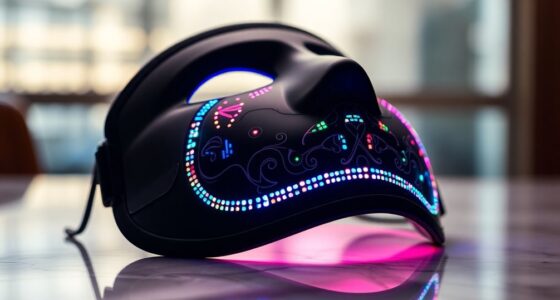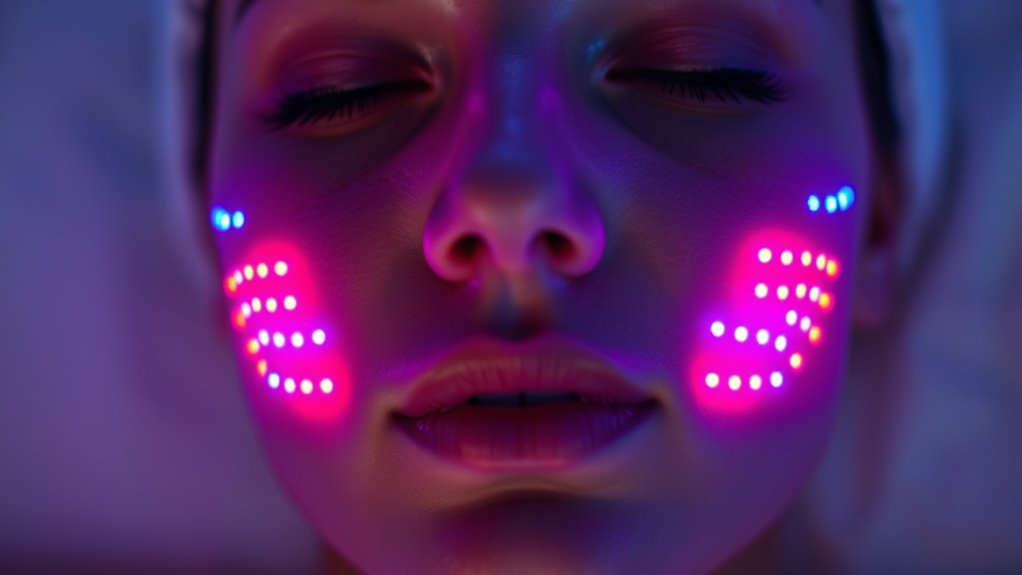

Using an LED mask after a procedure can help you heal faster by reducing inflammation, redness, and discomfort. The light therapy stimulates cellular responses, promotes collagen production, and boosts blood flow, which accelerates skin repair and renewal. When used consistently as directed, LED masks support a smoother recovery with brighter, firmer skin. To learn more about how you can optimize your post-procedure healing, keep exploring your options.
Key Takeaways
- LED masks accelerate healing, reduce inflammation, and promote skin rejuvenation after procedures.
- They emit specific wavelengths that penetrate deep, triggering cellular repair and boosting collagen production.
- Regular, guided sessions support quicker recovery, minimize swelling, and address uneven skin tone.
- Combining LED therapy with proper skincare enhances post-procedure results and skin resilience.
- Using FDA-approved LED masks ensures safety, effectiveness, and complements natural healing processes.
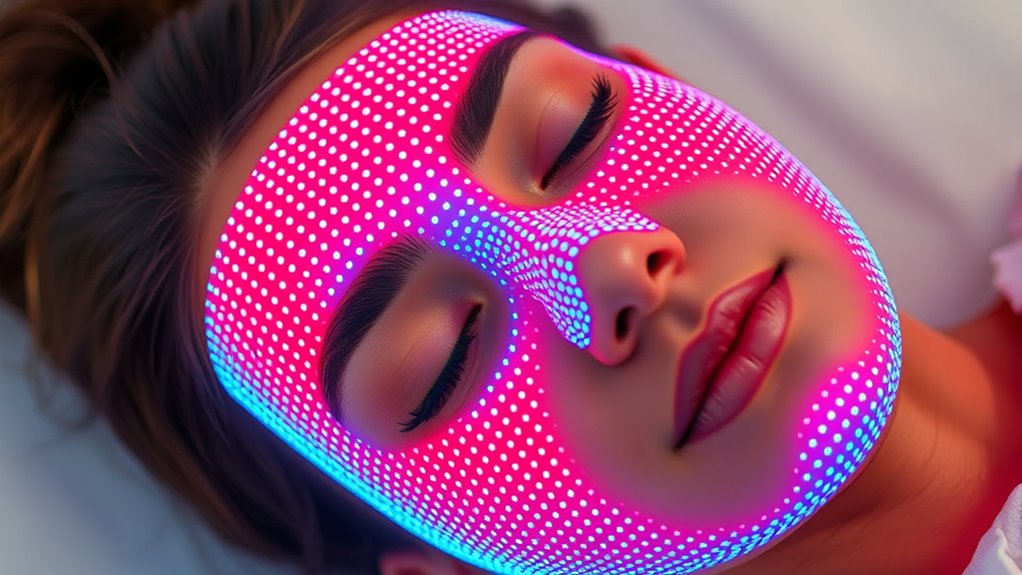
After certain cosmetic or medical procedures, your skin needs extra care to heal effectively. Using an LED mask can be a smart addition to your post-procedure routine. LED light therapy has gained popularity for its ability to accelerate healing, reduce inflammation, and promote skin rejuvenation. When you incorporate LED masks into your recovery plan, you provide your skin with targeted light energy that stimulates cellular activity and boosts your body’s natural healing processes.
Using an LED mask accelerates healing, reduces inflammation, and boosts skin rejuvenation after cosmetic or medical procedures.
LED light therapy works by emitting specific wavelengths of light that penetrate deep into your skin layers. These wavelengths trigger cellular responses, encouraging collagen production, reducing redness, and speeding up tissue repair. For skin rejuvenation, LED masks can be especially effective because they enhance the overall appearance of your skin, making it look brighter, firmer, and more even-toned. This is particularly beneficial after procedures like laser treatments, chemical peels, or microneedling, where your skin might be sensitive, inflamed, or compromised.
When you use an LED mask post-procedure, you’re giving your skin an extra layer of support. You’ll want to follow your healthcare provider’s instructions, but generally, sessions last around 15-30 minutes, and consistency is key. Regular use can help minimize swelling, reduce discomfort, and promote faster healing. The light energy also encourages blood flow, which supplies oxygen and nutrients to damaged tissues, further accelerating recovery. Plus, LED therapy is non-invasive and painless, making it a comfortable option for enhancing your healing process without additional stress or downtime.
In addition to aiding recovery, LED light therapy can address common post-procedure concerns such as dullness, uneven skin tone, or minor scars. Its ability to promote skin rejuvenation means that your skin can return to its ideal condition more quickly. If you’re considering an LED mask after a procedure, ensure you choose a device designed for skin rejuvenation and follow safety guidelines to avoid overexposure. Combining LED therapy with proper skincare, sun protection, and hydration maximizes your results and helps you achieve healthy, resilient skin.
Ultimately, integrating LED masks into your post-procedure care can make a significant difference in your healing journey. It supports your skin’s natural ability to recover, reduces the risk of complications, and enhances your overall aesthetic outcome. By giving your skin this extra boost, you’re investing in a smoother, more youthful-looking complexion that can bounce back faster and look its best sooner.
Frequently Asked Questions
Are LED Masks Safe for All Skin Types Post-Procedure?
LED masks are generally safe for most skin types post-procedure, but you should consider your skin sensitivity and device compatibility. If you have sensitive skin, start with lower settings and consult your dermatologist. Verify the LED mask is compatible with your skin type and follow the manufacturer’s guidelines. Always do a patch test first to prevent adverse reactions, and seek professional advice if you’re unsure about your skin’s response.
How Soon After a Procedure Can I Start Using an LED Mask?
You can typically start using an LED mask within a few days after your procedure, but it’s essential to contemplate timing considerations. Wait until healing indicators, like reduced redness and minimal discomfort, are evident. Always follow your practitioner’s advice, as they can provide personalized guidance based on your specific healing process. Rushing too early might interfere with recovery, so ensure your skin shows signs of healing before reintroducing LED therapy.
Can LED Masks Replace Other Post-Healing Treatments?
Can LED masks truly replace other post-healing treatments? While they offer a promising alternative therapy, they shouldn’t be viewed as thorough substitutes. LED masks support healing and skin renewal, but for long-term efficacy, combining them with other proven treatments is essential. Think of them as an effective supplement, not a standalone solution—enhancing recovery, but not replacing exhaustive post-procedure care.
What Specific Wavelengths Are Most Effective for Healing?
You’ll find that wavelengths around 630-700 nanometers are most effective for healing. These wavelengths offer wavelength precision in light therapy, promoting cell repair and reducing inflammation. When you choose LED masks, look for devices that emit these specific wavelengths, as they penetrate deep into the skin to support post-procedure recovery. Using targeted light therapy helps accelerate healing, making your post-treatment process more comfortable and efficient.
How Long Should I Use the LED Mask per Session for Best Results?
For the best results, you should use your LED mask for about 20 minutes per session. This duration allows the ideal timing for the wavelengths to penetrate your skin effectively. You can do this 3 to 5 times a week, depending on your skin’s response and your healthcare provider’s advice. Consistency is key, so stick to the recommended session duration to support your healing process efficiently.
Conclusion
By incorporating LED masks into your post-procedure routine, you can speed up healing and reduce discomfort. Imagine a patient who, after a chemical peel, uses an LED mask nightly and notices faster skin recovery with less redness. This simple addition can make a significant difference in your recovery process. Give it a try—your skin deserves the extra support to heal beautifully and quickly. LED therapy could be the boost you need for ideal post-procedure results.