To keep your LED devices running smoothly, regularly clean dust from surfaces and vents using a soft cloth and compressed air. Check power connections and verify your voltage and current are steady to prevent flickering or damage. Proper heat dissipation is key—remove dust from heatsinks and vents often. Using timers or smart controls can help save energy and extend lifespan. For more tips on maintaining peak performance, keep exploring ways to care for your LEDs.
Key Takeaways
- Regularly wipe LED surfaces with a soft, lint-free cloth to prevent dust buildup and maintain brightness.
- Use compressed air to clear dust from vents, heatsinks, and internal components for optimal heat dissipation.
- Inspect and secure power connections and drivers to ensure consistent operation and prevent flickering or damage.
- Keep LED devices in a clean, dust-free environment and avoid harsh chemicals to protect surface integrity.
- Implement routine maintenance and monitoring to extend device lifespan, improve performance, and reduce repair costs.
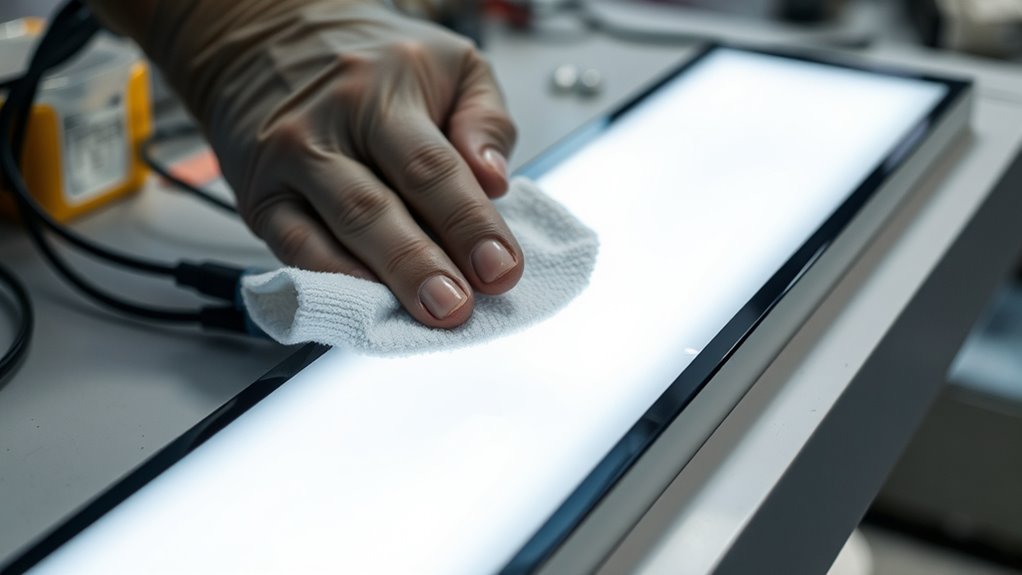
LED devices are reliable and energy-efficient, but keeping them clean is vital to guarantee peak performance and longevity. One of the most important aspects of maintenance is dust removal. Over time, dust can accumulate on the surface of your LEDs, blocking light output and causing the device to work harder to produce the same brightness. Regularly wiping the surface with a soft, lint-free cloth helps prevent dust buildup and guarantees your LEDs shine at full capacity. Avoid using harsh chemicals or abrasive materials, as they can scratch or damage the delicate components. Using compressed air is also effective for removing dust from hard-to-reach areas like vents or internal heatsinks, which is essential because dust can impair heat dissipation. When dust isn’t properly removed, it can lead to overheating, reducing the lifespan of your LED devices and increasing energy consumption.
Power management is another vital factor in maintaining your LED devices. Proper power management involves ensuring your LEDs receive the right voltage and current, which helps prevent flickering, dimming, or potential damage. Check your power supplies and connections regularly, making sure they are secure and compatible with your LEDs’ specifications. Using dimmers or smart controls allows you to adjust brightness levels based on your needs, reducing unnecessary power draw and extending your device’s lifespan. When your LEDs are well-powered and not overdriven, they operate more efficiently, generate less heat, and last longer. Additionally, employing timers or automation systems can turn off or dim your LEDs during periods of low usage, further optimizing energy efficiency and preventing undue stress on the components.
Maintaining good power management practices also involves monitoring your LED devices for signs of irregular operation, such as flickering or inconsistent brightness. If you notice these issues, it’s a sign to inspect connections, replace faulty drivers, or reevaluate your power setup. Combining dust removal with smart power management guarantees your LED devices stay in top condition and operate at their best. Consistent cleaning routines and careful electrical oversight not only improve performance but also save you money in the long run by reducing energy consumption and extending the lifespan of your LEDs. Remember, a little proactive maintenance goes a long way in keeping your lighting systems reliable, efficient, and long-lasting.
Frequently Asked Questions
How Often Should I Replace My LED Device’s Components?
You should consider replacing your LED device’s components when you notice significant dimming, flickering, or reduced brightness, which indicates a decline in performance. Regular component replacement can extend your device’s lifespan, but most LEDs last around 25,000 to 50,000 hours. Keep an eye on signs of wear and tear, and replace parts proactively to guarantee peak function and longevity of your device.
Can I Use Harsh Chemicals on LED Surfaces?
You shouldn’t use harsh chemicals on LED surfaces, as studies show improper cleaning can reduce their lifespan by up to 20%. For safe surface cleaning, stick to gentle, non-abrasive cleaners and avoid alcohol or ammonia-based products. Chemical safety is vital; harsh chemicals can damage the device’s protective coatings and internal components. Always follow manufacturer guidelines to guarantee your LED device remains bright and functional for years to come.
What Should I Do if My LED Device Stops Working Suddenly?
If your LED device stops working suddenly, start with troubleshooting steps like checking the power source, cables, and connections. Make certain the device is properly plugged in and the power outlet functions correctly. If these steps don’t resolve the issue, it’s best to seek professional repair. Avoid attempting to fix internal components yourself, as it might cause further damage or void your warranty.
Are There Specific Storage Tips to Prolong LED Lifespan?
Your LED devices are more delicate than a spider’s web, so proper storage is essential. Use storage tips like keeping them in a cool, dry place to prevent overheating and degradation. Temperature control is key; avoid extreme heat or cold, as it can drastically shorten their lifespan. Store them in their original packaging or a protective case to shield from dust and physical damage, ensuring your LEDs shine brightly for years to come.
How Do Environmental Factors Affect LED Performance Over Time?
Environmental factors like humidity effects and temperature fluctuations can notably impact your LED performance over time. High humidity may cause moisture buildup, leading to corrosion or electrical issues, while temperature swings can stress components, reducing lifespan. To keep your LEDs working at their best, avoid exposing them to extreme or fluctuating temperatures, and store them in a dry, controlled environment. Proper care minimizes these environmental risks, ensuring longer-lasting, reliable LED performance.
Conclusion
Think of your LED devices as the stars in your own night sky. Just as stars shine brightest when they’re clear and well-maintained, your devices perform best when kept clean and cared for. Regular cleaning is like tending to your constellation, ensuring each light shines vividly. So, take a moment to care for your LEDs—they’ll light up your world with brilliance, just like a well-kept sky full of shimmering stars.