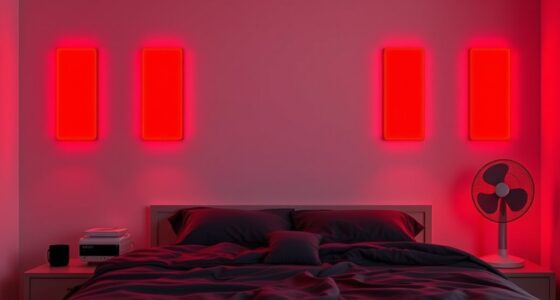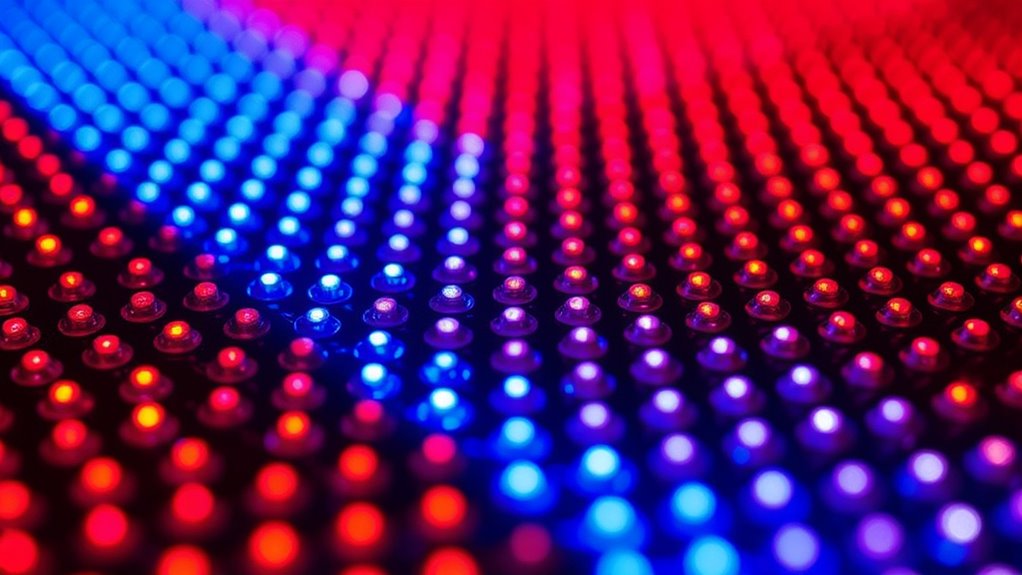

Red LEDs emit wavelengths between 620-750 nm, promoting skin rejuvenation and helping tissues heal, making them common in medical therapies. Blue LEDs, with wavelengths around 450-495 nm, are used for sterilization, disinfection, and digital displays, often influencing sleep patterns. Near-infrared LEDs operate between 750-1400 nm, penetrating deep into tissues to aid in pain relief, tissue healing, and imaging. Each color serves specific functions across health, industry, and technology—discover more about their unique uses below.

Get wellness gear delivered free — and shop member deals
- Fast, free delivery on millions of items
- Access to Prime Big Deal Days deals on October 6–7
- Prime Video, Amazon Music and more included
Key Takeaways
- Red LEDs promote skin rejuvenation, collagen production, and cellular activity, aiding in healing and tissue regeneration.
- Blue LEDs disinfect surfaces, kill bacteria, and influence sleep cycles by affecting melatonin levels.
- Near-infrared LEDs penetrate deep tissues to facilitate pain relief, tissue healing, and non-invasive medical imaging.
- All three LED colors are used in medical, industrial, and technological applications based on their specific wavelength effects.
- The wavelength determines each LED’s function, from skin therapy (red), sterilization (blue), to deep tissue treatment (near-infrared).
LEDs come in various colors, each serving unique purposes in different applications. When you look at red, blue, and near-infrared LEDs, you’re seeing different parts of the light spectrum that have distinct effects and uses. Red LEDs emit light with wavelengths typically between 620 and 750 nanometers. You’ll find these in indicator lights, brake lights, and even in some medical devices. Their primary function is often related to signaling or illumination, but they also play a key role in plant growth and skin therapy due to their ability to penetrate tissue and promote cellular activity. Red light can stimulate collagen production, making it popular in beauty treatments for skin rejuvenation. In the domain of health, red LEDs are used in phototherapy to reduce inflammation and improve circulation, thanks to their deep tissue penetration. Additionally, their ability to influence cellular processes makes them valuable in healing and regenerative medicine.
Blue LEDs, on the other hand, emit light with wavelengths roughly between 450 and 495 nanometers. They’re most recognizable in screens, flashlights, and decorative lighting, giving off a cool, vibrant glow. But their utility extends far beyond aesthetics. Blue LEDs are essential in sterilization and disinfection because their light can kill bacteria and other microbes. This capability makes them invaluable in water purification systems, medical sterilizers, and air purifiers. You might also notice how blue light influences your sleep cycle; exposure to it can suppress melatonin production, which is why many devices now feature blue light filters to reduce eye strain and sleep disruption. In technical applications, blue LEDs are vital for optical data transmission, such as in Blu-ray discs, where they enable high-capacity data storage by precisely reading and writing data.
Near-infrared LEDs operate with wavelengths just beyond the visible spectrum, generally between 750 and 1400 nanometers. You might not see this light, but it’s everywhere in medical and industrial fields. Near-infrared LEDs are heavily used in medical diagnostics and treatments, especially in infrared therapy devices that promote tissue healing and reduce pain. They’re also essential in remote controls, where their invisible light carries signals to electronic devices. In addition, near-infrared light can penetrate deeper into biological tissues than red or blue light, making it ideal for imaging and therapeutic purposes. They’re used in pulse oximeters to measure blood oxygen levels, as the light passes through tissue and is absorbed differently by oxygen-rich and oxygen-poor blood. The versatility of near-infrared LEDs lies in their ability to deliver deep tissue treatment without invasive procedures, making them a fundamental component in modern health technology. Furthermore, advances in LED technology continue to expand their applications in both medical and industrial sectors.
red light therapy device for skin rejuvenation
As an affiliate, we earn on qualifying purchases.
As an affiliate, we earn on qualifying purchases.
Frequently Asked Questions
How Do LED Colors Affect Skin Penetration Depth?
You’ll notice that LED colors influence skin penetration depth considerably. Blue LEDs penetrate the shallowest, ideal for surface treatments like acne. Red LEDs go deeper, promoting collagen production and healing. Near-infrared LEDs reach the deepest layers, improving blood flow and tissue repair. By choosing the right color based on your skin concern, you optimize treatment effectiveness, ensuring the light reaches the specific skin depths needed for your desired results.
Can Different LED Colors Be Used Simultaneously?
Yes, you can absolutely use different LED colors simultaneously! Imagine harnessing a powerful energy wave where red, blue, and near-infrared lights team up, supercharging your skincare routine like an unstoppable force. Combining these wavelengths allows you to target multiple skin layers at once, boosting healing, reducing inflammation, and enhancing collagen production all in one session. It’s like releasing a full-spectrum attack on skin issues—fast, effective, and revolutionary!
Are There Safety Concerns With High-Intensity LED Therapy?
Yes, there are safety concerns with high-intensity LED therapy. You should be cautious about overexposure, which can cause skin irritation or eye damage. Always follow manufacturer guidelines and avoid staring directly into intense LEDs. If you have sensitive skin or eye conditions, consult a healthcare professional beforehand. Using appropriate protective eyewear and limiting session duration helps guarantee your safety during high-intensity LED treatments.
How Do LED Wavelengths Influence Cellular Responses?
You can influence cellular responses through LED wavelengths by targeting specific chromophores within your cells. For example, blue light stimulates bacteria-killing effects, while red and near-infrared light penetrate deeper, promoting tissue repair and reducing inflammation. When you expose your skin to these wavelengths, you activate cellular processes like increased ATP production, enhanced circulation, and faster healing. The wavelength’s energy and depth of penetration determine how effectively your cells respond.
What Are the Best LED Combinations for Skin Rejuvenation?
Thinking like a modern-day Da Vinci, you should combine red and near-infrared LEDs for skin rejuvenation. Red light boosts collagen, reducing fine lines, while near-infrared penetrates deeper to improve skin elasticity and repair. Add a touch of blue light to target bacteria and reduce inflammation. This multi-wavelength combo provides all-encompassing skin renewal, helping you achieve a youthful glow with a blend of science and a bit of artistic flair.
Conclusion
Just as the colors of a painter’s palette each serve a unique purpose, so do red, blue, and near-infrared LEDs in your life. Harnessing their distinct benefits can transform your health and wellness, much like the sun’s rays shape the world around us. Remember, each color is an essential brushstroke in the masterpiece of your well-being—embracing their roles helps you paint a healthier, brighter future.
Fall Picks
fall essentials
As an affiliate, we earn on qualifying purchases.