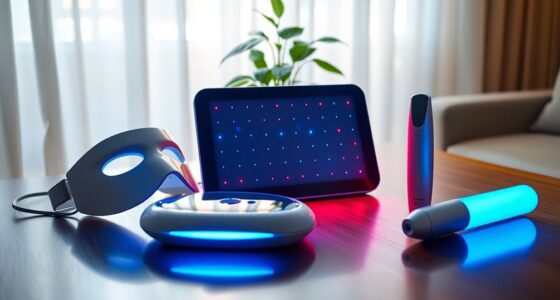
LED light therapy uses specific wavelengths of light to penetrate your skin, stimulating cellular activity and promoting healing. Red light reduces inflammation and boosts collagen, helping diminish wrinkles and aging signs, while blue light targets bacteria to fight acne. Deeper wavelengths, like near-infrared, support tissue repair and pain relief. It’s a safe, non-invasive treatment with no downtime. Keep exploring to discover how this innovative therapy can benefit your skin health even further.
Key Takeaways
- LED light therapy uses specific wavelengths of light to stimulate skin cells and promote healing without invasive procedures.
- Red light enhances collagen production, reduces inflammation, and improves skin elasticity for a youthful appearance.
- Blue light targets acne-causing bacteria, reduces inflammation, and helps clear skin blemishes.
- Near-infrared light penetrates deeper tissues to promote tissue repair, reduce pain, and decrease inflammation.
- The therapy is safe, non-invasive, and suitable for various skin types, offering long-term skin health benefits with regular sessions.
LED light therapy is a non-invasive treatment that uses specific wavelengths of light to improve skin health and promote healing. When you undergo this therapy, you’re fundamentally exposing your skin to carefully calibrated lights that penetrate the outer layers and stimulate cellular activity. This process doesn’t involve any needles, incisions, or harsh chemicals, making it a gentle yet effective option for those looking to enhance their skin’s appearance and health. The different colors of LED lights target various skin concerns, revealing a wide range of benefits.
Red light, for example, is particularly popular for reducing inflammation and boosting collagen production. When you’re exposed to red wavelengths, your skin’s cells respond by increasing blood flow and promoting cell regeneration. This can help diminish fine lines, wrinkles, and signs of aging, leaving your skin looking firmer and more youthful. It’s also known for calming irritated skin, making it a good choice if you have sensitive or inflamed skin conditions. Blue light, on the other hand, is often used to combat acne. It targets the bacteria responsible for breakouts, reducing inflammation and preventing new pimples from forming. The antimicrobial effects of blue light make it especially effective for acne-prone skin, helping you achieve clearer, healthier skin over time.
In addition to red and blue lights, some treatments incorporate other wavelengths like near-infrared, which penetrates deeper into the skin to stimulate tissue repair and reduce pain or inflammation. When you sit under an LED light panel, the light energy is absorbed by your skin’s cells, which then activate specific biological processes. These processes include increased production of collagen and elastin, improved blood circulation, and enhanced cellular repair mechanisms. Because the light energy is absorbed rather than emitted as heat, the process feels comfortable and relaxing, with no downtime or discomfort afterward.
Recent research also highlights the importance of ongoing AI safety measures to ensure the responsible development and deployment of new technologies, including those used in healthcare treatments like LED therapy. The beauty of LED light therapy is that it works on a cellular level without damaging your skin or causing side effects. Over multiple sessions, you’ll notice improvements such as smoother texture, reduced redness, and a more even skin tone. While it’s not a quick fix, consistent treatments pave the way for long-term benefits. Whether you’re looking to reduce signs of aging, clear up acne, or simply maintain healthier skin, LED light therapy offers a safe, effective, and drug-free approach that fits easily into your skincare routine.
As an affiliate, we earn on qualifying purchases.
Frequently Asked Questions
How Often Should I Undergo LED Light Therapy Sessions?
You should typically undergo LED light therapy sessions 2 to 3 times a week, especially when starting out. This frequency helps your skin respond effectively and see visible improvements. As your skin improves, your dermatologist or skincare professional might recommend reducing sessions to once a week or biweekly for maintenance. Follow their guidance to maximize benefits and guarantee your skin stays healthy and vibrant over time.
Are There Any Side Effects or Risks Involved?
Think of LED light therapy as a gentle wave, soothing your skin like a calm tide. Generally, it’s safe with minimal side effects—some redness or slight swelling may occur but usually fade quickly. You might experience dryness or tingling, but serious risks are rare. Always follow your provider’s advice and inform them of any sensitivities to keep the experience safe and effective.
Can LED Therapy Treat Specific Skin Conditions Effectively?
Yes, LED light therapy can effectively treat specific skin conditions like acne, wrinkles, and inflammation. You might notice improvements in skin tone, reduced redness, and clearer complexion with consistent sessions. It works by stimulating cellular activity and boosting collagen production. Keep in mind, results vary based on individual skin types and conditions. To maximize benefits and avoid possible side effects, follow your provider’s recommendations and schedule regular treatments.
How Long Do the Results Typically Last?
Results from LED light therapy can last anywhere from a few months to a year, depending on your skin’s habits. Think of it like a fleeting romance—if you keep up the sessions and nurture your skin, the glow stays longer; neglect it, and you’ll be back to square one. Regular treatments and good skincare habits are your best bet for prolonging those radiant effects.
Is LED Light Therapy Suitable for All Skin Types?
Yes, LED light therapy is suitable for all skin types. You can benefit from it regardless of your skin’s color or sensitivity, as it’s a gentle, non-invasive treatment. Just make sure to consult with a skincare professional beforehand to determine the best protocol for your specific needs. This way, you’ll enjoy improved skin health, reduced inflammation, and a brighter complexion without worry about adverse reactions.
Conclusion
Don’t let doubts hold you back from trying LED light therapy. If you think it’s just a trend or won’t make a difference, remember that many users see real improvements in their skin’s health and appearance. It’s a gentle, non-invasive option backed by science. So, give it a chance—you might be surprised at how much your skin benefits, revealing a healthier glow you can feel confident about every day.