LED therapy can be a safe and effective option for children and adolescents when performed by trained professionals. It uses specific light wavelengths to promote skin healing, reduce inflammation, and improve skin texture without damage. Since young skin is still developing, proper guidance and consultation with a dermatologist are essential. When managed correctly, LED therapy offers a gentle, non-invasive treatment ideal for youthful skin concerns—discover more about how it might benefit your teen.
Key Takeaways
- LED therapy is generally safe for children and adolescents when performed by trained professionals.
- It promotes skin healing, reduces scars, and improves skin tone with minimal side effects.
- Proper consultation ensures the treatment is suitable for a young person’s developing skin.
- Safety depends on correct application and individual skin response; professional guidance is essential.
- LED therapy offers a natural, non-invasive option for skin issues in youth, making it a popular choice.
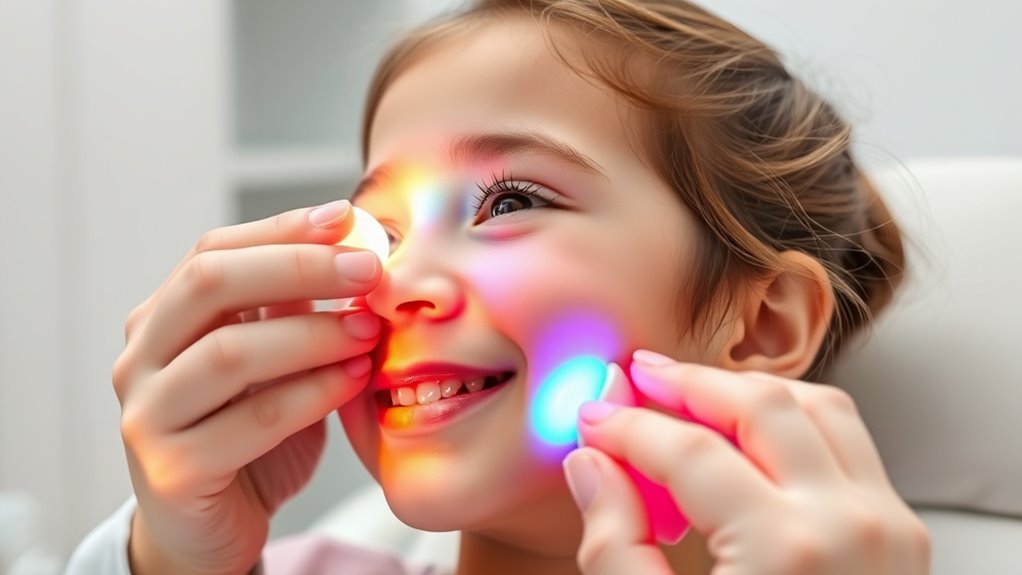
With growing interest in non-invasive skin treatments, many parents and teens wonder if LED therapy is safe and effective for children and adolescents. It’s natural to be cautious about trying new procedures, especially for young skin that’s still developing. LED therapy uses specific wavelengths of light to target skin issues without damaging the surface. This method has gained attention for its potential to promote skin regeneration and provide pain relief, making it appealing for youthful skin concerns.
Skin regeneration is one of the key benefits associated with LED therapy. When you expose your skin to certain light wavelengths, your cells can boost their activity, encouraging faster regeneration. This process helps improve skin texture, reduce scars, and minimize the appearance of blemishes or uneven skin tone. For teens dealing with acne scars or persistent skin imperfections, LED therapy offers a gentle way to support healing and renewal without harsh chemicals or invasive procedures. Since it encourages natural skin repair, it’s often seen as a safer alternative for young skin that needs gentle support rather than aggressive treatments.
LED therapy promotes natural skin repair, improves texture, and helps reduce scars and blemishes safely for teens.
Pain relief is another advantage that makes LED therapy attractive for younger patients. Many teens experience discomfort from skin conditions or even from other treatments like extractions or chemical peels. LED therapy can help soothe inflammation and reduce pain associated with conditions like acne, eczema, or psoriasis. The light stimulates blood flow and encourages the release of endorphins, which are natural pain relievers. This can make the healing process more tolerable and less stressful for teens, especially those who may be sensitive to discomfort.
However, it’s important to understand that while LED therapy shows promise, its safety and effectiveness for children and adolescents depend on proper application and guidance from a healthcare professional. The procedure is generally considered safe when performed by trained practitioners, and side effects are minimal. Still, every young person’s skin is unique, and what works for one may not be suitable for another. It’s essential to consult with a dermatologist or qualified specialist before starting any treatment, ensuring it’s tailored to your specific skin needs and age.
Frequently Asked Questions
Are There Age Restrictions for LED Therapy in Children?
Yes, there are age restrictions for LED therapy in children. You should follow safety guidelines strictly, as younger children may have more sensitive skin and different responses. It’s best to consult with a healthcare professional before proceeding, especially for kids under 12. Age restrictions are in place to guarantee safety and efficacy, so adhering to these guidelines helps protect your child’s health and optimize treatment results.
How Long Does It Take to See Results in Teens?
You’ll typically see visible improvements in teens after about 4 to 6 treatment sessions, though it can vary based on individual skin types and concerns. Most teens notice changes within a few weeks, especially with consistent treatment. The treatment duration per session is usually around 20 minutes, and maintaining regular sessions helps guarantee the best results. Patience and adherence to your provider’s advice are key for ideal outcomes.
Can LED Therapy Replace Traditional Acne Treatments for Youths?
You might find LED therapy a promising non-invasive alternative for teens, as studies show it can reduce acne lesions by up to 60%. While it’s not a complete replacement for traditional treatments, it offers a natural remedy option with fewer side effects. LED therapy targets inflammation and bacteria, making it effective for some youths. Always consult a dermatologist to determine if it fits your child’s acne management plan.
Are There Any Long-Term Risks for Children Undergoing LED Therapy?
You don’t need to worry much about long-term risks with LED therapy for children. Current research shows that LED therapy has good long-term safety and minimal developmental impact when used appropriately. However, it is crucial to have regular check-ups with a healthcare professional to monitor any unforeseen effects. Overall, LED therapy is considered safe for children, but ongoing research will help confirm its long-term safety and developmental impact.
Is LED Therapy Suitable for Children With Sensitive Skin?
Yes, LED therapy can be suitable for children with sensitive skin. You should look for providers who customize the treatment to your child’s skin sensitivity, ensuring the light intensity is appropriate. Always consult a healthcare professional beforehand to assess your child’s skin type and needs. With proper treatment customization, LED therapy can be a gentle, effective option for managing skin concerns without aggravating sensitive skin.
Conclusion
So, after all this talk about LED therapy’s safety and effectiveness, it’s almost amusing how many still doubt its potential. You’d think the promise of a gentle, non-invasive treatment would be enough to persuade skeptics. But maybe it’s easier to resist change than to embrace hope for healthier children and teens. Ironically, the real risk might be missing out on a safe, innovative solution — simply because we’re too cautious to try.