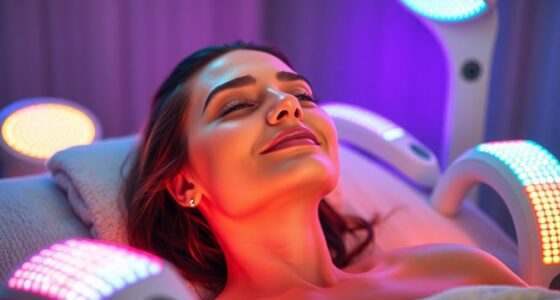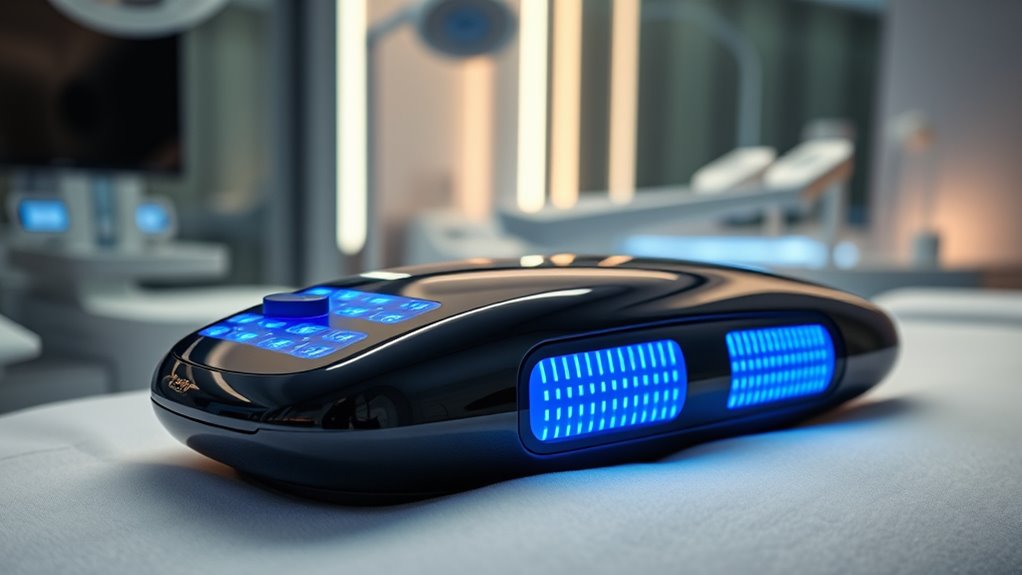
Combining LED therapy with radiofrequency creates dual‑tech devices that target multiple skin concerns at once. LED light treats issues like acne and boosts collagen, while radiofrequency heats deep skin layers for tightening and elasticity. Together, they offer a customizable, non-invasive approach for smoother, younger-looking skin. This synergy enhances results and reduces treatment time. Stick around, and you’ll discover how this innovative combo can help you achieve your skincare goals.
Key Takeaways
- Dual‑Tech devices combine LED therapy and radiofrequency to target multiple skin concerns simultaneously for comprehensive results.
- LED therapy uses specific light wavelengths to reduce acne, stimulate collagen, and improve skin tone.
- Radiofrequency delivers deep heat to stimulate collagen and elastin production, enhancing skin tightening and elasticity.
- Combining both technologies accelerates skin rejuvenation, improves texture, and reduces signs of aging more effectively.
- This integrated approach offers a safe, non-invasive alternative to surgical procedures with customizable treatment options.
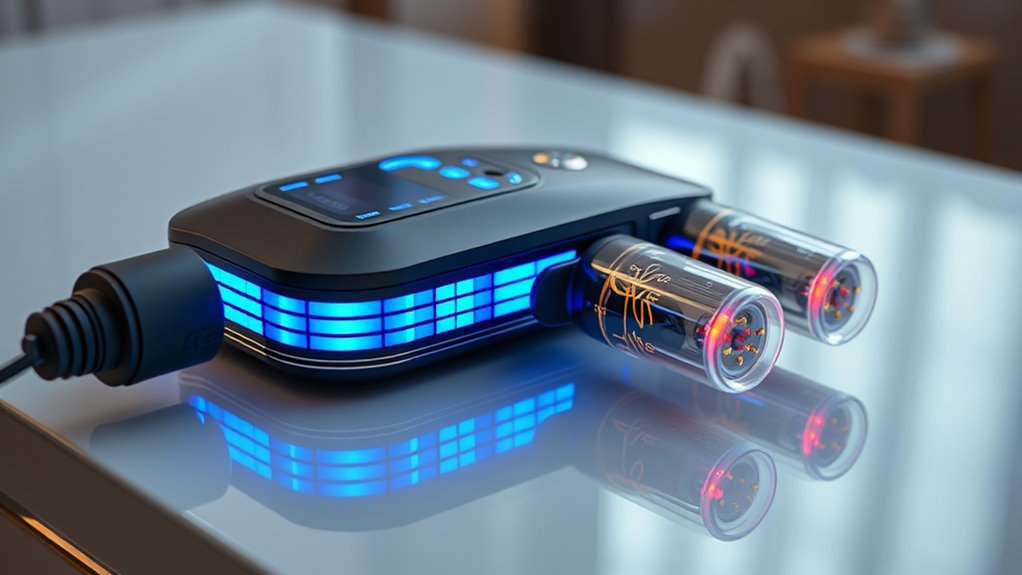
Have you ever wondered how some security systems can detect intruders more reliably? It’s similar to how dual‑tech devices work in the world of skincare and aesthetics. These advanced tools combine different technologies to deliver better results, and understanding how they operate can help you appreciate their effectiveness. When it comes to skin tightening and acne reduction, the combination of LED therapy with radiofrequency is a game changer. By merging these two methods, you get a more extensive approach that addresses multiple skin concerns simultaneously.
LED therapy, often called light therapy, uses specific wavelengths of light to target skin issues. For acne reduction, blue LED light penetrates the pores to kill bacteria responsible for breakouts, reducing inflammation and preventing future pimples. At the same time, red LED light stimulates collagen production, which is essential for skin renewal. This dual action not only clears up existing acne but also helps prevent new blemishes from forming. When you incorporate LED therapy into your skincare routine, you notice smoother skin with fewer breakouts and a more even complexion over time.
Blue and red LED lights work together to clear acne and boost collagen for healthier skin.
Radiofrequency, on the other hand, works by delivering heat deep into the skin layers. This process stimulates collagen and elastin fibers, leading to skin tightening and improved elasticity. It’s effective for reducing the appearance of sagging skin and fine lines, giving you a more youthful look. When combined with LED therapy, radiofrequency enhances the overall results by not only tightening the skin but also improving its texture and tone. The heat generated encourages your skin to produce more collagen, which pairs well with the collagen-stimulating properties of red LED light.
The synergy of these technologies makes dual‑tech devices particularly versatile. They allow practitioners to customize treatments based on your skin’s needs, whether it’s targeting stubborn acne, lifting sagging areas, or smoothing out wrinkles. Instead of relying on a single modality, combining LED therapy with radiofrequency maximizes benefits in a shorter period and with fewer sessions. It’s like having two powerful tools working together to improve your skin’s health and appearance.
In essence, dual‑tech devices are designed to give you more extensive results by harnessing the strengths of different technologies. If you’re looking to tighten your skin or reduce acne, this integrated approach offers a safe, non-invasive alternative to surgery or other invasive procedures. By understanding how these devices work, you can make more informed decisions about your skincare journey and achieve the radiant, youthful skin you desire.
Frequently Asked Questions
Are Dual-Tech Devices Suitable for All Skin Types?
Dual-tech devices are generally suitable for most skin types because of their versatility, but you should verify their skin type compatibility before use. These devices often feature adjustable settings to cater to different skin sensitivities and conditions. However, if you have very sensitive skin or specific skin concerns, it’s best to consult a professional. Always follow manufacturer guidelines to ensure safe and effective treatment tailored to your skin.
How Long Does Each Treatment Session Typically Last?
Your treatment session usually lasts between 20 to 30 minutes, depending on the targeted area and your skin’s needs. The treatment duration is designed to be efficient yet effective, allowing enough time for both LED therapy and radiofrequency to work synergistically. During each session, you can expect a comfortable experience, with the session length optimized to deliver noticeable results without causing discomfort or excessive time commitments.
Can Combining Therapies Cause Adverse Skin Reactions?
Imagine your skin as a delicate canvas, and combining LED therapy with radiofrequency is like adding layers of paint. Usually, this dual approach doesn’t cause skin irritation or allergic reactions if done properly. However, in rare cases, you might experience redness or sensitivity. Always consult your provider beforehand to minimize risks. With careful supervision, you can enjoy the benefits without adverse skin reactions.
Are There Any Specific Post-Treatment Skincare Recommendations?
After your treatment, make sure to prioritize post-treatment hydration by drinking plenty of water and applying a gentle moisturizer. Avoid direct sun exposure and always wear broad-spectrum sun protection to prevent damage and pigmentation. Refrain from using harsh skincare products like retinoids or acids for a few days. These steps help your skin recover faster, reduce irritation, and maximize the benefits of the dual-tech therapy.
How Often Should Treatments Be Scheduled for Optimal Results?
To achieve amazing results, you should schedule treatments with consistent cadence, typically every 1 to 2 weeks. This treatment frequency ensures your skin receives enough stimulation for lasting improvements. For ideal timing, follow your practitioner’s personalized plan, adjusting as needed based on your skin’s response. Regular sessions maximize benefits, maintaining youthful glow and firm texture. Stick to this schedule, and you’ll see noticeable, long-lasting results over time.
Conclusion
By exploring the gentle synergy of LED and radiofrequency technologies, you’re opening doors to a more refined approach to skin care. These dual-tech devices subtly work together, offering a comforting path toward improved skin health and significance. Embrace this innovative blend as a promising step forward—where advancements meet your desire for natural, effective results. With each treatment, you’re gently guiding your skin toward a brighter, more confident you, all without overwhelming your senses.