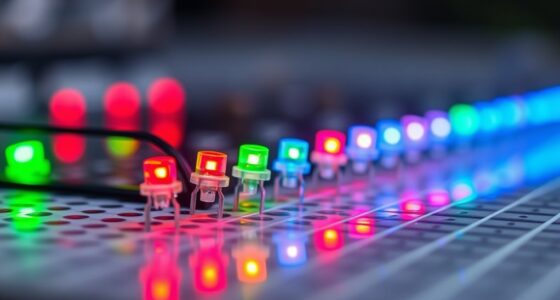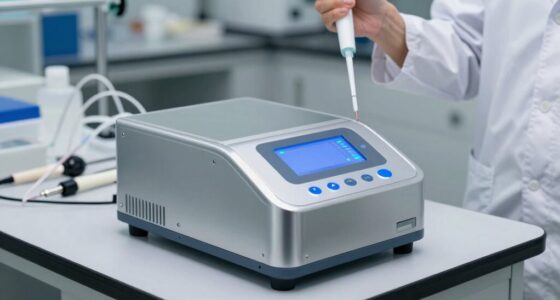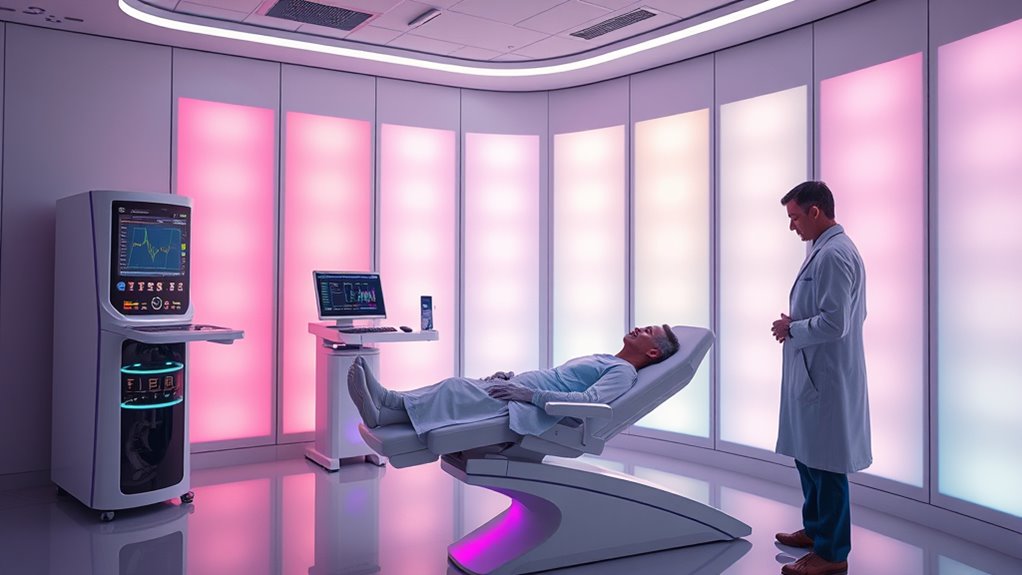
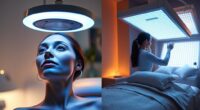
Machine learning is revolutionizing LED therapy by helping you develop personalized, adaptive treatment plans. It analyzes individual patient data, including responses, skin type, and conditions, to optimize sessions in real-time. This reduces trial and error, improves safety, and increases effectiveness, leading to better results and higher satisfaction. As algorithms learn from ongoing data, your treatment becomes more precise over time. Keep exploring to discover how this technology is setting new standards in LED therapy.

Get wellness gear delivered free with Prime
- Fast, free delivery on millions of items
- Prime Video, Amazon Music and more included
- Member-only deals all year
Key Takeaways
- Machine learning personalizes LED therapy by tailoring parameters based on individual patient data and responses.
- Adaptive treatment plans evolve dynamically, optimizing light wavelength, intensity, and session frequency over time.
- Algorithms forecast patient responses, reducing trial-and-error and increasing initial treatment effectiveness.
- Real-time data analysis enables safe, responsive adjustments that improve outcomes and reduce side effects.
- Continuous learning from new data enhances protocol effectiveness, setting new standards for personalized LED therapies.

Machine learning is transforming LED therapy by enabling more personalized and effective treatments. Instead of relying on generic protocols, you can now develop personalized protocols that adapt to each patient’s unique needs. This shift is powered by data-driven optimization, which allows algorithms to analyze vast amounts of treatment data to identify what works best for individual cases. As a result, you’re no longer limited to one-size-fits-all solutions; instead, you can fine-tune treatments to maximize outcomes, whether targeting skin rejuvenation, pain relief, or wound healing. This personalized approach ensures that each patient receives the most suitable LED therapy, reducing trial-and-error and increasing satisfaction.
With machine learning, the process becomes more efficient because the system continually learns from new data. As you gather more information—such as patient responses, treatment duration, skin type, or specific conditions—the algorithms refine their recommendations. This ongoing data-driven optimization means your treatment plans evolve over time, becoming more precise and effective with each session. Instead of static protocols, your approach becomes dynamic and responsive, adjusting parameters like light intensity, wavelength, and session frequency to match the patient’s progress. This responsiveness not only improves healing rates but also minimizes side effects and discomfort, making treatments safer and more comfortable.
Machine learning refines LED therapy by adapting treatments in real-time, enhancing safety and effectiveness.
Implementing machine learning in LED therapy also streamlines decision-making. You can leverage predictive models that forecast how a patient might respond to different treatment settings. This foresight helps you craft tailored plans that are more likely to succeed from the outset, reducing the need for multiple adjustments. Furthermore, the system’s ability to analyze patterns across hundreds or thousands of cases means you can identify subtle trends or factors that influence outcomes, which might not be obvious through traditional methods. This insight allows you to optimize protocols not just on a case-by-case basis but across broader patient populations, driving continuous improvement in your practice.
Ultimately, integrating machine learning with LED therapy empowers you to deliver smarter, more personalized care. It shifts the focus from standardized, one-size-fits-all treatments to adaptive plans that evolve based on real-time data. This approach enhances the efficacy of your treatments, shortens recovery times, and increases patient satisfaction. As you harness data-driven optimization, your ability to provide tailored, effective LED therapy becomes more precise, consistent, and impactful, setting a new standard in aesthetic and medical treatment protocols.
LED therapy device with adjustable wavelength
As an affiliate, we earn on qualifying purchases.
As an affiliate, we earn on qualifying purchases.
Frequently Asked Questions
How Does Machine Learning Personalize LED Therapy for Individual Patients?
You leverage machine learning to personalize LED therapy by analyzing data from real-time monitoring of your patient’s responses. This technology adjusts the dosing based on individual needs, ensuring ideal treatment. As you collect more data, the system refines its recommendations, enabling a tailored approach that adapts to changes in your patient’s condition. This personalized dosing maximizes effectiveness while minimizing side effects, offering a smarter, more responsive therapy plan.
What Types of Data Are Used to Train Adaptive LED Treatment Models?
You use sensor data and patient demographics to train adaptive LED treatment models. Sensor data provides real-time feedback on skin response, temperature, and treatment effectiveness, while patient demographics like age, skin type, and medical history help tailor the therapy. By analyzing this information, the model adjusts LED parameters dynamically, ensuring personalized, effective treatments that adapt to each patient’s unique needs and responses.
Can Machine Learning Algorithms Predict Long-Term Outcomes of LED Therapy?
Think of machine learning as your oracle for LED therapy. It uses predictive analytics to forecast long-term outcomes, helping you make smarter treatment choices. By analyzing past patient data and real-time responses, algorithms can refine treatment plans, ensuring better results over time. This approach enables treatment optimization, giving you personalized, effective therapies that adapt as you progress, much like a seasoned guide steering through uncharted waters.
How Is Patient Safety Ensured When Using Ai-Driven LED Treatment Plans?
You guarantee patient safety by adhering to ethical considerations and regulatory compliance when using AI-driven LED treatment plans. You carefully validate algorithms, monitor outcomes, and maintain transparency to prevent adverse effects. Regular audits and updates align treatments with healthcare standards, while informed consent keeps patients aware of AI’s role. This approach minimizes risks, promotes trust, and guarantees safe, effective therapy tailored to individual needs.
What Are the Limitations of Current Machine Learning Applications in LED Therapy?
You should be aware that current machine learning applications in LED therapy face limitations like data privacy concerns and algorithm bias. These issues can affect treatment accuracy and patient safety. Algorithms may not always account for individual differences, leading to suboptimal results. Additionally, incomplete or biased data can skew outcomes. Recognizing these limitations helps you understand the need for ongoing improvements and safeguards in AI-driven LED therapies.
Conclusion
You now see how machine learning makes LED therapy more personalized and powerful. By blending brilliance with biology, you can boost healing and banish barriers. Embrace this innovative intersection, igniting inspiration and improving outcomes. Let technology lead your journey—leveraging learning, opening possibilities, and ultimately uplifting lives. With this dynamic duo, you don’t just treat—you transform, creating a compelling future where precision, progress, and passion prevail.
Halloween Picks
halloween
As an affiliate, we earn on qualifying purchases.