
RF treatments generally target sagging better by delivering heat deep into the skin, stimulating collagen production for noticeable tightening. LED therapies are gentler, promoting gradual improvements but are better suited for mild sagging or skin maintenance. If you’re after faster, more dramatic results, RF is likely a better option. Want to understand which method suits your skin type and goals? Keep exploring for helpful insights to make the right choice.
Key Takeaways
- RF provides faster, more noticeable lifting for moderate to severe sagging due to deep tissue heating.
- LED offers gentle, gradual improvements suitable for mild sagging and sensitive skin.
- RF may cause side effects like redness or discomfort, while LED is safer with minimal side effects.
- RF is more effective for deep collagen stimulation, leading to stronger skin tightening results.
- LED is less costly and better for maintenance, but results are subtler and take longer to achieve.
How Do RF and LED Treatments Work for Skin Tightening?
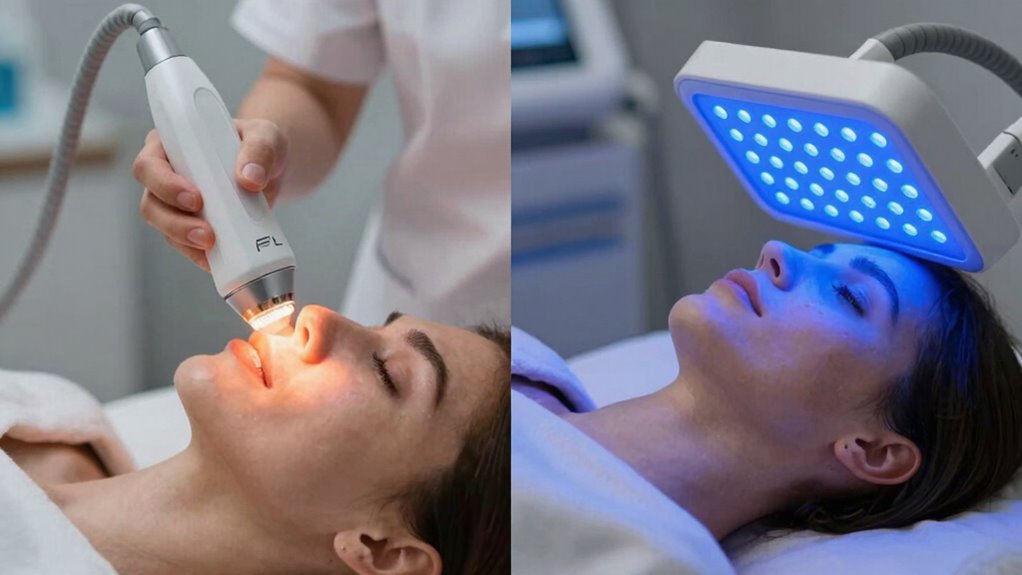
Radiofrequency (RF) and LED treatments both aim to tighten skin by stimulating your body’s natural healing processes. RF uses heat energy to penetrate deep layers, encouraging collagen production and tissue contraction. Microcurrent therapy, a form of RF, delivers low-level electrical currents that boost cellular activity, enhancing skin firmness. Ultrasound skin tightening employs high-frequency sound waves to stimulate collagen synthesis, providing a non-invasive lift. LED therapy, on the other hand, uses specific light wavelengths to reduce inflammation and promote cell regeneration, indirectly supporting skin tightening. Both treatments activate your body’s healing response, but RF and ultrasound focus more on collagen stimulation through heat, while LED primarily encourages cellular repair. Additionally, light-based therapies can be tailored to target specific skin concerns, making them versatile options in skin rejuvenation. These treatments can also be combined for enhanced results, offering a comprehensive approach to skin tightening without surgery. Furthermore, understanding the mechanisms of action helps in selecting the most suitable method for individual skin types and concerns. Recognizing the different energy modalities used in these treatments can aid in customizing skincare plans, ensuring optimal outcomes. It is also important to consider the safety and efficacy of each method, as well as consulting with a skincare professional to determine the best treatment plan. Together, these methods work to improve skin elasticity and smoothness without surgery.
RF vs LED: Which Is More Effective and Safer for Sagging Skin?

When choosing between RF and LED treatments for sagging skin, safety and effectiveness are key considerations. RF typically offers more noticeable tightening results but may carry a higher risk of side effects, while LED is gentler and safer for sensitive skin. Understanding how each method compares can help you make an informed choice for your skin’s needs. Additionally, considering appropriate treatment settings can optimize results and minimize risks. Proper device calibration can further enhance safety and effectiveness during treatments. Ensuring adherence to recommended safety guidelines is essential to prevent potential complications and achieve optimal outcomes. For optimal results, it’s also important to consider professional consultation to tailor treatments to individual skin types and conditions. Incorporating personalized treatment plans can ensure that each individual receives the most suitable and safe therapy.
Safety Profiles Compared
While both RF and LED treatments are generally considered safe for tightening sagging skin, their safety profiles differ based on how they interact with your skin. RF uses heat to stimulate collagen, which can cause side effects like redness, swelling, or discomfort if not properly managed. LED therapy, on the other hand, employs low-level light, making it gentler with fewer side effects. It’s important to note contraindications for both treatments, such as pregnancy, certain skin conditions, or use of photosensitive medications. Additionally, moisturizing agents can help mitigate some side effects and improve treatment comfort. Proper treatment protocols can also reduce risks and enhance safety during procedures. Using appropriate safety gear like eye protection can further prevent accidental exposure to intense light or heat during treatments. Understanding skin type considerations is vital to ensure the safety and effectiveness of each therapy. For optimal safety, consulting with a qualified professional who understands these treatment safety profiles is recommended.
Effectiveness in Tightening
Both RF and LED treatments aim to tighten sagging skin, but their effectiveness varies depending on individual needs and skin conditions. RF works by delivering thermal energy that stimulates collagen production, leading to improved skin elasticity over time. It’s especially effective for moderate to severe sagging, providing noticeable lifting results. LED therapy, on the other hand, promotes collagen stimulation through light energy, which enhances skin elasticity gradually and is better suited for mild sagging or preventative care. While RF offers more immediate tightening, LED treatments tend to be gentler with fewer side effects. Your choice depends on your skin’s condition and desired results. For significant tightening, RF generally performs better, but for safer, more natural improvements, LED can be effective. Additionally, understanding the skin’s response to different treatments can help in choosing the most suitable option.
Are RF and LED Treatments Safe, Comfortable, and Side Effect-Free?

RF and LED treatments are generally considered safe and well-tolerated when performed by trained professionals. While potential risks are minimal, understanding patient comfort and safety is essential. Most clients experience little to no discomfort during sessions, thanks to the non-invasive nature of these treatments. However, some minor side effects can occur, such as temporary redness or swelling. To guarantee safety and minimize risks, it’s vital to follow proper protocols. Always choose a qualified practitioner who understands your skin type and medical history. Remember, individual responses vary, and what’s comfortable for one person might differ for another. Overall, both RF and LED offer a safe, comfortable experience with minimal side effects when administered correctly. Choosing the right practitioner is crucial to ensure optimal results and safety. Additionally, staying informed about the safety standards for these treatments helps clients make confident decisions. Proper training and adherence to maintenance procedures further enhance treatment safety and efficacy. Moreover, understanding treatment protocols can help manage expectations and improve outcomes. Maintaining clinical best practices ensures that treatments remain safe and effective for all patients.
Factors to Consider When Choosing Between RF and LED for Skin Lifting?

When deciding between RF and LED for skin lifting, you should consider how effective each treatment is for your specific goals. It’s also important to evaluate how well your skin type responds to these options to avoid issues or disappointments. Understanding these factors can help you choose the safest and most effective solution for your needs. Additionally, exploring temperature-based therapies can provide insight into how different modalities impact skin tightening and overall results. Recognizing the safety considerations associated with each method can further guide your decision-making process. Incorporating sustainable textile care practices into your skincare routine can also support overall skin health and environmental responsibility.
Treatment Efficacy Differences
Choosing the right treatment for skin lifting depends heavily on understanding their efficacy differences. RF and LED treatments have shown varying results in clinical trials, influencing patient satisfaction levels. RF generally provides more immediate lifting effects, with many patients noticing visible improvements after a few sessions. LED therapy, while gentler, may require multiple treatments for noticeable results but offers a lower risk of side effects. When evaluating efficacy:
- RF tends to deliver faster, more pronounced lifting outcomes
- LED offers gradual, sustained improvements over time
- Clinical trials support RF’s effectiveness for skin tightening
- Patient satisfaction varies based on individual goals and treatment expectations
- Considering piercing care and hygiene can help maintain healthy skin during treatment periods
Your choice should consider these factors, balancing desired results with safety and comfort. Both treatments can be effective, but understanding their efficacy helps you make an informed decision.
Skin Type Compatibility
Your skin type plays a crucial role in determining whether RF or LED treatments will be most effective and comfortable. If you have sensitive skin, LED therapy may be gentler, as it uses low-level light without thermal effects that could cause irritation. RF treatments involve heat, which might be less suitable for very sensitive skin or those prone to redness and inflammation. Age considerations also matter; younger skin tends to respond well to LED, while RF can be more effective for mature skin needing deeper lifting. Additionally, if your skin is prone to conditions like rosacea or eczema, LED might reduce the risk of adverse reactions. Understanding your skin sensitivity and age-related needs helps you choose the treatment that enhances comfort and results. Recognizing skin compatibility is essential to achieving optimal outcomes and minimizing side effects.
Cost, Maintenance, and How Long Results Last With RF and LED?

RF and LED treatments vary considerably in cost, maintenance requirements, and how long their results last. Generally, RF tends to be more expensive upfront but offers longer-lasting effects, while LED is more affordable with minimal maintenance. The cost comparison depends on the treatment area and session frequency. RF devices often need professional upkeep, whereas LED devices are typically simple to maintain at home.
RF treatments cost more upfront but last longer; LED is affordable and low maintenance.
- RF may require multiple sessions for sustained results
- LED treatments usually need fewer sessions
- Maintenance for LED devices is minimal and straightforward
- RF treatments can involve ongoing costs for touch-ups
Your choice depends on your budget, willingness to maintain the device, and desired longevity of results. Both options provide benefits, but understanding these factors helps you make an informed decision.
Which Non-Invasive Skin Tightening Method Is Right for Your Needs?

Selecting the right non-invasive skin tightening method depends on your specific goals, budget, and lifestyle. If improving skin elasticity is your main priority, RF treatments often deliver noticeable tightening by stimulating collagen production. LED therapy, on the other hand, offers a gentler approach that enhances skin tone and promotes healing, which can boost patient satisfaction without significant downtime. Consider how much time you’re willing to invest in treatments and recovery—RF procedures typically require fewer sessions for visible results. Your desired outcome will influence your choice: for more dramatic lifting, RF might be best; for maintenance and mild tightening, LED could suffice. Ultimately, understanding your needs ensures you select a method that offers ideal results and high patient satisfaction.
Frequently Asked Questions
Can RF or LED Treatments Be Combined for Better Results?
Yes, combining RF and LED treatments can enhance your results through treatment synergy. Combination therapy allows you to target multiple skin concerns simultaneously, improving sagging and overall skin tone. You might notice faster, more noticeable improvements because the treatments work together to stimulate collagen and reduce inflammation. Always consult with a skincare professional to guarantee the combination is tailored to your skin type and goals, maximizing safety and effectiveness.
How Quickly Can I Expect to See Skin Tightening Improvements?
You can expect to see visible results within a few weeks, but real skin tightening takes time. Usually, improvements become noticeable after 4 to 6 treatment sessions, with full results showing up around 8 to 12 weeks. Keep in mind, the treatment duration varies based on individual skin condition and goals. Patience is key—your skin will thank you for sticking with it!
Are There Any Skin Types or Conditions That Contraindicate RF or LED Therapy?
You should avoid RF and LED therapy if you have skin sensitivity or certain medical contraindications, like active infections, open wounds, or metal implants in the treatment area. If you’re pregnant or have skin conditions such as rosacea or eczema, consult your healthcare provider first. These treatments are generally safe, but your provider can assess your specific skin sensitivities and medical history to prevent adverse reactions.
How Do RF and LED Treatments Differ in Their Healing Times?
You’ll notice that RF treatments generally have a longer treatment duration and healing process compared to LED therapy. RF sessions often require multiple visits, with some swelling or redness lasting a few days. In contrast, LED treatments are quicker, usually taking less time per session, and your skin heals faster afterward. LED is gentler, making it ideal for sensitive skin types, while RF targets deeper layers with a longer recovery period.
What Are the Long-Term Maintenance Requirements for Each Treatment?
You’ll need ongoing maintenance for both RF and LED treatments to preserve results. RF may require periodic sessions to sustain skin firmness, while LED often needs regular treatments to keep skin glowing. Consider cost-effectiveness, as RF can be more expensive over time, but it offers longer-lasting effects. If you have skin sensitivity, LED is gentler and may need less frequent sessions. Regular upkeep helps maintain your desired look and addresses changing skin needs.
Conclusion
Choosing between RF and LED treatments is like picking the right key for a lock—you want it to fit perfectly. RF offers powerful tightening, much like a steady hand guiding a sculptor’s chisel, while LED gently stimulates skin renewal, akin to sunrise gradually brightening a room. Consider your goals, budget, and comfort. With the right choice, you’ll open a more lifted, youthful look—like finding the perfect fit that transforms your reflection.