
Bright-light therapy can markedly boost your mental health by improving sleep, stabilizing your mood, and increasing energy levels. It helps reset your body’s internal clock, which can lessen depression symptoms and promote better sleep. By influencing neurotransmitters like serotonin and dopamine, it supports emotional balance and reduces mood swings. The therapy is safe, practical, and often used alongside other treatments. Keep exploring to discover how it can fit into your routine and enhance your well-being.
Key Takeaways
- Bright-light therapy improves sleep regulation, reducing depressive symptoms linked to disrupted sleep patterns.
- It stabilizes mood by influencing neurotransmitters like serotonin and dopamine.
- Enhances daytime alertness and energy levels, supporting daily functioning and motivation.
- A safe, non-invasive treatment that can complement medications or serve as an alternative.
- Promotes overall emotional stability and well-being through consistent use and improved sleep quality.
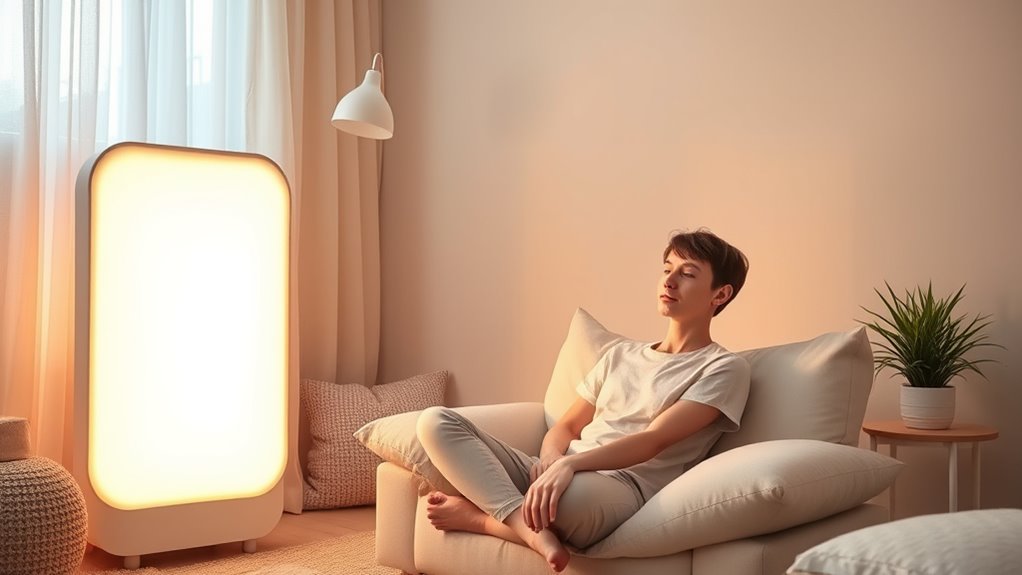
Taking care of your mental health offers powerful benefits that can improve your overall well-being. One effective method you might consider is bright-light therapy, especially if you’re dealing with nonseasonal depression. This therapy exposes you to bright, artificial light that mimics natural sunlight, helping to influence your brain chemistry positively. When you use bright-light therapy consistently, you may notice improvements in sleep regulation, which is essential because disrupted sleep often worsens depressive symptoms. By resetting your circadian rhythms, this treatment helps you fall asleep more easily and enjoy more restful nights, contributing to better mental clarity and emotional resilience.
Bright-light therapy helps regulate sleep and improves mood in nonseasonal depression.
Furthermore, bright-light therapy plays an indispensable role in mood stabilization. If you’ve experienced mood swings or persistent feelings of sadness, exposing yourself to bright light can lead to a more balanced emotional state. This is because light exposure influences neurotransmitters like serotonin and dopamine, which regulate mood and feelings of well-being. As your mood stabilizes, you might find it easier to handle daily stressors, engage in social activities, and maintain a positive outlook on life. Consistent use of light therapy can also reduce the severity and frequency of depressive episodes, helping you regain a sense of control and stability.
In addition to its effects on sleep and mood, bright-light therapy can boost your overall energy levels. When your body gets enough light during the day, it signals your brain to produce less melatonin, the hormone responsible for sleepiness. This adjustment helps you feel more alert and awake during waking hours, making it easier to stay active and motivated. As a result, you may notice improvements in your daily functioning, from work productivity to personal relationships. This increased energy further contributes to your mental health, as feeling energized can reduce feelings of fatigue and hopelessness often associated with depression.
Another benefit worth mentioning is that bright-light therapy is generally safe and non-invasive. It can be a practical addition to your mental health toolkit, especially if you prefer to avoid medication or seek a complementary treatment. To maximize its benefits, it’s important to follow guidelines about timing and duration of exposure, ideally consulting with a healthcare professional. When used correctly, bright-light therapy can become a powerful ally in managing nonseasonal depression, helping you achieve better sleep regulation, mood stabilization, and an overall improved sense of well-being. Taking these steps can empower you to regain control over your mental health and enjoy a more balanced, fulfilling life.
Frequently Asked Questions
How Long Does It Typically Take to See Improvements?
You can typically expect to see symptom progress within one to two weeks of starting bright-light therapy. Timing expectations vary, but many people notice improvements in mood and energy levels early on. Consistency is key, so follow your treatment schedule closely. If you don’t see changes after a few weeks, consult your healthcare provider to adjust the duration or intensity of your sessions to optimize results.
Are There Any Risks or Side Effects?
You won’t believe how safe bright-light therapy is, but it’s important to know about potential side effects and safety concerns. Some people might experience eye strain, headache, or mild nausea, especially if they’re sensitive. Rarely, it can cause agitation or insomnia. Always follow your provider’s instructions, and if you notice any severe side effects, stop using the therapy and consult a healthcare professional. It’s generally a safe, effective treatment.
Can Light Therapy Replace Medication?
Light therapy can be a helpful alternative treatment, but it shouldn’t fully replace medication without consulting your healthcare provider. You might consider integrating bright-light therapy with other treatments as part of a thorough approach. While some find relief through therapy integration and lifestyle changes, others may still need medication for ideal results. Always discuss your options with a professional to tailor the best plan for your mental health needs.
Is Light Therapy Effective for All Age Groups?
Light therapy can be effective across different age groups, but you should consider age considerations and safety protocols. For children and older adults, consult a healthcare professional to guarantee proper timing, intensity, and duration. Safety protocols, like avoiding eye exposure and starting with shorter sessions, are essential regardless of age. Always seek medical advice to tailor the treatment appropriately and safely for your specific age group.
How Do I Choose the Right Light Box?
Think of choosing a light box as finding your guiding star. Look for features like adjustable brightness, a UV filter, and a size that fits comfortably on your desk. Usage tips include sitting about 16-24 inches away, using it in the morning, and starting with 20-minute sessions. Select one with flicker-free, full-spectrum light to guarantee safety and effectiveness in brightening your day.
Conclusion
Imagine your mind as a garden, and bright light as a gentle sun breaking through clouds. When you embrace light therapy, you’re planting seeds of hope, helping your inner landscape flourish. Just as sunlight nurtures growth, this treatment can lift your spirits and clear shadows of depression. Remember, even the smallest rays can illuminate your path, guiding you toward brighter days. Embrace the light, and let your mental garden blossom anew.