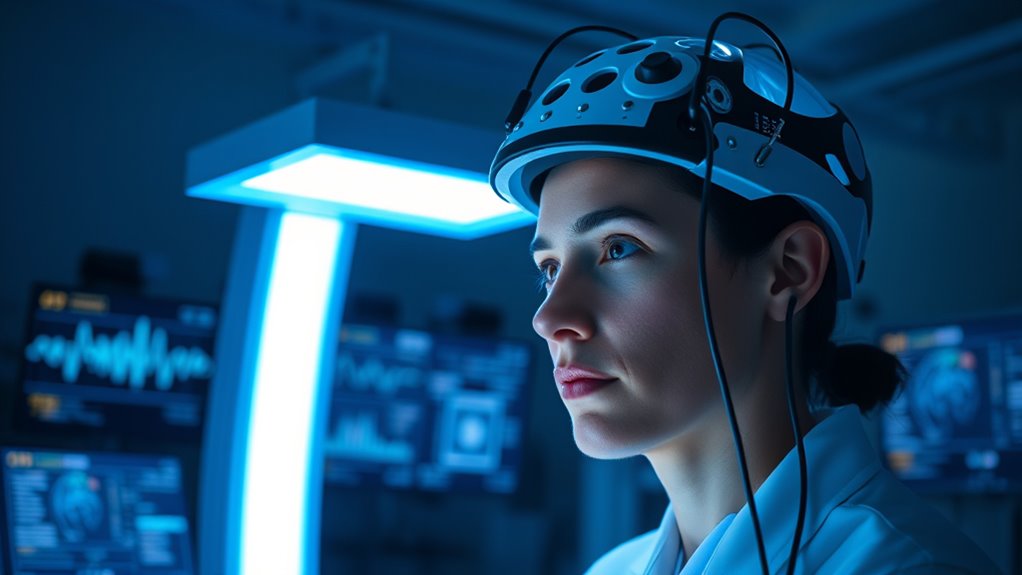

Light therapy can help boost your cognitive functions by stabilizing your circadian rhythms and promoting neuroplasticity, which enhances attention and mood—especially if you’re experiencing sub-threshold depression. It works by synchronizing your internal clock with natural light cycles, improving sleep, focus, and emotional resilience. With consistent use, you’ll notice better mental clarity and reduced fatigue. Stay with us to discover how these benefits can support your daily well-being and mental sharpness.
Key Takeaways
- Light therapy regulates circadian rhythms, improving sleep and alertness, which enhances attention and cognitive performance.
- It promotes neuroplasticity, increasing neural connections that support cognitive functions like memory and focus.
- Consistent use stabilizes mood in sub-threshold depression, reducing fatigue and improving mental clarity.
- Light therapy acts as a biological reset, lifting mood gradually and reducing symptoms that impair attention.
- Enhanced neuroplasticity from light therapy strengthens brain resilience, supporting sustained cognitive and emotional health.

Light therapy has gained attention as a promising way to boost cognitive function, especially for those experiencing mood disorders or seasonal affective disorder. When you expose yourself to specific wavelengths of light, it can help regulate your internal biological clock, known as circadian rhythms. This regulation is essential because your circadian rhythms influence not just sleep patterns but also alertness, mood, and overall cognitive performance. Disruptions in these rhythms can lead to issues like fatigue, poor concentration, and even sub-threshold depression, where symptoms are mild but persistent. Light therapy acts as a reset button, aligning your circadian rhythms to a more natural cycle, which can markedly improve your mental clarity and attention span.
Moreover, this therapy doesn’t just impact your sleep-wake cycle; it also promotes neuroplasticity—the brain’s ability to reorganize itself by forming new neural connections. When you’re exposed to adequate light, your brain responds by increasing the production of neurotrophic factors, such as brain-derived neurotrophic factor (BDNF). This boost encourages the growth of new neurons and strengthens existing neural pathways, which enhances cognitive functions like attention, memory, and learning. If you’re dealing with sub-threshold depression, this increased neuroplasticity can help lift your mood gradually and foster resilience against cognitive decline. It’s as though light therapy primes your brain to adapt and recover more efficiently from the effects of mood disturbances.
You might find that consistent use of light therapy sessions helps solidify these benefits by reinforcing your circadian rhythms and stimulating neuroplasticity. When your internal clock is synchronized with your environment, your alertness levels become more predictable and stable throughout the day. This stability can make it easier for you to focus on tasks, process information, and resist distractions. The enhancement of neuroplasticity means that your brain is more receptive to positive changes, allowing you to optimize cognitive performance even during periods of mild depression or fatigue. Over time, this could translate into better attention, improved mood, and a greater capacity to handle daily stressors.
In essence, light therapy works on multiple levels—adjusting your biological rhythms and strengthening your brain’s capacity to adapt. By aligning your circadian rhythms and promoting neuroplasticity, you pave the way for improved cognitive function and emotional resilience. If you’re seeking a non-invasive way to elevate your mental clarity and stabilize mood, consistent light therapy might just be the natural boost you need.
light therapy lamp for mood and focus
As an affiliate, we earn on qualifying purchases.
As an affiliate, we earn on qualifying purchases.
Frequently Asked Questions
Can Light Therapy Improve Cognitive Function in Healthy Individuals?
Yes, light therapy can improve cognitive function in healthy individuals by helping regulate your circadian rhythm, leading to better sleep patterns and alertness. When your circadian rhythm is aligned, mood regulation improves, which boosts focus and mental clarity during the day. Regular exposure to bright light, especially in the morning, supports these processes, helping you stay alert, improve attention, and enhance overall cognitive performance naturally.
How Does Light Therapy Compare to Medication for Sub-Threshold Depression?
You might find that light therapy offers a promising alternative treatment for sub-threshold depression compared to medication. While medications can have side effects, light therapy is non-invasive and generally well-tolerated. Research suggests it can improve mood and energy levels, but it may not be as immediately effective as medication. Consider discussing both options with your healthcare provider to determine the best medication comparison and alternative treatments for your needs.
What Are the Long-Term Effects of Light Therapy on Mental Health?
Long-term light therapy can positively influence your mental health by enhancing neuroplasticity effects and stabilizing your circadian rhythm. You might experience improved mood, better sleep patterns, and increased resilience over time. Consistent exposure helps your brain adapt, supporting lasting benefits. However, it’s essential to monitor your response and consult a healthcare professional for personalized guidance, ensuring sustained positive effects without adverse reactions.
Are There Any Age-Related Differences in Response to Light Therapy?
Think of light therapy like tuning a radio; different age groups pick up the signal differently. You might find that younger individuals respond more quickly due to developmental differences in circadian rhythms, while older adults may need longer or more intense sessions. Age-related response varies because of biological and lifestyle factors, but overall, most ages benefit from tailored light therapy, making it a versatile tool for improving mental health across the lifespan.
What Types of Light Are Most Effective for Enhancing Cognitive Performance?
You’re most effective with specific light types like LED wavelengths and blue light. LED wavelengths, especially in the blue spectrum, enhance alertness and cognitive performance by stimulating your brain’s alertness pathways. When used appropriately, blue light can improve attention and focus. Just make sure to use it in moderation and avoid exposure close to bedtime, as it might disrupt your sleep patterns.
Conclusion
You can clearly see that light therapy lifts your mood and sharpens your focus, especially when dealing with sub-threshold depression. By brightening your days, you boost your brain’s balance, banishing blurriness and boosting clarity. Don’t underestimate the power of a simple, steady shine—your mental mojo will marvel at the measurable improvements. So, step into the sunshine, and let light lead the way to a more motivated, mindful mind!