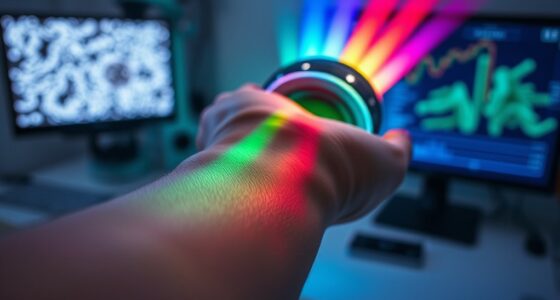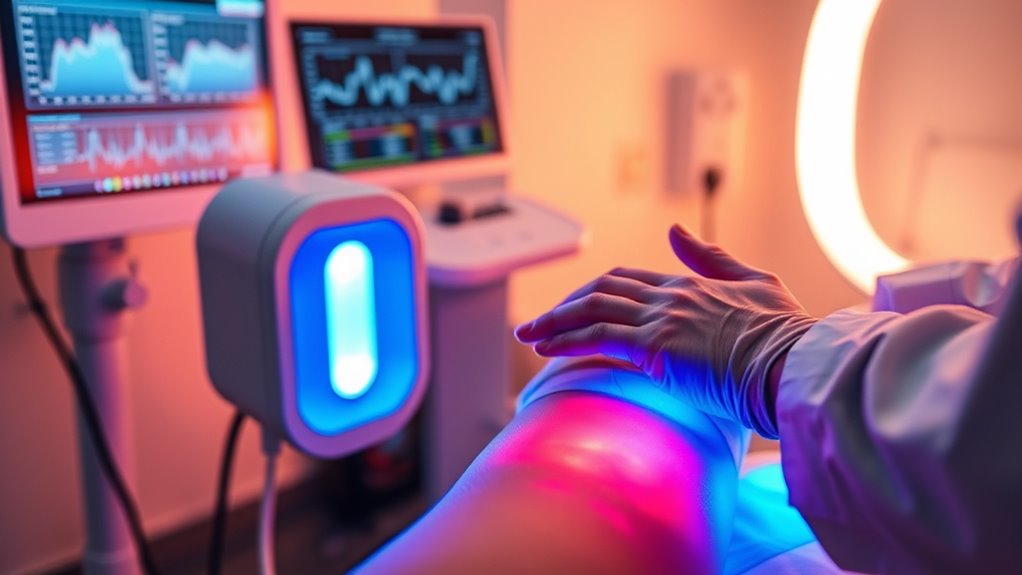

Light therapy uses specific red and near-infrared wavelengths to stimulate your cells, boosting energy production in mitochondria. This process helps reduce inflammation, promote tissue repair, and decrease pain signals naturally. Evidence shows that carefully designed protocols can improve pain relief and mobility without drugs or invasive procedures. If you’d like to discover how these mechanisms work and see the scientific support, there’s more to explore that could help you manage pain effectively.
Key Takeaways
- Light therapy uses specific wavelengths, mainly red or near-infrared, to penetrate tissues and stimulate cellular activity for pain relief.
- Photobiomodulation enhances mitochondrial function, increasing cellular energy and promoting tissue repair while reducing inflammation.
- Properly designed LED protocols, including wavelength, intensity, and duration, are essential for effective pain management.
- Clinical evidence shows that light therapy can significantly decrease pain levels and improve mobility in various conditions.
- As a non-invasive, drug-free treatment, light therapy integrates well into comprehensive pain management strategies with minimal risks.

Have you ever considered that a simple light could help ease your pain? It might sound surprising, but light therapy, especially through photobiomodulation applications, has gained recognition for its potential to reduce discomfort and promote healing. This approach involves exposing your skin to specific wavelengths of light, often delivered via LEDs, to stimulate cellular activity and trigger biological responses that alleviate pain. The key to its effectiveness lies in carefully designed LED therapy protocols, which specify the wavelength, intensity, and duration of treatment to optimize results. As you explore light therapy, understanding these protocols can help you appreciate how targeted light exposure can influence your body’s healing processes.
Photobiomodulation applications utilize various wavelengths, typically in the red or near-infrared spectrum, to penetrate tissues and activate cellular mechanisms. When you undergo LED therapy, the light photons are absorbed by mitochondria in your cells, boosting their energy production. This increase in cellular energy fosters tissue repair, reduces inflammation, and modulates pain signals. Unlike more invasive treatments, photobiomodulation offers a non-invasive, drug-free alternative that you can incorporate into your pain management routine. The beauty of LED therapy protocols is their flexibility—they can be tailored to your specific condition, whether you’re dealing with chronic back pain, joint discomfort, or nerve issues.
LED therapy uses specific wavelengths to boost cellular energy and promote healing naturally.
The protocols typically specify parameters such as wavelength—commonly between 630-850 nanometers—power density, and session length, ensuring you receive the right amount of light for effective results. For example, shorter sessions with specific wavelengths can target superficial tissues, while longer wavelengths penetrate deeper, addressing underlying issues. Consistency is vital; regular sessions aligned with established protocols can maximize pain relief and improve your overall function. Many clinical studies support the efficacy of these protocols, showing significant reductions in pain scores and enhanced mobility after a series of treatments.
As you consider incorporating light therapy into your pain relief strategy, it’s necessary to follow evidence-based LED therapy protocols to guarantee safety and effectiveness. Proper application not only maximizes benefits but also minimizes any potential risks. With the increasing availability of user-friendly light devices, you can explore this therapy at clinics or even at home, provided you adhere to proper guidelines. Keep in mind that while light therapy shows promising results, it’s best used as part of a comprehensive pain management plan, ideally under the guidance of a healthcare professional. Ultimately, the gentle power of light may offer you an effective, non-invasive way to manage pain and support your body’s natural healing processes.
Frequently Asked Questions
Can Light Therapy Replace Traditional Pain Medications?
Light therapy can’t fully replace traditional pain medications, but it can serve as a helpful alternative treatment for some. You might find it reduces pain and inflammation, offering a non-invasive option. Keep in mind, cost considerations vary, and it’s often used alongside medications rather than as a complete substitute. Always consult your healthcare provider to determine if light therapy fits your pain management plan, especially if you’re seeking alternatives.
How Soon Can I Expect Pain Relief After Starting Light Therapy?
You might feel pain relief within days, but don’t expect miracles overnight. The timing expectations vary wildly because individual variability plays a huge role. Some people notice rapid improvements, feeling almost reborn, while others see subtle changes over weeks. Stay patient and consistent—your body’s response to light therapy can be unpredictable, but with persistence, you’re more likely to experience meaningful relief sooner rather than later.
Are There Any Risks or Side Effects Associated With Light Therapy?
You might wonder about safety concerns and potential side effects of light therapy. Generally, it’s safe when used properly, but some people experience minor side effects like skin irritation, headaches, or eye discomfort. Always follow manufacturer guidelines and consult your healthcare provider, especially if you have eye conditions or skin sensitivities. Being cautious helps reduce risks and ensures you get the most benefit from the therapy.
Is Light Therapy Suitable for Chronic or Acute Pain?
You can use Photobiomodulation Therapy for both chronic and acute pain, as it’s a versatile pain management strategy. It helps reduce inflammation and promote healing, making it effective for ongoing chronic conditions and sudden injuries. However, consult your healthcare provider first to confirm it’s appropriate for your specific situation. In many cases, light therapy offers a safe, non-invasive option to complement your pain management plan.
What Types of Light Are Most Effective for Pain Relief?
You’ll find that red and near-infrared light are most effective for pain relief because their wavelength specificity allows deeper light penetration into tissues. This deeper penetration helps stimulate cellular repair and reduce inflammation. When choosing light therapy, look for devices that emit specific wavelengths in the 600-1000 nm range, as they maximize light penetration and therapeutic benefits, providing targeted relief for both acute and chronic pain conditions.
Conclusion
Imagine you’re struggling with chronic back pain. By trying light therapy, you could experience reduced inflammation and improved healing, just like Sarah did after her shoulder injury. This non-invasive treatment targets pain at its source, offering hope without drugs or surgery. While research is promising, it is crucial to consult a healthcare professional to see if light therapy suits your needs. Give it a shot—you might find relief you never thought possible.