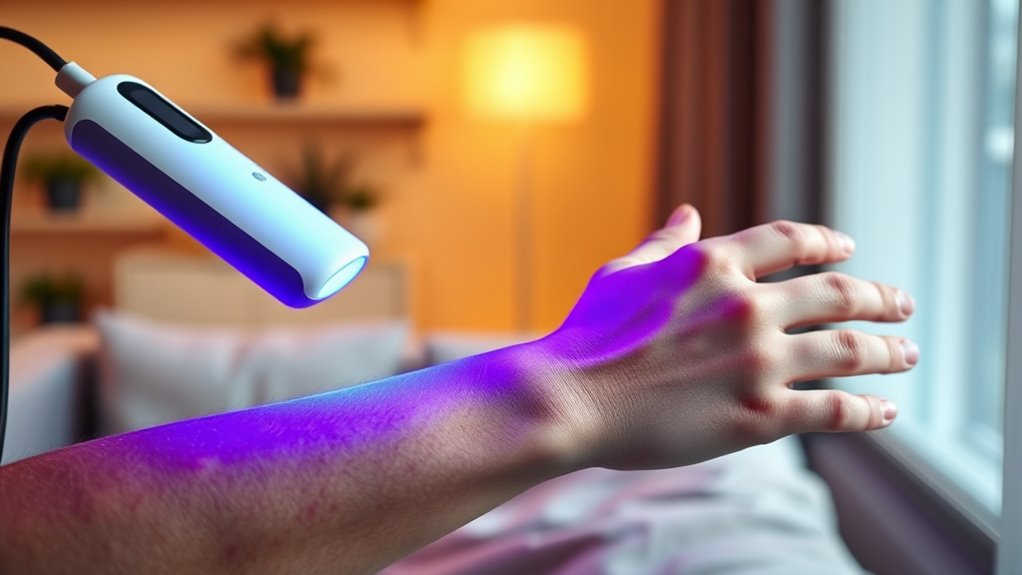
Light therapy for psoriasis uses controlled UV light to reduce inflammation, slow skin cell growth, and improve symptoms. It can lead to clearer skin and lessen plaques and scaling when done regularly under professional supervision. However, it’s important to manage side effects like skin burns and premature aging by following safety precautions. With proper guidance and monitoring, this non-invasive treatment offers promising results—learn more about how you can safely benefit from it.
Key Takeaways
- Light therapy can reduce psoriasis symptoms by decreasing inflammation and slowing skin cell growth through controlled UV exposure.
- Regular sessions with monitored UVB light can improve skin clarity and decrease plaques and scaling.
- Proper management and supervision are essential to minimize side effects like burns, premature aging, and skin cancer risks.
- Treatment plans are individualized, requiring careful dosing, frequency, and ongoing skin monitoring for safety and effectiveness.
- Post-therapy skin care and protective measures help prevent long-term skin damage and enhance treatment benefits.
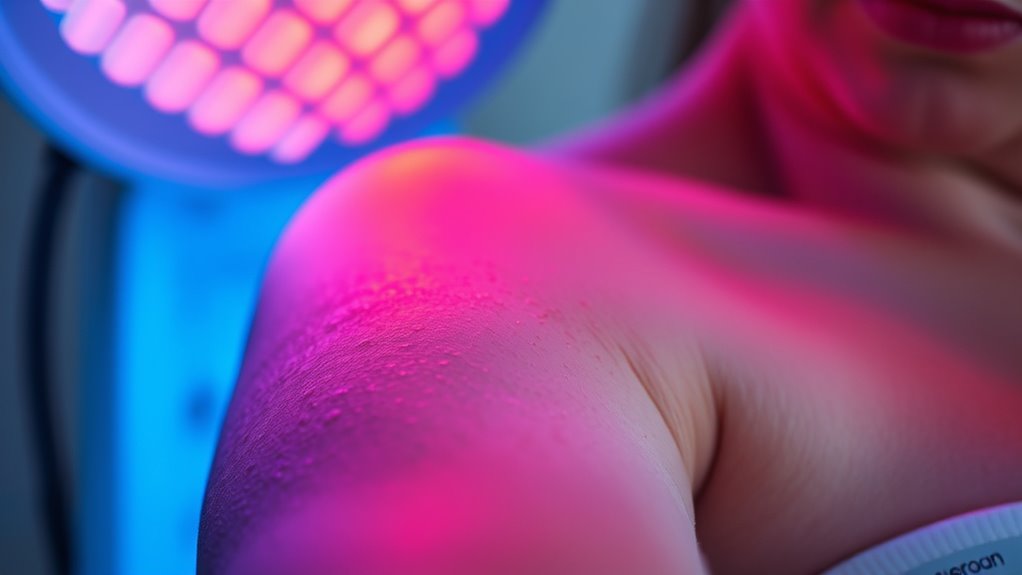
Have you considered light therapy as a treatment option for psoriasis? Many people with this condition find relief through controlled UV exposure, which can reduce inflammation and slow the rapid growth of skin cells. Light therapy, also known as phototherapy, involves exposing your skin to specific wavelengths of ultraviolet light in a safe and monitored setting. It’s often recommended when topical treatments and other medications haven’t provided sufficient results. The goal is to harness the healing properties of UV rays while minimizing potential side effects.
Considering light therapy for psoriasis may help reduce inflammation and improve skin health safely.
One of the main benefits of light therapy is its ability to deliver targeted UV exposure, which can markedly improve psoriasis symptoms. Regular sessions can lead to clearer skin and a reduction in plaques and scaling. But it’s essential to understand that, like any medical treatment, light therapy requires careful management, especially in terms of side effect management. Overexposure to UV rays can cause skin burns, premature aging, or increase the risk of skin cancer. That’s why professional supervision is vital to guarantee you’re receiving the right dosage and frequency of treatment. Your healthcare provider will tailor your sessions to your skin type and the severity of your psoriasis, which helps keep side effects at bay.
During treatment, you’ll likely undergo multiple sessions, often two or three times a week. Each session is carefully controlled to avoid excessive UV exposure. The equipment used in phototherapy delivers narrow-band ultraviolet B (UVB) light, which has been shown to be effective while reducing the risk of side effects compared to broader spectrum UV light. Consistent monitoring allows your provider to adjust the treatment plan as needed, minimizing adverse effects and enhancing benefits. It’s also important to communicate any skin changes or discomfort you experience during therapy, so your provider can modify the approach accordingly.
While light therapy can be highly effective, it’s not without risks, which makes side effect management a vital part of the process. Protecting your skin after sessions with moisturizers and avoiding additional UV exposure from sunlight helps prevent burns and irritation. Wearing protective clothing and sunglasses during and after treatments can also protect sensitive areas. Your provider may recommend additional measures to prevent long-term skin damage, such as limiting exposure time and using specific UV wavelengths.
Frequently Asked Questions
Can Light Therapy Cure Psoriasis Permanently?
Light therapy can’t cure psoriasis permanently, but it can considerably improve your symptoms. Phototherapy effectiveness varies, and some people achieve long-term remission, while others may need ongoing treatments. You should discuss with your dermatologist whether light therapy suits your condition and understand that maintaining remission often requires additional therapies or lifestyle changes. Remember, while it helps manage psoriasis, it doesn’t guarantee a permanent cure.
How Long Does Each Light Therapy Session Last?
You might worry about how long each light therapy session lasts, but typically, sessions are quite manageable. Usually, each session takes about 10 to 20 minutes, depending on your specific treatment plan. You’ll need treatment sessions several times a week initially, then possibly less often as your condition improves. This routine allows you to fit therapy into your schedule comfortably while maximizing its benefits for psoriasis management.
Are There Any Age Restrictions for Light Therapy?
You should know that age restrictions for light therapy depend on individual cases and medical advice. Pediatric considerations are vital, as young children may require special protocols or alternative treatments. Doctors typically evaluate the child’s skin condition and overall health before recommending light therapy. If you’re considering this for a child or teenager, consult a dermatologist to make certain it’s safe and appropriate, considering any specific age-related guidelines.
Can Light Therapy Be Combined With Other Treatments?
Yes, you can combine light therapy with other treatments for psoriasis. This approach, known as combination treatment, often enhances overall effectiveness. You might integrate topical medications, systemic drugs, or phototherapy sessions to better control symptoms. Always discuss therapy integration with your dermatologist to ensure safety and optimize results, as some treatments may interact or require specific timing for the best outcome.
What Are Potential Side Effects of Light Therapy?
Did you know that about 10-20% of people experience side effects from light therapy? You might notice increased skin sensitivity or redness after UV exposure. While generally safe, some may develop dry skin, itching, or burns if not properly overseen. It’s important to follow your healthcare provider’s guidance to minimize these risks and ensure safe, effective treatment.
Conclusion
As you explore light therapy for psoriasis, you might find it’s more than just a coincidence that many patients see improvement. Sometimes, the smallest changes—like a new treatment—can unexpectedly lead to relief and renewed confidence. Keep an open mind and consider all options, because what works for one person could be the breakthrough you’ve been waiting for. After all, sometimes, healing begins when you least expect it.