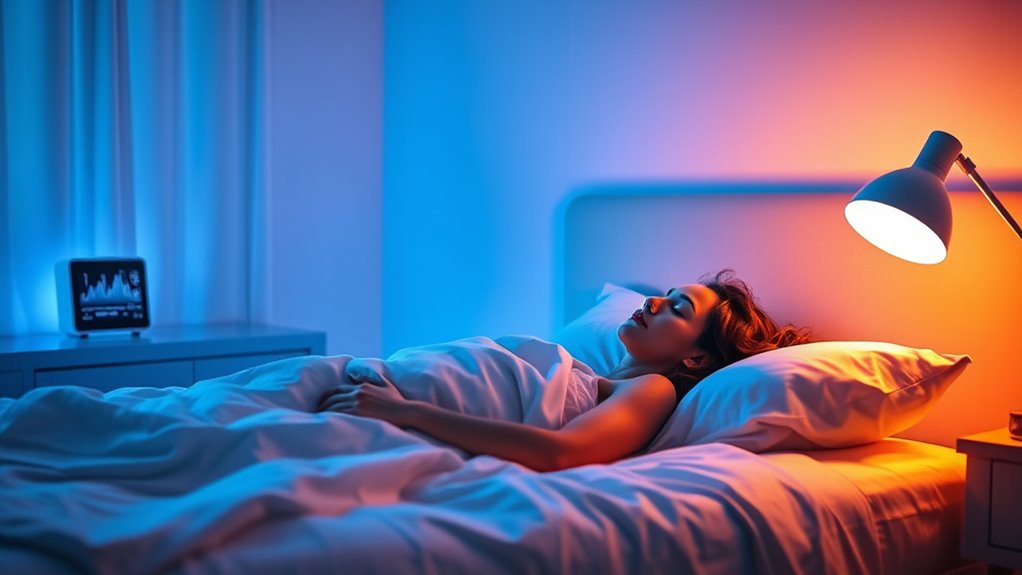

Light therapy helps you balance melatonin levels and synchronize your circadian rhythms by exposing you to bright, natural-like light at key times, especially in the morning. This signals to your brain that it’s daytime, suppressing melatonin and boosting alertness. Regular sessions can improve sleep quality and elevate mood during darker months or for sleep disorders. Keep exploring how proper timing and consistent use can optimize your sleep and overall well-being.
Key Takeaways
- Morning light therapy suppresses melatonin production, helping to regulate sleep-wake cycles and improve alertness.
- Proper timing of light exposure aligns circadian rhythms with the natural day-night cycle.
- Bright light therapy enhances sleep quality by resetting internal clocks disrupted during darker months.
- Controlled light exposure prevents melatonin overproduction during daytime, promoting better sleep at night.
- Regular use of light therapy supports the balance of melatonin levels, improving mood and overall sleep health.
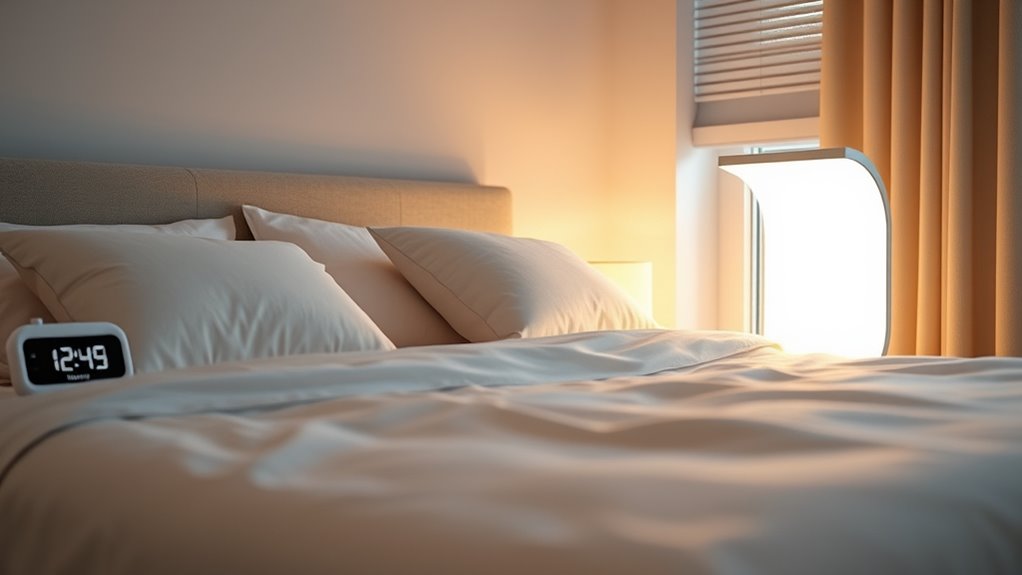
Have you ever wondered how exposure to light influences your sleep patterns? The way your body responds to light, especially natural sunlight, plays an essential role in regulating your circadian rhythms and melatonin production. When these rhythms are out of sync, you might find yourself feeling tired during the day or struggling to fall asleep at night. This is where understanding light therapy becomes vital, particularly for addressing issues like Seasonal Affective Disorder (SAD). Seasonal Affective is a type of depression that occurs at a specific time of year, usually during the fall and winter months when daylight hours are shorter. For many, the reduced exposure to sunlight disrupts their circadian rhythms, leading to feelings of fatigue, low mood, and sleep difficulties.
Light exposure influences sleep, circadian rhythms, and mood, especially during shorter days and darker seasons.
Phototherapy benefits come into play as a targeted way to mimic natural sunlight, helping to reset your internal clock. During phototherapy sessions, you sit near a light box that emits a bright, full-spectrum light, typically in the range of 10,000 lux. This exposure signals your brain that it’s daytime, which suppresses melatonin production and boosts alertness. By doing so, it helps realign your circadian rhythms, making it easier to fall asleep at night and wake up feeling more refreshed. If you’re battling seasonal affective symptoms, regular light therapy sessions can considerably improve your mood and sleep quality, restoring a sense of normalcy during the darker months.
Using light therapy for SAD isn’t just about mood; it’s also about balancing your sleep-wake cycle. When you’re exposed to bright light each morning, your body receives consistent cues about when to be awake and alert, which reduces the tendency to oversleep or suffer from irregular sleep patterns. It’s important to note that the timing of light therapy matters—morning sessions tend to be most effective for resetting your circadian rhythm. Additionally, phototherapy benefits extend beyond SAD. People with delayed sleep phase syndrome or those experiencing jet lag also find relief through controlled light exposure, which helps synchronize their internal clocks with their environment.
In essence, light therapy offers a practical, non-invasive way to help your body maintain its natural rhythms, especially during seasons or circumstances when sunlight is scarce. By harnessing the power of light, you can improve your sleep quality, elevate your mood, and restore balance to your circadian system. As you incorporate phototherapy into your routine, it’s a promising step toward better sleep and overall well-being, especially if you’re affected by seasonal changes or sleep disruptions linked to light exposure.
Frequently Asked Questions
Can Light Therapy Help With Seasonal Affective Disorder Year-Round?
Yes, light therapy benefits can help you manage seasonal affective disorder year-round. By using a lightbox daily, you boost your mood regulation and reduce symptoms regardless of the season. It’s effective because it mimics natural sunlight, helping reset your circadian rhythms and balance melatonin production. Consistent use can improve your overall well-being, making it a valuable tool for maintaining mood stability throughout the year.
What Types of Light Are Most Effective for Circadian Rhythm Adjustment?
Think of your circadian rhythm as a delicate dance that needs the right music to stay in sync. Blue light is most effective for adjusting your internal clock, especially in the morning, because it mimics natural daylight. Red light, on the other hand, is gentler and useful in the evening for winding down without disrupting melatonin. Incorporate these lights thoughtfully to help regulate your sleep-wake cycle effectively.
Are There Any Long-Term Risks Associated With Light Therapy?
Long-term safety of light therapy is generally good, but you should be aware of potential side effects like eye strain, headaches, or insomnia if overused. While serious risks are rare, it’s best to adhere to recommended guidelines and consult a healthcare professional for personalized advice. Regular monitoring ensures you enjoy benefits without unintended effects, helping you maintain healthy circadian rhythms safely over time.
How Does Light Therapy Interact With Sleep Medications?
Think of light therapy and sleep medications like a tightrope walk—you need balance. Light therapy can boost alertness, but it might interfere with how your medications work, leading to drug interactions. Always consider dosage considerations, as bright light could amplify medication effects or cause side effects. Consult your healthcare provider to coordinate timing and intensity, ensuring both treatments complement each other safely and effectively.
Can Light Therapy Improve Sleep Quality in Shift Workers?
Yes, light therapy can improve your sleep quality as a shift worker by aiding work schedule adaptation and regulating melatonin production. By exposing yourself to bright light at strategic times, you help reset your circadian rhythms, making it easier to fall asleep and stay alert during your shifts. Consistent use of light therapy supports better sleep patterns, combatting fatigue and promoting overall well-being despite irregular work hours.
Conclusion
By harnessing light therapy to balance melatonin and circadian rhythms, you hold the power to transform your sleep. Some believe it’s a miracle cure, capable of resetting your internal clock and restoring restful nights. While not a magic solution for everyone, many find hope in its potential. Embrace the possibility that controlling your light exposure could release better sleep, brighter mornings, and a healthier life—proving that sometimes, small changes can truly make a world of difference.