To get the best results with your red light panel, stand about 6-12 inches away for targeted skin treatments and 12-24 inches for broader wellness benefits, depending on your panel’s size and strength. Keep in mind that higher intensity panels require more distance to prevent discomfort. Always follow the manufacturer’s recommendations and monitor your skin and comfort levels. If you want to learn how to optimize your setup, continue exploring these helpful tips.
Key Takeaways
- Follow manufacturer guidelines for recommended distance based on panel size and power.
- For small panels, stand 6-12 inches away; for larger panels, 18-24 inches is optimal.
- Keep the face 6-12 inches from the panel for targeted skin therapy.
- Adjust distance to balance light intensity and comfort, avoiding overheating or dimness.
- Use protective goggles and monitor skin response to ensure safe, effective treatment.
How Does Red Light Therapy Work and What Are Its Benefits?
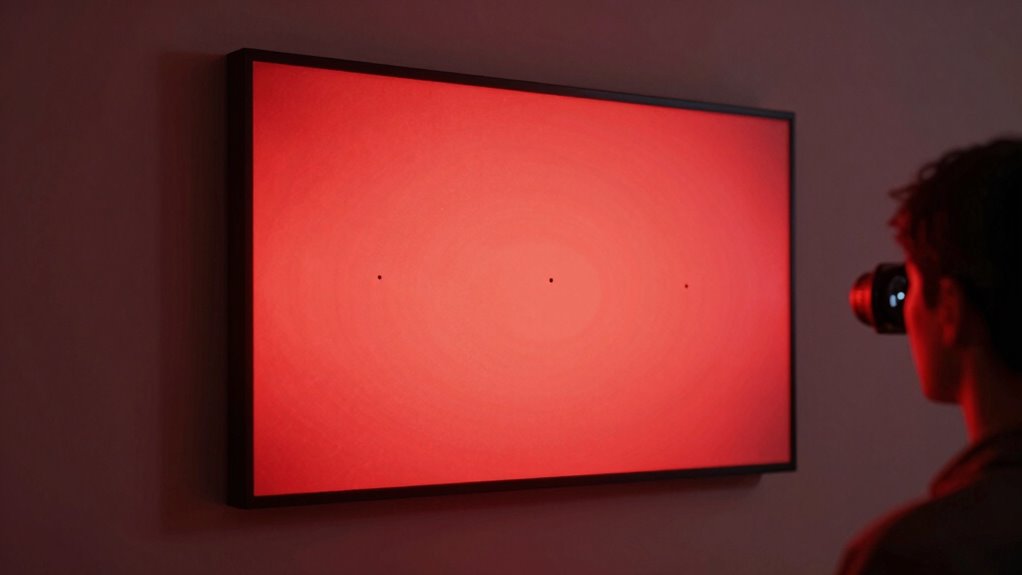
Red light therapy works by using specific wavelengths of red and near-infrared light to penetrate the skin and stimulate cellular activity. These therapy mechanisms boost your cells’ energy production, enhancing healing and reducing inflammation. As a result, you may experience various red light benefits, such as improved skin health, faster recovery from injuries, and pain relief. The light creates a photobiomodulation effect, encouraging your cells to regenerate more efficiently. This process is non-invasive and painless, making it a popular option for many seeking natural health improvements. Additionally, research indicates that sound vibrations are believed to enhance cellular regeneration and overall health. By targeting your skin and underlying tissues, red light therapy activates your body’s natural healing responses, providing a safe way to support overall wellness. Understanding these therapy mechanisms helps you appreciate how red light benefits can positively impact your health. Moreover, the penetration depth of the light ensures effective treatment at various tissue levels, maximizing the therapy’s efficacy. It is also important to recognize how cellular response plays a role in the overall effectiveness of the treatment. Recent studies also suggest that biological mechanisms are integral to optimizing treatment outcomes, especially when combined with other holistic approaches like natural healing methods.
What Factors Affect How Close You Should Stand to a Red Light Panel?
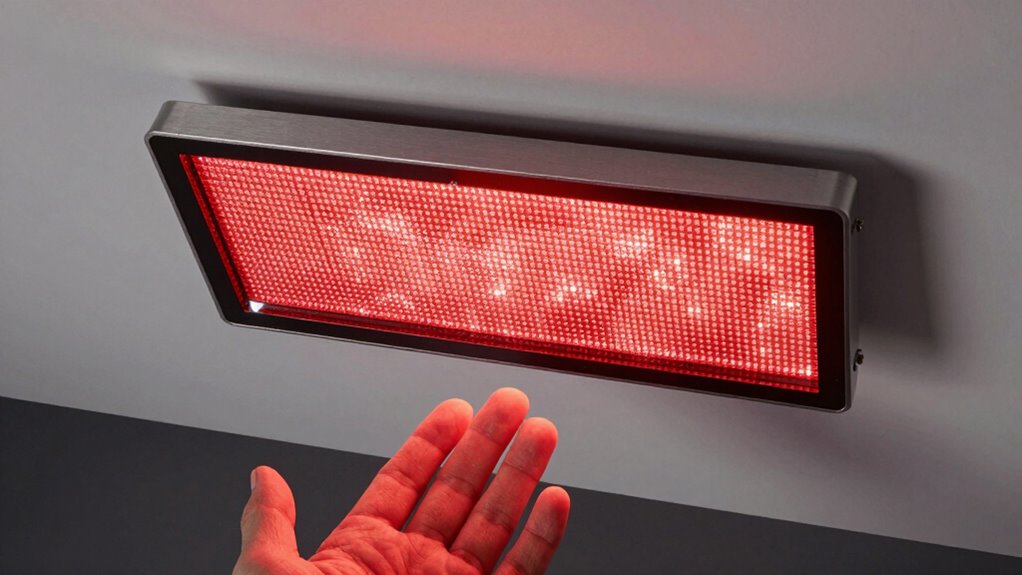
Your distance from a red light panel depends on several key factors. Light intensity levels, your sensitivity, and how long you expose yourself all influence the ideal position. Understanding these elements helps you find the safest and most effective spot for your therapy. For example, medical alert wearables can offer guidance on safe exposure levels and positioning.
Light Intensity Levels
The brightness of a red light panel directly influences how close you should stand to it. Higher light intensity means you need to maintain a greater exposure distance to avoid discomfort or overexposure. If the panel emits intense light, standing too close can cause eye strain, headaches, or skin sensitivity. Conversely, lower light intensity levels allow you to get nearer without adverse effects. Adjusting your distance based on the light’s intensity ensures you receive the benefits of red light therapy safely and effectively. Always follow manufacturer guidelines for recommended exposure distances, especially when dealing with powerful panels. Remember, the goal is to balance effective treatment with comfort, so understanding how light intensity impacts your exposure distance is essential. Additionally, considering yarn weight and stitch type can influence how you use light in activities like knitting, ensuring proper visibility and reducing eye strain. Proper light positioning also plays a crucial role in optimizing safety and effectiveness during treatment, and being mindful of light exposure duration can help prevent overstimulation or fatigue. Being aware of eye safety tips is essential to protect your vision while using bright red light panels. For optimal results, it’s important to also consider ambient lighting conditions, as they can affect how you perceive and tolerate the light intensity.
User Sensitivity Factors
Several factors influence how close you should stand to a red light panel, especially since individual sensitivities vary widely. Your skin sensitivity plays a role; if you have delicate or easily irritated skin, maintaining a greater distance can help prevent discomfort or irritation. Eye protection is also essential—if your eyes are more sensitive to bright or flickering lights, standing farther away reduces strain and potential eye fatigue. Age, existing skin conditions, and overall health can further impact your comfort level. Some people may tolerate closer proximity without issues, while others need more distance for safety and comfort. Paying attention to how your body reacts and adjusting your distance accordingly ensures a safer, more comfortable experience with red light therapy. Additionally, understanding light intensity levels helps you determine the appropriate distance to avoid overstimulation or discomfort. Recognizing individual sensitivity factors can also guide you in customizing your exposure for optimal safety and effectiveness. Being aware of tolerance thresholds can help you set personalized safety limits and prevent overstimulation. Adjusting your exposure based on personal feedback ensures a safe and comfortable red light therapy session. For optimal safety, it is also advisable to consult medical professionals if you have underlying health concerns that might affect your response to light therapy.
Duration of Exposure
The duration of exposure to a red light panel directly impacts how close you should stand, as longer sessions can increase the risk of discomfort or overstimulation if you’re too near or exposed for too long. When considering light absorption and skin penetration, shorter sessions minimize the chance of skin irritation or unwanted effects. Extended exposure allows more light to penetrate deeper into your skin, which can be beneficial but also raises safety concerns if not carefully managed. To optimize benefits and safety, start with brief sessions and gradually increase duration, adjusting your distance accordingly. Remember, the longer your exposure, the more important it becomes to monitor your body’s responses and avoid standing too close for extended periods, reducing potential overstimulation or adverse effects. Additionally, understanding light safety guidelines can help you make informed decisions about exposure duration and distance. Being mindful of exposure limits ensures you maintain a safe and effective light therapy experience. Recognizing recommended exposure durations can also help prevent overexposure and promote safe usage habits. Awareness of individual sensitivity can further tailor your session length and proximity to optimize safety. Furthermore, paying attention to proper positioning techniques can enhance safety and effectiveness during your sessions.
What Are the Recommended Distances for Different Red Light Panels?
Different red light panels require specific distances to guarantee safe and effective use. Proper positioning ensures maximum light penetration while maintaining safety considerations. The right distance varies depending on the panel’s power and size. Here are general recommendations:
Proper distance varies by panel size and power for safe, effective red light therapy.
- Small panels (up to 6 inches): 6-12 inches away for targeted therapy. Light penetration is more precise at closer distances but requires careful attention to avoid overexposure. Adjusting distance based on light intensity helps optimize treatment outcomes. Additionally, understanding light penetration depth can assist in customizing your treatment plan effectively. Knowing how light energy disperses helps users achieve better results with minimal risk.
- Medium panels (6-12 inches): 12-18 inches for balanced coverage.
- Large panels (12-24 inches): 18-24 inches to avoid overexposure.
- High-intensity panels: 24-36 inches to prevent light overstimulation.
Adjusting your distance based on these guidelines helps optimize light penetration without risking safety. Keep in mind, closer distances increase light intensity, so always prioritize safety considerations and follow manufacturer recommendations. Proper distance ensures effective therapy without unnecessary risks. Understanding light intensity is crucial for safe and effective treatment.
How Can You Adjust Your Position to Meet Your Therapy Goals?
To get the most out of your red light therapy, you should consider adjusting your distance based on your goals. Standing closer can increase the treatment’s intensity, while moving farther away might suit your comfort. Finding the right balance helps you meet both your effectiveness and comfort needs.
Optimal Distance for Effectiveness
Adjusting your distance from a red light panel is crucial for maximizing its therapeutic benefits. The ideal distance depends on your goals and the panel’s intensity. To enhance effectiveness, consider how light reflection and panel placement influence your treatment. Here are four tips:
- Keep your face about 6-12 inches from the panel for targeted skin therapy.
- Increase distance to 16-24 inches for broader, overall benefits.
- Adjust based on panel power — more intense panels require more distance.
- Position the panel to minimize light reflection on surrounding surfaces, ensuring direct exposure.
Finding the right distance helps you meet your therapy goals while preventing discomfort. Remember, proper panel placement and maintaining a consistent distance are key to getting the most from your red light therapy.
Adjusting for Comfort and Goals
Finding the right position for your red light therapy sessions means aligning your comfort with your goals. If you want deeper light penetration for targeted areas, you might stand closer, but always prioritize skin safety to avoid irritation. For broader coverage or general wellness, increasing the distance can still deliver effective light penetration while enhancing comfort. Adjust your stance based on your specific goals—closer for intense treatment, farther for relaxation or skin health. Keep in mind that maintaining a comfortable position helps you stay consistent with your routine. Always listen to your skin; if you notice any discomfort, reassess your distance. Balancing effective light penetration with skin safety ensures you get the most benefit from your therapy sessions without risking irritation.
How Do You Know If You’re Standing Too Close or Too Far?
You can tell if you’re standing too close or too far by paying attention to how the panel looks and feels. If you’re too close, you might notice excessive heat, discomfort, or skin sensation from light penetration and absorption. If you’re too far, the light may seem dim, and you might not experience the desired benefits. To gauge your distance:
- Check for skin warmth or discomfort, indicating you’re too close.
- Observe if the light appears weak or less effective, meaning you’re too far.
- Notice if your skin absorbs the light unevenly, which suggests improper distance.
- Ensure the light feels comfortable without any overpowering sensation, confirming ideal positioning.
Maintaining proper distance helps maximize benefits without risking skin irritation or ineffective exposure.
Tips for Safely and Effectively Positioning Yourself During Sessions
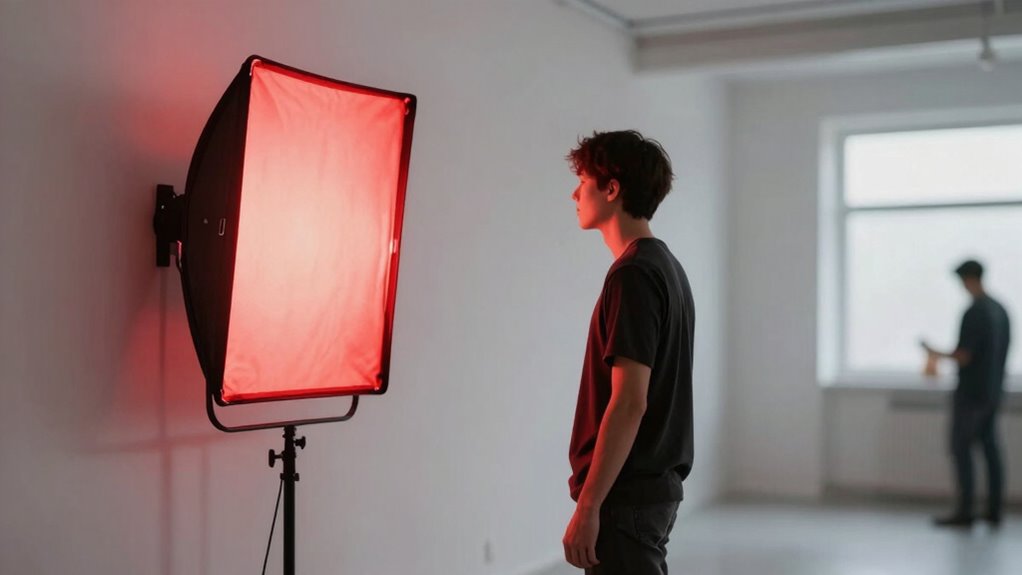
Positioning yourself correctly during a red light therapy session guarantees you receive maximum benefits safely. To optimize light penetration, verify you’re standing at the recommended distance based on the panel’s calibration. Proper placement allows the light to reach your skin effectively without causing discomfort or diminishing treatment efficacy. Always check that your panel is calibrated correctly, as this influences the intensity and distribution of light, making positioning more predictable. Keep your body aligned with the panel to avoid shadows that could hinder light absorption. Use a timer to maintain consistent exposure, and wear protective goggles if recommended. Remember, consistent positioning and understanding your device’s calibration help you achieve safe, effective results while minimizing risks.
Common Mistakes to Avoid When Setting Your Distance
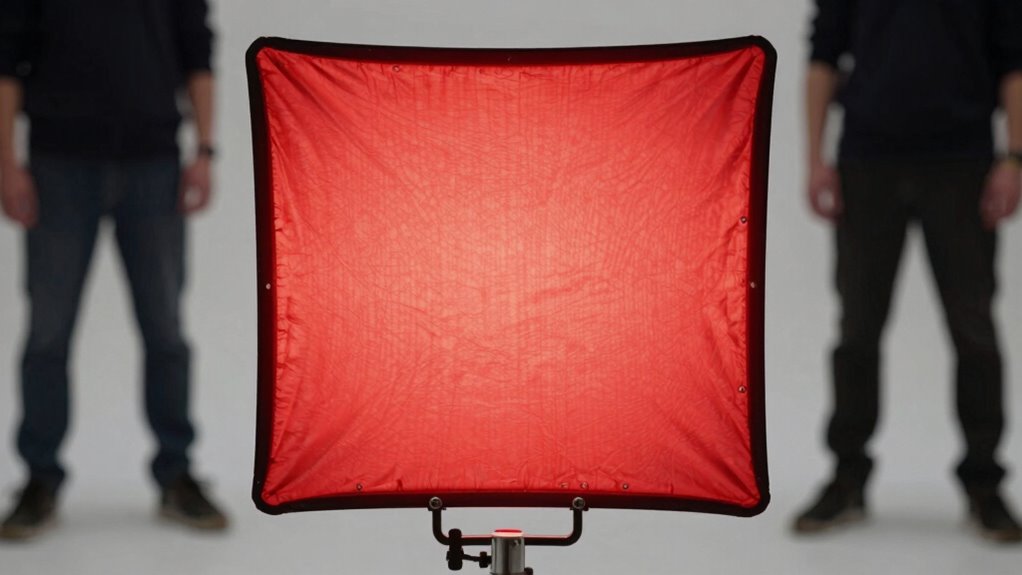
One common mistake is setting the panel too close, which can cause discomfort, increase the risk of skin irritation, and reduce treatment effectiveness. To avoid this, pay attention to lighting angles, ensuring the panel is positioned correctly for ideal light absorption. Additionally, neglecting regular panel maintenance can diminish light output, leading you to adjust distances unnecessarily. Here are some mistakes to watch out for:
- Ignoring recommended lighting angles—this can result in uneven light distribution.
- Placing the panel too close—causing discomfort or skin issues.
- Not maintaining the panel—dust or debris can block light and reduce effectiveness.
- Overlooking proper distance adjustments based on panel specifications—leading to ineffective treatments.
Being mindful of these pitfalls helps you set the right distance and get the most benefit from your red light therapy.
FAQs: How Do I Find the Right Distance for My Red Light Panel?
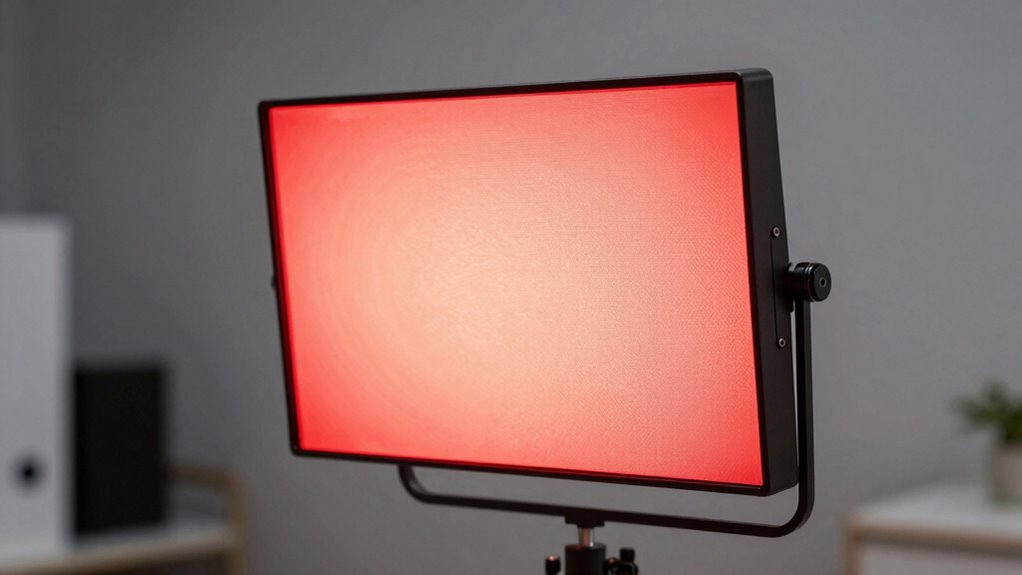
Finding the right distance for your red light panel guarantees you get the most effective treatment without discomfort or reduced results. To achieve *maximum* light penetration, start by placing the panel at the recommended distance specified by the manufacturer, usually between 6 to 24 inches from your skin. Adjust panel placement based on your comfort and the intensity of light exposure. If the light feels too intense or causes discomfort, move the panel slightly farther away. Conversely, if you don’t notice any effects, try moving it closer. Remember, the goal is to balance sufficient light penetration with comfort. Regularly evaluate your experience and adjust your panel placement accordingly to ensure you’re getting the best results from your red light therapy.
Frequently Asked Questions
Can I Use Red Light Therapy While Lying Down?
Yes, you can use red light therapy while lying down. Just make certain the red light intensity is appropriate and the treatment duration is suitable for your needs. Lying down allows for a relaxed position, maximizing comfort and exposure. Keep the light at a consistent distance to ensure even coverage. Follow manufacturer guidelines on treatment duration to avoid overexposure, and consult a professional if you’re uncertain about your specific condition.
How Long Should I Stay at the Optimal Distance?
You should stay at the ideal distance for about 10-20 minutes per session, ensuring distance consistency each time. This helps maximize the therapy’s benefits while avoiding overexposure. Keep the panel at the recommended distance, typically around 6-12 inches from your skin, and stick to the same session duration. Consistency in distance and timing optimizes results, so don’t exceed the suggested time.
Does the Distance Vary for Face Versus Body Treatments?
A stitch in time saves nine, so knowing the right distance matters. When it comes to face versus body treatments, the distance varies to optimize light intensity and treatment coverage. For your face, stand closer but still within safe limits to guarantee effective results without overexposure. For larger body areas, you can increase the distance to cover more surface area evenly. Always follow specific device guidelines for best results and safety.
Are There Any Risks of Standing Too Close?
Standing too close to a red light panel can pose risks, especially if the light intensity is high or your skin sensitivity is low. You may experience discomfort, redness, or irritation due to prolonged exposure at close range. To stay safe, maintain the recommended distance, typically a few inches away, ensuring your skin isn’t overly exposed to the intense light. Always follow manufacturer guidelines for ideal and safe results.
How Often Should I Adjust My Position During Sessions?
You should make posture adjustments as needed during your sessions to stay comfortable and avoid strain. It’s best to adjust your position periodically, about every few minutes or whenever you notice discomfort. Incorporate these posture adjustments regularly to prevent fatigue and ensure effective exposure. As for session frequency, follow your provider’s recommendations, typically 3-5 times per week, to maximize benefits without overdoing it.
Conclusion
Finding the right distance from your red light panel is like tuning a guitar string—you need just the right tension to produce perfect sound. Too close, and you risk discomfort; too far, and you might not see results. Start with recommended distances, listen to your body’s signals, and adjust accordingly. When you get it right, you’ll feel the benefits resonate, much like a beautifully played note that fills the room.