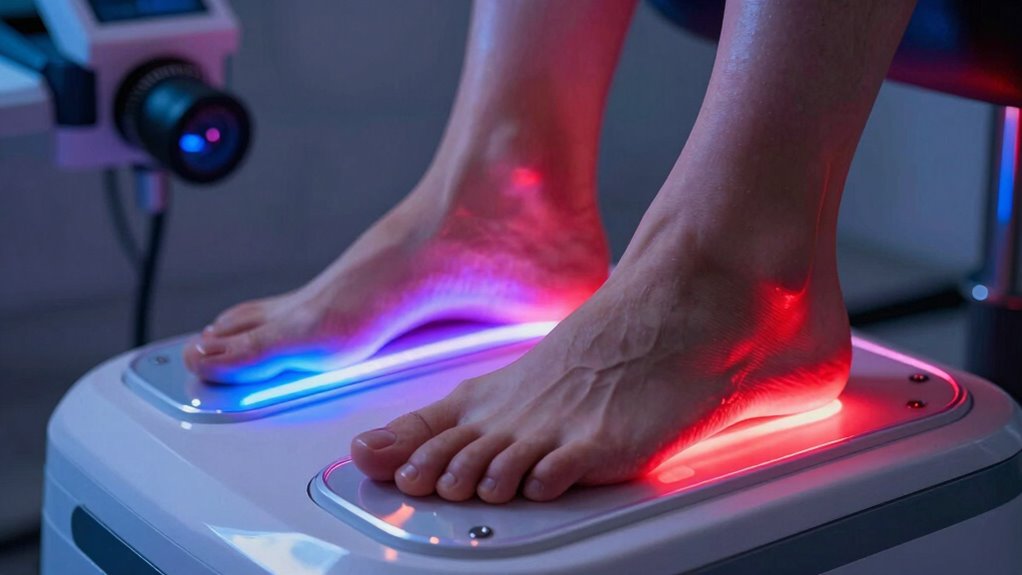

You need a different setup for light therapy on feet and ankles because their size, shape, and tissue sensitivity are unique. Proper calibration guarantees the right light intensity, wavelength, and placement, which helps prevent discomfort or damage. Since bones and tissues absorb light differently, tailored adjustments are essential for safety and effectiveness. Getting this setup right is vital, and more details about optimizing your treatment await if you continue exploring.
Key Takeaways
- Feet and ankles have unique size, shape, and sensitivity requiring specialized equipment adjustments.
- Proper calibration ensures effective light penetration tailored to the thinner, sensitive skin of feet and ankles.
- Standard devices may deliver insufficient or excessive light, risking discomfort or ineffective treatment.
- Customized setup accounts for tissue differences, preventing overexposure and skin irritation.
- Precise calibration maintains safety, consistency, and optimal therapeutic outcomes for sensitive areas.
When it comes to using light therapy for your feet and ankles, one size definitely doesn’t fit all. These areas require a different setup compared to other parts of the body because of their unique size, shape, and sensitivity. Properly targeting these areas means adjusting the equipment to ensure effective treatment safety. You can’t just use a standard device designed for larger body parts; the light intensity, wavelength, and placement need to be carefully calibrated. If the equipment isn’t properly calibrated, you risk delivering insufficient or excessive light, which could diminish benefits or cause discomfort. Ensuring correct calibration is essential to optimize results and maintain safety standards, especially since the skin on your feet and ankles can be more sensitive and prone to irritation.
The setup for foot and ankle light therapy isn’t just about size adjustments—it’s also about understanding the specific needs of these tissues. You need to consider the thickness of the skin, the presence of bones, and the underlying tissues. These factors influence how light penetrates and how deeply the therapy reaches. Equipment designed specifically for feet and ankles should allow for precise targeting, so you get the right dose of light without risking overexposure. This is why tailored equipment calibration is critical. It guarantees that you’re applying the therapy at safe, therapeutic levels, reducing the chance of adverse effects like burns or skin irritation. Additionally, understanding how light penetration varies in different tissues helps in customizing the treatment for optimal efficacy. Proper calibration also involves understanding tissue sensitivity, which can differ across individuals and areas. Regularly consulting professional guidelines can help ensure your setup remains safe and effective. Moreover, staying informed about recent innovations in light therapy technology can assist in achieving better treatment outcomes. Proper calibration procedures] play a vital role in maintaining the safety and consistency of light therapy sessions. Properly calibrated devices help prevent accidental overexposure, especially in sensitive areas like the feet and ankles.
foot and ankle light therapy device
As an affiliate, we earn on qualifying purchases.
As an affiliate, we earn on qualifying purchases.
Frequently Asked Questions
Can I Use the Same Light Therapy Device for Feet and Ankles?
You shouldn’t use the same light therapy device for your feet and ankles. Foot health and ankle pain require specific treatment areas, and devices designed for other parts of the body might not deliver effective or safe results. Using a device tailored for feet ensures you target the right spots with proper intensity. For maximum relief from foot and ankle issues, invest in a setup designed specifically for those areas.
How Long Should Each Session Last for Effective Results?
For effective results, aim for a session duration of about 15 to 20 minutes for your feet and ankles. This helps optimize effectiveness without overexposing your skin. Keep in mind, consistency is key—use the light therapy device daily or as recommended. If you notice any discomfort or unusual symptoms, stop and consult a healthcare professional. Following these guidelines guarantees you get the best benefits from your treatment.
Are There Specific Wavelengths Best for Foot and Ankle Therapy?
Did you know that wavelengths between 630-670nm are most effective for foot pain relief? For foot and ankle therapy, wavelength specificity is essential, as different wavelengths penetrate tissues differently. Red and near-infrared light are ideal choices, providing deeper tissue healing and pain reduction. Using the right wavelengths guarantees you get targeted, effective results, making your therapy sessions more efficient and comfortable.
Is Light Therapy Safe for All Skin Types and Conditions?
Light therapy is generally safe for most skin types, but you should be cautious if you have sensitive skin or a history of allergic reactions. You might experience skin sensitivity or irritation, especially with prolonged use. Always start with shorter sessions and monitor your skin’s response. If you notice redness, burning, or other reactions, stop treatment and consult a healthcare professional to make certain it’s appropriate for your specific skin condition.
How Often Should I Perform Light Therapy Sessions?
You should perform light therapy sessions for your feet and ankles 3-5 times weekly, depending on your condition. Make certain proper foot positioning to maximize exposure and comfort during each session. Also, check that your device is correctly calibrated for your specific needs. Consistency is key, so follow your healthcare provider’s guidance, and adjust frequency as advised to achieve best results safely.
Conclusion
So, if you think one size fits all with light therapy for your feet and ankles, think again. You’re not just tweaking a gadget; you’re revealing a power that could outshine the sun itself. A tailored setup guarantees you target those stubborn spots effectively, maximizing relief and healing. Don’t settle for a cookie-cutter approach—your feet deserve a setup as unique as your journey to recovery. When you get it right, the results will be nothing short of extraordinary.