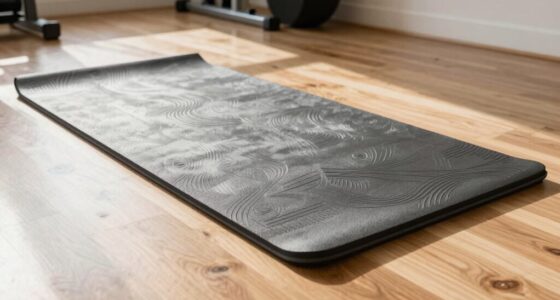
To make your home knee workouts less random, create a structured routine with targeted exercises that focus on stabilizing muscles like your quads, hamstrings, and calves. Incorporate balancing moves, stability tools, and variations to challenge your proprioception and prevent imbalances. Gradually increase intensity and include warm-ups, cool-downs, and core exercises. Consistently following this plan boosts joint stability, prevents injuries, and turns your workouts into effective, proactive sessions—stay tuned to learn how to optimize your routine even further.

Get wellness gear delivered free with Prime
- Fast, free delivery on millions of items
- Prime Video, Amazon Music and more included
- Member-only deals all year
Key Takeaways
- Develop a structured, progressive plan targeting key knee-supporting muscles for consistent, effective workouts.
- Incorporate varied exercises like balance drills, step-ups, and resistance training to prevent routine monotony.
- Warm-up and cool-down routines improve flexibility and reduce injury risk during home sessions.
- Gradually increase exercise intensity and complexity to enhance stability and avoid plateaus.
- Focus on proper technique and small adjustments for optimal joint support and injury prevention.
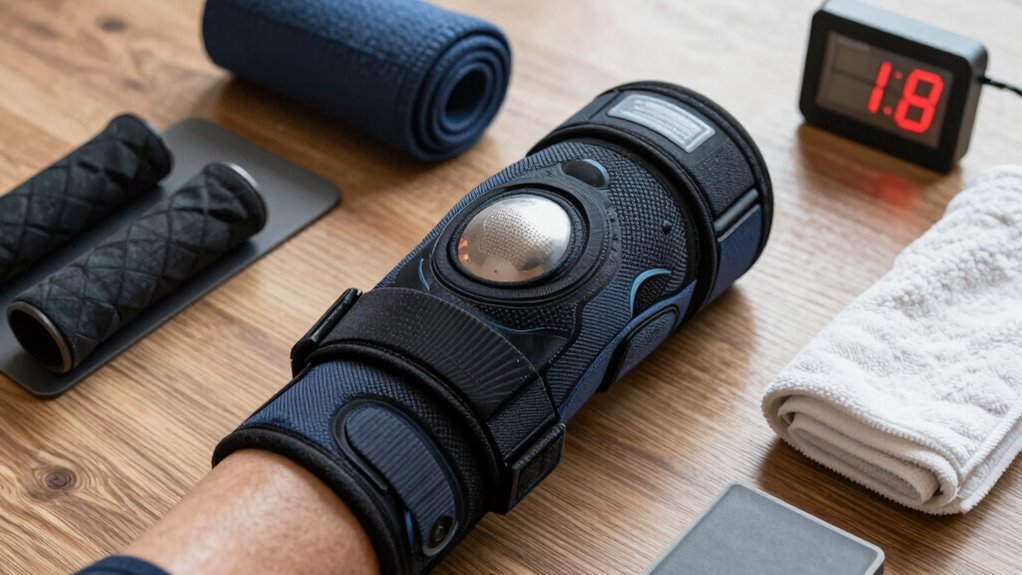
If you’re looking to strengthen your knees and improve overall stability, upgrading your routine can make a significant difference. Many people approach knee workouts with sporadic exercises, which often leaves their joint stability lacking and increases the risk of injury. By creating a structured, intentional plan, you guarantee that each session contributes to long-term health and resilience. A well-designed routine helps you target key muscles around the knee—like the quadriceps, hamstrings, and calves—providing better support and reducing unnecessary strain on the joint.
When you focus on joint stability, your knees become less vulnerable to common injuries such as strains, sprains, or ligament tears. The upgrade involves incorporating exercises that not only strengthen muscles but also improve coordination and balance. For example, balancing on one leg or using stability balls challenges your proprioception, training your knee to respond better to uneven terrains or sudden movements. This proactive approach to injury prevention means you’re less likely to experience setbacks due to avoidable mishaps.
Another aspect of upgrading your routine is establishing consistency and progression. Instead of random sessions, you can plan your workouts to gradually increase intensity and complexity. This steady progression enhances joint stability over time, as your muscles adapt and become more capable of supporting your knees during daily activities or athletic pursuits. Including variations like step-ups, lunges, or resisted leg presses ensures your muscles work through different angles, promoting balanced strength around the joint. Additionally, muscle adaptation plays a crucial role in maintaining joint health by allowing your body to respond effectively to increasing demands. Incorporating proper technique during exercises ensures that stress is distributed correctly, preventing unnecessary strain and optimizing results. Paying attention to exercise variation can target muscles from different angles, preventing imbalances and promoting overall stability. Engaging in core strength exercises also supports your lower body by providing a stable foundation during knee-focused workouts. In addition, warming up properly before each session primes your muscles and ligaments, reducing the chance of overstretching or tearing. Implementing exercise progression ensures your routine remains challenging and effective over time, maximizing joint support and resilience. Cooling down with stretches keeps your tissues flexible, further supporting joint health. Incorporating exercises like isometric holds or controlled eccentric movements can also contribute to better joint stability, making your knees more resilient to stress. These small adjustments transform a haphazard workout into a focused plan that actively contributes to injury prevention and long-term joint health.
knee stability exercise resistance bands
As an affiliate, we earn on qualifying purchases.
As an affiliate, we earn on qualifying purchases.
Frequently Asked Questions
How Long Should Each Knee Session Last?
You should aim for each knee session to last about 15 to 20 minutes. Focus on exercises that improve knee flexibility and joint stability, ensuring you don’t overdo it. Consistency is key, so stick to this timeframe regularly. If you experience pain or discomfort, reduce the duration or intensity. Properly balanced sessions help strengthen your knees without risking injury, making your home workouts more effective and less random.
Can Beginners Safely Try This Upgrade?
Think of trying this upgrade as stepping onto a well-paved trail rather than a rugged mountain path. Beginners can safely explore it by starting with beginner modifications, which keep the intensity manageable. While advanced techniques add depth, they require proper form and strength. So, if you’re new, take it slow, focus on proper technique, and build up gradually—this way, you’ll strengthen your knees safely and confidently.
What Equipment Is Needed for the Routine?
You’ll need a few simple pieces of equipment for this routine, like resistance bands and a foam roller, which aid in warm-up exercises and equipment maintenance. These tools help activate your knee muscles and keep your gear in good condition. Make sure to regularly check your equipment for wear and tear, ensuring safety and effectiveness during your sessions. With the right gear, you’ll make your home workouts more targeted and less random.
How Often Should I Perform This Routine?
You should perform this knee routine 3 to 4 times a week for ideal results. Incorporate proper nutrition tips like staying hydrated and eating anti-inflammatory foods to support recovery and injury prevention. Consistency is key to strengthening your knees and avoiding setbacks. Remember, listening to your body and allowing enough rest between sessions helps prevent injuries and guarantees you get the most benefit from your workouts.
Are There Any Risks or Contraindications?
Yes, there are some risks if you don’t perform the routine correctly. Overloading your knee can compromise joint stability and increase injury risk. Avoid pushing through pain, and always warm up beforehand. If you have existing knee issues or recent injuries, consult a healthcare professional first. Proper technique and gradual progression help guarantee injury prevention and maintain joint stability, making your home sessions safer and more effective.
Conclusion
Now that you’ve upgraded your knee routine, you’ll find your home sessions more focused and effective. Consistency and smart tweaks turn randomness into progress, proving that practice makes perfect. Remember, a journey of a thousand miles begins with a single step — so keep moving forward, stay committed, and watch your knees strengthen over time. With these improvements, your workouts won’t just be routine; they’ll be powerful steps toward better mobility.
Cold & flu season Picks
humidifiers
As an affiliate, we earn on qualifying purchases.