Many overlook three key angles for effective knee pain light therapy: choosing the right wavelengths like red or near-infrared, ensuring consistent and properly timed sessions, and adjusting device settings for deep tissue penetration. Proper calibration, avoiding overexposure, and tailoring therapy to your needs are essential. Mastering these details can boost healing results. Keep exploring these overlooked aspects to maximize relief and discover how to implement them successfully.
Key Takeaways
- Many overlook the importance of angle alignment to ensure effective light penetration into knee tissues.
- Proper device positioning at the correct angle maximizes coverage of the affected knee area.
- Adjusting angles during therapy can target different tissue depths for comprehensive relief.
- Ignoring device angle can lead to suboptimal results and reduced therapeutic benefits.
- Using adjustable devices and proper angling techniques enhances overall treatment efficacy.
What Is Light Therapy and Does It Help Knee Pain?
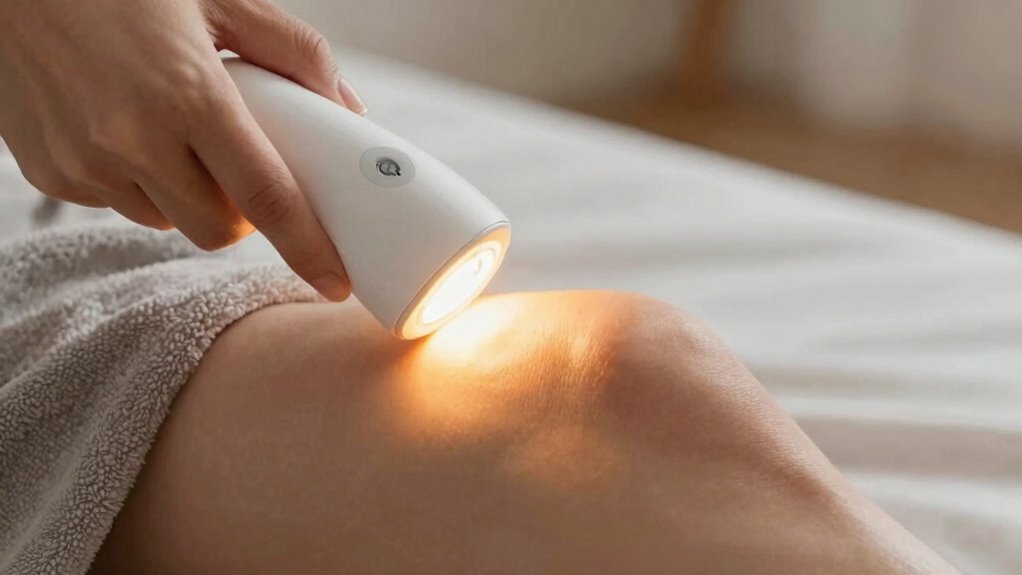
Light therapy, also known as phototherapy, involves exposing your skin to specific wavelengths of light to promote healing and reduce pain. It’s considered an alternative therapy that many turn to for pain management, especially for chronic knee pain. This treatment uses targeted light to stimulate cellular repair, reduce inflammation, and improve blood flow. Unlike medications, light therapy offers a non-invasive approach with fewer side effects. You may find it helpful as part of a holistic pain management plan, especially if traditional methods haven’t provided relief. Additionally, understanding improving indoor air quality can contribute to overall health and recovery by reducing contaminants that may exacerbate inflammation or discomfort. Moreover, integrating proper light wavelength exposure can optimize the effectiveness of the therapy and support faster healing, emphasizing the importance of light spectrum optimization for maximizing benefits. Recognizing the role of evidence-based practices can further enhance treatment outcomes and ensure safety during therapy sessions. For optimal results, considering individualized treatment plans tailored to your specific needs can also be beneficial.
How to Use Light Therapy Effectively: Timing, Dosage, and Duration
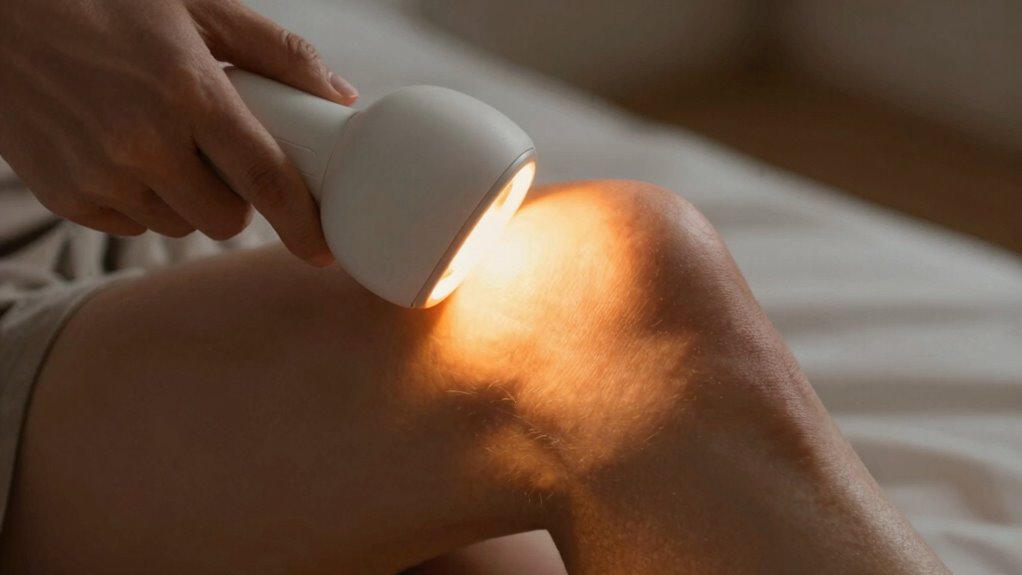
To see the best results from light therapy for knee pain, it’s important to follow proper guidelines for timing, dosage, and duration. Using effective phototherapy techniques guarantees you deliver the right amount of light without overdoing it. Start with shorter sessions, around 10-15 minutes daily, and gradually increase as your body adapts. Monitoring tools can help you track your progress and adjust treatment parameters accordingly. Incorporating proper scheduling ensures consistency and enhances healing outcomes. Consistency is key, so stick to a regular schedule. Avoid light therapy myths that suggest longer sessions always mean better results; more isn’t always better. Pay attention to the recommended dosage and avoid overexposure, which can cause irritation or diminish benefits. Proper timing and duration help maximize healing while minimizing side effects, making your treatment safer and more effective. Incorporating smart home technology can also help automate your therapy routine for better adherence and monitoring. Additionally, understanding light exposure principles can help you optimize the therapy’s effectiveness and prevent unintended side effects. Being aware of piercing care and hygiene practices can also be beneficial if you’re managing piercings in the treated area to prevent infections.
Choosing the Best Light Devices and Settings for Knee Relief
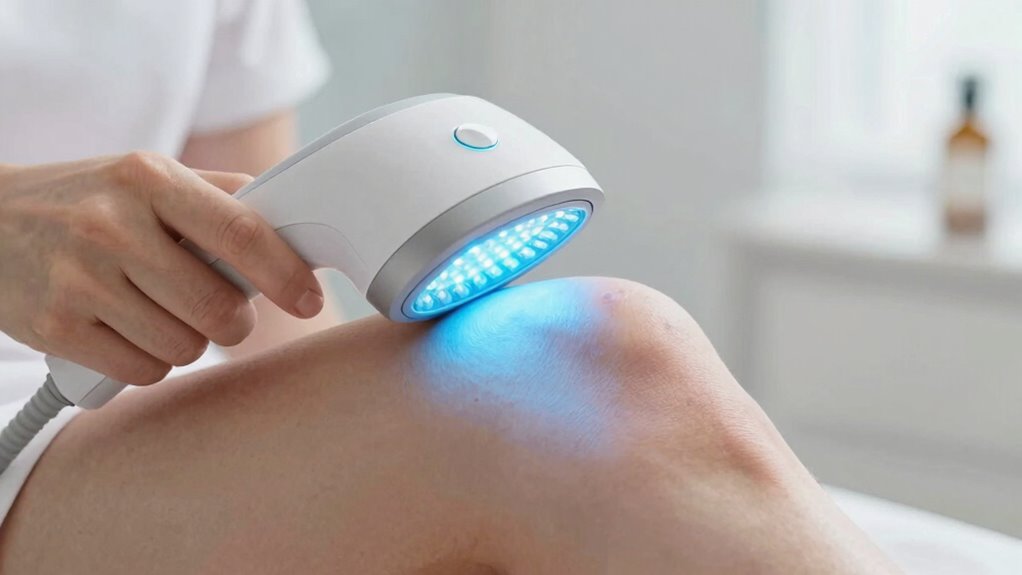
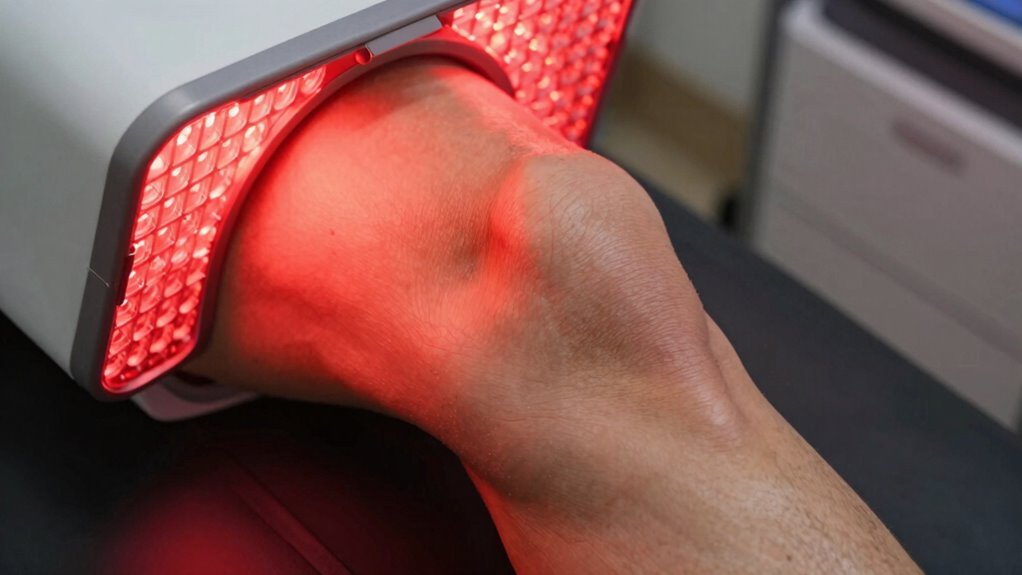
Choosing the right device and settings is essential for effective knee pain relief through light therapy. You need to prioritize device safety and treatment customization to maximize benefits. Select devices with appropriate wavelengths (red or near-infrared) proven to penetrate deep tissues. Adjustable settings allow you to tailor treatment intensity and duration to your needs. Here’s a quick guide:
| Device Type | Key Features | Safety Tips |
|---|---|---|
| Handheld LED | Portable, customizable power | Use on clean skin, avoid overexposure |
| Panel Lights | Broad coverage, adjustable angles | Follow manufacturer guidelines |
| Wearables | Continuous use, targeted therapy | Check for proper fit, avoid eye exposure |
Additionally, understanding essential safety tips can help prevent potential hazards during use. Proper device calibration is also crucial to ensure consistent and safe treatment outcomes. It’s important to stay informed about light therapy advancements that could enhance treatment effectiveness. Choosing wisely, prioritizing device safety, and customizing treatments for ideal knee pain relief will help ensure effective and safe therapy.
Frequently Asked Questions
Can Light Therapy Prevent Future Knee Injuries?
Light therapy benefits can help prevent future knee injuries by reducing inflammation and promoting tissue repair. When you use light therapy consistently, you support your body’s ability to heal and strengthen knee tissues, lowering injury risk. While it’s not a guaranteed prevention method, incorporating light therapy into your routine can enhance your overall knee health and reduce the likelihood of future injuries. Stay proactive with proper care and treatment.
Are There Any Risks or Side Effects From Light Therapy?
Light therapy is generally safe, but you should watch out for potential skin irritation, especially if you have sensitive skin. Additionally, eye safety concerns are important—always wear proper eye protection to prevent damage. Some people might experience mild redness or irritation, but serious side effects are uncommon. If you notice any discomfort, discontinue use and consult a healthcare professional to ensure safe treatment.
How Quickly Can I Expect Knee Pain Relief?
You might start noticing knee pain relief within a few sessions of light therapy, especially when combined with alternative medicine approaches. The therapy duration varies based on your condition and response, but many see improvements after 2-4 weeks of consistent treatment. Keep in mind, individual results differ, so patience and regular sessions are key. Consult your practitioner to adjust your treatment plan for ideal relief.
Is Light Therapy Suitable for All Age Groups?
Light therapy is generally suitable for most age groups, but you should consider age considerations and therapy accessibility. If you’re a child or elderly, consult your healthcare provider first to guarantee safety and proper use. Younger people usually respond well, and accessibility tends to be good across age ranges. Always seek professional guidance to determine if light therapy is appropriate for your specific age and condition.
Can Light Therapy Replace Traditional Knee Treatments?
Ever wonder if light therapy can fully replace traditional knee treatments? While it’s a promising alternative therapy, it may not be suitable as a complete substitute for conventional methods. Treatment efficacy varies, and combining light therapy with physical therapy or medication often yields better results. Always consult your healthcare provider to determine the best approach for your knee pain, ensuring you choose a safe, effective treatment plan tailored to your needs.
Conclusion
By understanding these overlooked angles of light therapy, you’re opening the door to true knee relief. Think of it as revealing a hidden treasure—you hold the key in your hands. When you master the timing, select the right device, and fine-tune your settings, you’re not just treating pain—you’re reclaiming your mobility and confidence. Don’t let these missed opportunities be the shadows over your recovery; shine a light on your path to healing.