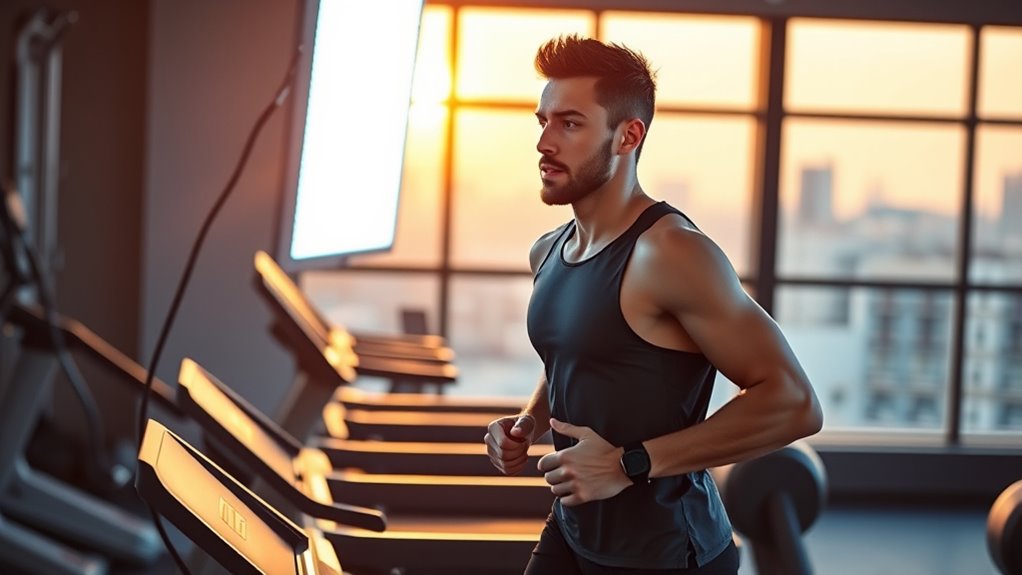

Combining light therapy with exercise can boost your performance by speeding up recovery, increasing energy, and enhancing mood. Light therapy stimulates cellular activity, improves circulation, and regulates circadian rhythms, helping you feel more alert and motivated. It also reduces inflammation and soreness, allowing you to train more consistently. If you want to discover how to incorporate this powerful combo into your routine for better results, keep exploring the benefits further.

Get wellness gear delivered free — and shop member deals
- Fast, free delivery on millions of items
- Access to Prime Big Deal Days deals on October 6–7
- Prime Video, Amazon Music and more included
Key Takeaways
- Light therapy enhances mood and reduces stress, boosting motivation and consistency in exercise routines.
- It accelerates muscle recovery by increasing cellular activity and blood flow post-workout.
- Combining light therapy with exercise improves sleep regulation, leading to better energy and performance.
- Light exposure supports mental resilience, helping maintain motivation during challenging training periods.
- Short sessions of light therapy before or after exercise optimize recovery, reduce soreness, and enhance overall performance.

If you’re looking for ways to boost your health and energy levels, combining light therapy with exercise might be a game-changer. Light therapy, especially phototherapy, offers numerous benefits that can complement your workout routine. It’s known to improve mood, reduce inflammation, and enhance cellular function—all factors that can support your exercise goals. When used correctly, phototherapy benefits extend beyond just mood enhancement; they can also accelerate exercise recovery, helping you bounce back faster after intense sessions.
One of the key advantages of integrating light therapy into your fitness regimen is its role in exercise recovery. After a tough workout, your muscles need time to repair and rebuild. Light therapy stimulates cellular activity, encouraging blood flow and reducing inflammation, which are vital for faster recovery. This means less soreness and downtime, allowing you to stick to your training schedule more consistently. The phototherapy benefits in this context are clear: quicker recovery times translate into more frequent, effective workouts, ultimately boosting your overall performance.
Furthermore, light therapy can enhance your energy levels during workouts. Exposure to specific wavelengths of light has been shown to influence your circadian rhythms, helping regulate your sleep-wake cycle. When your sleep improves, your energy and focus during exercise naturally increase. Better sleep also means your body produces more growth hormone, which promotes muscle repair and strength. This synergy can make your workouts feel more productive and less draining, encouraging you to push yourself further.
You might notice that combining light therapy with exercise also positively impacts your mental resilience. The phototherapy benefits include mood enhancement and stress reduction, which can help you stay motivated and committed to your fitness goals. When your mental state improves, you’re more likely to maintain consistency and push through challenging sessions. Additionally, some studies suggest that light therapy can help combat fatigue, making even early mornings or late-night workouts more manageable.
Incorporating light therapy into your routine doesn’t require drastic changes. You can use light panels or wearable devices before or after exercise sessions. Just a few minutes of exposure can set the stage for better recovery, improved mood, and increased energy. When combined with regular physical activity, these benefits create a positive feedback loop, encouraging you to stay active and healthy. Overall, blending light therapy with exercise isn’t just about improving performance; it’s about optimizing your body’s ability to recover, adapt, and thrive.
light therapy panel for recovery
As an affiliate, we earn on qualifying purchases.
As an affiliate, we earn on qualifying purchases.
Frequently Asked Questions
Are There Any Long-Term Risks of Combining Light Therapy With Exercise?
There are minimal long-term risks when combining light therapy with exercise, but you should stay aware of potential phototherapy side effects like skin irritation or eye strain. Always prioritize exercise safety by following professional advice and avoiding overexposure to light. If you notice persistent discomfort or unusual symptoms, consult a healthcare provider. Overall, with proper precautions, this combination is generally safe and can be beneficial for your performance.
How Does Light Therapy Affect Different Age Groups During Exercise?
You’ll find that light therapy offers age-specific benefits during exercise, supporting different developmental impacts across age groups. For children, it may enhance growth and coordination, while adults experience improved energy levels and recovery. Older adults benefit from reduced inflammation and better circulation. By tailoring light therapy to your age, you can optimize its effects, helping your body adapt and thrive through various developmental stages and exercise routines.
Can Light Therapy Replace Traditional Warm-Up Routines?
No, light therapy can’t replace traditional warm-up routines. Warm-ups promote muscle activation and increase blood flow, which are essential for injury prevention and ideal performance. Light therapy can complement your warm-up by enhancing muscle readiness, but it doesn’t deliver the thorough benefits of a proper warm-up. For safety and effectiveness, stick to your usual routine, then consider adding light therapy as an extra aid.
Is There an Optimal Time of Day to Use Light Therapy Before Exercise?
You should use light therapy about 30 minutes before exercise for ideal timing. This timing optimization helps your body prepare better, enhancing performance and reducing fatigue. Incorporate it into your daily scheduling consistently, ideally in the morning or early afternoon when natural light is limited. By aligning light therapy with your workout routine, you can boost energy levels and maximize the benefits of your exercise session.
Does Combining Light Therapy With Exercise Benefit Individuals With Specific Health Conditions?
Yes, combining light therapy with exercise can benefit individuals with specific health conditions. Phototherapy benefits may include reduced inflammation and improved muscle recovery, aiding exercise adaptation. If you have conditions like depression, seasonal affective disorder, or inflammatory issues, light therapy might enhance your exercise results and overall well-being. Always consult your healthcare provider before starting, but this combination can support your health goals effectively.
Conclusion
Just as the dawn heralds a new day, combining light therapy with exercise could unlock your peak performance. By harnessing this powerful duo, you’re tapping into a secret weapon akin to the myth of Icarus soaring higher. With consistent effort, you might find yourself reaching new heights, illuminating your true potential. So, embrace this innovative approach and let the light guide your journey to greatness, turning each workout into a step toward your personal Olympus.
Cold & flu season Picks
humidifiers
As an affiliate, we earn on qualifying purchases.




![Anxiety Be Like [Heresvix]](https://lightmask.net/wp-content/uploads/2026/10/anxiety-be-like-heresvix-featured-260x140.jpg)