Many cheap red light panels claim to offer quick, easy results, but they often fall short because they use low-quality LEDs, incorrect wavelengths, and poor design. These issues mean you’re unlikely to get the therapeutic benefits you expect, and they might even pose safety risks. To avoid wasting money and missing out on real improvements, it’s important to understand what to look for—stay with us to learn more about spotting quality panels.
Key Takeaways
- Many believe cheap panels are a cost-effective solution, but they often lack essential features like accurate wavelength and sufficient power density.
- The myth suggests low-cost units are just as effective, ignoring their inferior build quality and poor light distribution.
- Cheap panels frequently use low-quality LEDs that fail quickly, reducing therapy effectiveness and increasing replacement costs.
- Safety features and certifications are often missing in inexpensive units, posing risks like overheating and electrical hazards.
- Investing in high-quality panels ensures better durability, consistent performance, and true therapeutic benefits, contrary to the cheap unit myth.
Why Cheap Red Light Panels Usually Fail to Deliver Results
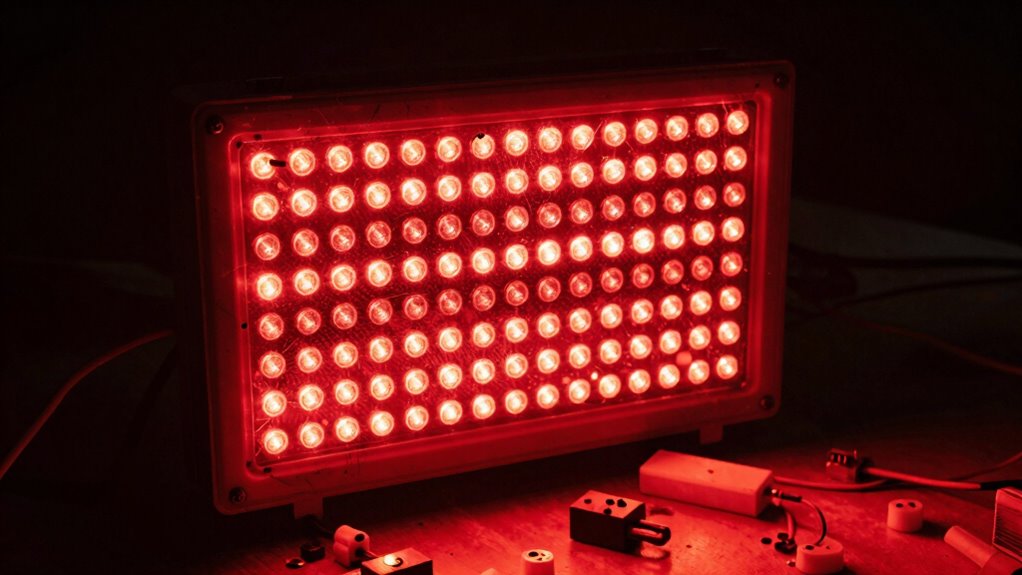
Cheap red light panels often fail to deliver results because they typically use lower-quality LEDs that don’t emit the necessary wavelength or intensity. Poor lighting design means the light isn’t properly focused or evenly distributed, reducing its effectiveness. These panels often prioritize cost savings over ideal energy efficiency, which means they waste power without providing adequate therapeutic benefits. When LEDs lack the right wavelength, your body won’t absorb the light as intended, limiting the therapy’s impact. Additionally, inferior components may overheat or burn out quickly, further diminishing results. Without proper engineering, these panels can be inefficient and ineffective, making it clear that investing in quality is essential. Proper LED selection is crucial to ensure the correct wavelength and optimal performance of therapeutic panels. Moreover, lighting design plays a key role in maximizing therapeutic outcomes by ensuring even light distribution and focus. Ensuring proper device maintenance can also extend the lifespan and effectiveness of your red light therapy panel. To achieve true wellness benefits, selecting products rooted in Indigenous wellness essentials that incorporate traditional, holistic practices can also enhance overall results. Regular quality assurance checks are vital to maintain consistent performance and safety standards over time.
What Makes a High-Quality Red Light Therapy Panel?
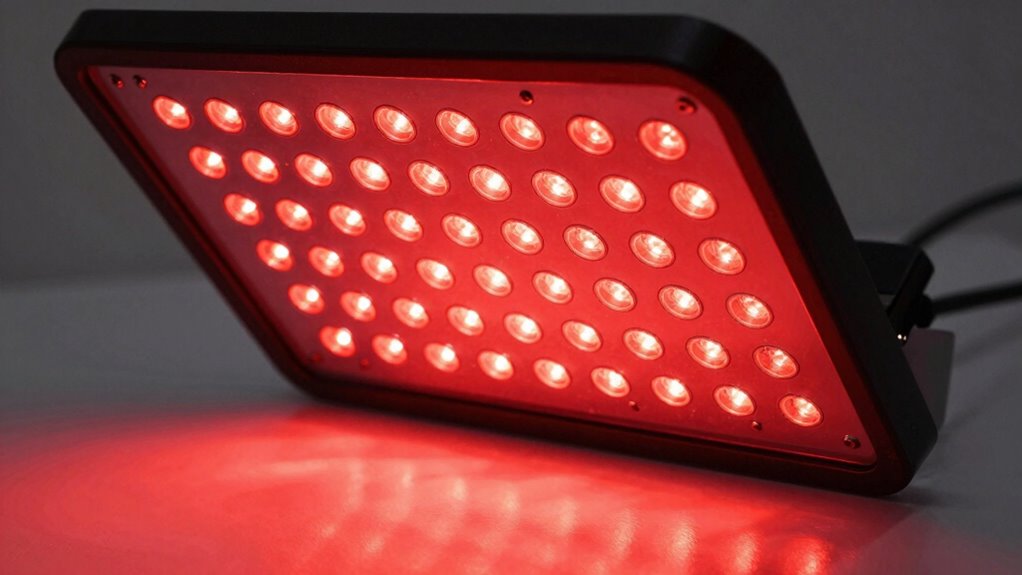
A high-quality red light therapy panel is built with advanced LEDs that emit the precise wavelengths proven to promote healing and skin rejuvenation. To guarantee effectiveness, look for LEDs with a long LED lifespan, which guarantees durability and consistent performance over time. A good panel also features an ideal color temperature, typically around 660nm to 850nm, to target specific tissues effectively. Key factors include:
Choose a high-quality red light panel with durable LEDs and optimal wavelength targeting for best healing results.
- High-quality LEDs with extended LED lifespan for longevity
- Accurate color temperature to deliver the correct wavelengths
- Solid construction and reliable heat dissipation for safety and durability
- Understanding symbolism and shapes can help you better interpret the design and purpose of different panels and their features. Additionally, paying attention to manufacturing quality can ensure the device maintains optimal performance and safety standards over its lifespan. Recognizing design features can also aid in evaluating the overall quality and effectiveness of the panel. Being aware of material composition can further assist in assessing the durability and safety of the device. Moreover, component quality plays a crucial role in the overall reliability and longevity of the device.
These elements ensure your device provides consistent, effective results while maintaining safety and longevity.
How Wavelength Accuracy Affects Red Light Therapy Effectiveness?
Since the effectiveness of red light therapy depends heavily on targeting specific tissues, wavelength accuracy plays a crucial role. Wavelength precision ensures the light penetrates deeply enough to reach cells that need healing or stimulation, making spectral accuracy essential. If a panel’s wavelengths are off, even slightly, it might target the wrong tissues or fail to activate the desired cellular responses. Cheap units often sacrifice wavelength accuracy, delivering light outside the ideal therapeutic range, which diminishes results. Precise wavelengths, typically within a narrow nanometer range, maximize the therapy’s benefits by ensuring your body absorbs the correct light frequencies. spectral accuracy is key to achieving consistent and effective treatment outcomes. Additionally, manufacturing quality significantly impacts the ability of a device to maintain wavelength consistency over time, further influencing treatment efficacy. Good calibration practices help ensure that devices remain accurate and reliable throughout their lifespan, impacting overall performance stability of the device over its lifespan, making reliable quality control measures essential for long-term results.
Why Power Density Is Critical for Red Light Therapy Success?
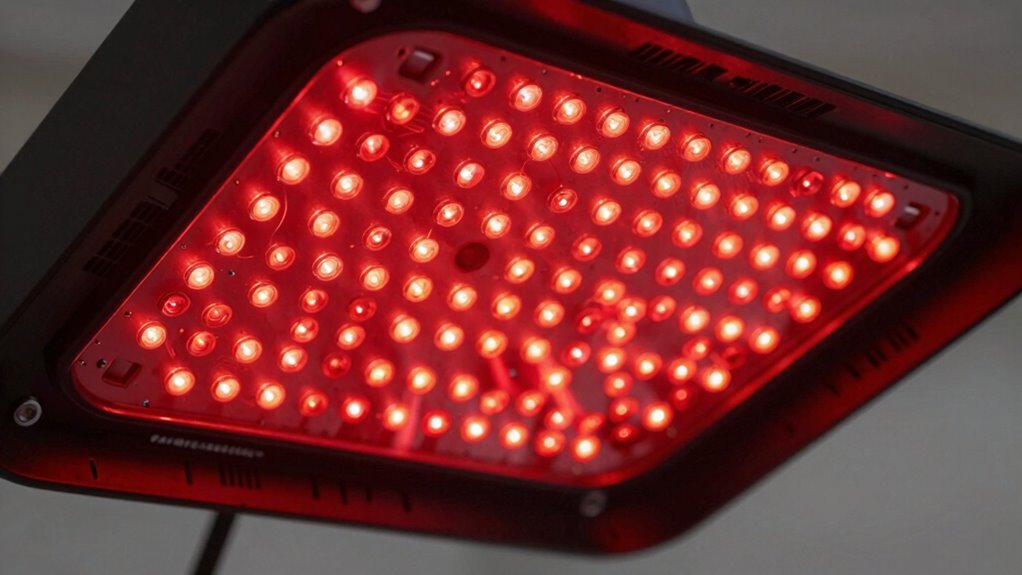
Power density, or the amount of light energy delivered per square centimeter, is vital for achieving meaningful results with red light therapy. Higher power density ensures better light penetration, reaching deeper tissues effectively. Without sufficient power, your body won’t absorb enough photons to stimulate cellular repair. Proper light calibration is essential to ensure the device delivers the specified power density consistently across the treatment area. Wavelength precision also matters because it influences how well light penetrates and interacts with tissues. Additionally, using a projector or panel with a high refresh rate can help deliver consistent light output during therapy sessions. To maximize success, focus on: – Adequate power density for effective light penetration – Precise wavelength targeting for optimal tissue absorption – Consistent delivery to guarantee therapeutic results. Moreover, understanding power density helps differentiate between effective panels and those that are simply marketed as red light therapy devices. Low-quality panels often lack the necessary power density, reducing their effectiveness. It’s also important to consider how light distribution impacts therapy outcomes, as uneven light spread can diminish treatment efficacy. Ensuring proper device calibration can make a significant difference in achieving consistent and effective therapy sessions. Remember, a panel’s ability to deliver the right intensity and wavelength is essential for meaningful red light therapy outcomes.
Essential Safety Features to Look for in a Red Light Panel
When choosing a red light panel, safety features are essential to guarantee effective and worry-free use. Look for overheat protection systems to prevent overheating, built-in timers to control your sessions, and adjustable light intensity for personalized treatment. These features help you use your panel safely and optimize your results. Additionally, proper ventilation can help prevent heat buildup during extended use, ensuring a safer experience. Incorporating safety protocols such as regular maintenance and following manufacturer guidelines can further enhance your safety and device longevity. Being aware of device specifications ensures you select a panel that meets your safety standards and intended applications. Furthermore, understanding product certifications can provide additional assurance of the panel’s safety and compliance with industry standards. Regularly reviewing industry standards can also help you stay informed about the latest safety requirements and best practices.
Overheat Protection Systems
Overheat protection systems are a vital safety feature to contemplate when choosing a red light panel, as they prevent the device from overheating during extended use. Proper overheat protection ensures your device remains safe, maintaining its device durability and performance over time. Without this feature, prolonged sessions could cause heat buildup, risking damage or failure. Look for panels with automatic shut-off or temperature regulation to avoid overheating issues. Key indicators of quality include:
- Built-in thermal sensors that monitor heat levels
- Automatic shut-off when reaching critical temperatures
- Durable components designed to withstand heat fluctuations
- Temperature regulation systems that maintain optimal operating conditions
These features help extend your device’s lifespan, improve safety, and guarantee consistent performance. Prioritizing overheat protection means you’re investing in a safer, more reliable red light panel that lasts.
Built-in Timer Options
Built-in timer options are essential safety features that help you manage your red light therapy sessions effectively. With a timer, you can set precise session durations, ensuring you don’t overexpose yourself or underestimate treatment time. A good timer also enhances panel durability by preventing prolonged exposure that could damage the unit over time. The user interface plays a crucial role here; a clear, intuitive display makes setting and monitoring your session simple. Look for panels with straightforward controls, so you can easily adjust and confirm your timer settings without confusion. This feature not only promotes safe usage but also streamlines your experience, allowing you to focus on your therapy rather than fussing with complicated controls. Proper timers make your sessions safer, more efficient, and more reliable.
Adjustable Light Intensity
Adjustable light intensity is a crucial safety feature that allows you to customize your red light therapy sessions to suit your skin type and sensitivity. With adjustable settings, you can control the light intensity to prevent discomfort and optimize results. This flexibility ensures you don’t accidentally use too much or too little light. Look for panels that offer:
- Multiple levels of light intensity for tailored sessions
- Easy-to-use controls for quick adjustments
- Consistent performance across different skin sensitivities
Having adjustable settings helps you find the perfect balance, making therapy safer and more effective. It’s especially important if you’re new to red light therapy or have sensitive skin. Prioritize panels with customizable light intensity for a safer, more personalized experience.
Debunking Myths About Cost and Effectiveness in Red Light Therapy

Many assume that higher cost means better quality, but that’s not always true with red light therapy devices. Cheaper units often have less power, which can reduce their effectiveness. Understanding this helps you make smarter choices and avoid overspending on products that won’t deliver the results you want.
Cost Doesn’t Equal Quality
Just because a red light panel comes with a hefty price tag doesn’t mean it’s automatically more effective. Many factors influence performance beyond cost, so don’t rely solely on price comparison. A higher price often reflects brand reputation, but that doesn’t guarantee better results. Instead, focus on key features like:
- Wavelength accuracy for targeted therapy
- Light intensity and power density
- Device durability and warranty
Cheaper units can sometimes match or even outperform pricier options if they meet your needs. Remember, a reputable brand may charge more, but it’s not a guarantee of quality. Your goal should be to find a device that balances affordability with proven effectiveness, rather than assuming cost equals superiority. Always research specifications and reviews before making a decision.
Cheaper Units, Less Power
While affordability might suggest a less powerful device, many believe that cheaper red light panels lack the necessary power for effective therapy. However, this isn’t always true. Cheaper units often offer significant cost savings without sacrificing core features, especially when well-designed and properly branded. Product branding plays a vital role here; reputable brands ensure quality components and consistent power output, regardless of price. Lower-cost options can deliver sufficient power to stimulate cellular repair and reduce inflammation, provided they meet safety and performance standards. Assuming that lower-priced panels are inherently weaker overlooks the quality control and engineering behind many affordable devices. Ultimately, focusing solely on price ignores the importance of brand reputation and proper specifications, which determine a device’s effectiveness.
Signs That a Budget Red Light Panel Is a Poor Investment
A budget red light panel might seem like a cost-effective way to boost safety and visibility, but certain signs indicate it’s a poor investment. First, pay attention to the color temperature; cheap units often emit inconsistent or dull light that diminishes effectiveness. Second, the brand reputation matters—if the manufacturer isn’t well-known or lacks reviews, reliability is questionable. Finally, poor build quality can be obvious through flimsy materials or unstable mounting options. These signs suggest the panel may not last or perform as needed. Investing in a low-quality panel can lead to wasted money and disappointment. Remember, a reputable brand with proper color temperature ensures your safety and better results over time. Don’t compromise on quality for a cheaper price.
How to Choose the Best Red Light Therapy Panel Without Overpaying
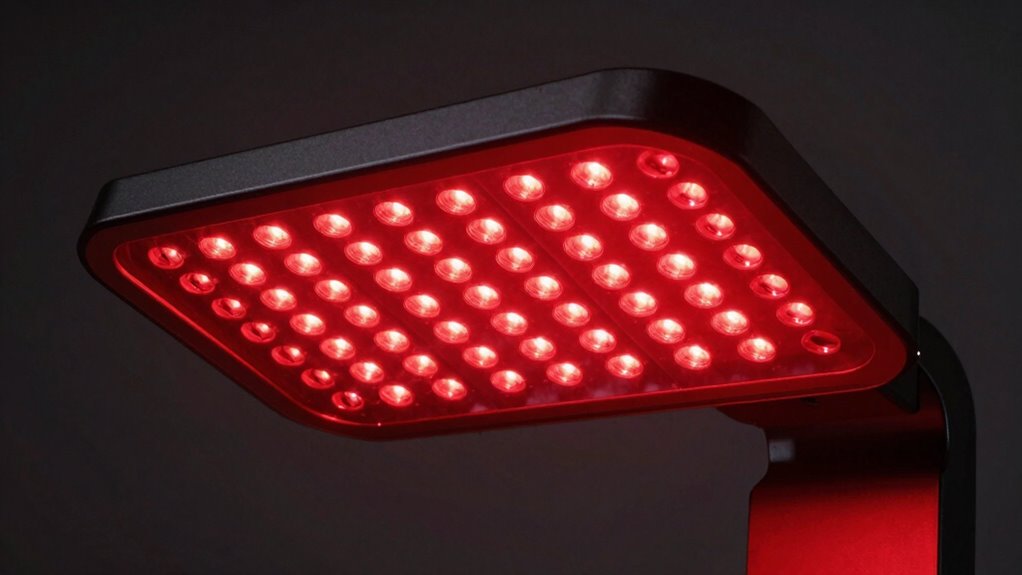
Choosing the right red light therapy panel involves balancing quality and cost to get the best results without overspending. To do this, focus on understanding light therapy benefits, such as skin rejuvenation, pain relief, and improved recovery. Look for panels with the appropriate wavelength and irradiance for your goals, rather than just the price tag. When considering panel installation, verify it’s easy to set up and fits your space comfortably. Avoid cheap units that cut corners on quality, as they often offer weaker light output and shorter lifespan. Instead, prioritize reputable brands that provide transparent specifications and warranties. This way, you get an effective device that maximizes light therapy benefits without paying extra for unnecessary features or inferior build quality.
Risks of Using Cheap Red Light Panels and Why Quality Matters
Using cheap red light panels can pose significant risks because they often deliver weaker light output and lack proper safety certifications. Poor-quality panels may not provide effective light therapy, reducing benefits and wasting your time and money. Additionally, their panel durability is questionable, leading to early failure or safety hazards. When choosing a panel, beware of:
Cheap red light panels risk safety, durability, and effectiveness—invest in quality for reliable, safe therapy results.
- Insufficient irradiance that hampers therapy results
- Subpar build quality risking electrical issues
- Lack of safety certifications increasing injury risk
Low-cost units might seem appealing, but they often compromise on essential features that ensure safe and effective use. Investing in a high-quality red light panel guarantees reliable performance, longer lifespan, and peace of mind during your light therapy sessions. Quality truly matters for safe, effective results.
Frequently Asked Questions
Can Cheap Red Light Panels Cause Skin Damage or Adverse Effects?
Cheap red light panels can cause skin damage or adverse effects if they don’t balance cost versus quality. Low-quality units often lack proper wavelength control or safety features, risking overexposure. While some budget options may have a sleek aesthetic design, they might not deliver consistent, safe light therapy. Always choose reputable brands, check for safety certifications, and make certain the device offers the correct wavelengths to protect your skin.
Do Cheaper Panels Have Longer-Term Durability Issues?
Cheaper red light panels often face durability issues because of lower quality components and materials, which can lead to malfunction or reduced effectiveness over time. When considering cost vs. quality, you might find that investing in a reputable brand with a strong reputation guarantees your panel lasts longer. While cheaper options save money upfront, they may require replacement sooner, making them less cost-effective in the long run.
How Does Panel Size Influence Therapy Effectiveness?
Think of panel size as the canvas for your therapy journey. Larger panels serve as expansive windows, offering more light and covering greater areas, consequently boosting therapy effectiveness. Smaller panels act like focused spotlights, targeting specific zones. Your choice depends on your goals—bigger panels enhance overall results, while smaller ones provide precision. Select wisely, understanding that panel size directly influences how well your therapy works, shaping your path to wellness.
Are There Specific Brands Known for Reliable Affordable Red Light Panels?
If you’re looking for reliable, affordable red light panels, consider brands with solid reputations like Mito Red Light, Joovv, or Red Light Rising. These brands balance quality and affordability factors, guaranteeing you get effective therapy without overspending. Their panels feature sturdy construction, proven wavelengths, and good customer reviews, making them trustworthy choices for consistent results. Always check for warranty and customer support to ensure long-term satisfaction.
What Certifications Should I Look for in Budget-Friendly Panels?
Think of certifications as your shield against low quality—look for panels with FDA clearance, CE marking, or UL certification. These standards make certain your device meets safety and performance benchmarks, giving you peace of mind. Prioritize quality assurance because it guarantees the panel’s durability and effectiveness. By choosing panels with reputable certification standards, you’re investing in safe, reliable red light therapy that truly benefits your health without breaking the bank.
Conclusion
Don’t be fooled by the siren call of cheap red light panels — they often fail where it counts. Just like the trusty steed of yore, a quality panel will serve you reliably and effectively. Do your homework, check the specs, and invest wisely. Remember, in this modern age, choosing a high-quality device isn’t just smart — it’s essential for real results. Avoid being left in the dust like a knight without his armor; choose wisely and see true benefits.