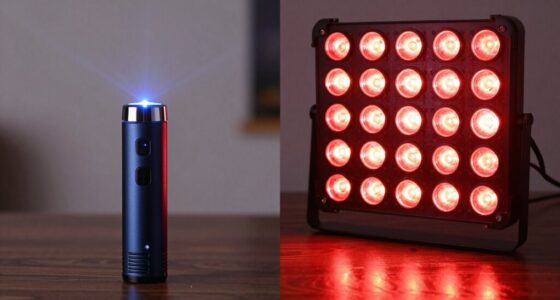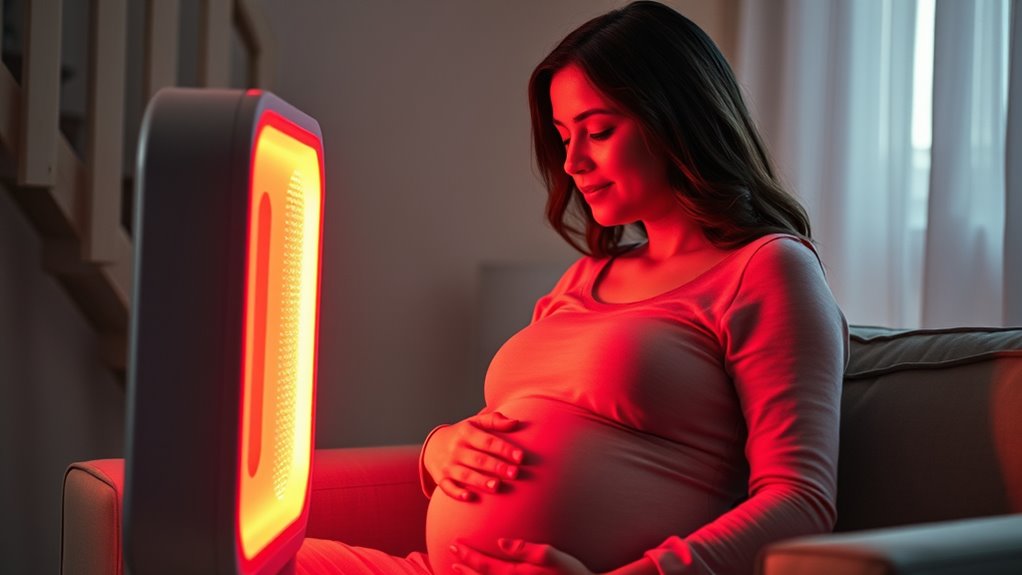

Red-light therapy is generally safe, but during pregnancy, you should exercise caution. Hormonal changes and increased skin sensitivity can lead to more noticeable reactions or irritation. It’s best to consult your healthcare provider before starting or continuing therapy, especially near your abdomen or sensitive areas. Use gentle settings and short sessions to reduce risks. If you want to understand specific precautions and evidence, you’ll find helpful information that guides you to make informed decisions.
Key Takeaways
- Red-light therapy is generally safe but should be used cautiously during pregnancy, with medical consultation recommended.
- Pregnant women may experience increased skin sensitivity, leading to more noticeable reactions like redness or irritation.
- Limited evidence exists on the effects of red-light therapy on hormonal balance during pregnancy; caution is advised.
- Use low-intensity, brief sessions and avoid treatment areas near the abdomen or thin skin regions.
- Always consult healthcare providers before starting red-light therapy during pregnancy to ensure safety and proper guidance.
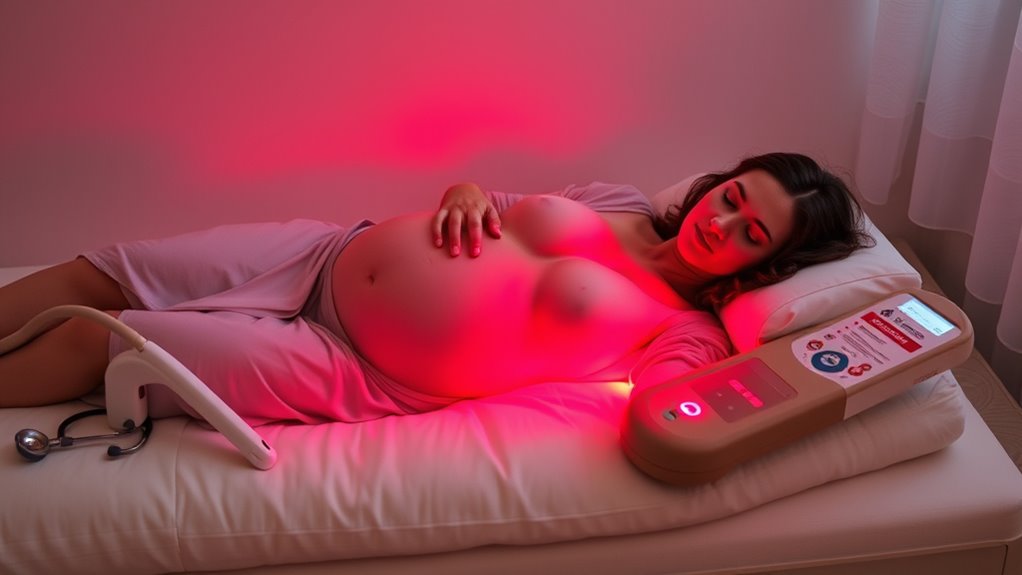
Red-light therapy has gained popularity as a non-invasive treatment for various health concerns, but if you’re pregnant, it’s natural to wonder whether it’s safe for you and your baby. While many find it helpful for skin rejuvenation, pain relief, and inflammation, pregnancy brings unique considerations. One key aspect to consider is how your body might react to the therapy, especially regarding potential skin reactions and hormonal effects. Since pregnancy alters your body’s physiology, you might be more sensitive to external stimuli, including light-based treatments.
Potential skin reactions are among the most immediate concerns. Although red-light therapy is generally gentle, some women notice mild redness, irritation, or dryness after sessions. During pregnancy, your skin can become more sensitive due to hormonal shifts, making you more prone to these reactions. If you already have skin conditions like eczema or rosacea, there’s a chance that the therapy could exacerbate these issues temporarily. It’s essential to monitor how your skin responds and to stop treatment if you experience discomfort or adverse reactions.
During pregnancy, increased skin sensitivity may lead to redness, irritation, or dryness after red-light therapy sessions.
Hormonal effects are another area worth considering. Pregnancy greatly impacts your hormonal balance, which influences everything from skin health to mood. While red-light therapy is thought to stimulate cellular processes and promote healing, its influence on hormones isn’t fully understood in pregnant women. Some preliminary studies suggest that light therapy might interact with hormonal pathways, although concrete evidence is limited. Consequently, you should approach red-light therapy cautiously, especially if you’re using it to target hormonal imbalances or related symptoms. Consulting your healthcare provider before starting treatment is necessary to ensure it won’t interfere with your pregnancy or any medications you’re taking.
It’s also essential to think about the intensity and duration of sessions. During pregnancy, your body is more delicate, and overexposure, even to gentle light therapy, could lead to unintended effects. Keep sessions brief and avoid high-powered devices unless your healthcare provider approves. Additionally, be aware of the treatment area; areas with thin skin or near the abdomen should be approached cautiously to prevent any unintended effects.
Frequently Asked Questions
Can Red-Light Therapy Improve Pregnancy Symptoms?
Red-light therapy may help improve pregnancy symptoms by promoting prenatal comfort and relaxation. It can reduce discomfort and support relaxation techniques, which might ease common pregnancy issues like fatigue or muscle tension. However, you should consult your healthcare provider before trying red-light therapy during pregnancy to guarantee safety. While some find it beneficial, personal medical advice is essential to avoid any risks and to tailor comfort strategies effectively.
Are There Any Long-Term Risks for the Fetus?
There’s limited research on long-term fetal effects from red-light therapy, so potential developmental risks remain uncertain. While current evidence suggests it’s generally safe when used properly, you should be cautious, especially during pregnancy. To protect your baby’s future, consult your healthcare provider before trying red-light therapy. They can help you weigh any possible risks and advise you on safe practices to minimize long-term fetal effects.
How Does Red-Light Therapy Affect Hormonal Balance During Pregnancy?
Red-light therapy may influence hormonal fluctuations during pregnancy by supporting endocrine function, but research is limited. You might experience some benefits, like improved mood or reduced inflammation, but it’s crucial to consult your healthcare provider first. Since pregnancy involves delicate hormonal changes, professional guidance ensures you avoid disrupting your endocrine balance. Always prioritize medical advice to safely incorporate red-light therapy into your prenatal care.
Can Red-Light Therapy Be Used to Prepare for Labor?
While red-light therapy isn’t widely recognized for labor induction, some believe it may support relaxation and pain management as you prepare for labor. You might consider it as a gentle way to ease discomfort and foster a calm mindset, potentially making labor a smoother experience. However, always consult your healthcare provider before trying red-light therapy for labor preparation, especially to guarantee safety and personalized guidance during your pregnancy journey.
Is Red-Light Therapy Safe for Women With High-Risk Pregnancies?
Red-light therapy isn’t recommended for women with high-risk pregnancies because it may impact maternal safety. You should always consult your healthcare provider before using any therapy, including red-light, to ensure it aligns with therapy guidelines and doesn’t pose risks. Your doctor can advise you on safe options to support your pregnancy, prioritizing both your health and your baby’s well-being. Always follow medical guidance for maternal safety.
Conclusion
So, you’re pregnant and eyeing that red-light therapy like it’s the latest miracle? Well, hold your horses! While a little glow might seem tempting, safety isn’t exactly a game of “try and see.” Until more research lights the way, it’s best to play it safe—skip the lasers, avoid the hype, and chat with your doc. After all, the only thing you should be glowing from now on is that pregnancy glow, not a risky light show.