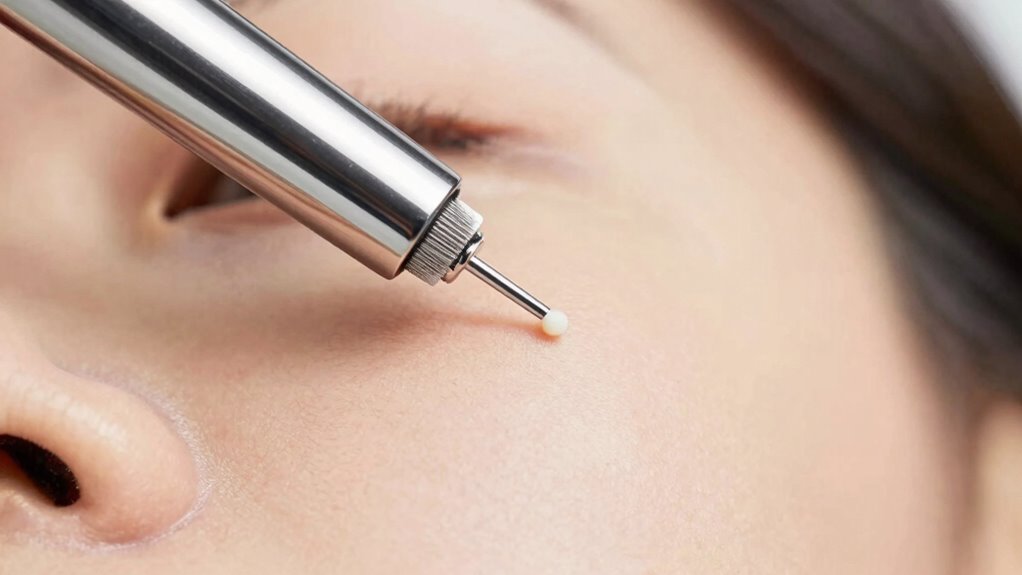

To remove blackheads without damaging your skin barrier, choose tools made from medical-grade stainless steel or hypoallergenic materials, and always sterilize them before use. Use gentle techniques, applying light, consistent pressure at a 45-degree angle, and soften your skin first with steam or warm towels. Focus on one blackhead at a time to avoid irritation. If you want to learn more about safe methods and tool choices, keep exploring for expert tips.
Key Takeaways
- Use high-quality stainless steel or medical-grade tools with safety certifications to ensure material safety and prevent skin damage.
- Always sterilize tools before and after use to reduce infection risk and protect your skin barrier.
- Apply gentle, consistent pressure at a 45-degree angle, focusing on one blackhead at a time for safe extraction.
- Incorporate steam, warm towels, or chemical exfoliants like salicylic acid to soften skin and open pores before extraction.
- Avoid harsh scrubs, sharp objects, or rushing; opt for natural remedies and gentle devices to maintain skin integrity.
What Causes Blackheads and Why Gentle Removal Matters

Blackheads develop when your pores become clogged with excess oil, dead skin cells, and dirt, creating a perfect environment for them to form. Pore congestion results from oil buildup that mixes with dead skin, blocking the hair follicles and trapping debris. This combination leads to an accumulation of sebum and dead skin, which oxidizes when exposed to air, turning black. When you pick or squeeze blackheads aggressively, you risk damaging your skin barrier, causing inflammation, scars, or further breakouts. Gentle removal is essential because it minimizes trauma to your skin, reduces the risk of infection, and helps prevent future blackheads. Proper skincare techniques and filter maintenance are crucial in maintaining a healthy skin barrier and preventing blackhead formation. Using gentle exfoliation methods can assist in preventing pore congestion without harming your skin. Being mindful of how you clean and treat your skin ensures that you manage blackheads effectively without compromising your skin’s health. Incorporating proper skincare techniques can further help in maintaining a healthy skin barrier and prevent blackhead formation. Additionally, practicing self-awareness about your skin’s responses can guide you toward gentler and more effective blackhead management.
How to Choose Safe and Effective Blackhead Removal Tools
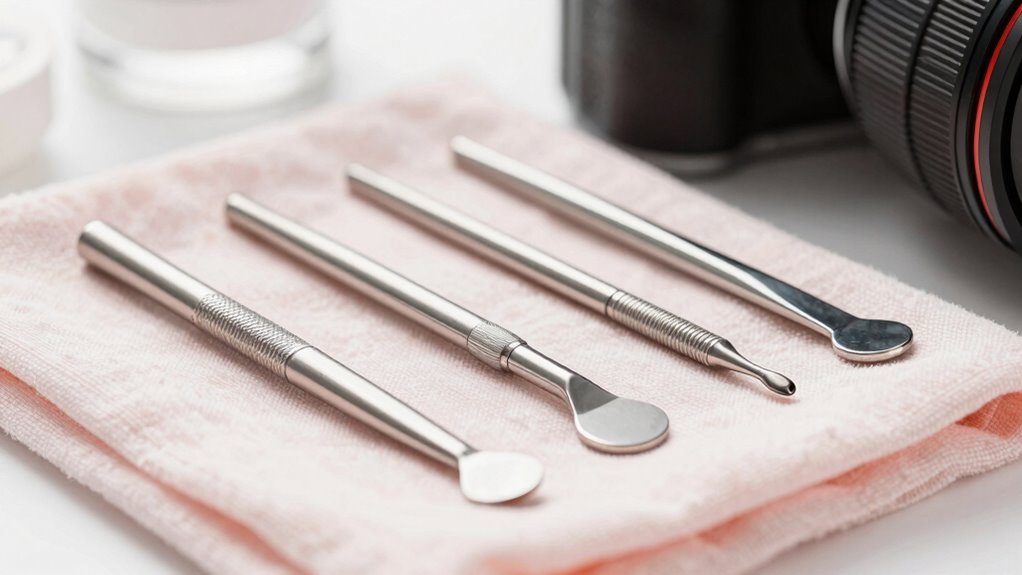
When choosing blackhead removal tools, safety should be your top priority, so pay attention to the materials they’re made from. Using the right technique is essential to avoid skin damage and infections, even with the safest tools. Make sure you understand proper methods to get effective results without risking your skin’s health. Additionally, selecting tools with appropriate material quality can help prevent irritation and ensure safe use. To further protect your skin, consider the microplastics in dust that may settle on your tools and affect their cleanliness and safety. Incorporating requirements traceability in your selection process can help ensure that the tools meet safety standards and quality assurance criteria. Staying informed about emerging trends in digital publishing can also help you access the latest information on safe skincare practices and tools. Utilizing tools with reliable quality assurance can further minimize risks associated with substandard products.
Material Safety Considerations
How can you guarantee the tools you choose are safe and effective for blackhead removal? Start by checking material compatibility—look for stainless steel or medical-grade materials, as they resist corrosion and minimize skin irritation. Avoid tools made from cheap plastics or metals that may cause allergic reactions or break easily. Safety certifications, like FDA approval or CE marking, indicate the tool has met safety standards. These certifications ensure the product has been tested for biocompatibility and safety during use. Always verify the origin and quality of the tool before buying. Choosing tools with proper safety features reduces the risk of damaging your skin barrier or causing infections. Material safety considerations are essential when selecting tools to prevent adverse reactions. Additionally, opting for tools with hypoallergenic properties can further reduce the risk of irritation. Incorporating tools that align with energetic alignment principles may also promote a more calming removal process. Ensuring that the tools are designed with biocompatibility standards can help prevent unwanted skin responses and enhance overall safety. Prioritize quality and safety to make blackhead removal both effective and safe. Using durable materials can also ensure your tools last longer and maintain their safety features over time.
Proper Technique Tips
Choosing the right tools is only part of the process; using them correctly guarantees safe and effective blackhead removal. Start by evaluating your pore size—larger pores may require gentle pressure, while smaller pores need delicate handling. Always ensure your skin is well-hydrated, as hydrated skin is more elastic and less prone to damage. Before extraction, steam your face or use a warm towel to soften the skin, making pore opening easier. When applying tools, hold them at a 45-degree angle and apply gentle, consistent pressure directly over the blackhead. Avoid digging or forcing, which can damage your barrier. Proper tool technique is essential to prevent skin trauma and ensure optimal results. Additionally, skin elasticity plays a key role in how well your skin responds to extraction, making proper technique even more crucial. Using tools with proper sterilization reduces the risk of infection and skin irritation. Maintaining optimal skin health supports resilient skin that heals more effectively after extraction. Afterward, rinse your face with cool water to close pores and apply a calming toner or moisturizer to maintain skin hydration. Incorporating classic arcade games into your relaxation routine can provide a nostalgic distraction and reduce stress after skincare.
The Best Blackhead Extraction Devices That Protect Your Skin

Finding the right blackhead extraction device is essential for effectively clearing your pores without causing damage. The best tools prioritize pore cleansing while protecting your skin’s barrier. Look for devices made with gentle materials and ergonomic designs to avoid unnecessary pressure. Proper technique further minimizes the risk of irritation and damage.
Choosing gentle, ergonomic blackhead tools protects your skin while effectively cleansing pores.
Consider these options:
- Steel comedone extractors with smooth edges for precise pore targeting
- Silicone pore cleansers that gently loosen debris without harsh scraping
- Vacuum suction devices that regulate pressure to prevent skin trauma
- Multi-functional tools combining extraction and exfoliation to streamline your skincare routines
Choosing the right device helps you achieve clear skin without compromising your skin’s health. Properly skincare routines and using gentle tools can help maintain your skin’s protective barrier and prevent future blackheads. Additionally, selecting tools with non-abrasive surfaces minimizes the risk of irritation and preserves the skin’s natural defenses. Incorporating proper technique during extraction can further reduce skin irritation and support barrier integrity. To ensure safety, always sanitize tools before and after use to prevent bacterial transfer and potential infections. Using appropriate pressure during extraction is key to avoiding unnecessary trauma and maintaining skin health.
How to Use Blackhead Tools Properly to Avoid Damage
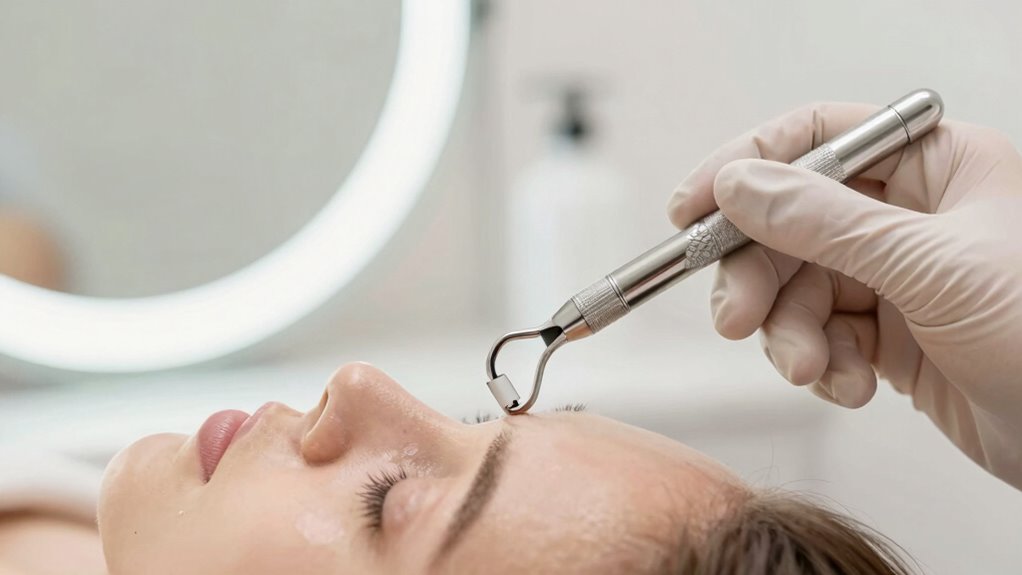
To avoid damaging your skin, you need to use proper technique when applying blackhead tools. Make sure to apply gentle pressure and avoid pressing too hard, which can cause irritation or scars. Focus on being careful and precise to keep your skin healthy and clear. Additionally, understanding proper skincare techniques can help prevent skin damage and promote healing.
Proper Technique Application
When using blackhead removal tools, applying proper technique is crucial to prevent skin damage and guarantee effective extraction. To protect your pore size and skin sensitivity, focus on gentle, precise movements. Always sterilize your tools before use. Avoid pressing too hard, which can cause bruising or scarring. Use a light touch and target one blackhead at a time for best results. Keep your skin clean and steamed beforehand to open pores. Remember, rushing can lead to damage, so take your time. Proper technique ensures you remove blackheads without harming your skin’s barrier.
- Sterilize tools regularly to prevent infection
- Use a gentle, controlled pressure
- Focus on one blackhead at a time
- Cleanse and steam your skin beforehand
Gentle Pressure Use
Applying gentle pressure with your blackhead tools helps prevent skin damage and guarantees a smoother extraction process. Focus on maintaining consistent pressure control; pressing too hard can cause bruising or scarring. Use your tool’s ergonomics to your advantage by gripping it comfortably and applying steady, controlled force. Pay attention to how your skin responds—if you feel resistance or discomfort, ease up immediately. Proper pressure ensures you target blackheads effectively without harming the surrounding skin. Remember, the goal is to gently loosen the pore contents, not to force them out. Mastering pressure control and choosing tools with ergonomic designs will help you extract blackheads safely and efficiently, reducing the risk of damage and promoting healthier skin.
Alternatives to Mechanical Extraction for Gentle Blackhead Care
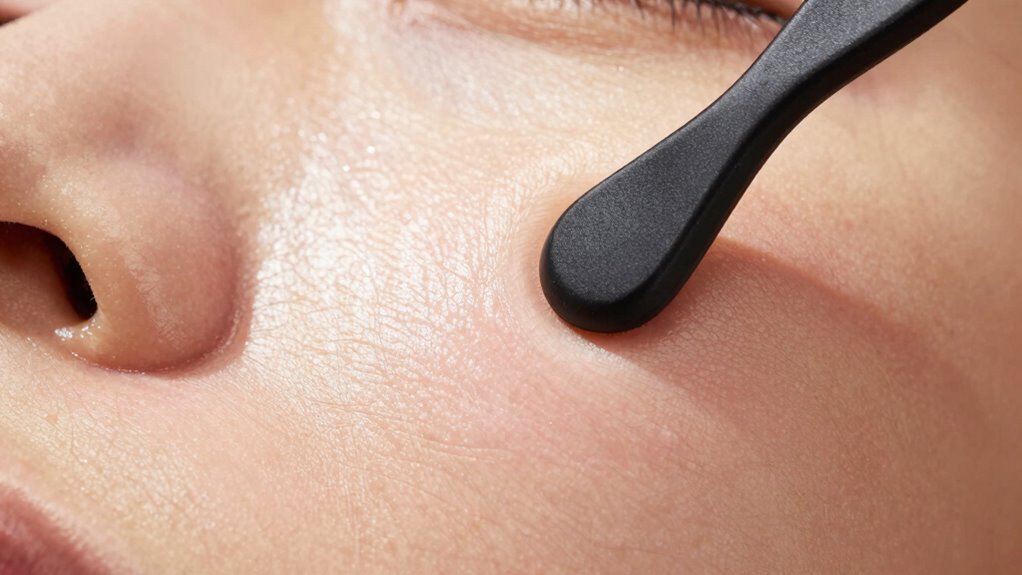
If you’re seeking gentler ways to care for blackheads without resorting to mechanical extraction, there are effective alternatives that can minimize skin irritation. Natural remedies and chemical exfoliants can help loosen debris and clear pores without damaging your skin barrier. For example, using products with salicylic acid helps penetrate and dissolve sebum buildup. Incorporating gentle chemical exfoliants like AHAs can lift dead skin cells, reducing pore blockages. You might also try clay masks to absorb excess oil, or apply niacinamide to soothe inflammation. These options support blackhead removal without aggressive pinching or squeezing. Remember, consistency is key—regular, gentle treatments can improve your skin’s appearance over time and keep your barrier healthy.
Common Mistakes That Can Damage Your Skin When Removing Blackheads

Removing blackheads without proper care can easily damage your skin, especially if you fall into common traps. One mistake is using unclean tools or fingers, which can introduce bacteria and cause skin irritation. Overzealous squeezing can push debris deeper into pores, leading to pore clogging and inflammation. Picking at blackheads with sharp objects increases the risk of damaging the skin’s barrier, causing redness and irritation. Using harsh scrubs or excessive force can strip away natural oils, aggravating your skin instead of helping. Avoid applying too much pressure or using improper techniques, as this can lead to scarring and increased pore clogging. Being careless during blackhead removal not only irritates your skin but also hampers your skin’s natural healing process, making blackheads more persistent.
When to Seek Professional Help for Blackhead Removal and Skin Concerns

Sometimes, despite your best efforts, blackheads and skin concerns persist or worsen, signaling that it’s time to seek professional help. If you notice persistent breakouts, painful cysts, or signs of infection, a professional consultation is essential. A trained dermatologist can perform a thorough skin assessment to identify underlying issues and recommend effective treatments. You should also consider professional help if over-the-counter remedies aren’t delivering results or if you’re unsure about the best approach for your skin. Ignoring these signs can lead to scarring or further damage. Remember, a dermatologist can provide safe extraction methods and tailored skincare plans that protect your skin’s barrier. Don’t hesitate to seek professional help when needed to maintain healthy, clear skin.
Frequently Asked Questions
Are There Any Natural Remedies for Blackhead Removal?
Yes, you can try herbal remedies and natural masks to remove blackheads gently. Use ingredients like clay or honey as natural masks to absorb excess oil and unclog pores. Herbal remedies like tea tree oil or witch hazel can also help reduce blackheads without damaging your skin barrier. Just make sure to patch-test first and avoid overdoing it, so your skin stays healthy and clear.
How Often Should I Clean My Blackhead Tools?
Thoroughly cleaning your blackhead tools prevents problems and promotes purity. You should sterilize and clean your tools after each use to avoid bacteria buildup. Establish a consistent cleaning frequency—ideally after every attempt—to keep tools safe and skin healthy. Remember, proper tool sterilization and prompt cleaning prevent potential infections, ensuring your skincare routine remains safe, sanitary, and successful. Stay diligent, and your skin will thank you!
Can Over-The-Counter Products Replace Tools Entirely?
Over-the-counter products can’t fully replace tools, especially when dealing with pore size and skin sensitivity. While they can help minimize blackheads, tools are more precise and effective for extraction. If your skin is sensitive, using gentle products alongside tools can reduce irritation. Remember, overuse of products might worsen pore size or cause damage, so balance their use with proper tool technique to protect your skin’s barrier.
What Ingredients Help Prevent Blackheads Long-Term?
Did you know that using the right ingredients can reduce blackheads by up to 50%? To prevent blackheads long-term, look for chemical exfoliants like salicylic acid, which penetrates pores and dissolves debris. Pore strips offer quick relief but aren’t a long-term solution. Incorporating chemical exfoliants into your routine helps keep pores clear without damaging your skin barrier, making blackhead prevention more effective and sustainable.
Are Professional Extractions Safer Than At-Home Methods?
Professional extraction is generally safer than at-home methods because trained estheticians understand proper techniques and can minimize safety concerns. They know how to avoid skin damage, infections, and scarring, reducing the risk of damaging your skin barrier. At-home extractions can be risky if done incorrectly, leading to irritation or worse. If you’re considering extraction, consulting a professional ensures a safer, more effective approach with fewer safety concerns.
Conclusion
Remember, treating blackheads with care is like tending a delicate garden; rushing or using harsh tools can cause more harm than good. Stick to gentle methods, choose your tools wisely, and don’t hesitate to seek professional help if needed. By being patient and cautious—like a knight guarding his castle—you can keep your skin healthy and clear without damage. Your skin’s health is worth the effort—treat it like a prized artifact, not a battlefield.