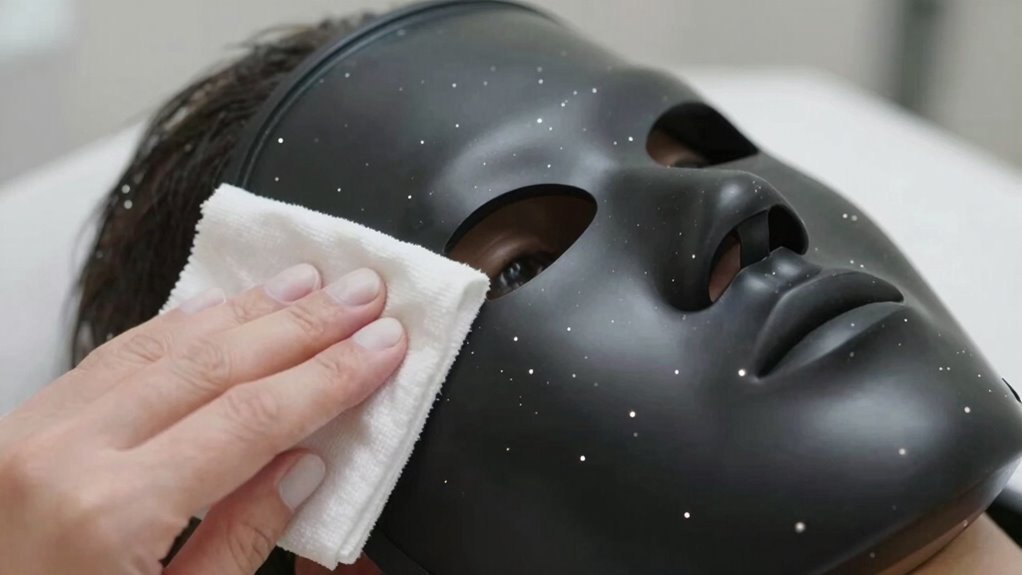

To clean your LED mask safely, unplug it first and avoid harsh chemicals. Use a soft, lint-free cloth dampened with a mild, alcohol-based solution like diluted isopropyl alcohol or a gentle soap mixture, avoiding direct contact with the LEDs. Gently wipe the surface and use cotton swabs for tight spots. Regular, careful cleaning helps protect the LEDs and maintain ideal performance—if you want tips on doing it right, keep going.
Key Takeaways
- Unplug the device and detach any removable straps or filters before cleaning.
- Use a soft, lint-free cloth dampened with mild, non-abrasive cleaner to wipe the surface gently.
- Avoid applying liquids directly to the LEDs; instead, lightly dampen cloths or cotton swabs for detailed areas.
- Disinfect detachable parts separately with alcohol wipes, ensuring thorough cleaning without risking LED damage.
- Allow the device to air dry completely before reassembling and using to prevent moisture-related issues.
Why Cleaning Your LED Mask Is Important for Safety and Results
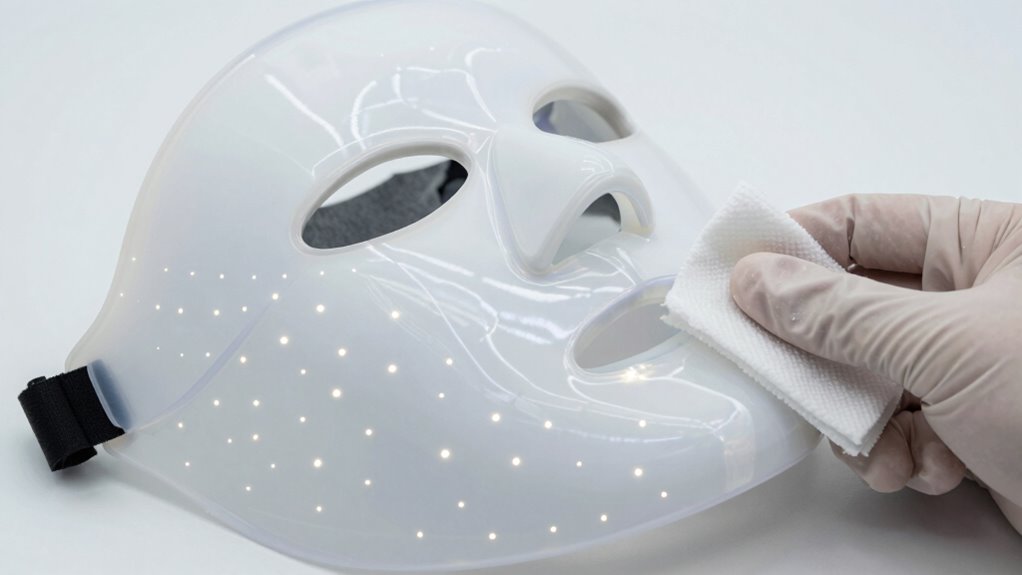
Cleaning your LED mask regularly is essential to guarantee both safety and effective results. Proper LED hygiene helps prevent bacteria buildup, reducing the risk of skin infections or breakouts. When you neglect cleaning, oils, sweat, and dirt can accumulate on the mask’s surface, compromising skin safety and potentially causing irritation. Maintaining a clean mask ensures the LED lights function correctly, delivering consistent therapeutic benefits. Regular cleaning also prolongs the lifespan of your device, saving you money and hassle. Proper cleaning routines can also help preserve the LED light quality, which is vital for consistent treatment outcomes. Implementing proper cleaning techniques can also help prevent LED degradation, ensuring your mask remains effective over time. Remember, a clean LED mask isn’t just about appearance—it’s about safeguarding your health and ensuring you get the best possible skincare results. Additionally, understanding filtration/suction basics can help ensure your device maintains optimal hygiene and safety standards. Incorporating regular maintenance practices can further enhance the longevity and safety of your LED mask, especially by paying attention to device cleaning methods.
What Supplies You Need to Clean Your LED Mask Safely
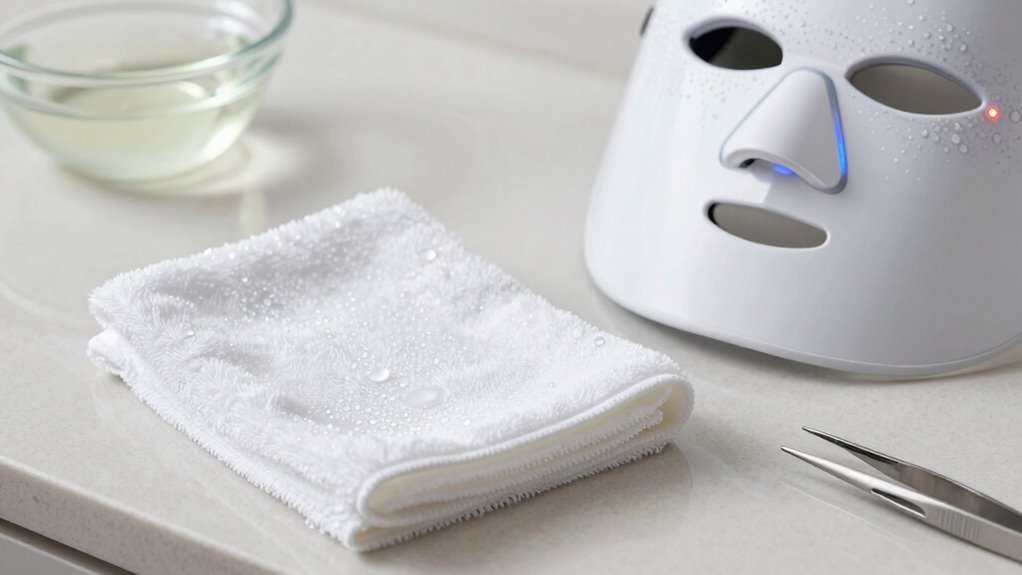
Before you begin cleaning your LED mask, gather the essential supplies to do so safely and effectively. You’ll need a soft, lint-free cloth or microfiber towel to prevent scratching the LEDs. Mild, non-abrasive cleaning solutions like isopropyl alcohol or gentle soap diluted with water are ideal for cleaning surfaces without damaging electronics. Have cotton swabs ready for tight spots and crevices. Safety precautions include unplugging the device before cleaning and avoiding excessive moisture that could seep into electronic components. Keep a small spray bottle for applying cleaning solutions and ensure you have a clean, dry area to work in. Using proper cleaning techniques and adhering to safety precautions helps preserve your mask’s longevity without risking damage to the delicate LEDs. Additionally, understanding the proper cleaning methods ensures you maintain your LED mask without compromising its functionality. Regularly inspecting your device and following manufacturer guidelines can also prevent damage or malfunction over time. Being aware of electronic component sensitivity can help you avoid common mistakes that could lead to costly repairs. Moreover, avoiding harsh chemicals or abrasive materials is crucial to prevent surface damage that can impair the device’s effectiveness. Incorporating gentle cleaning routines and manufacturer recommendations can further extend the life of your LED mask.
How to Clean Your LED Mask Step-by-Step
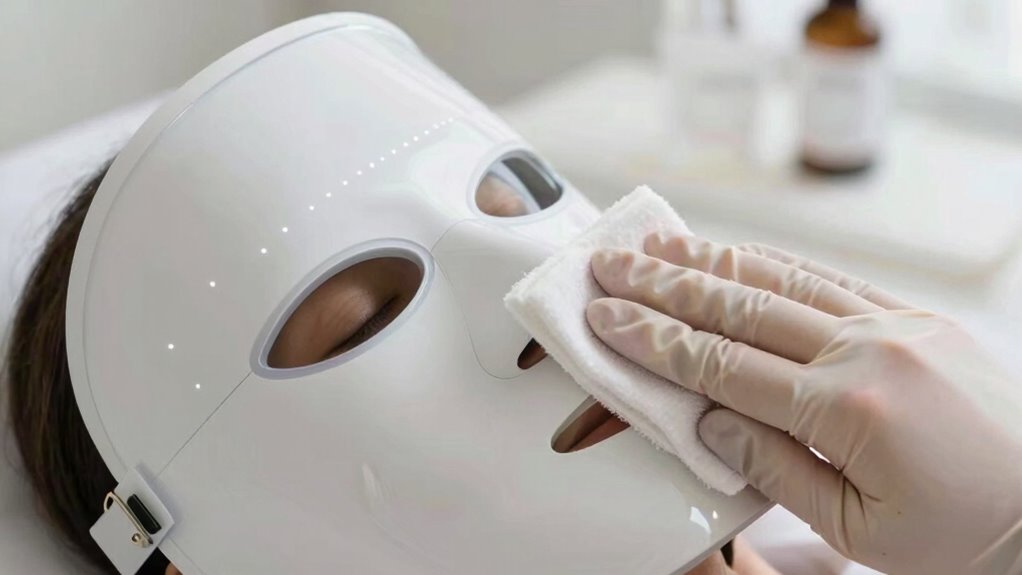
To effectively clean your LED mask, start by unplugging it and removing any detachable parts, such as straps or filters. This guarantees proper LED hygiene and prevents damage during cleaning. Next, prepare a soft cloth with a gentle cleaning solution or alcohol wipe. Use the cloth to wipe down the mask’s surface carefully, avoiding direct contact with the LEDs. Focus on areas prone to sweat and dirt buildup. For equipment sterilization, regularly disinfect detachable parts separately. Follow this table to guide your cleaning process:
| Step | Action | Tip |
|---|---|---|
| Unplug and Remove | Detach straps and filters | Prevent damage, ensure LED safety |
| Wipe Surface | Use soft cloth with mild cleaner | Avoid harsh chemicals |
| Disinfect Parts | Clean detachable components | Maintain hygiene |
| Dry Thoroughly | Air dry or wipe with a clean cloth | Prevent moisture buildup |
| Reassemble | Put parts back carefully | Check for proper fit |
Additionally, always consult the manufacturer’s instructions for any specific cleaning guidelines to ensure you do not inadvertently damage the LEDs. Incorporating proper cleaning techniques can help prolong the lifespan of your LED mask and maintain its effectiveness. Regularly inspecting the LEDs for any signs of wear or damage can help identify issues early and prevent further deterioration, ensuring safe and optimal performance. Proper maintenance also enhances home safety by preventing potential damage or malfunctions that could pose safety risks.
A comprehensive cleaning routine can significantly extend the functional life of your LED mask and support safe usage.
Common Mistakes to Avoid When Cleaning Your LED Mask

While following proper cleaning steps is important, being aware of common mistakes can prevent damage to your LED mask and guarantee it stays effective. First, avoid harsh chemicals, which can harm the delicate LEDs and their surfaces. Stick to gentle, non-abrasive cleaners designed for electronic devices. Also, don’t use rough or abrasive cloths; instead, opt for soft, microfiber cloths that won’t scratch or damage the mask. Never apply cleaning solutions directly onto the mask; always dampen the cloth first. Rushing the process or applying too much pressure can also cause damage. Taking these precautions helps preserve the integrity of your LED mask and ensures it functions correctly for a longer time. Additionally, using protective car accessories can help prevent dust and debris from settling on your device, making cleaning easier and safer. Regular maintenance can also help identify potential issues early and prolong the lifespan of your LED mask. Proper cleaning techniques are essential to avoid accidental damage and maintain optimal performance. Incorporating proper cleaning methods can significantly reduce the risk of accidental damage during maintenance, especially if you are aware of the sensitive components involved.
How Often Should You Clean Your LED Mask for Optimal Results

Your LED mask needs regular cleaning to stay effective and hygienic. How often you clean it depends on your skincare routine and usage frequency. If you use the mask daily, it’s best to clean it after each session to maintain proper LED hygiene and prevent bacteria buildup. For less frequent use, cleaning every few days is sufficient. Consistent cleaning helps ensure your skin benefits from the treatment without risking breakouts or infections. Keep in mind that neglecting regular cleaning can compromise the efficacy of your LED therapy and introduce dirt or oils onto the device. Incorporating cleaning into your skincare routine to keep your mask in top condition and maximize results. Regular maintenance supports both your skin health and the longevity of your LED device. Additionally, paying attention to device-specific care instructions can help prevent damage to the LEDs and extend the lifespan of your LED mask. Proper cleaning techniques are essential to avoid damaging the delicate LED components and ensure the device functions optimally over time. Maintaining proper LED hygiene practices also reduces the risk of skin irritation caused by bacteria buildup. Following recommended cleaning methods can further safeguard the integrity of your device and ensure consistent performance. Using gentle cleaning agents and avoiding harsh chemicals can help preserve the LED lifespan and keep the device working effectively.
Tips for Maintaining Your LED Mask Between Deep Cleanings
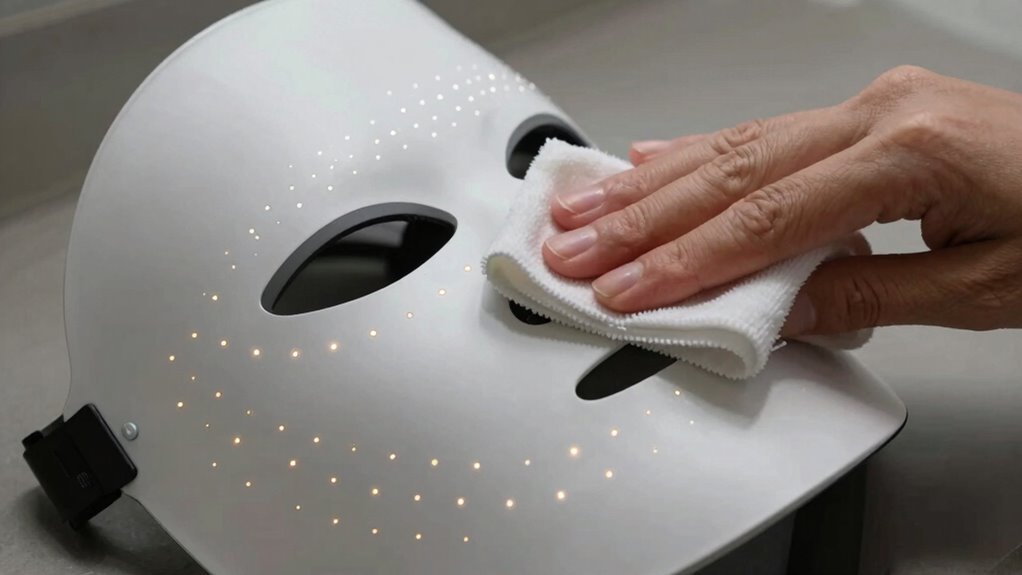
Maintaining your LED mask between deep cleanings is essential for keeping it hygienic and functioning properly. Regular care prevents buildup and prolongs its lifespan. Here are some tips to help you stay on top of maintenance:
- Use gentle brushing to remove dust and debris from the LED surface without damaging the delicate components.
- Wipe down the mask with alcohol wipes after each use to disinfect and prevent bacteria growth.
- Store your mask in a clean, dry place, avoiding direct sunlight to preserve the LEDs’ longevity.
- Regularly check the device’s components to ensure all parts are working correctly and to catch any potential issues early.
What to Do If Your LEDs Are Damaged During Cleaning

If you notice any damage to your LEDs during cleaning, don’t overlook it. Carefully assess the extent of the damage to determine whether repairs are needed. It’s best to seek professional help to ensure your mask gets fixed properly and safely.
Assess LED Damage Carefully
When you notice any flickering, dimming, or irregular lighting from your LED mask during cleaning, it’s crucial to assess the damage carefully before proceeding. Damage can shorten the LED lifespan and reduce light intensity, affecting your results. Take these steps:
- Check if the flickering is consistent or intermittent—persistent issues may signal deeper damage.
- Observe whether specific LEDs appear dimmer or non-functional, indicating possible burnouts.
- Test the mask after cleaning to see if the light output matches its original brightness; diminished light intensity suggests damage.
Seek Professional Repair Assistance
Damage to your LEDs during cleaning can be frustrating, but seeking professional repair assistance guarantees your mask gets properly fixed without risking further harm. When LEDs are damaged, it can shorten their LED lifespan and compromise your user maintenance efforts. A professional technician can assess the extent of the damage and ensure correct repairs, preventing further issues. Here’s a quick guide to help you understand the process:
| Step | Action |
|---|---|
| 1 | Turn off and unplug your mask |
| 2 | Contact authorized repair service |
| 3 | Describe the damage clearly |
| 4 | Follow their repair instructions |
| 5 | Test the LEDs after repair |
Seeking help guarantees your LED mask stays effective and safe for future use.
Frequently Asked Questions
Can I Use Household Cleaners on My LED Mask?
You shouldn’t use household cleaners on your LED mask, as they can damage the LEDs and compromise LED safety. Instead, gently wipe the surface with a soft, damp cloth and a mild, alcohol-free cleanser if necessary. Avoid harsh chemicals, abrasives, or excessive moisture. This careful cleaning helps preserve your mask’s functionality and ensures safe LED use over time. Always follow manufacturer instructions for the best results.
Is It Safe to Submerge the Mask in Water?
Did you know that water damage causes over 50% of electronic device failures? Submerging your LED mask in water isn’t safe because it risks water damage and jeopardizes electrical safety. Water can seep into components, causing malfunctions or short circuits. To keep your mask working well and safe, avoid submerging it completely. Instead, use a damp cloth to clean the surface and protect your device from costly repairs.
How Do I Disinfect My LED Mask Properly?
To disinfect your LED mask properly, focus on LED maintenance and use safe disinfection techniques. First, unplug the device and wipe the surface with a soft cloth dampened with a mix of mild soap and water or isopropyl alcohol (70%). Avoid harsh chemicals and submerging the mask. Regularly cleaning the exterior and avoiding excess moisture guarantees your LEDs stay in top condition while effectively disinfecting the mask.
What Should I Do if My LEDS Stop Working After Cleaning?
Think of your LED mask as a delicate orchestra; if the LEDs stop playing, it’s time for troubleshooting tips. First, unplug it and check connections for loose wires. If that doesn’t work, consider LED repair options or contact customer service. Sometimes, a simple reset or gentle cleaning fixes the issue. If problems persist, professional repair might be necessary to bring your mask back to harmony.
Can I Use a UV Sterilizer for My LED Mask?
Yes, you can use a UV sterilizer for your LED mask, but be cautious. UV sterilization kills bacteria effectively, making it great for household cleaning. However, avoid exposing your mask to direct UV light for too long, as it may damage the LEDs over time. Always follow the sterilizer’s instructions and make certain the UV light is used safely, without risking harm to the mask or your skin.
Conclusion
Keeping your LED mask clean guarantees safe, effective treatments and longer-lasting LEDs. With gentle supplies and careful techniques, you can easily maintain its performance without damage. Think of it like caring for a delicate piece of jewelry—you wouldn’t scrub it harshly. Regular cleanings not only protect your investment but also keep your skin glowing. So, take a few minutes to clean your mask properly—your skin and LEDs will thank you for it!