Yes, you can stack high-frequency modules and LEDs safely if you carefully plan for electrical compatibility, thermal management, and electromagnetic interference. Guarantee proper insulation with dielectric materials, use grounded shielding, and implement heat sinks or spreaders to manage heat. Maintain adequate spacing and mechanical stability to prevent damage or signal issues. Following best practices helps protect sensitive components and ensures reliable operation. Keep exploring for detailed tips on building safe, effective layered systems.
Key Takeaways
- Use dielectric insulators like polyimide or ceramic to prevent electrical conduction between stacked high-frequency modules and LEDs.
- Incorporate electromagnetic shielding and grounded conductive coatings to minimize EMI and cross-talk in stacked configurations.
- Ensure proper thermal management with heat sinks, thermal interface materials, and adequate spacing to prevent overheating.
- Confirm electrical compatibility, including matching voltage, current, and impedance, to maintain signal integrity and safety.
- Design mechanical stability with secure fasteners, vibration damping, and proper layout to prevent damage and ensure reliable operation.
What Are High-Frequency Modules and LED Layers?
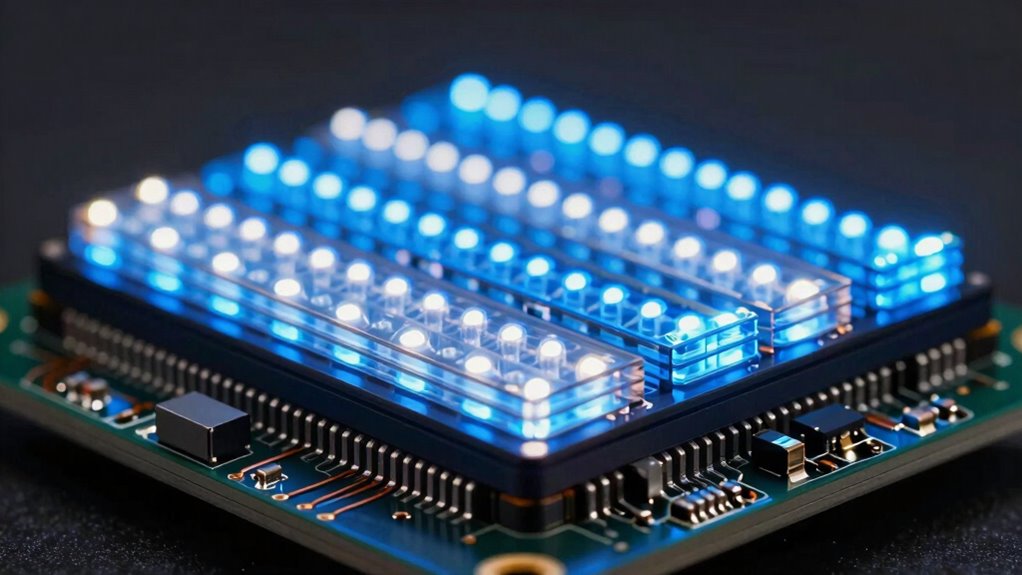
Have you ever wondered how high-frequency modules and LED layers work together in advanced lighting systems? These components are essential for creating efficient, reliable performance. High-frequency modules transmit signals at rapid speeds, making them indispensable for wireless communication or data transfer within the system. LED layers, on the other hand, provide illumination and visual feedback. Ensuring material compatibility between these layers is critical to prevent interference or damage. Proper integration maintains signal integrity, so signals stay clear without distortion. When stacking these components, you must consider how different materials interact to avoid issues like signal degradation or overheating. Understanding their roles helps optimize system design, ensuring that high-frequency modules and LED layers work harmoniously without compromising performance. Additionally, selecting compatible materials can help prevent issues such as overheating or signal interference, further enhancing system reliability. Paying attention to material compatibility is vital to prevent potential failures or malfunctions in complex electronic assemblies. Furthermore, understanding component interactions allows engineers to design more resilient and efficient systems that can adapt to various operating conditions. Recognizing the importance of proper layering techniques can also significantly reduce the risk of damage during assembly and operation. Moreover, considering thermal management is crucial to maintaining safe operating temperatures and prolonging component lifespan in stacked configurations.
How to Ensure Electrical Compatibility When Stacking Components
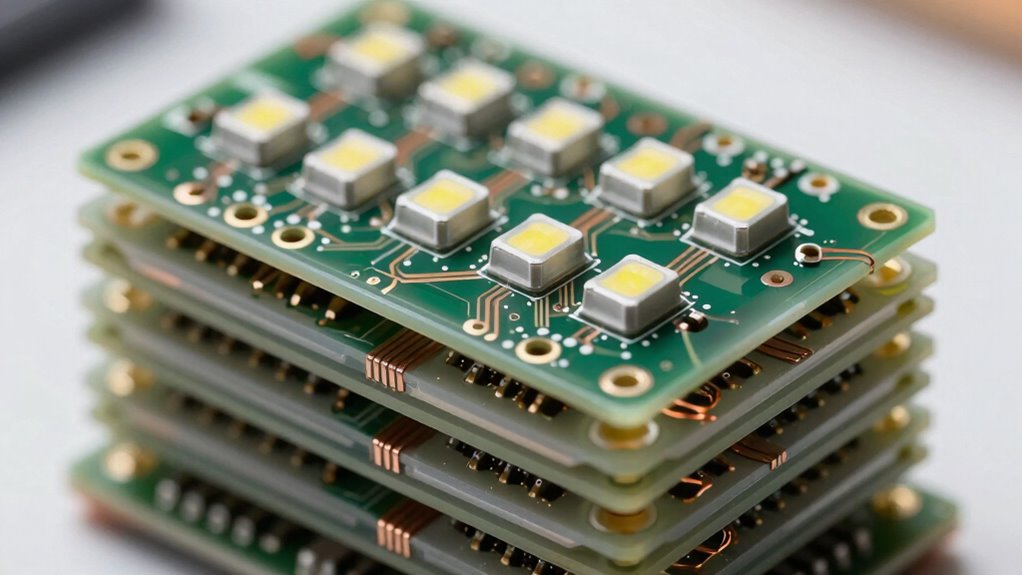
To guarantee electrical compatibility when stacking components like high-frequency modules and LED layers, you need to focus on matching their electrical characteristics. Start by selecting conductive adhesives that ensure solid electrical connections without adding unwanted resistance or interference. These adhesives help maintain signal integrity and reduce noise. Additionally, incorporate electromagnetic shielding to prevent electromagnetic interference (EMI) that can disrupt high-frequency signals. Proper shielding materials, like conductive coatings or metal enclosures, isolate sensitive components and minimize cross-talk. Verify voltage and current ratings to match component specifications, preventing overloads or damage. Paying close attention to electrical characteristics also helps prevent issues related to impedance mismatches, ensuring your layered design functions reliably, with minimized interference and optimal performance across all components. Considering component compatibility and adherence to electrical standards is essential for safe and effective stacking. Proper grounding techniques are equally important to avoid potential voltage fluctuations or ground loops that could compromise system stability. Ensuring system safety through correct wiring practices can further enhance reliability and prevent potential hazards.
Managing Heat: Preventing Overheating in Layered Designs
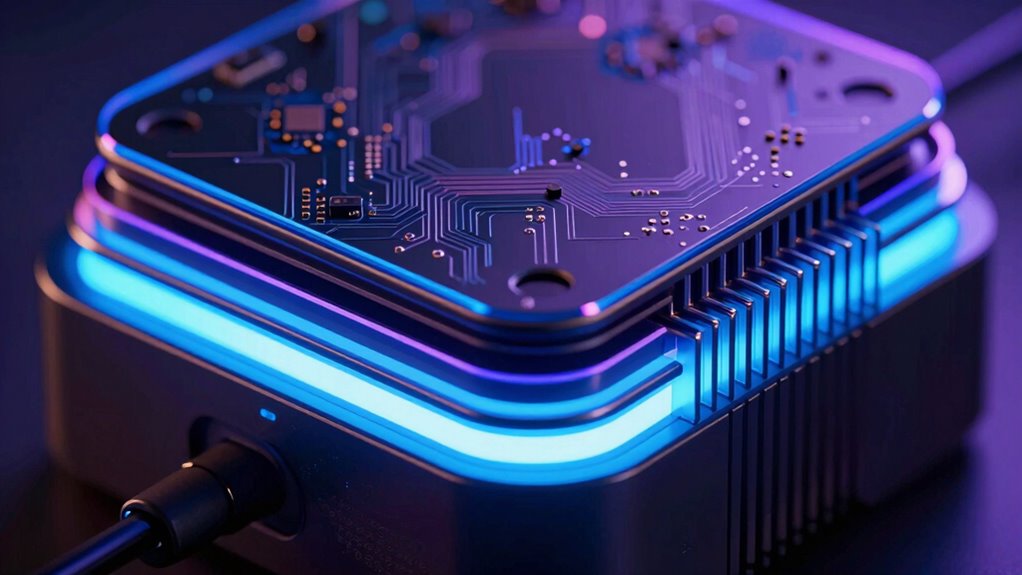
To keep your layered design from overheating, you need effective heat dissipation strategies. Choosing the right materials for cooling can make a big difference in managing temperature. By focusing on these points, you can prevent performance issues caused by excess heat. Understanding dream symbolism related to time and life can also inspire innovative cooling concepts that align with natural cycles. Incorporating air quality considerations such as proper ventilation and dust control can further enhance heat management and overall device longevity. Selecting an appropriate battery inverter generator capacity ensures your system can handle heat loads efficiently without risking damage. Additionally, awareness of early warning signs for overheating can help you take preventive measures before issues escalate. Paying attention to indoor humidity control can also prevent heat buildup caused by excessive moisture that hampers cooling efficiency.
Effective Heat Dissipation Strategies
Effective heat dissipation is essential when designing layered LED and high-frequency components, as heat buildup can substantially impair performance and lifespan. To manage this, focus on effective thermal management techniques, such as incorporating heat sinks or heat spreaders to draw heat away from critical areas. Guarantee proper electrical isolation between layers prevents thermal pathways that could lead to shorts or damage. Use thermal interface materials to improve heat transfer while maintaining electrical separation. Ventilation and airflow management also help dissipate heat efficiently. Keep in mind that organized layering and strategic placement of components reduce hotspots and facilitate consistent cooling. Additionally, understanding Free Floating principles can aid in designing systems that naturally minimize heat retention without additional components. Incorporating thermal management strategies is crucial for maintaining optimal operating conditions. By maintaining ideal thermal conditions, you protect your components from overheating, extend their lifespan, and ensure reliable operation of your stacked high-frequency and LED systems. Considering thermal conductivity in component selection can further enhance heat dissipation efficiency, leading to more durable and dependable systems.
Material Selection for Cooling
Have you considered how the choice of materials impacts heat management in layered LED and high-frequency systems? Selecting materials with high thermal conductivity is essential to efficiently transfer heat away from sensitive components. A good thermal interface material ensures minimal resistance between layers, promoting better heat flow. Avoid insulating materials that hinder heat dissipation, and opt for substrates and interfaces specifically designed for high thermal performance. Proper material selection helps prevent hotspots and overheating, especially in compact, stacked designs. By understanding the thermal properties of your materials, you can optimize cooling strategies, extend component lifespan, and maintain system stability. Remember, choosing the right materials isn’t just about electrical performance—it’s critical for effective heat management in high-frequency and LED stacking applications.
How to Minimize Electromagnetic Interference in Stacked Systems
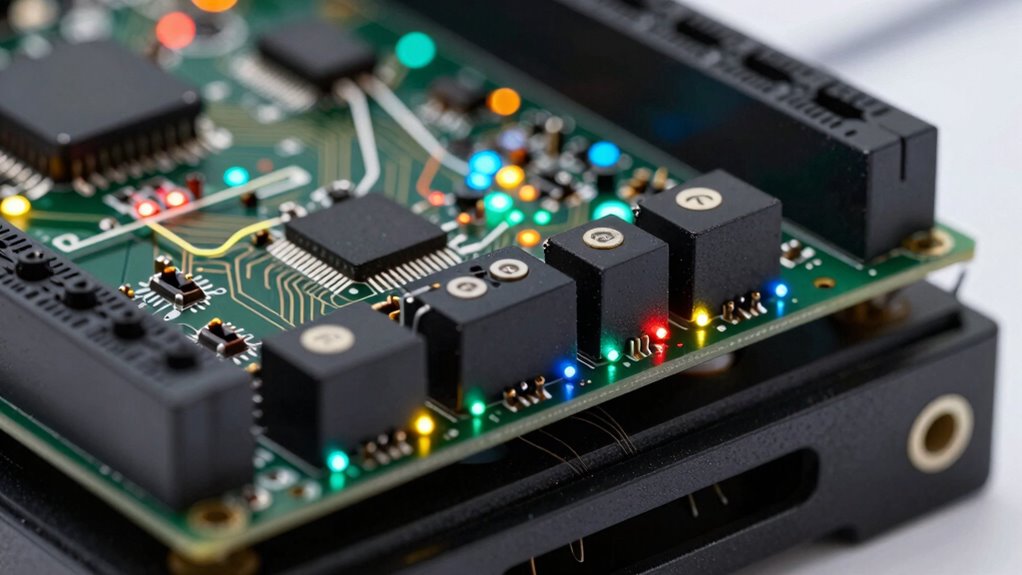
When dealing with stacked LED systems operating at high frequencies, electromagnetic interference (EMI) can pose significant challenges. To minimize EMI, start with proper grounding techniques; guarantee all components share a solid, low-impedance ground connection to reduce noise. Use shielded cables and enclosures to contain electromagnetic emissions and prevent external interference. Incorporate shielding methods like metallic cases or conductive coatings around sensitive areas to block stray signals. Keep signal and power lines twisted or separated to decrease coupling. Additionally, implement filters and ferrite beads on cables to suppress high-frequency noise. Regularly check grounding integrity and shielding effectiveness to maintain ideal performance. Understanding electromagnetic compatibility (EMC) principles helps in designing systems that minimize interference and operate reliably. Paying attention to conducted and radiated emissions can further enhance system stability. Employing EMI mitigation strategies such as these is essential for ensuring your high-frequency LED system operates reliably and safely in stacked configurations. Incorporating proper grounding and shielding techniques further reduces the risk of interference and ensures consistent operation. Proper system layout is also vital to minimize the coupling of electromagnetic fields between components.
Mechanical Design Tips for Stable, Safe Layering
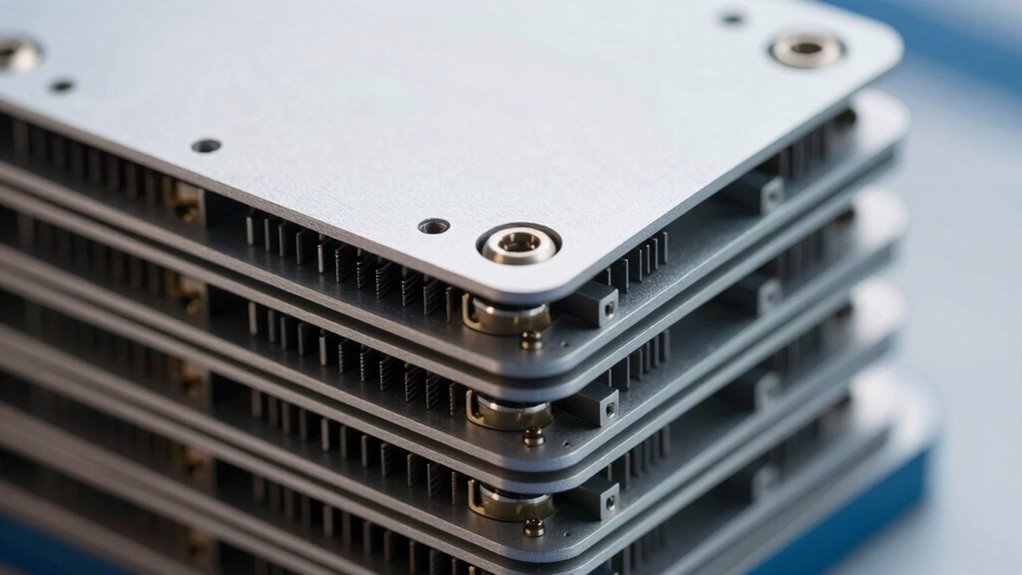
Ensuring stable and safe layering in high-frequency LED systems requires careful mechanical design. To achieve this, consider these tips:
- Use high-quality mechanical fasteners that can withstand thermal expansion without loosening or warping.
- Select materials with compatible coefficients of thermal expansion to prevent stress buildup or misalignment.
- Implement rigid mounting structures that minimize movement or vibrations during operation.
- Regularly inspect and tighten fasteners to maintain stability as components heat and cool.
- Incorporate strain relief components to reduce mechanical stress on connections and enhance overall stability.
- Pay attention to thermal management strategies to prevent material warping or deformation over time.
- Choose materials with known thermal expansion properties to further reduce the risk of misalignment or damage under thermal cycling.
Best Placement and Spacing Practices to Reduce Heat and Interference
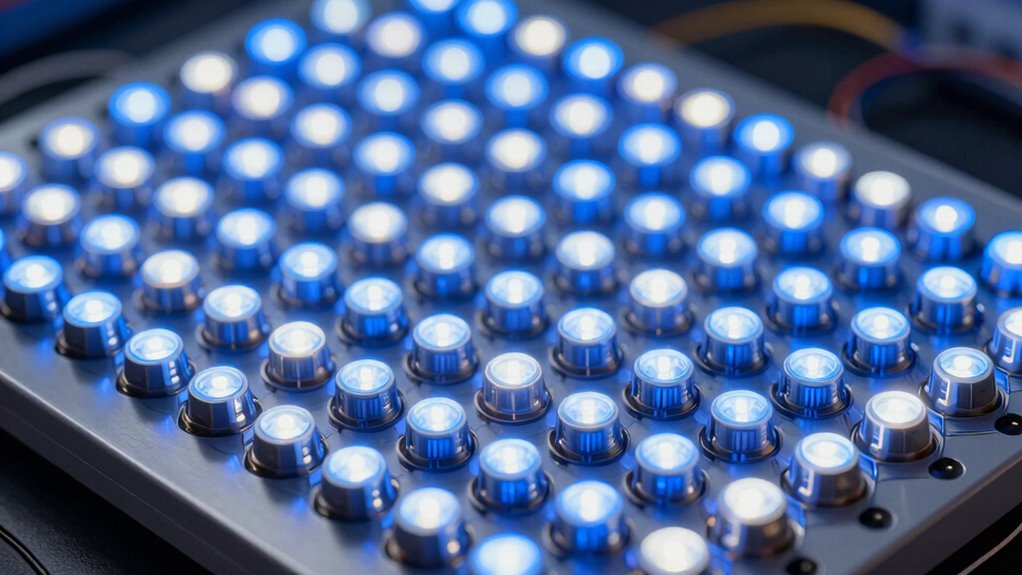
Proper placement and spacing of LED components are essential for minimizing heat buildup and reducing electromagnetic interference. To enhance thermal management, keep LEDs sufficiently separated to allow airflow and prevent heat concentration. Avoid clustering high-frequency components too close to LEDs, as this can increase electromagnetic interference. Use adequate spacing to facilitate heat dissipation and maintain consistent performance. Incorporate electromagnetic shielding around sensitive parts to further reduce interference, especially when stacking multiple layers. Ensure that power lines and signal paths are routed with proper clearance to limit cross-talk. By carefully planning layout and spacing, you can considerably lower thermal and electromagnetic issues, promoting safer operation and longer component lifespan. Precise placement and thoughtful spacing are key to achieving reliable, interference-free integration.
Which Materials and Insulation Protect Sensitive Components?
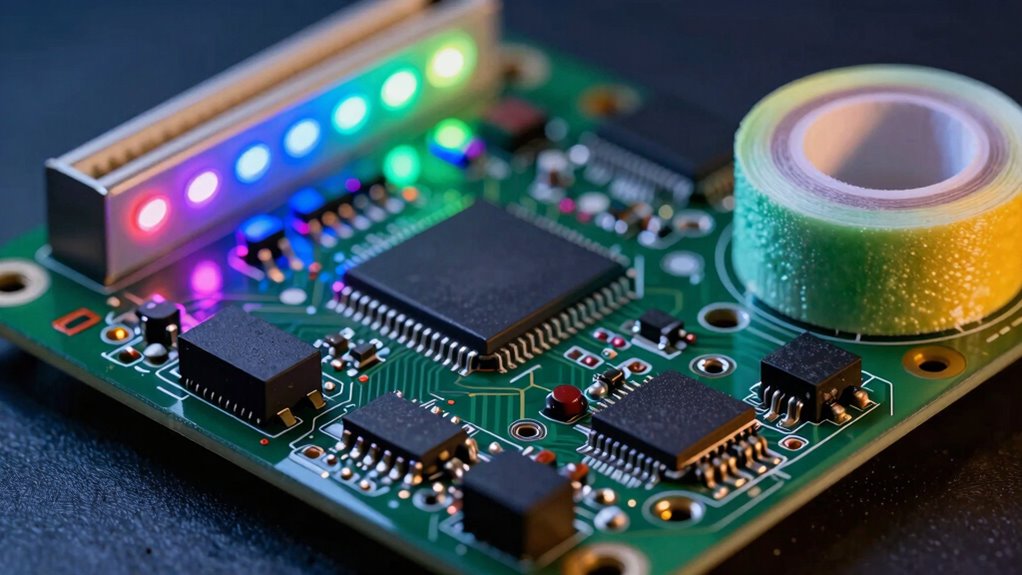
Selecting the right materials and insulation is crucial for protecting sensitive components from heat, electromagnetic interference, and electrical shorts. To guarantee safety and performance, consider these options:
Choosing proper materials and insulation ensures safety, prevents shorts, and enhances device longevity.
- Use dielectric materials like polyimide or ceramic insulators to prevent electrical conduction and shield components from interference.
- Apply conductive coatings such as copper or silver to create grounded barriers that reduce electromagnetic noise.
- Incorporate thermal insulation layers, like silicone or foam, to manage heat buildup.
- Opt for high-quality insulation tapes and sleeves that resist high temperatures and prevent accidental shorts.
These choices help safeguard your components, ensuring reliable operation in high-frequency and LED applications. Proper material selection minimizes risks and prolongs device lifespan.
How to Test and Verify Safe Operation After Stacking

After stacking components in high-frequency and LED devices, you need to thoroughly test and verify that everything operates safely and reliably. Focus on thermal management to ensure heat dissipation is effective, preventing overheating that can damage components or cause failures. Use thermal imaging or temperature sensors to monitor critical areas during operation. Check component integration by verifying signal integrity, ensuring no interference or signal degradation occurs between modules. Run functional tests under expected load conditions, observing how the system handles combined high-frequency signals and LED illumination. Confirm that voltage levels stay within safe limits and that no unexpected temperature rises happen. Proper testing guarantees that your stacked setup maintains safety standards and performs reliably over time.
Common Mistakes to Avoid When Combining High-Frequency Modules With LEDS

When combining high-frequency modules with LEDs, one common mistake is neglecting electromagnetic interference (EMI) that can disrupt signal integrity. To prevent issues, pay close attention to voltage compatibility to avoid damaging components or causing malfunction. Additionally, guarantee proper component isolation so that high-frequency signals don’t interfere with LED operation. Here are key mistakes to avoid:
- Ignoring voltage compatibility between modules and LEDs.
- Failing to implement adequate component isolation measures.
- Overlooking EMI shielding, leading to signal noise.
- Neglecting proper grounding to minimize interference.
Expert Tips for Building Reliable, Safe Stacked Systems
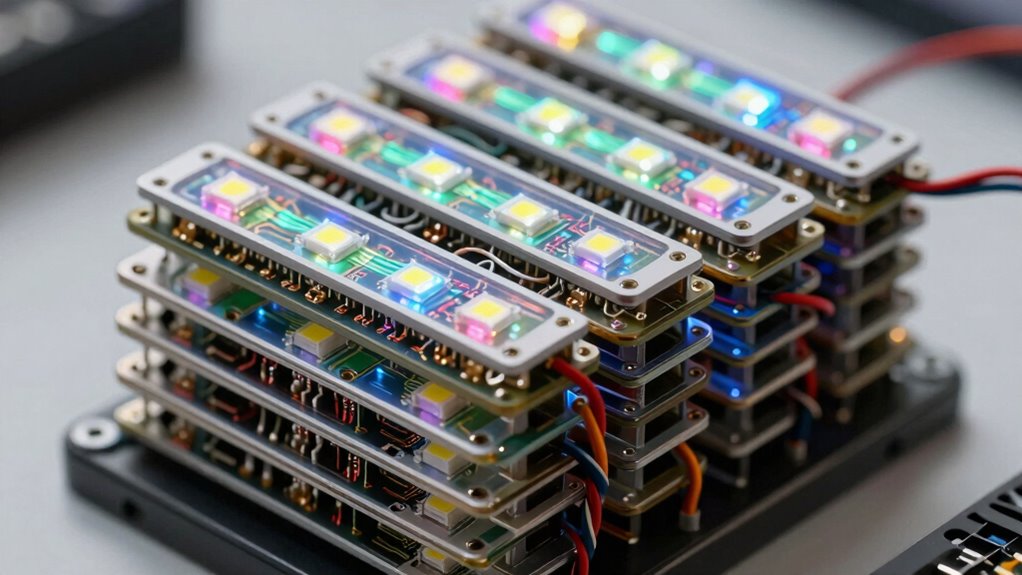
Building reliable, safe stacked systems requires careful attention to the overall design and proper implementation of safety measures. Focus on circuit miniaturization to keep components compact without sacrificing performance, which helps reduce potential points of failure. Effective power management is essential; ensure your system can handle high-frequency signals and LED loads without overheating or voltage issues. Use appropriate filtering and shielding to prevent interference and protect sensitive components. Proper grounding and insulation minimize electrical hazards. Always test your design under real-world conditions to identify weak points. By balancing circuit miniaturization with robust power management, you create a system that’s both efficient and safe. Remember, thorough planning and meticulous execution are key to building reliable, stacked high-frequency and LED systems.
Frequently Asked Questions
What Are the Safety Standards for Stacking High-Frequency Modules With LEDS?
You should follow safety standards that emphasize proper electrical isolation and thermal management when stacking high-frequency modules with LEDs. Make certain there’s adequate spacing to prevent overheating and maintain electrical separation to avoid short circuits. Use appropriate insulators and heat sinks, and adhere to manufacturer guidelines and industry standards like IEC or UL. Regular inspections and testing are essential to ensure safe operation and prevent damage or hazards.
How Does Stacking Affect the Lifespan of High-Frequency and LED Components?
Coincidentally, stacking high-frequency modules with LEDs can shorten their lifespan if you neglect thermal management and electrical isolation. When components are stacked, heat builds up, risking overheating and damage. Without proper electrical isolation, voltage fluctuations can cause premature wear. To guarantee longevity, maintain effective thermal management, provide adequate spacing, and use insulation materials, helping components operate efficiently and last longer despite stacking.
Can Stacking Cause Signal Degradation or Loss of Performance?
Yes, stacking high-frequency and LED components can cause signal degradation or loss of performance. When you stack them, electromagnetic interference may increase, disrupting signal integrity. This interference can lead to weakened signals or data errors. To prevent this, guarantee proper shielding and spacing. By managing electromagnetic interference effectively, you maintain peak performance and protect signal quality even when stacking these components.
What Are the Best Practices for Grounding Stacked High-Frequency and LED Layers?
Think of grounding stacked layers like building a sturdy bridge—you need solid foundations. To do this, you should implement proper grounding techniques, such as connecting each layer to a common ground point, guaranteeing minimal impedance. Use insulation methods to prevent unintended contact or interference. Keep grounding paths short and thick, and test regularly. These steps help maintain performance, reduce noise, and ensure safety when stacking high-frequency and LED layers.
How Do Environmental Factors Influence the Safety of Stacked High-Frequency and LED Systems?
Environmental factors crucially impact the safety of stacked high-frequency and LED systems. Poor thermal management can cause overheating, increasing fire risks and damaging components. Electromagnetic interference from external sources can disrupt system performance or lead to malfunction. To guarantee safety, you should optimize thermal management strategies, like proper ventilation and heat sinks, and shield against electromagnetic interference, maintaining a controlled environment that minimizes these risks effectively.
Conclusion
Stacking high-frequency modules and LEDs is like orchestrating a delicate symphony—you must synchronize every note carefully. By understanding electrical compatibility, managing heat, and choosing the right materials, you guarantee your layered design stays in perfect harmony. Avoid pitfalls and test thoroughly, so your system doesn’t just look good on paper but performs flawlessly in the real world. With proper planning, you’ll craft a resilient, high-performance masterpiece that shines brightly and functions safely.