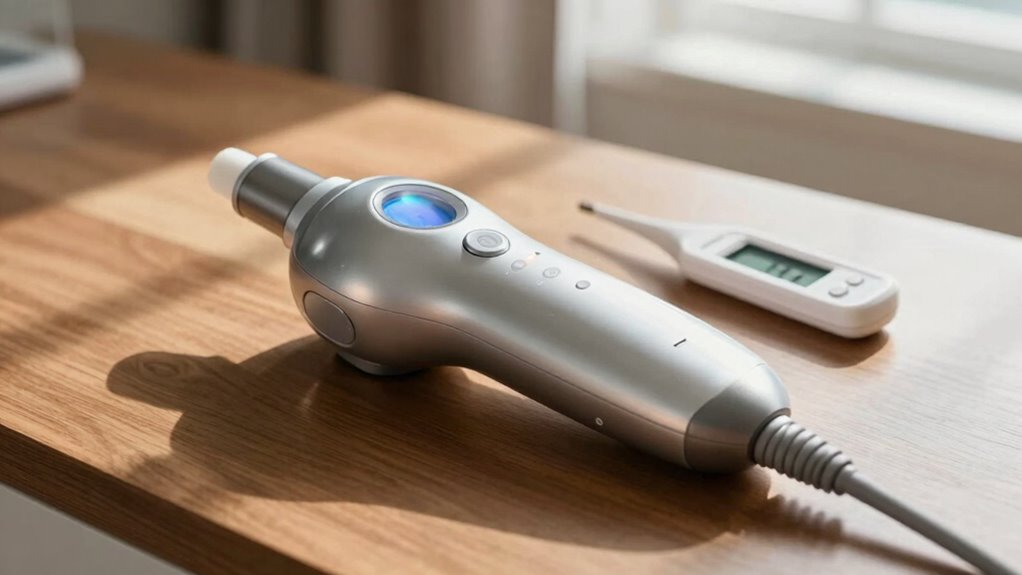

When using radiofrequency devices at home, it’s essential to avoid the temperature myth that higher always means better results. Too much heat can damage your skin or cause discomfort, while too little reduces effectiveness. Proper device calibration, monitoring your skin temperature, and following manufacturer instructions help you maintain safe, effective treatment levels. Staying informed about safe temperature ranges ensures you get the best results without risking harm—if you want to learn more, keep going.
Key Takeaways
- Proper device calibration and temperature monitoring prevent overheating and skin damage during at-home RF treatments.
- Maintaining safe temperature ranges (38°C-42°C) ensures effective results without risking burns or irritation.
- Overestimating temperature can cause harm, while underestimating reduces treatment efficacy—accurate control is essential.
- Using reliable thermometers or built-in sensors helps identify overheating and allows timely adjustments.
- Educating yourself on proper RF device operation dispels myths about temperature, promoting safe, effective at-home skincare.
How Do RF Treatments Work Safely?

Radiofrequency (RF) treatments work safely when performed with proper equipment and trained professionals or reputable at-home devices. Ensuring device calibration is essential; it guarantees the RF device delivers consistent, accurate energy levels, preventing skin damage. When using RF devices at home, always follow manufacturer instructions carefully. Maintaining skin hydration before and after treatment helps enhance safety and effectiveness, as well-hydrated skin minimizes irritation. Proper calibration ensures the device emits the right heat, reducing risks associated with overheating. Additionally, staying within recommended settings and durations is critical. Good device maintenance is vital for ongoing safety and optimal performance. Regular device calibration ensures consistent treatment results and minimizes risks. Being aware of tissue response during treatment helps prevent adverse effects and ensures optimal outcomes. A thorough understanding of treatment parameters can further improve safety and efficacy. By focusing on device calibration and keeping your skin well-hydrated, you create a safer environment for RF treatments, allowing you to enjoy their benefits without compromising your skin’s health. Incorporating proper safety protocols can further reduce the likelihood of unintended side effects and promote better results.
Why Are Heat Levels Important for RF Safety?

Have you ever wondered why controlling heat levels is essential during RF treatments? It’s because excessive heat increases radiation exposure, which can harm your skin. Different skin sensitivities react uniquely to heat, making it crucial to maintain safe temperature levels. If the heat gets too high, you risk damaging skin tissue or causing discomfort, defeating the purpose of a safe treatment. Proper heat regulation minimizes risks, allowing your skin to benefit from RF therapy without adverse effects. Staying within safe temperature ranges helps prevent burns and reduces unnecessary radiation exposure. Remember, controlling heat isn’t just about comfort; it’s vital for your safety and the effectiveness of the treatment. Additionally, understanding future trends in safety measures can help you stay informed about innovative ways to enhance RF treatment safety. Implementing advanced temperature control technologies is becoming increasingly important as RF treatments become more widespread. Maintaining precise heat levels also contributes to minimizing comedogenic risks, ensuring your skin remains healthy and clear during and after treatments. Proper heat management is essential to prevent overheating, which can compromise both safety and results during RF procedures. Incorporating real-time temperature monitoring systems can further improve safety by providing immediate feedback and adjustments.
How to Set the Correct Temperature on Your RF Device

Wondering how to set the right temperature on your RF device? Proper device calibration and ongoing temperature monitoring are key. To guarantee safe and effective use, follow these steps:
- Check your device’s calibration settings to confirm the temperature scale is accurate.
- Use a reliable thermometer or built-in sensor to monitor the skin’s temperature during treatment.
- Adjust the device settings gradually, aiming for the recommended safe temperature range—usually between 38°C and 42°C—to avoid overheating.
- Remember that proper device calibration is essential for consistent and safe treatment results.
- Additionally, being aware of indoor air quality can help ensure your environment supports safe device use by minimizing dust and other particles that could impact your health.
- Regularly inspecting your device for wear and tear can prevent malfunctions that might affect temperature accuracy.
- Maintaining a stable environment with appropriate home safety measures can further enhance the safety during RF treatments.
- Ensuring your device has proper maintenance can help sustain accurate temperature control over time.
Always verify that your device is properly calibrated before each session. Regular temperature monitoring helps you stay within safe limits, preventing discomfort or potential harm. Remember, precise control is essential for safe, effective RF treatments at home.
How to Spot and Fix Overheating During Treatment
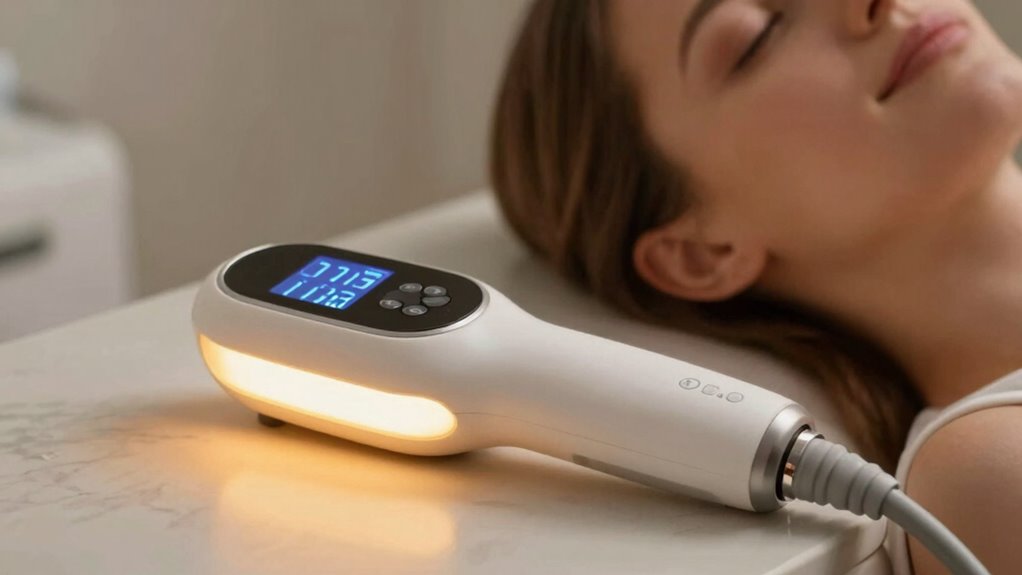
How can you tell if your skin is overheating during a RF treatment? Look for signs like redness, excessive warmth, or discomfort. Your device calibration plays a role here—if it’s not properly calibrated, overheating can occur. To prevent this, follow user safety tips such as testing the device on a small area first and monitoring your skin closely. Additionally, understanding treatment safety is essential to minimize risks and achieve optimal results. Remember that proper device maintenance can significantly reduce the chances of overheating. Imagine a grid:
| Skin Reaction | Temperature Feeling | Action to Take |
|---|---|---|
| Redness | Hot, uncomfortable | Pause treatment, cool skin |
| Swelling | Warm, tender | Reduce intensity, check device calibration |
| Tingling | Slight warmth | Continue cautiously |
| Numbness | No sensation | Stop immediately |
| Itching | Mild irritation | Reassess device settings |
Being aware of overheating signs can help you respond quickly and safely during your treatment. Stay attentive, and fix overheating promptly to ensure safe, effective treatment.
Expert Tips for Safe and Effective At-Home RF Use

To guarantee safe and effective at-home RF treatments, it’s essential to follow a few expert tips that prioritize both safety and results. First, verify your device is properly calibrated before each use to deliver consistent energy levels. Second, keep your skin well-hydrated; dry skin can increase the risk of irritation and reduce treatment effectiveness. Third, always follow the manufacturer’s instructions regarding treatment duration and intensity, avoiding overuse. Regularly check your device for any signs of malfunction, and never attempt to modify it. Remember, proper device calibration and maintaining skin hydration are key to avoiding overheating and achieving ideal results. Staying informed and cautious helps you get the benefits of RF at home without compromising safety. Additionally, understanding skin care practices can enhance your overall treatment safety and effectiveness. Incorporating proper hygiene practices before and after treatments also minimizes the risk of infection and irritation. Maintaining awareness of device maintenance ensures your equipment continues to operate safely and efficiently. Moreover, being mindful of temperature myths can prevent unnecessary concerns and ensure you use RF technology correctly. Educating yourself about correct device usage can further optimize your results and safety during at-home treatments.
Frequently Asked Questions
Can I Use RF Devices on Sensitive Skin Areas Safely?
You can use RF devices on sensitive skin areas if you choose a device compatible with your skin sensitivity. Always start with a lower intensity to see how your skin reacts, and follow the manufacturer’s guidelines. It’s best to perform a patch test first and avoid overuse. If you experience discomfort, redness, or irritation, stop immediately and consult a dermatologist to guarantee safe application.
What Signs Indicate RF Treatment Is Causing Damage?
A warning sign is when you notice skin discoloration or persistent redness after RF treatment. As the saying goes, “Better safe than sorry,” so keep an eye out for any unusual changes. If your skin feels tender, swollen, or burns, stop use immediately. These signals suggest damage and require prompt care. Always listen to your skin’s responses and consult a professional if you suspect harm.
How Often Should I Perform RF Treatments at Home?
You should perform RF treatments at home about once every 4 to 6 weeks. This treatment frequency allows your skin to adapt and recover, reducing the risk of damage. Avoid overdoing it, as excessive sessions can lead to irritation or adverse effects. Always follow the device’s instructions and listen to your skin’s response, adjusting the frequency if needed to maintain safe and effective results.
Are There Specific Skin Types That Respond Better to RF?
You’ll find that skin types with better compatibility, like slightly thicker or less sensitive skin, tend to respond more effectively to RF treatments. Make certain your device is properly calibrated for your skin type to optimize results and prevent adverse effects. Always perform a patch test first, especially if you have sensitive or darker skin, to ensure safe and effective treatment. Proper calibration and understanding your skin’s response are key.
What Should I Do if My RF Device Malfunctions?
A stitch in time saves nine. If your RF device malfunctions, stop using it immediately. Check if it’s properly calibrated and guarantee safety precautions were followed. Contact the manufacturer’s customer support for troubleshooting tips or repairs. Avoid trying to fix it yourself, as improper handling can be risky. Always prioritize safety and quality assurance to keep your treatments effective and safe.
Conclusion
Now that you know the truth about RF treatment temperatures, you’re better equipped to use your device safely. But what if you encounter an unexpected overheating? The next step could be more vital than you think. Stay vigilant, follow expert tips, and never ignore signs of trouble. Your skin’s safety depends on it—are you ready to take control and access the full potential of at-home RF skincare? The choice is yours.