
To guarantee safe and effective IPL treatments, you need to assess your skin tone first. Lighter skin generally responds better and is safer for IPL, while darker skin may require specific devices to reduce risks like burns or pigmentation issues. Use tools like colorimeters, apps, or color charts for an accurate check and perform patch tests. Understanding these basics helps prevent complications—continue exploring to learn how to choose the right device for your skin.
Key Takeaways
- Assess your skin tone using tools like colorimeters or smartphone apps to ensure device compatibility and safety.
- Choose IPL devices with built-in sensors and safety features that adapt to your skin tone to prevent burns or hyperpigmentation.
- Perform patch tests on small skin areas before full treatments to monitor reactions and confirm suitability.
- Avoid IPL use on skin with active infections, psoriasis, eczema, or recent sun exposure to reduce adverse risks.
- Follow manufacturer guidelines for device calibration, maintenance, and treatment settings tailored to your skin type.
Why Skin Tone Matters When Choosing an IPL Device
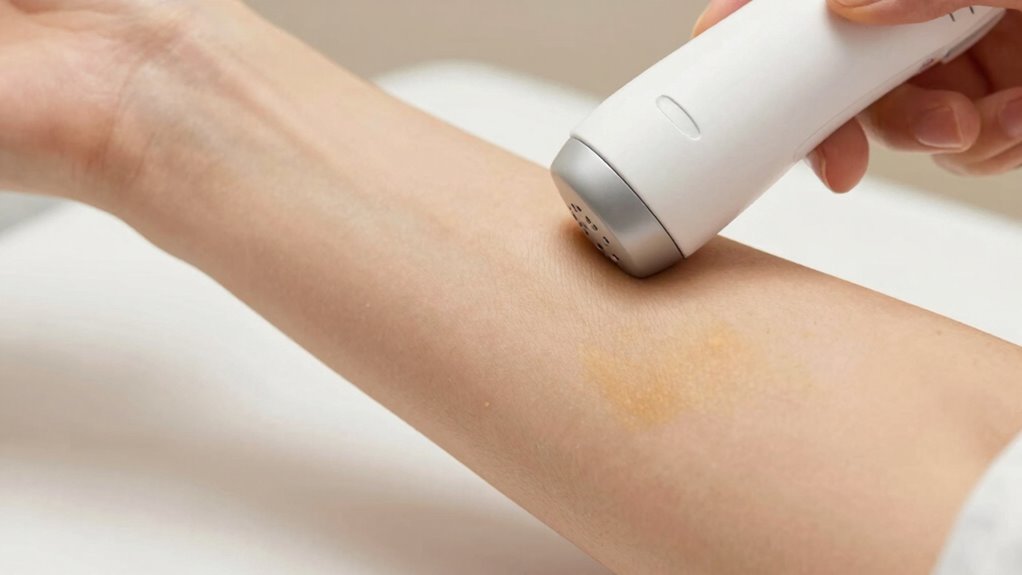
Your skin tone plays a essential role in choosing the right IPL device because it directly affects the safety and effectiveness of the treatment. For laser hair removal, matching your skin tone to the device’s specifications is paramount to prevent burns, pigmentation issues, or ineffective results. Lighter skin tones generally respond better to IPL treatments because the contrast between hair and skin allows the laser to target hair follicles accurately. Skin tone matching helps guarantee the device delivers the right wavelength and energy level, reducing the risk of skin damage. If your skin is darker, you’ll need a device specifically designed for deeper skin tones. Properly matching your skin tone with the right IPL device makes your hair removal safer and more effective. Additionally, understanding your skin tone safety requirements ensures you choose a device that minimizes risks while maximizing results. Being aware of your skin tone classification can further aid in selecting the most suitable device for your needs, especially when considering natural skin variations. Recognizing the importance of individual skin differences can help you make more informed choices for safe treatments.
Understanding the Fitzpatrick Skin Type Scale
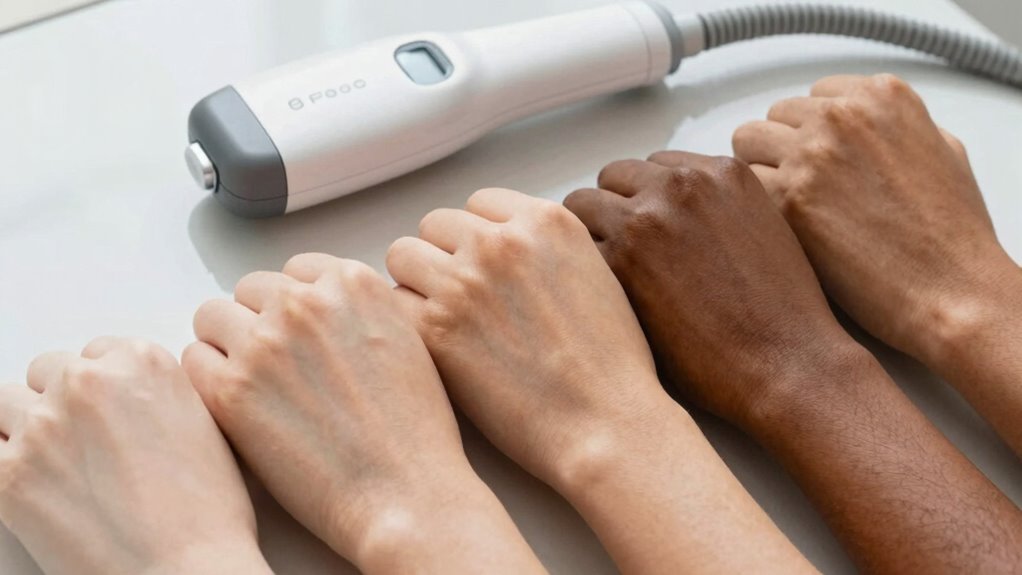
To choose the right IPL device for your skin, understanding how skin types respond to laser treatments is key. The Fitzpatrick scale helps classify skin based on its reaction to sun exposure and pigmentation. This skin classification system ranges from Type I to Type VI, guiding you on safe treatment options. Understanding skin reactions is crucial for minimizing risks and achieving optimal results. Additionally, knowing your Fitzpatrick skin type can help determine appropriate treatment settings and prevent adverse effects such as burns or hyperpigmentation. Recognizing your skin’s sensitivity levels can further refine treatment safety and effectiveness. Proper equipment maintenance, including selecting suitable tip sizes and ensuring effective filtration, also contributes to safer and more successful IPL treatments. Being aware of skin response patterns allows for more personalized treatment plans that enhance safety and outcomes.
Is Your Skin Tone Suitable for IPL Treatment?

Your skin tone plays a vital role in IPL treatment success, so it’s important to check if your skin falls within the compatible range. Before committing to a full session, a patch test can help determine how your skin reacts. Ensuring compatibility reduces the risk of side effects and improves your chances of achieving the desired results. Additionally, understanding cycling gear care tips can help you maintain your equipment and stay prepared for your rides. Recognizing nail biology differences between males and females can also influence post-treatment skin care, helping you maintain healthy skin throughout the process. Being aware of environmental considerations like avoiding sun exposure can further enhance your results and skin safety. Incorporating supportive emotional health strategies can help you stay confident and positive throughout your skincare journey. Moreover, considering safety standards for laser treatments ensures you select reputable clinics that prioritize skin safety and technology efficacy.
Skin Tone Compatibility
While IPL devices can be effective for hair removal and skin treatment, they work best on certain skin tones. To guarantee safety and effectiveness, you should do a skin tone assessment before starting. This helps determine if your skin is compatible with the device. During device compatibility testing, check if your skin is too dark or too light, as IPL targets pigment. Generally, lighter skin tones with minimal melanin work best. Darker skin tones may risk burns or hyperpigmentation. Here’s what to consider:
- Skin tone ranges recommended by the device manufacturer
- Whether your skin has any pigmentation irregularities
- How your skin reacts during compatibility testing
- Skin tone compatibility is crucial, as it directly affects the safety and efficacy of IPL treatments. Performing these checks helps you avoid adverse effects and achieve safe, ideal results. Additionally, understanding your melanin levels can further inform your suitability for IPL therapy. Recognizing the importance of skin assessment can help prevent complications and ensure optimal treatment outcomes. Moreover, proper skin evaluation can identify underlying skin conditions that might interfere with IPL procedures.
Testing Before Full Use
Before using an IPL device regularly, it’s important to conduct a thorough skin tone test to confirm your skin’s suitability. This step ensures device safety and minimizes risks like burns or pigmentation changes. Perform a patch test on a small skin area, such as your wrist or behind your ear, and wait 24 hours to check for adverse reactions. Use the table below to evaluate your skin tone:
| Skin Tone Category | Suitability for IPL | Recommendations |
|---|---|---|
| Very Light | Highly suitable | Proceed with caution |
| Light | Suitable | Safe with proper settings |
| Medium | Usually suitable | Use gentle settings |
| Olive | Caution advised | Consult professional advice |
| Dark | Generally unsuitable | Avoid IPL treatment |
This testing helps confirm your skin tone aligns with device safety guidelines. Additionally, understanding chemical skin reactions can help you recognize potential adverse effects from IPL treatments. It is also beneficial to be aware of spirituality insights like angel numbers, which can encourage positive mindset and trust in the process during your skincare journey. Proper skin assessment is essential before beginning IPL treatments to ensure optimal safety and results. Recognizing skin tone variations can further aid in customizing treatments for better outcomes.
How to Safely Check Your Skin Tone at Home
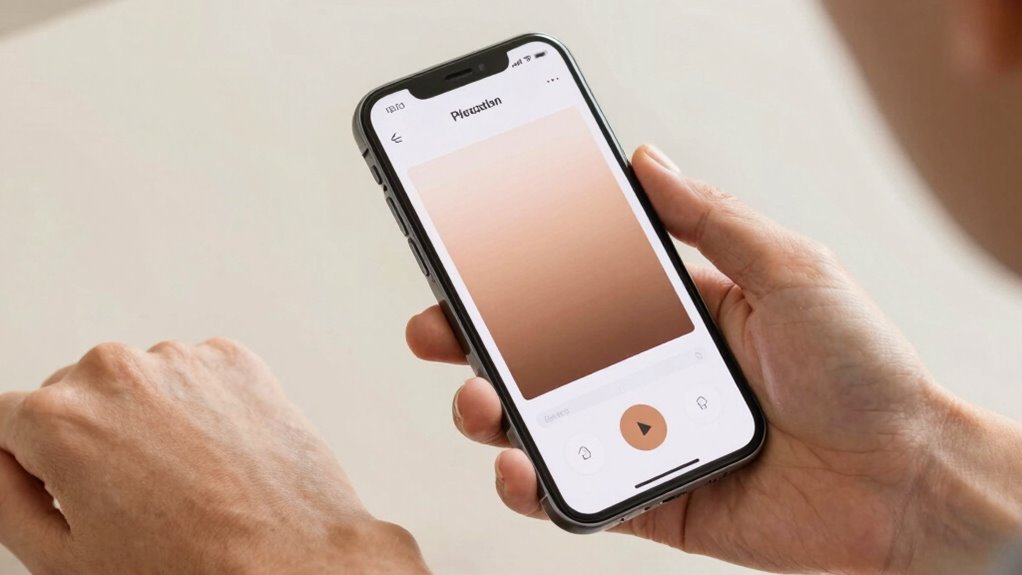
To safely verify your skin tone at home, start by gathering the right skin tone tools. Follow the proper testing steps carefully, and then record and observe your results. This process helps guarantee you’re choosing the right IPL device for your skin. Ensuring your cabling solutions are secure and properly installed can also prevent issues during treatment. Additionally, understanding your skin assessment results can help you make more confident decisions about your device options.
Gather Skin Tone Tools
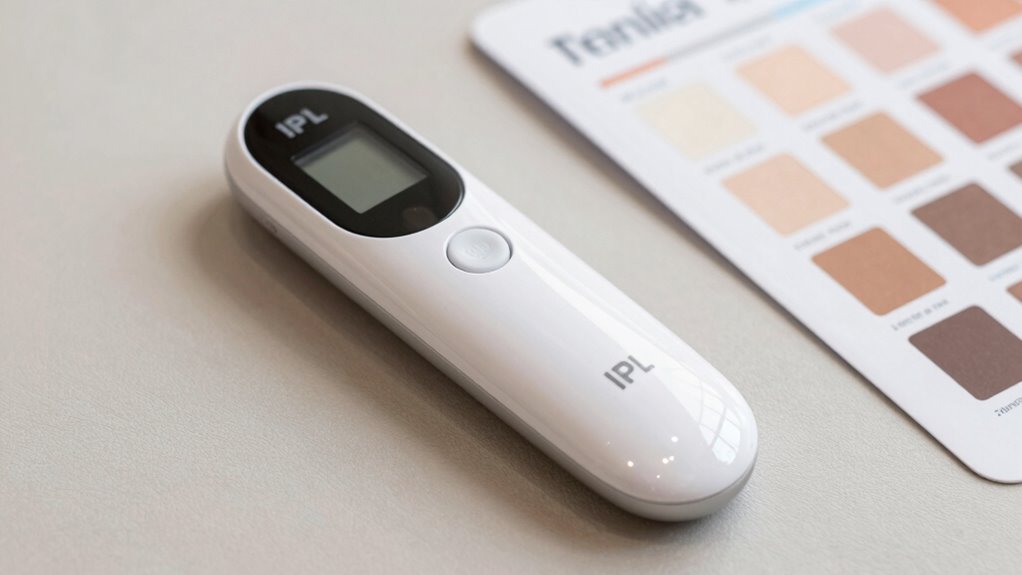
Checking your skin tone at home is simple when you have the right tools. Using a skin tone assessment kit or color matching chart helps you accurately determine your skin’s hue, which is essential for device compatibility. To get started, gather:
- A reliable skin tone assessment device, like a colorimeter or smartphone app
- A well-lit mirror to see your skin clearly
- A neutral background or white sheet for accurate color comparison
These tools help you identify your skin’s undertone and tone, ensuring you choose the right IPL device. Proper skin tone assessment minimizes risks and enhances safety. Remember, accurate measurement is key to matching your skin tone with the device’s settings, reducing the chance of irritation or ineffective treatment.
Follow Proper Testing Steps
Once you have your tools ready, follow these steps to accurately assess your skin tone at home. Begin by cleaning and drying the test area to guarantee accurate results. Apply a small amount of the test patch or use the device’s calibration feature if available. Check your skin sensitivity by performing a patch test on a less visible area, like your inner wrist, to observe any adverse reactions. Ensure your device is properly calibrated according to the manufacturer’s instructions, which helps prevent overexposure or improper settings. Carefully follow the test procedure, noting how your skin reacts and how the device performs. This process minimizes risks and ensures you’re choosing the right IPL device for your skin tone, keeping safety front and center.
Record and Observe Results
How can you guarantee your skin tone assessment is accurate and safe? Start by recording your initial skin tone carefully and observing how it responds after each session. Consistently track your progress to confirm the device remains compatible with your skin. To do this effectively:
- Take clear photos under natural light for comparison over time
- Note any changes in skin tone or irritation during treatments
- Use a skin tone chart to verify device compatibility throughout your sessions
Features That Make an IPL Device Safe for Your Skin Tone
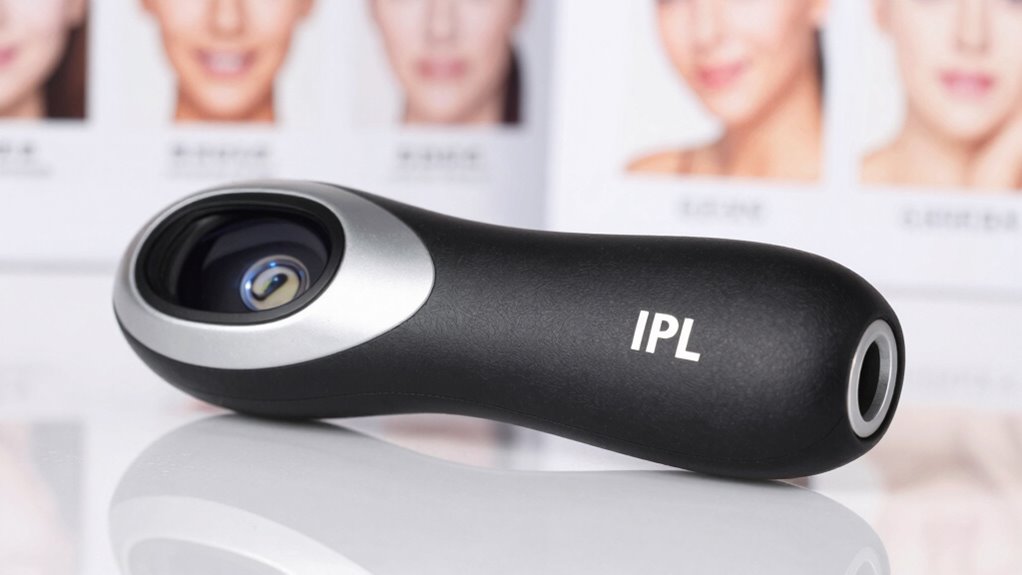
To guarantee safety when using IPL devices on different skin tones, manufacturers incorporate specific features that minimize the risk of side effects. One key feature is advanced sensors that assess your skin tone before treatment, ensuring the device only emits safe levels of light. This helps dispel common skin tone myths, such as the idea that IPL works equally well on all skin types. Additionally, many devices now offer customizable settings and multiple device color options, making it easier to select the right intensity for your skin. These safety features help prevent burns, pigmentation issues, and other adverse effects. By choosing an IPL device with these capabilities, you can enjoy effective hair removal while prioritizing your skin’s safety.
What Are the Risks of Using IPL on Unsuitable Skin?

Using IPL on unsuitable skin can increase your risk of burns and skin discoloration. If your skin tone isn’t compatible, the treatment might not work safely or effectively. It’s important to understand these risks before proceeding.
Increased Risk of Burns
Applying IPL devices on unsuitable skin can markedly increase the risk of burns. When your skin tone isn’t compatible, the device’s intense pulsed light may overheat the skin, leading to serious skin damage. This burn risk is higher if you have darker skin, tanned skin, or recent sun exposure. You might notice:
- Unpleasant burning sensation during treatment
- Redness, blistering, or swelling afterward
- Prolonged skin irritation or discoloration
These signs indicate that your skin isn’t handling the IPL well, increasing the chance of lasting damage. Using IPL on unsuitable skin not only causes discomfort but also raises the likelihood of burns and skin damage that could require medical attention. Always confirm your skin tone matches the device’s safety guidelines to minimize these risks.
Skin Discoloration Possibilities
When IPL devices are used on unsuitable skin, the risk of skin discoloration increases considerably. You might notice uneven patches or darkening, known as hyperpigmentation, or lighter spots called hypopigmentation. These pigment changes occur because IPL targets melanin, and if your skin tone isn’t compatible, it can disrupt melanin production. Using IPL on skin that’s too dark or too light can lead to unpredictable results, leaving you with lasting skin discoloration. Such pigment changes are often permanent and may require treatments to correct. To avoid these risks, it’s essential to assess your skin tone carefully before use. If your skin isn’t suitable, consider alternative hair removal methods to prevent unwanted discoloration and maintain an even complexion.
Tips for Safe and Effective IPL Results
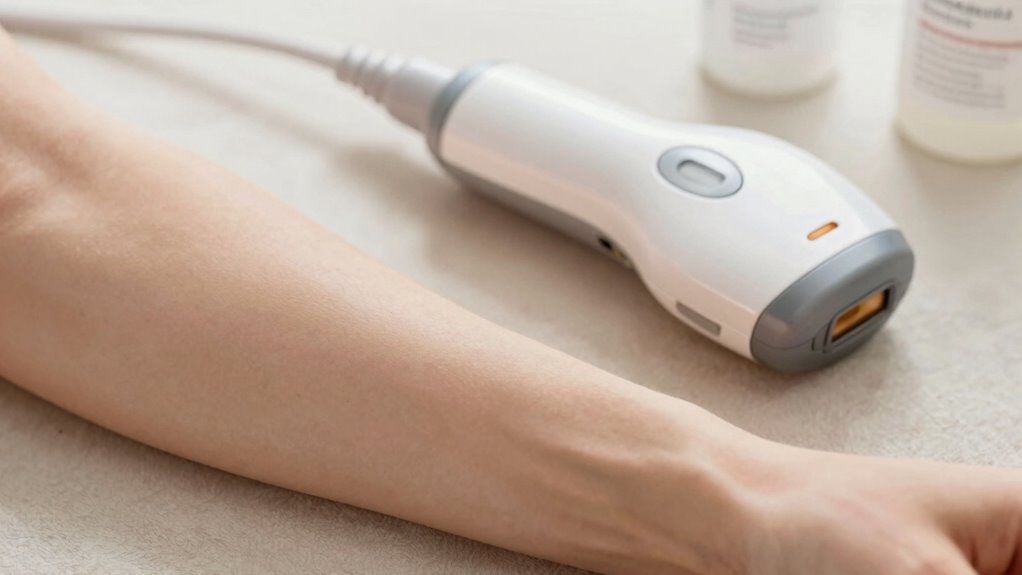
To achieve safe and effective results with IPL devices, it’s essential to follow proper guidelines and precautions. Start by understanding your skin tone awareness and how it impacts treatment. Always choose a device with robust safety features, like skin contact sensors and adjustable energy levels. Before each session, clean and shave the treatment area to improve light absorption. Avoid sun exposure and tanning products that can interfere with results or cause skin damage. When operating the device, follow the manufacturer’s instructions carefully. Remember to start with the lowest energy setting to assess your skin’s response. Consistency is key; regular treatments yield better results while minimizing risks. These tips help you maximize benefits securely and ensure your IPL experience is both effective and skin-friendly.
Alternatives to IPL for Darker or Sensitive Skin
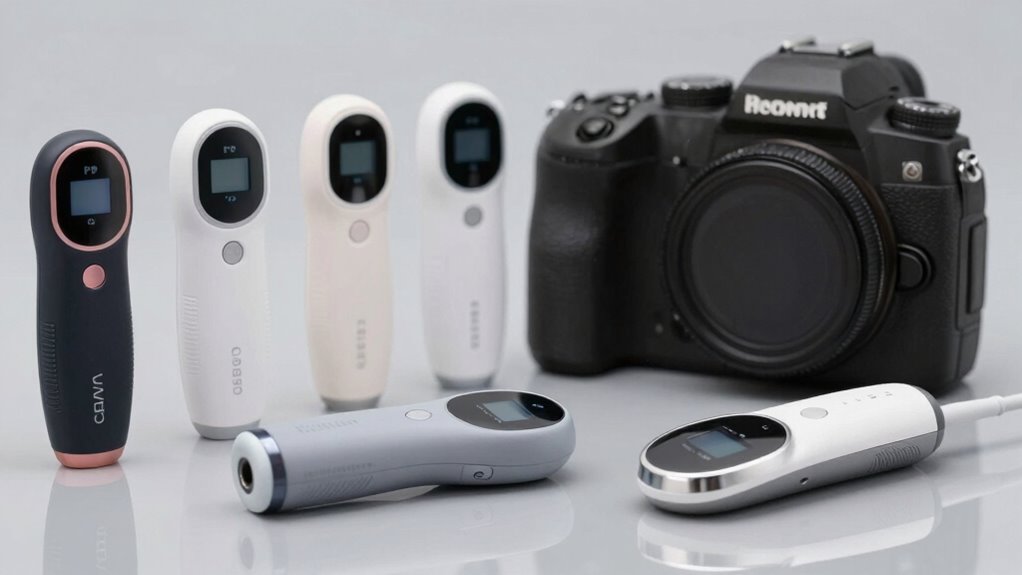
If IPL treatments aren’t suitable for your darker or sensitive skin, there are effective alternatives you can consider. Laser hair removal options like diode lasers or Nd:YAG lasers often provide better skin compatibility, targeting hair follicles without risking pigmentation issues. Electrolysis is another safe alternative, especially effective for small areas, offering permanent results with minimal skin impact. Topical treatments, such as depilatory creams, can also work, but it’s crucial to choose products designed for sensitive skin to avoid irritation. Additionally, some opt for natural methods like sugaring or waxing, which may be suitable if your skin reacts poorly to light-based treatments. Always consult with a dermatologist to determine which alternative treatments align best with your skin type and safety needs.
Common Mistakes When Choosing an IPL Device
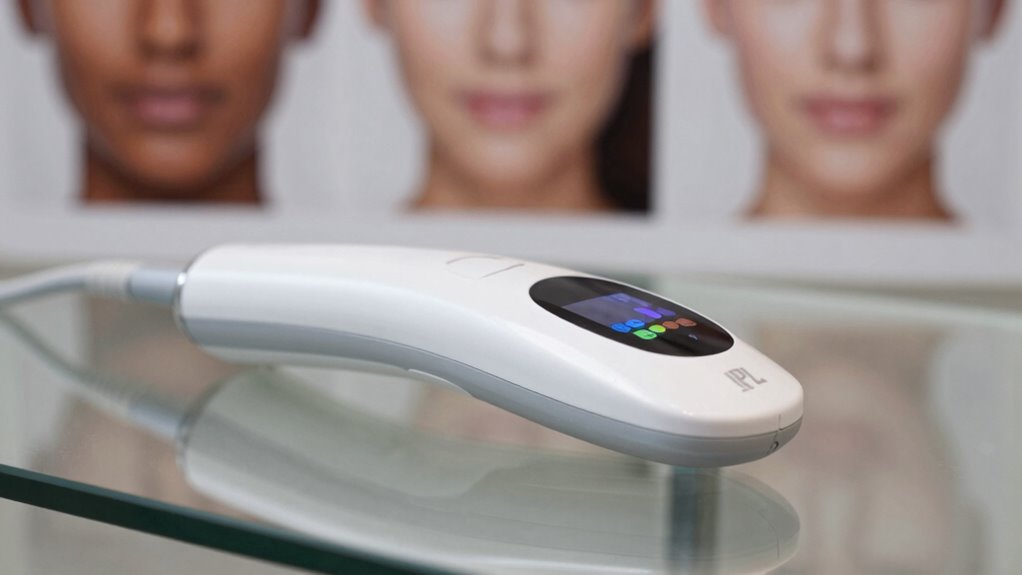
Choosing the right IPL device can be tricky, and many people make common mistakes that compromise safety and effectiveness. One mistake is ignoring device durability, risking a device that breaks or underperforms quickly. Another is selecting a brand with a poor reputation, which may lack safety features or reliable results. Finally, focusing solely on price can lead you to an unreliable device that doesn’t last or deliver consistent results. To avoid these pitfalls, research brands with established reputations and read reviews about device durability. Look for devices with proven track records and warranties. Skimping on quality can cost more in the long run, both financially and in skin safety. Making informed choices ensures a safer, more effective IPL experience.
When to Consult a Professional Before Buying or Using IPL

Making the right choice in an IPL device isn’t just about picking the most popular model or the lowest price; it’s also about knowing when professional guidance can safeguard your skin and ensure effective results. If you have any skin conditions, dark skin tones, or are unsure about your skin’s suitability, a professional consultation is essential. A skin assessment allows specialists to evaluate your skin type, tone, and health, helping you choose the safest device. Consider consulting a dermatologist before starting IPL treatments if you experience the following:
| Skin Conditions | Skin Tone Concerns | Medical History | Recent Sun Exposure | Sensitive Skin |
|---|---|---|---|---|
| Psoriasis | Dark or tanned skin | Bleeding disorders | Sunburns in past 2 weeks | Allergies or reactions |
| Eczema | Very light skin | Blood thinners | Tanning beds | Skin sensitivity |
| Active infections | Uncertain skin tone | Autoimmune diseases | Recent chemical peels | Skin infections |
Frequently Asked Questions
Can IPL Devices Cause Skin Discoloration in Darker Skin Tones?
Yes, IPL devices can cause skin discoloration in darker skin tones if not used with proper IPL safety measures. The intense pulses may target melanin, leading to uneven skin pigmentation or hyperpigmentation. To avoid this, you should choose devices designed for darker skin and follow safety guidelines carefully. Always consult a professional or read the instructions thoroughly to safeguard your skin and ensure safe, effective results.
How Do I Identify My Skin’s Undertone for IPL Safety?
You might notice a coincidence when you observe your veins—if they appear blue or purple, your skin likely has cool undertones; if they look greenish, you’re warm-toned. To identify your skin undertone for safe IPL use, do a simple color matching test: hold a white cloth next to your face and see which jewelry looks better—silver or gold. This quick test helps guarantee safe IPL treatment tailored to your skin.
Are There Specific IPL Features Recommended for Sensitive Skin?
If you have sensitive skin, look for IPL devices with features like adjustable intensity levels, cooling functions, and dermatologist-approved settings. These features help minimize irritation and protect your skin during treatments. Always choose devices specifically designed for sensitive skin, as they often include gentle pulse settings and skin sensors. Using these IPL features guarantees a safer, more comfortable experience while achieving effective hair removal or skin treatments.
How Long Does It Take to See Results on Different Skin Tones?
You might worry about uneven results with laser hair removal on different skin tones, but patience pays off. Typically, you’ll see noticeable results within 3 to 4 sessions, although skin pigmentation can influence the timeline. Lighter skin tones often respond faster, while darker tones may take longer. Consistent treatments guarantee the best outcome, and understanding your skin’s unique response helps set realistic expectations for your hair removal journey.
What Are the Signs That IPL Is Not Suitable for My Skin?
You’ll notice if IPL isn’t suitable for your skin through signs like persistent skin irritation or allergic reactions, such as redness, swelling, or itching. If these symptoms occur after treatment, stop using the device and consult a dermatologist. Avoid IPL if you have very dark skin or are prone to allergies, as these increase the risk of adverse reactions. Always perform a patch test prior to full application to verify safety.
Conclusion
Choosing the right IPL device is like selecting the perfect key for a lock—you need to match it precisely to open safe, effective results. By understanding your skin tone and respecting your skin’s unique needs, you guarantee a smooth journey through the treatment landscape. Think of it as tending a delicate garden; with proper care and awareness, you nurture healthy, radiant skin without risking damage, revealing your true glow with confidence and safety.