
If you’re managing hyperpigmentation, be cautious about mixing multiple brightening agents, as this can lead to skin irritation and potentially worsen dark spots. Instead, stick to a simple routine: cleanse, treat, moisturize, and apply sunscreen. Introduce new ingredients gradually and one at a time to monitor how your skin reacts. Proper product combination and sun protection are key to safe, effective fading—keep going to discover more expert tips for your routine.
Key Takeaways
- Avoid mixing multiple brightening agents simultaneously to prevent skin irritation and product ineffectiveness.
- Introduce new ingredients gradually, monitoring skin response to minimize adverse reactions.
- Ensure compatibility of skincare products to prevent unwanted interactions and maintain ingredient stability.
- Use simple routines with fewer products to reduce the risk of irritation and maximize treatment efficacy.
- Prioritize sun protection, as UV exposure can worsen hyperpigmentation regardless of product layering.
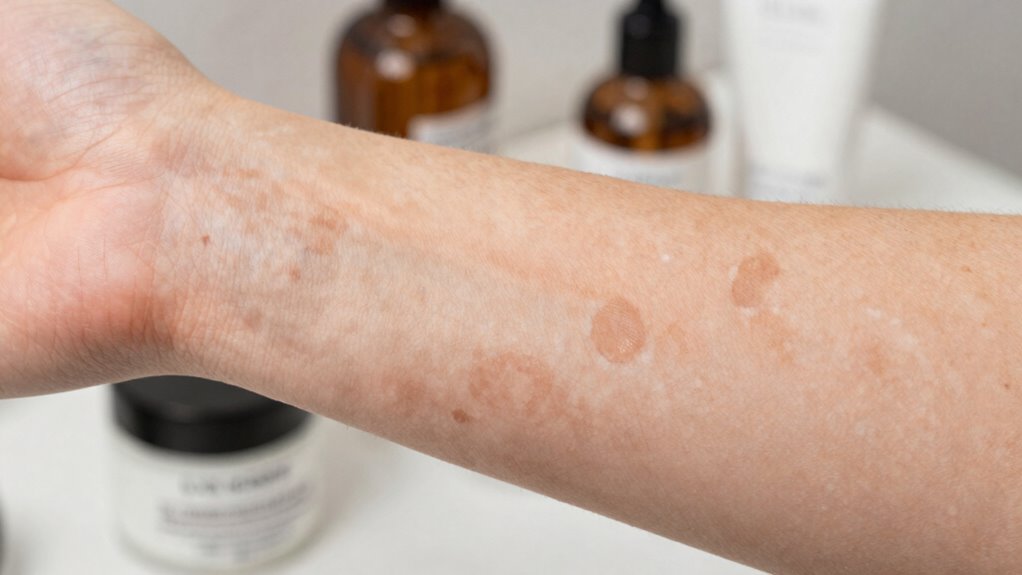
Dealing with hyperpigmentation can be frustrating, but with the right routine, you can effectively fade dark spots and even out your skin tone. One of the most important steps you shouldn’t overlook is sun protection. UV rays are a primary trigger for hyperpigmentation, and skipping sunscreen can undo all your efforts. Make certain to apply a broad-spectrum sunscreen every day, even on cloudy days or when you’re indoors near windows. Reapplying every two hours when you’re outside is equally essential. Besides sunscreen, wearing protective clothing and seeking shade can further shield your skin from harmful UV exposure.
Prioritize daily sun protection to prevent hyperpigmentation from worsening or returning.
When it comes to your skincare routine, ingredient safety should be a top priority. Many ingredients that claim to fade hyperpigmentation, like hydroquinone or certain acids, can cause irritation if not used correctly or if combined improperly. Mixing products without understanding their chemical interactions can increase the risk of adverse effects, such as redness, peeling, or even worsening dark spots. Always read labels carefully and consult with a dermatologist before introducing new treatments. For example, combining strong acids like retinoids or vitamin C with other potent agents can sometimes irritate your skin, especially if you have sensitive skin. It’s better to introduce new products gradually and monitor how your skin responds.
You might be tempted to layer multiple brightening agents, but doing so without guidance can be risky. Some ingredients may cancel each other out or cause irritation, which hampers your progress. Focus on a simple, consistent routine first—cleanser, targeted treatment, moisturizer, and sunscreen. If you want to add ingredients like niacinamide, azelaic acid, or kojic acid, do so one at a time and observe how your skin reacts. This approach helps safeguard ingredient safety and reduces the chances of adverse reactions. Recognizing the importance of ingredient safety can help you avoid potential skin damage and ensure your hyperpigmentation treatment is effective. Additionally, understanding product compatibility can help you make better choices when combining treatments and prevent unwanted interactions. Being aware of ingredient stability can also help you select products that remain effective over time, reducing the risk of ingredient degradation. Remember, fading hyperpigmentation is a gradual process; patience and consistency matter more than aggressive product stacking. Incorporating these safety principles and being mindful of product formulation can further optimize your skincare routine. By paying attention to sun protection and ingredient safety, you’re setting yourself up for a safer, more effective journey toward even skin tone.

La Roche-Posay Mela B3 UV Face Sunscreen SPF 30 with Niacinamide, 1.35oz
- Daily Anti-Aging SPF Moisturizer: Protects against sun damage and corrects dark spots
- Powered by Melasyl & Niacinamide: Reduces hyperpigmentation and improves skin appearance
- Broad-Spectrum SPF 30: No white cast, oxybenzone-free, suitable for all skin tones
As an affiliate, we earn on qualifying purchases.
As an affiliate, we earn on qualifying purchases.
Frequently Asked Questions
Can Mixing Multiple Products Worsen Hyperpigmentation?
Yes, mixing multiple products can worsen hyperpigmentation if ingredient interactions aren’t carefully considered. Some ingredients may not be compatible and could cause irritation or increase pigmentation issues. Always check product compatibility and avoid combining strong acids or bleaching agents without guidance. You should also consult a dermatologist before mixing products to make sure they work well together and don’t trigger adverse reactions, making your hyperpigmentation worse.
How Often Should I Change My Hyperpigmentation Routine?
You should update your hyperpigmentation routine every 4 to 6 weeks. Notably, skin can become resistant to certain ingredients, reducing effectiveness. During routine changes, prioritize sun protection, as UV exposure worsens hyperpigmentation. Also, watch for ingredient sensitivity; if you notice irritation or no improvement, it’s time to adjust your products. Regularly evaluating your skin’s response helps guarantee your routine stays effective and safe.
Are Natural Ingredients Safer for Combination Routines?
Natural ingredients like herbal extracts and essential oils can be safer for your combination routine, but you should still be cautious. Some herbal extracts may cause irritation if mixed improperly, and essential oils are potent and can trigger sensitivities. Always patch-test new ingredients, use them in moderation, and consult a dermatologist if you’re unsure. Natural doesn’t automatically mean safer—be mindful and monitor how your skin reacts.
What Signs Indicate My Routine Is Causing Irritation?
Your skin’s warning lights are blinking if you notice redness, burning, or itching—like sparks flying from a fire. These signs point to ingredient sensitivity and potential skincare reactions. You might also experience dryness, swelling, or sudden breakouts. Don’t ignore these signals; they’re your skin’s way of saying it’s overwhelmed. Stop using the product immediately, and consider patch testing new ingredients before adding them to your routine.
Should I Consult a Dermatologist Before Mixing Products?
Yes, you should consult a dermatologist before mixing products. Prioritizing product safety is essential, especially when combining active ingredients that may cause irritation or diminish each other’s effectiveness. An expert can give you tailored advice, ensuring your routine is safe and effective. They can also help identify potential interactions and recommend suitable products, preventing adverse reactions and optimizing your hyperpigmentation treatment.
Conclusion
Remember, your skincare routine is a delicate dance—each ingredient like a note in a symphony. Mixing blindly can create discord, intensifying hyperpigmentation instead of soothing it. Think of your regimen as tending a garden; patience and careful pairing nurture beauty without chaos. Approach your routine with mindful intention, respecting each element’s role. When you harmonize your actions, you’ll cultivate a radiant complexion that’s truly a masterpiece—crafted with care, not chaos.