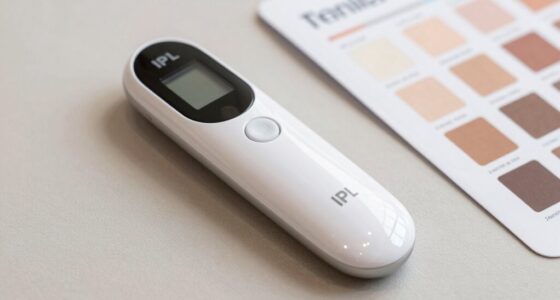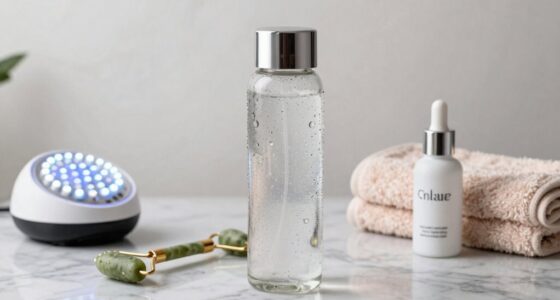

To manage combination skin with LED therapy, focus on a zone-smart plan. Use blue and red LEDs on your T-zone to control oil and fight bacteria, spending about five minutes on each. On your cheeks, apply red and green LEDs to boost hydration and soothe dryness. Adjust treatment times and intensity based on each area’s needs. If you want to discover how to customize your routine further, keep exploring the details ahead.
Prime for Young Adults — start your free trial
Fast free delivery, streaming and member deals for eligible 18–24 year olds.
As an affiliate, we earn on qualifying purchases.
Key Takeaways
- Use blue LEDs on the T-zone to target oiliness and acne-causing bacteria effectively.
- Apply red and green LEDs on cheeks to boost hydration, soothe, and balance pigmentation.
- Allocate about 5 minutes per zone, adjusting LED types and session duration based on skin needs.
- Combine zone-specific LED treatments with tailored skincare for optimal, long-term results.
- Regular sessions (2-3 times weekly) help maintain balanced, healthy skin tailored to combination skin challenges.
Are you wondering if LED therapy can effectively address the unique needs of combination skin? The good news is, it can, especially when you adopt a zone-smart approach. Combination skin is tricky because it features both oily and dry areas, often with enlarged pores in the T-zone and dryness or dullness on the cheeks. This means a one-size-fits-all treatment might not deliver the best results. Instead, tailoring your LED sessions to target specific zones helps you get the most out of each treatment.
First, recognize that the T-zone—your forehead, nose, and chin—is prone to excess oil production and breakouts. For these areas, red and near-infrared LEDs work well. They stimulate collagen and improve circulation, helping to reduce inflammation and control oiliness. Blue LED, on the other hand, is excellent for targeting bacteria that cause acne, making it a good choice for problem spots. When you focus blue light on your T-zone, you can help clear up blemishes without drying out the rest of your face.
Meanwhile, your cheeks may be dry, dull, or sensitive. Here, you want to soothe and hydrate. Green LED can help balance excess pigmentation and improve skin tone, while red light boosts moisture retention and promotes healing. For these areas, you might spend less time under blue LEDs and more on red and green, depending on your skin’s specific needs. This targeted approach ensures you’re not over-treating oily zones or neglecting dry patches.
A zone-smart plan also involves adjusting treatment duration and intensity based on each area’s condition. For example, you might spend five minutes on the T-zone with blue and red LEDs to combat oiliness and bacteria, while dedicating a few extra minutes to the cheeks with red and green lights to enhance hydration and calm irritation. This way, you’re respecting your skin’s natural diversity rather than applying a uniform treatment that could be too harsh or ineffective in certain zones.
Consistency is key, so sticking to a regular LED routine—say, two to three times a week—will help reinforce the benefits. Over time, you’ll notice the oily areas becoming less greasy, breakouts reducing, and the dry zones feeling more balanced and refreshed. Remember, combining LED therapy with a good skincare regimen tailored to your skin zones maximizes results. Cleansing, moisturizing, and sun protection are still essential.
In essence, a zone-smart LED plan recognizes your skin’s complexity and treats each area with precision. It’s about understanding that combination skin isn’t just a challenge but an opportunity to customize your skincare. With patience and targeted therapy, you can achieve a clearer, more balanced complexion that feels comfortable and looks radiant.
LED facial mask for combination skin
As an affiliate, we earn on qualifying purchases.
As an affiliate, we earn on qualifying purchases.
Frequently Asked Questions
Can LED Therapy Help Reduce Oiliness in T-Zone?
Yes, LED therapy can help reduce oiliness in your T-zone. It stimulates your skin’s natural healing processes, balancing oil production and calming inflammation. By targeting the sebaceous glands, LED therapy can decrease excess oil and minimize breakouts. Regular sessions can improve your skin’s overall texture and clarity. Just be consistent with treatments, and you’ll notice a reduction in shine and improved skin tone over time.
How Often Should I Use LED Treatments for Best Results?
You should use LED treatments about two to three times a week for the best results. Consistency is key, so stick to your schedule to see improvements in your skin’s tone, clarity, and oil control. You’ll notice the benefits build over time, so don’t skip sessions. Keep your treatments regular, stay patient, and you’ll enjoy healthier, glowing skin as your skin responds to the therapy.
Are There Any Side Effects for Sensitive Skin Areas?
You might experience mild side effects on sensitive skin areas, like redness or irritation, especially if you’re new to LED treatments. To minimize this, start with shorter sessions and use gentle settings. If you notice persistent discomfort or swelling, stop treatment and consult a dermatologist. Always patch-test first, and make certain your skin is clean and free of irritants before using LED devices to reduce the risk of adverse reactions.
Can LED Therapy Improve Pore Size in Combination Skin?
Yes, LED therapy can help improve pore size in combination skin. It stimulates collagen production and enhances skin elasticity, which can lead to visibly smaller pores. By targeting specific areas, you can promote skin renewal and reduce excess oil or congestion. Consistent treatment helps refine your skin’s texture over time, giving you a smoother, more balanced complexion. Just be sure to follow your provider’s recommendations for ideal results.
Is LED Suitable for Use Alongside Other Skincare Products?
Yes, LED therapy is suitable to use alongside other skincare products. You should apply your usual products before the LED session, ensuring they’re fully absorbed. During treatment, avoid products with harsh ingredients that could irritate your skin. Afterward, you can continue your regular routine. Just make sure to follow your skincare provider’s guidance and wait a few minutes before applying makeup or additional products to maximize benefits.
Conclusion
Ultimately, using LED therapy for combination skin can really work if you tailor the treatment to your skin’s unique zones. Some experts believe that targeted LED can balance oil production and boost healing, but others think its effects are temporary. While not a magic fix, combining LED with a consistent skincare routine may give you noticeable improvements. So, give it a try, but stay curious—science suggests the true benefits come from personalized, ongoing care.
Fall yard work Picks
leaf blowers
As an affiliate, we earn on qualifying purchases.