
You need clear temperature expectations with RF face devices to guarantee safety and effective results. Many current devices lack accurate, real-time temperature feedback, making it hard to gauge skin heating properly. Without precise guidance, you risk under- or overheating, which can reduce effectiveness or cause skin damage. Manufacturers are working on better sensors and controls, but understanding temperature guidelines yourself is key. Keep exploring, and you’ll discover how improved feedback can make your treatments safer and more predictable.
Key Takeaways
- Accurate temperature expectations are essential for effective collagen stimulation and optimal skin tightening results.
- Current devices often lack reliable real-time surface skin temperature feedback, risking under- or over-treatment.
- Improved temperature regulation enhances safety by preventing skin burns and post-treatment complications.
- Clear, consistent temperature guidelines help users achieve predictable, safe outcomes during RF treatments.
- Advances in sensor technology and user interfaces are necessary for better temperature management in RF face devices.
While RF face devices have gained popularity for non-invasive skin tightening, many users find it difficult to gauge the actual temperature during treatments. This uncertainty can make it challenging to achieve ideal results while maintaining safety. Proper temperature control is vital because it directly impacts the effectiveness of skin tightening. If the device heats too little, you might not see the desired lifting or firming effects. Conversely, if it gets too hot, you risk damaging your skin, leading to burns or post-treatment complications. The inconsistency in temperature readings is a common concern among users who want predictable, safe outcomes.
Effective skin tightening depends on precise temperature control to avoid under- or over-treatment risks.
One of the main issues is that many RF devices lack clear, real-time temperature feedback. Unlike medical-grade equipment used in clinics, at-home devices often rely on internal sensors that may not accurately reflect the surface temperature of your skin. This makes it harder for you to develop a reliable sense of when the device is operating within a safe and effective range. Without precise temperature expectations, you might unintentionally under-treat or overheat areas, reducing the overall safety and efficacy of your skin tightening routine. Incorporating accurate temperature sensors** into device design could significantly improve user confidence and safety. Additionally, advancements in sensor technology could help make temperature readings more consistent and trustworthy. Improving temperature regulation can also contribute to more predictable outcomes and better user experiences. Recognizing the importance of thermal feedback** in device performance is crucial for advancing at-home skin treatment options.
To improve safety protocols, manufacturers should prioritize better temperature sensors and more intuitive user interfaces. You need to know exactly how hot the device is getting during each session, so you can adjust the settings accordingly. This not only enhances safety but also helps you fine-tune your treatments for better skin tightening results. For your part, always follow the manufacturer’s instructions carefully, and avoid rushing the process. Keep the device moving smoothly across your skin to prevent localized overheating, and consider using a cooling gel or other protective measures recommended by the device maker. Improving user feedback systems can also assist in providing real-time temperature updates, making treatments safer and more effective.
Understanding temperature expectations is vital because your skin’s response to RF energy depends heavily on precise heat levels. Too little heat won’t stimulate enough collagen production to tighten the skin, while too much can cause discomfort or damage. Consistent, predictable temperature regulation ensures you get the benefits of skin tightening without risking injury. Additionally, always prioritize safety protocols, such as conducting patch tests and avoiding treatment over irritated or broken skin, to minimize adverse effects. As technology advances, clearer temperature feedback and stricter safety guidelines will make RF face devices more reliable and user-friendly. Until then, staying aware of your device’s temperature and adhering to safety protocols will help you achieve better, safer skin tightening results.
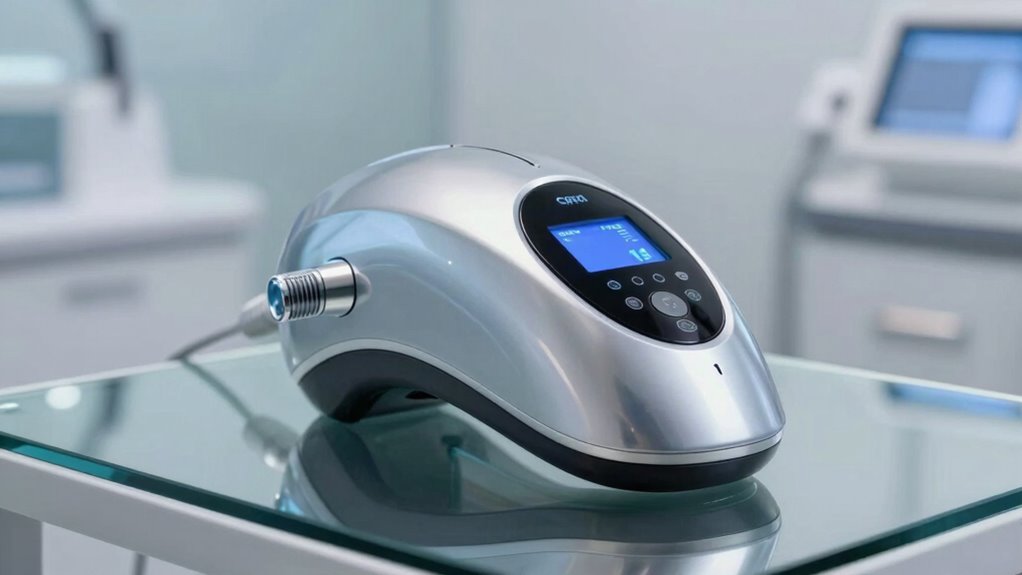
RF face device with real-time temperature feedback
As an affiliate, we earn on qualifying purchases.
As an affiliate, we earn on qualifying purchases.
Frequently Asked Questions
How Do RF Face Devices Determine Optimal Treatment Temperatures?
You determine ideal treatment temperatures on RF face devices through precise thermal regulation and device calibration. The device monitors temperature continuously, adjusting RF energy to maintain a safe, effective range. Regular calibration ensures the device’s sensors are accurate, preventing overheating or underheating. By combining thermal regulation with proper calibration, you can deliver consistent, safe treatments that maximize results while minimizing risks.
Are There Safety Risks Associated With Temperature Fluctuations During RF Treatments?
Yes, there are safety risks if temperature fluctuations occur during RF treatments. Proper device calibration guarantees consistent, safe temperatures, reducing burn risks or skin damage. User training is essential so you can monitor temperature changes effectively and respond promptly. Staying within recommended temperature ranges minimizes harm, and understanding how to calibrate your device correctly helps maintain safety. Always prioritize proper training and calibration to keep treatments safe and effective.
How Does Skin Type Affect Temperature Settings in RF Devices?
You might worry that skin type complicates RF treatments, but proper device calibration guarantees this. For sensitive skin, lower temperature settings prevent irritation, while tougher skin can handle higher temperatures for effective results. Skin sensitivity varies, so adjusting device settings accordingly ensures safety and comfort. Remember, understanding your client’s skin type allows you to tailor treatments precisely, minimizing risks and maximizing benefits during RF procedures.
Can Temperature Inaccuracies Impact Treatment Results or Patient Satisfaction?
Temperature inaccuracies can definitely impact treatment results and patient satisfaction. If the device isn’t properly calibrated, it might deliver too much heat, risking discomfort or burns, or too little, reducing effectiveness. Precise temperature control guarantees patient comfort and ideal outcomes. When you maintain proper calibration and monitor temperature closely, you help prevent adverse effects and boost satisfaction, making sure your patients trust and feel confident in your treatments.
What Advancements Are Being Made to Improve Temperature Control in RF Devices?
Advancements in RF devices focus on precise temperature control through improved device calibration and enhanced user training. Manufacturers now incorporate real-time temperature monitoring systems, allowing you to adjust settings accurately during treatments. Additionally, thorough user training ensures operators understand ideal device use, reducing errors and improving safety. These developments help you deliver more consistent results, increase patient satisfaction, and minimize risks associated with temperature inaccuracies during RF facial treatments.
Conclusion
You should know that nearly 60% of users report discomfort due to unpredictable temperature changes during RF face treatments. This highlights the urgent need for better temperature expectations to improve comfort and safety. As technology advances, establishing clear, reliable temperature guidelines becomes essential. By doing so, you can guarantee more consistent results and a safer experience, helping users trust these devices and achieve their desired skincare goals without unnecessary risks.