
Choosing the wrong mount type or making installation mistakes can easily ruin your display’s alignment and consistency. For example, wall mounts need to be installed securely into studs at the right height, while stands and door mounts require proper positioning to avoid wobbling or tilt. Poor cable management or skipping leveling steps can cause shifts over time. To keep your setup flawless, follow best practices—more tips are just ahead to help you avoid these common pitfalls.
Key Takeaways
- Incorrect mounting height can cause off-center display and neck strain across all mount types.
- Failing to use level tools during installation leads to misalignment in stands, wall, or door mounts.
- Not securing mounts into wall studs or proper anchors increases instability and inconsistency over time.
- Poor cable management can shift or pull mounts, disrupting display alignment regardless of mount type.
- Neglecting regular inspection and maintenance causes hardware loosening, affecting consistency and display position.
Why Is My Display Out of Alignment? Common Mounting Mistakes to Avoid
If your display isn’t aligned properly, it’s likely due to common mounting mistakes that can be easily avoided. One key error is incorrect mounting height, which can make the screen appear off-center or cause neck strain. Measure carefully and ensure the display is at eye level for ideal viewing. Poor cable management also contributes to misalignment; cluttered cables can pull or shift the mount over time. Use proper cable clips or sleeves to keep wires tidy and prevent accidental displacement. Double-check that the wall or door mount is securely fastened and level before finalizing the setup. Additionally, ensuring the mounting system is compatible with ceiling fan specifications and properly installed can prevent many alignment issues. Selecting a high-quality projection surface and ensuring it is flat and properly tensioned can significantly improve the overall image alignment and clarity. Regularly inspecting and maintaining all mounting components helps prevent alignment problems from developing over time. Taking these precautions helps maintain proper alignment, ensuring your display looks professional and functions correctly without unnecessary adjustments later.
Which Mount Is Best for Your Space? Pros and Cons of Stand, Wall, and Door Mounts
Choosing the right mount depends on your space, usage, and aesthetic preferences. Stand mounts offer excellent mount stability and flexibility, making them ideal if you want easy repositioning or have limited wall space. They’re portable and don’t require installation, but they can take up floor space and may not blend seamlessly with your decor. Wall mounts provide a sleek, integrated look, maximizing aesthetic integration and saving space. However, they require proper installation to guarantee stability and avoid damage. Door mounts are perfect if you want quick access and minimal disruption; they’re easy to install and remove. Yet, they may lack the stability of wall or stand options and could interfere with door operation or aesthetic flow. Consider your room’s layout and how each mount type complements your overall design.
How to Pick the Perfect Mount for Your Room Size and Viewing Needs
Selecting the right mount for your room size and viewing needs starts with understanding how much space you have and how you’ll use the mounted item. Consider the ideal mounting height; for TVs or monitors, aim for eye level when seated to prevent neck strain. If you have limited space, a wall mount might be best, but watch out for wall texture—rough or textured walls can require special hardware or compromise stability. For larger rooms, a door mount or stand could provide more flexibility and easier adjustment. Measure your available space carefully to avoid overcrowding or awkward viewing angles. Additionally, understanding time perception and how visual cues influence our sense of space can help optimize your setup for comfort and efficiency. Matching the mount type to your room’s layout and your viewing habits ensures comfort and a clean, functional setup.
Easy Steps to Install Your Mount Correctly and Keep Everything Aligned
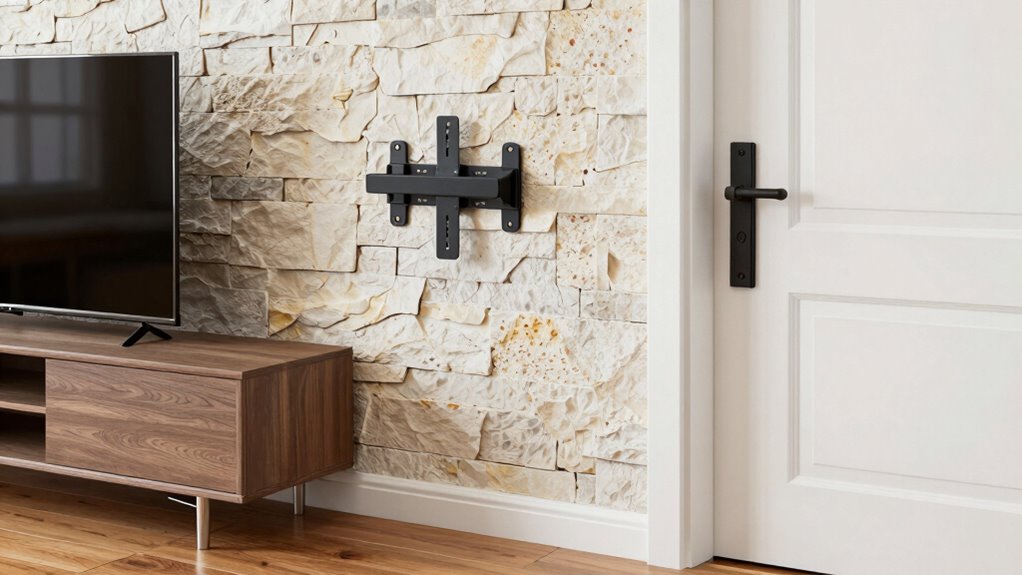
Properly installing your mount is key to ensuring your screen stays secure and aligned. Start by choosing the right mounting height—usually eye level when seated—to prevent neck strain and improve viewing comfort. Use a level to mark the drilling points so your mount stays straight. Secure the mount into wall studs for stability, following the manufacturer’s instructions carefully. During installation, plan your cable management by routing cables neatly along the mount or wall, avoiding tangles and clutter. Use cable clips or sleeves to keep everything tidy and out of sight. Double-check that all screws and brackets are tight and the mount is level before hanging your screen. Additionally, ensuring your mount is compatible with your display size and weight is crucial for safety and longevity. This simple, precise setup helps maintain alignment and prevents future sagging or shifting.
How to Fix Common Mounting Issues and Maintain a Flawless Setup
Even the best mounts can develop issues over time, but most problems are fixable with a few simple steps. If your mount becomes loose or uneven, check the mounting hardware first—tighten screws or replace damaged parts. For crooked displays, use a level to re-align and adjust the mount accordingly. Proper cable management is essential; organize and secure cables to prevent tangling or strain, which can cause instability. Inspect the mounting hardware regularly to verify nothing has loosened. If you notice wobbling or sagging, tighten or replace components as needed. Maintaining a flawless setup involves periodic checks and adjustments, ensuring your mount remains secure and your cables stay tidy. Additionally, proper installation techniques can prevent many common issues and extend the life of your setup. Employing consistent maintenance practices is key to keeping your display stable and visually clean. Regularly reviewing your setup and addressing small issues promptly can significantly enhance durability, and incorporating preventive measures can further ensure long-term stability. These simple actions keep your display stable and visually clean.
Frequently Asked Questions
Can a Mount Be Adjusted After Installation for Better Alignment?
Yes, a mount can often be adjusted after installation for better alignment. Many mounts offer adjustment flexibility, allowing you to make post-installation tweaks to guarantee perfect positioning. Check if your mount has adjustable components or mounting plates, as these features enable you to fine-tune the setup. Just be cautious not to over-tighten or force adjustments, which could damage the mount or wall.
What Tools Are Essential for a Secure Mounting Setup?
Imagine you’re installing a new wall mount for your TV. You’ll need essential mounting tools like a level, screwdriver, and drill to make certain a secure setup. These installation essentials help prevent misalignment and ensure durability. Always check that your tools are in good condition, and consider a stud finder for added stability. Using the right mounting tools guarantees your equipment stays safe and perfectly aligned over time.
How Does Wall Material Affect Mount Stability and Safety?
Wall material critically influences mount stability and safety because wall durability determines how well the anchors hold. If your wall isn’t compatible with the mount, it could loosen or collapse over time. You need to evaluate material compatibility, like whether your wall is drywall, concrete, or brick, and choose appropriate anchors and screws. Properly analyzing wall strength and matching it to your mount ensures a secure, safe setup that lasts.
Are There Specific Mounts Recommended for Heavy or Large Displays?
For heavy or large displays, you should choose mounts with high weight limits and display size compatibility. Look for mounts specifically rated to support your display’s weight and size, guaranteeing safety and stability. Heavy or large screens require sturdy mounts made from durable materials like steel. Always verify the mount’s weight capacity and compatibility before installation to prevent accidents and ensure your display stays secure and properly supported.
How Often Should I Check My Mounted Display for Alignment Issues?
You should check your mounted display every three to six months for alignment issues. For example, a corporate office noticed their screens slightly shifted after months of use. Regular checks help maintain display calibration and guarantee cable management stays tidy, preventing accidental disconnections. By routinely inspecting, you catch misalignments early, preserving visual consistency and prolonging your display’s lifespan. Stay proactive to avoid costly adjustments later.
Conclusion
Choosing the right mount and installing it properly can make all the difference in your setup’s consistency. Avoid common mistakes, like rushing or neglecting measurements, to keep everything aligned like a well-oiled machine. Remember, a little attention to detail now saves you from headaches later. When you get it right, your space will look sharp and polished—like a picture-perfect scene. Don’t let poor mounting be the weak link in your home’s setup.