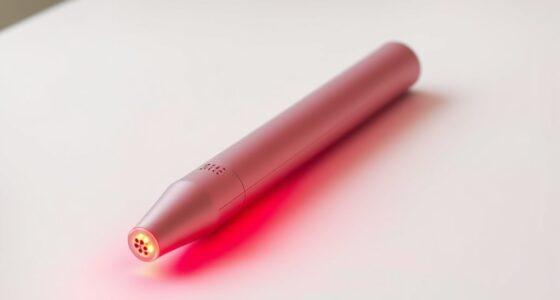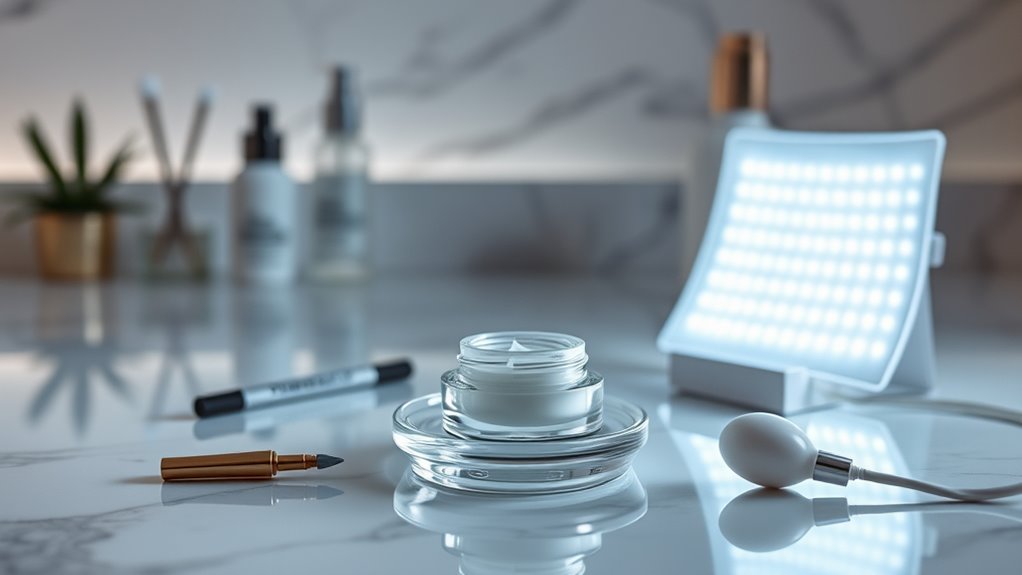

To alternate retinoids and LED therapy like a pro, apply retinoids at night to promote cell turnover, but avoid using them immediately before LED sessions. Use LED treatments a few times a week on non-retinoid days or during the day, giving your skin time to recover. Start slowly, building tolerance to prevent irritation, and listen to your skin’s signals. Staying consistent and balancing treatments ensures ideal results—keep exploring for more expert tips.
Key Takeaways
- Use retinoids at night and schedule LED sessions on non-retinoid days for optimal recovery.
- Wait several hours after applying retinoids before performing LED therapy to minimize irritation.
- Start with retinoids a few nights weekly and introduce LED treatments gradually to build skin tolerance.
- Avoid layering retinoids immediately before LED sessions; space treatments to prevent overloading skin.
- Monitor skin response and adjust frequency, focusing on gentle routines during sensitive phases for best results.
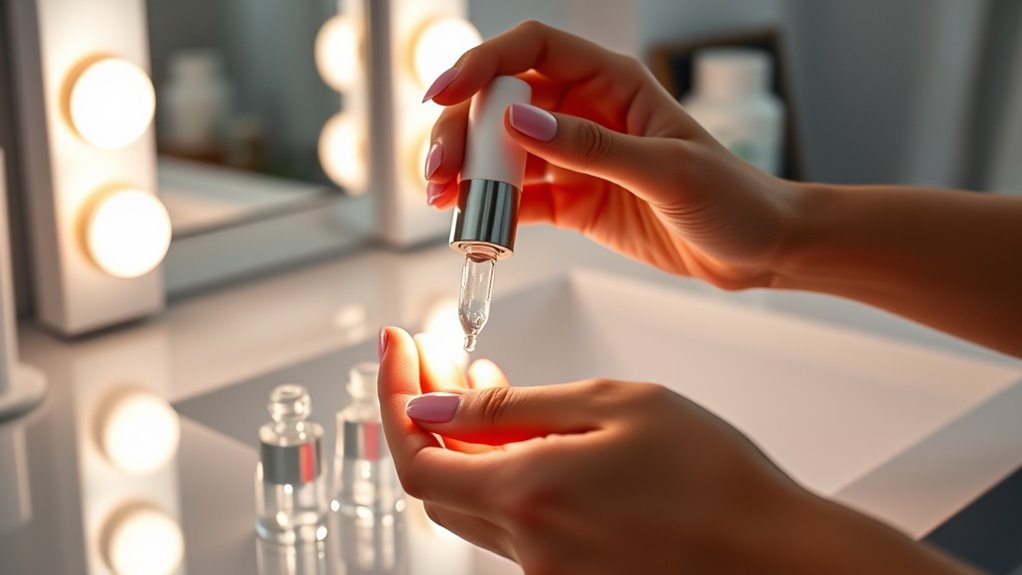
Combining retinoids with LED therapy can markedly enhance your skincare routine by boosting collagen production and improving skin texture. If you’re looking to maximize your results, understanding how to alternate these treatments properly is key. Retinoids, known for their powerful ability to accelerate cell turnover and combat signs of aging, can sometimes cause dryness or irritation, especially when first introduced. LED therapy, on the other hand, uses specific wavelengths of light to stimulate cellular activity, reduce inflammation, and promote healing. When used together thoughtfully, these treatments can complement each other, giving you brighter, firmer skin.
Combining retinoids and LED therapy enhances skin texture, collagen, and brightness when used thoughtfully.
The first step is to schedule your retinoid application and LED sessions in a way that minimizes skin stress. Typically, it’s best to apply your retinoid at night, allowing your skin to recover while you sleep. During the day, you can incorporate LED therapy, which is gentle and can be done as often as recommended for your skin type—usually a few times a week. This approach prevents overloading your skin with active ingredients and light therapy simultaneously, reducing the risk of irritation or sensitivity.
When you’re starting out, especially if you’re new to retinoids, it’s advisable to introduce them gradually. Begin by applying retinoids every other night or a few times a week, and observe how your skin responds. Once your skin builds tolerance, you can increase frequency. Meanwhile, you can incorporate LED treatments on the days you’re not using retinoids. This way, your skin gets the benefits of both without being overwhelmed. Some people prefer to do LED sessions on days when they skip retinoids entirely, allowing their skin to fully recover and heal.
If you notice any irritation, it’s wise to pause retinoid use temporarily and focus on calming treatments like gentle moisturizers and soothing LED sessions. Avoid layering retinoids immediately before LED therapy, as this can sometimes heighten sensitivity. Instead, wait at least a few hours after applying retinoids before doing an LED session, or better yet, schedule your LED treatments on days when you haven’t used retinoids that day. Consistency is paramount, but so is listening to your skin’s signals.
Frequently Asked Questions
Can Retinoids and LED Therapy Be Used Together Daily?
Yes, you can use retinoids and LED therapy daily, but it’s best to introduce them gradually. Start by using retinoids a few nights a week, and incorporate LED sessions on alternate days. Always listen to your skin; if you notice irritation or dryness, reduce frequency. Consult with a dermatologist to personalize your routine, ensuring both treatments work effectively without causing adverse reactions.
Are There Specific Skin Types That Benefit Most From This Combination?
Think of your skin like a garden; some plants thrive with specific care. If you have oily, acne-prone, or aging skin, you’ll often benefit most from combining retinoids and LED therapy. These treatments help regulate oil, boost collagen, and reduce inflammation. For sensitive skin, start slow, as this combo can sometimes cause irritation. Monitoring your skin’s response helps make sure you get the best results without overdoing it.
How Long Should I Wait Between Retinoid Application and LED Sessions?
You should wait about 30 minutes after applying your retinoid before using LED therapy. This allows your skin to absorb the retinoid fully and reduces the risk of irritation. If your skin feels sensitive, consider waiting even longer, around an hour. Always listen to your skin’s response and adjust timing as needed. Consistency and patience will help you maximize benefits without over-stimulating your skin.
What Are the Common Side Effects of Combining Retinoids With LED Therapy?
You might experience a skin firework show—redness, peeling, dryness, and sensitivity—when combining retinoids with LED therapy. These side effects happen because both treatments boost cell turnover and circulation, which can overstimulate your skin. To avoid this, start slow, monitor your skin’s reactions, and always patch-test new combos. If irritation strikes, give your skin a break and consult a dermatologist for personalized advice.
Is There an Age Limit for Using Retinoids and LED Treatments Together?
There’s no strict age limit for using retinoids and LED treatments together, but you should be cautious if you’re under 18 or have sensitive skin. Younger skin may react more intensely, so it’s best to consult a dermatologist before starting. They can recommend appropriate products and treatment plans tailored to your age and skin type, ensuring you get effective results without unnecessary irritation or risk.
Conclusion
Mastering the dance between retinoids and LED treatments is like conducting a symphony—each instrument plays a essential role in harmony. When you alternate wisely, you’re painting a masterpiece of radiant skin, blending science and self-care with finesse. Think of it as tending a garden: with patience and the right rhythm, your skin blossoms brighter and healthier. Embrace this routine as your secret sauce, and watch your glow shine through like a lighthouse guiding the way.