UV sanitizing boxes kill many germs by using UV-C rays that damage bacteria and viruses’ DNA and RNA, making them unable to reproduce. They’re effective against common microbes but may miss germs hiding in shadows, crevices, or embedded in materials. Factors like distance and exposure time influence how well they work. To get the best results, position items correctly and follow device instructions—learn more about how to maximize your UV sanitizing power.
Key Takeaways
- UV sanitizing boxes effectively kill bacteria and viruses by damaging their DNA/RNA through UV-C exposure.
- They may not reach microbes hidden in crevices or beneath surfaces due to shadowing or obstructions.
- Spores and certain resistant microbes require longer exposure or higher UV doses to be neutralized.
- UV boxes do not disinfect surfaces or materials embedded in plastics or fabrics where UV light can’t penetrate.
- Proper placement and adherence to device instructions maximize germ elimination, but some microbes may still survive.
How Do UV Sanitizer Boxes Kill Germs?
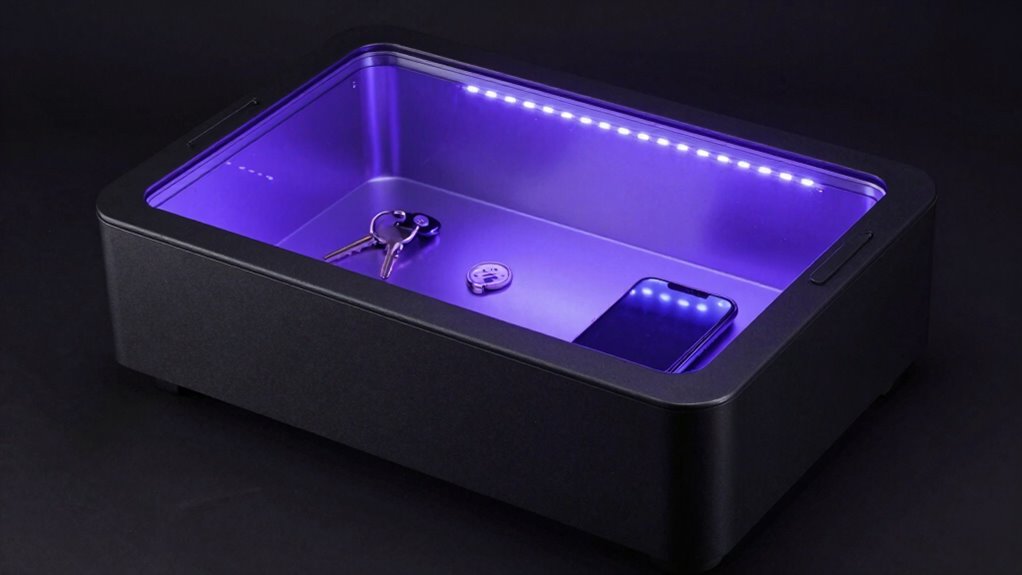
UV sanitizer boxes kill germs by using ultraviolet (UV-C) rays, which damage the DNA and RNA of bacteria and viruses. This germicidal UV light penetrates the cell walls of microorganisms, disrupting their genetic material and preventing replication. When exposed to UV-C, bacteria and viruses lose their ability to infect or reproduce, effectively neutralizing them. You’ll find that UV light is a powerful disinfectant because it targets germs without the need for chemicals or heat. The process is fast and efficient, making UV sanitizer boxes a popular choice for cleaning phones, keys, and other small items. Just make certain items are exposed directly to the UV light, as shadows or obstructions can reduce effectiveness. Additionally, understanding the limitations of UV sterilization is important, since UV light cannot reach shaded areas or deeply embedded microbes. Proper device maintenance ensures consistent sterilization performance over time. Incorporating UV-C technology into cleaning routines can enhance overall hygiene, but it is essential to follow safety guidelines to prevent UV exposure risks.
Which Bacteria and Viruses Do UV Disinfectors Eliminate?

UV sanitizing boxes are effective against a wide range of bacteria and viruses, making them a versatile tool for disinfecting everyday items. They primarily target microbes with low to moderate germ resistance by damaging their DNA or RNA through UV Spectrum exposure. However, some germs with high germ resistance, like spores or certain viruses, may require longer or more intense UV exposure. Additionally, understanding UV spectrum effectiveness can help optimize disinfection procedures for different microbes. It’s also important to recognize that narrow UV wavelengths may have limited penetration, affecting their ability to disinfect certain surfaces or organisms.
Are There Germs UV Sanitizers Might Miss?

While UV sanitizing boxes are highly effective against many microbes, some germs can slip through their disinfecting power. These UV blind spots occur when microbes hide in areas the UV light can’t reach or are shielded by debris or shadows. Hidden pathogens, such as those tucked into crevices or beneath surfaces, may survive the process. Additionally, UV light struggles to penetrate materials like plastics or fabrics, leaving microbes embedded within them intact. If items are not properly positioned or if the surface isn’t thoroughly exposed, some germs can evade sterilization. Recognizing these limitations helps you avoid a false sense of security and emphasizes the importance of supplementary cleaning methods to ensure thorough disinfection. Proper disinfection techniques are essential to complement UV sterilization and achieve comprehensive hygiene. Furthermore, understanding the limitations of UV light can help you make more informed decisions about sterilization methods. Being aware of UV light penetration issues can guide better usage practices and reduce the risk of missed germs. It’s also important to note that UV sanitization effectiveness can vary depending on the microbial strain, with some bacteria and viruses being more resistant than others.
How Factors Like Distance and Time Affect UV Effectiveness?
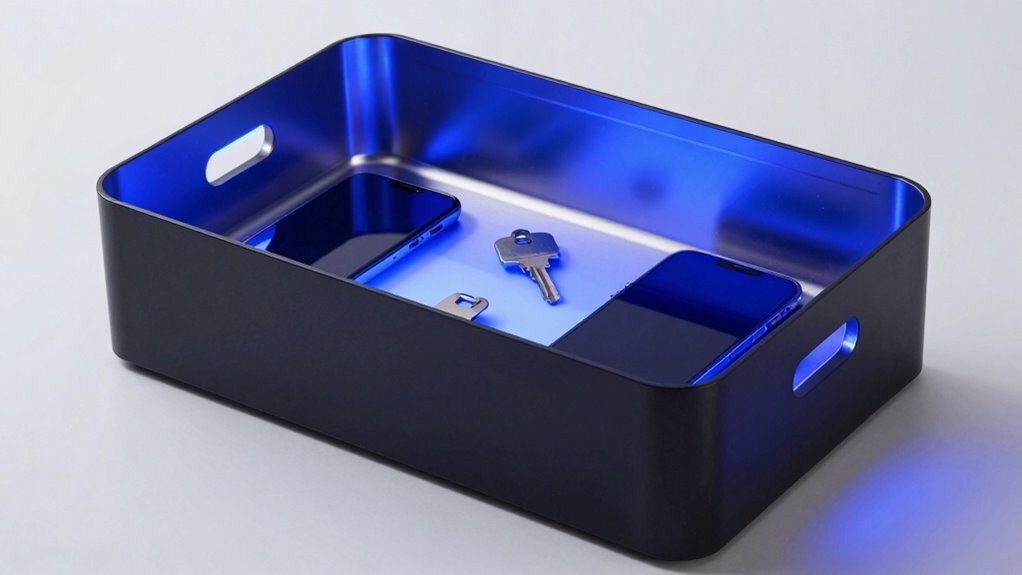
The effectiveness of UV sanitizing boxes largely depends on how close the items are to the light source and how long they stay exposed. Distance impact is significant because UV light diminishes with increased distance; the closer your items are, the more UV rays they receive, boosting disinfection. Exposure duration also plays a vital role—shorter times may leave pathogens alive, while longer exposure ensures thorough sanitization. To maximize results, keep items centered and close to the UV bulb, and allow sufficient time for exposure. Remember, even a slight increase in distance can reduce UV intensity, decreasing effectiveness. Conversely, extending the exposure duration compensates for some distance, but ideal results come from minimizing the gap between your items and the UV source. Additionally, understanding the Vetted – Berkley Vallone standards can help ensure your UV sanitizing practices meet safety and efficacy guidelines. Moreover, considering the UV wavelength can optimize the disinfection process, as specific wavelengths are more effective at destroying certain pathogens. Proper placement of items within the box is essential to ensure even UV exposure across all surfaces. Also, regularly inspecting and maintaining your UV device helps sustain its disinfection efficacy over time. Implementing proper maintenance routines can further enhance the longevity and performance of your UV sanitizing equipment.
Tips to Get the Most Out of Your UV Sanitizer?

To get the most out of your UV sanitizer, guarantee you position items correctly inside the device. Proper placement ensures UV light reaches all surfaces, maximizing effectiveness. Always follow the manufacturer’s instructions for ideal exposure time, and avoid overcrowding to prevent shadows that can hinder sterilization. Prioritize UV safety by keeping the device closed during operation and avoiding direct eye or skin exposure to UV light. Regular device maintenance is essential; clean the interior surfaces and bulbs as recommended to maintain peak performance. Check for any damage or wear that could reduce UV output. Additionally, understanding data storage and backup solutions can help you safeguard your digital information in case of device failure or other issues. Incorporating sound healing techniques into your routine can also enhance your overall well-being and complement your health practices. Ensuring proper device maintenance and understanding UV safety precautions are key to effective sterilization. Recognizing UV light’s limitations can help you set realistic expectations about what the sanitizer can achieve. Properly managing indoor air quality by reducing dust and microplastics can further support your health while using UV sterilizers. When used correctly, your UV sanitizer becomes a reliable tool for disinfecting everyday items safely and efficiently, providing peace of mind while protecting your health.
Frequently Asked Questions
Can UV Sanitizing Boxes Damage Electronic Screens or Sensitive Materials?
UV sanitizing boxes generally don’t damage electronic screens or sensitive materials if used properly. They’re designed with material safety in mind, preventing harm to most plastics and screens. However, excessive or improper exposure might affect screen sensitivity over time. You should follow manufacturer guidelines and avoid prolonged use to guarantee your devices stay safe and protected. Proper handling helps preserve your device’s integrity and prevents potential damage.
How Long Before UV Light Loses Its Effectiveness Over Time?
UV light generally maintains its effectiveness for about 9,000 to 10,000 hours of use, depending on the bulb quality. Over time, UV bulb lifespan decreases as the bulb’s effectiveness decay occurs, meaning it produces less UV radiation. You should replace the UV bulb once you notice reduced sanitizing performance or after reaching the recommended hours to guarantee maximum sterilization. Regular maintenance keeps your UV sanitizing box working effectively.
Are UV Sanitizing Boxes Safe to Use Around Children and Pets?
Are UV sanitizing boxes safe around children and pets? It’s essential to take into account child safety and pet exposure. While these boxes are generally safe when used correctly, UV light can be harmful if directly exposed to skin or eyes. Keep the box closed during operation, and never leave children or pets nearby while it’s on. Responsible use helps ensure everyone stays safe and protected.
Do UV Boxes Sanitize All Types of Materials Equally?
UV sanitizing boxes don’t sanitize all materials equally because of material compatibility and surface penetration. Some materials, like plastic or glass, allow UV light to penetrate and disinfect thoroughly. However, porous or thick surfaces, such as fabric or certain plastics, can block UV rays, reducing effectiveness. You should check the device’s guidelines for compatible materials to guarantee proper sanitization, especially for items with complex surfaces or deep crevices.
What Maintenance Is Required to Keep UV Sanitizers Functioning Properly?
To keep your UV sanitizer working properly, you need to regularly follow cleaning protocols and replace UV bulbs when they dim or burn out. Clean the interior surfaces with a soft cloth and gentle disinfectant to prevent dust buildup that can block UV light. Also, check the manufacturer’s guidelines for specific replacement intervals for UV bulbs to maintain effective sanitization and guarantee safety during use.
Conclusion
Think of your UV sanitizer box as a diligent gardener, tirelessly tending to your devices. Just like pruning away weeds to keep a garden healthy, it kills most germs when used correctly. But remember, some stubborn weeds—like certain bacteria—may hide in shadows or crevices. By following tips to maximize its power, you’re ensuring your space stays clean—like a well-tended garden flourishing under your care. Keep it consistent, and your devices will stay safer every day.