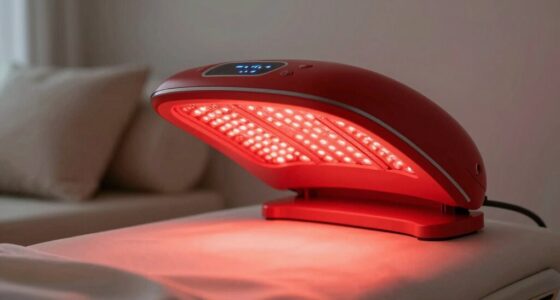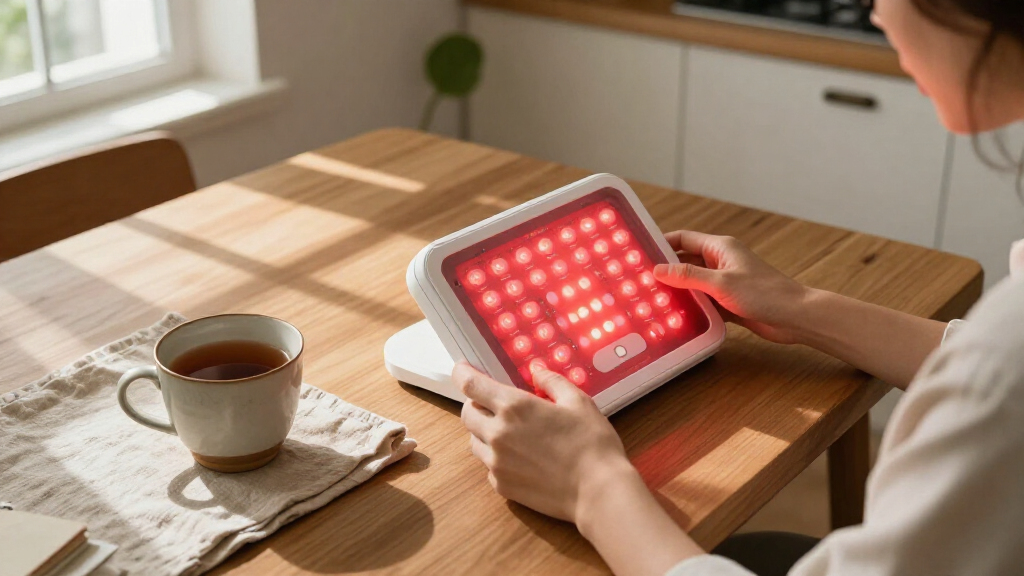

Smart light therapy panels vary in more than size: wavelength choices, controls, adjustability, and coverage all affect how well a device fits your routine. My best overall pick is the BestQool Pro100, which pairs four wavelengths with a 160W design; the waterproof BestQool 120W stands out for voice control, while the BO-300 offers five wavelengths and a remote for people who want more settings. Smaller dual-wavelength panels are easier to place and may suit focused use, but they cover less area than full-body designs. The listings here do not establish app connectivity or clinical results, so I focus on disclosed features rather than treating “smart” as a guarantee. Read on for the full comparison and guidance on choosing by setup, coverage, and control needs.

Get wellness gear delivered free with Prime
- Fast, free delivery on millions of items
- Prime Video, Amazon Music and more included
- Member-only deals all year
Key Takeaways
- The BestQool Pro100 is the strongest feature-led overall choice in this lineup, combining four wavelengths with a 160W panel; buyers should still check the dimensions and mounting setup before choosing it.
- Voice control is a clear differentiator, not a category standard: the BestQool waterproof 120W model lists it, while most other panels emphasize remotes, timers, or basic modes.
- Wavelength range varies substantially. The BO-300 lists five wavelengths, and several BestQool panels offer four; many compact alternatives use only 660nm red and 850nm near-infrared.
- Coverage and convenience pull in different directions. The 600-LED full-body panel is aimed at broad exposure, while 45W, 55W, and 70-dual-chip options are more suited to smaller setups or focused use.
- Product titles do not establish clinical performance or app-based smart features. I rank on disclosed specifications and usability features, not on unsupported treatment claims.
| Red Light Therapy 660nm & 850nm Infrared Lamp – Larger Panel 3-in-1 LED with Stand for Home Use |  | Best for Flexible Full-Body Positioning | Panel size: 15.5 x 8.75 inches | Stand height: 40–60 inches | Wavelengths: 660nm red and 850nm near-infrared | VIEW LATEST PRICE | See Our Full Breakdown |
| Professional Grade Full-Body Red Light Therapy Panel with Stand & Remote (600 LEDs) |  | Best for Broad Wavelength Coverage | LED count: 600 | Wavelengths: 630, 660, 810, 850, 940, and 1060nm | LED power: 5W per LED | VIEW LATEST PRICE | See Our Full Breakdown |
| INTEO Red Light Therapy Lamp for Body and Face | 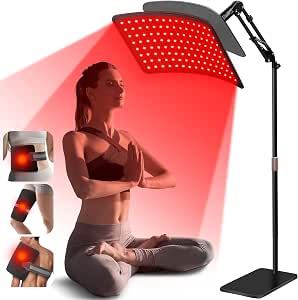 | Best for Multiple Mounting Options | Light source: Dual LED chips per lamp unit | Brightness levels: 5 | Timer settings: 9 | VIEW LATEST PRICE | See Our Full Breakdown |
| Red Light Therapy for Face and Body, 204 LEDs Tri‑Wavelength (660 nm, 850 nm, 940 nm) |  | Best Curved Panel with Warranty Coverage | LED count: 204 | Wavelengths: 660nm red, 850nm infrared, and 940nm infrared | Adjustable height: 20–50 inches | VIEW LATEST PRICE | See Our Full Breakdown |
| Red Light Therapy Panel, 850nm & 660nm Near Infrared Red Light Therapy for Body, High Power Red Light Therapy Lamp with 72 Dual-Chip LEDs, Adjustable Stand, 3 Modes/4 Power, Timer |  | Best for Compact High-Output Sessions | LED count: 72 dual-chip LEDs | Wavelengths: 660nm red and 850nm near-infrared | Power output: 105W | VIEW LATEST PRICE | See Our Full Breakdown |
| LED Red Light Therapy Device – 45W LED Panel with 660nm and 850nm Light Combo for Skin Beauty and Pain Relief |  | Best Simple Dual-Wavelength Pick | Power: 45W | Red wavelength: 660nm | Near-infrared wavelength: 850nm | VIEW LATEST PRICE | See Our Full Breakdown |
| BestQool Red Light Therapy Panel – 4 Wavelengths Full Body |  | Best for Expandable Coverage | Wavelengths: 630nm, 660nm, 850nm, 940nm | LED count: 300 | Irradiance: >106mW/cm² at 3 inches | VIEW LATEST PRICE | See Our Full Breakdown |
| Red Light Therapy Panel for Face & Body, Dual Chips 660nm & 850nm |  | Best for Adjustable Sessions | Wavelengths: 660nm red and 850nm near-infrared | LED count: 40 (20 single-chip 660nm and 20 dual-chip 660nm/850nm) | Irradiance: 140mW/cm² at 3 inches | VIEW LATEST PRICE | See Our Full Breakdown |
| BestQool Red Light Therapy Panel – Waterproof, Voice Control, 120W |  | Best for Humid Spaces and Hands-Free Use | Power: 120W | LED count: 96 | Wavelengths: 660nm red and 850nm near-infrared | VIEW LATEST PRICE | See Our Full Breakdown |
| BestQool Pro100 Red Light Therapy Panel, 4 Wavelengths, 160W |  | Best Compact Modular Four-Wavelength Panel | Wavelength count: 4 | Power: 160W | Dimensions: 19.7 × 8.4 × 2.6 inches | VIEW LATEST PRICE | See Our Full Breakdown |
| Red Light Therapy Panel with 660nm Red and 850nm Near-Infrared Light |  | Best for Fine-Tuning Sessions | Wavelengths: 660nm red and 850nm near-infrared | Irradiance: 140 mW/cm² at 3 inches; 110 at 6 inches; 90 at 12 inches; 70 at 18 inches | Coverage: 15 × 14 inches at 3 inches; 20 × 18 at 6 inches; 26 × 24 at 12 inches; 31 × 28 at 18 inches | VIEW LATEST PRICE | See Our Full Breakdown |
| Comfytemp 55W Red Light Therapy Lamp with 660nm and 850nm LEDs |  | Best for Flexible Positioning | Power: 55W maximum | Wavelengths: 660nm red and 850nm near-infrared | Irradiance: 143 mW/cm² at 6 inches | VIEW LATEST PRICE | See Our Full Breakdown |
| BO-300 Red Light Therapy Device – 5 Wavelengths (630/660/810/830/850nm), Dual-Chip LEDs, Remote Control & Timer for Face and Body |  | Best for Wavelength Range | Wavelengths: 630nm, 660nm, 810nm, 830nm, and 850nm | LEDs: 60 dual-chip LEDs | Beam angle: 60° | VIEW LATEST PRICE | See Our Full Breakdown |
| 45W LED Panel Red Light Therapy Device – Deep 660nm & Near-Infrared 850nm Combo for Skin Beauty and Pain Relief |  | Best for Simple Hands-Free Setup | Power: 45W | Wavelengths: 660nm deep red and 850nm near-infrared | LED type: Advanced high-reliability LEDs | VIEW LATEST PRICE | See Our Full Breakdown |
| RENPHO Red Light Therapy Panel, 70 Dual-Chip LEDs, 660 nm and 850 nm |  | Best for Multiple Mounting Options | LEDs: 70 dual-chip LEDs | Output: 100W | Wavelengths: 660nm red and 850nm near-infrared | VIEW LATEST PRICE | See Our Full Breakdown |
| smart light therapy panel | Wavelengths | Irradiance |
|---|---|---|
| Red Light Therapy 660nm & 850n | 660nm red and 850nm near-infrared | 203–206 mW/cm² at level 5 |
| Professional Grade Full-Body R | 630, 660, 810, 850, 940, and 1060nm | — |
| INTEO Red Light Therapy Lamp f | — | — |
| Red Light Therapy for Face and | 660nm red, 850nm infrared, and 940nm infrared | — |
| Red Light Therapy Panel | 660nm red and 850nm near-infrared | 138 mW/cm² at 6 inches |
| LED Red Light Therapy Device | — | — |
| BestQool Red Light Therapy Pan | 630nm, 660nm, 850nm, 940nm | >106mW/cm² at 3 inches |
| Red Light Therapy Panel for Fa | 660nm red and 850nm near-infrared | 140mW/cm² at 3 inches |
| BestQool Red Light Therapy Pan | 660nm red and 850nm near-infrared | — |
| BestQool Pro100 Red Light Ther | — | 109mW/cm² at 3 inches |
| Red Light Therapy Panel with 6 | 660nm red and 850nm near-infrared | 140 mW/cm² at 3 inches; 110 at 6 inches; 90 at 12 inches; 70 at 18 inches |
| Comfytemp 55W Red Light Therap | 660nm red and 850nm near-infrared | 143 mW/cm² at 6 inches |
| BO-300 Red Light Therapy Devic | 630nm, 660nm, 810nm, 830nm, and 850nm | 131 mW/cm² at 6 inches |
| 45W LED Panel Red Light Therap | 660nm deep red and 850nm near-infrared | — |
| RENPHO Red Light Therapy Panel | 660nm red and 850nm near-infrared | — |
More Details on Our Top Picks
Red Light Therapy 660nm & 850nm Infrared Lamp – Larger Panel 3-in-1 LED with Stand for Home Use
This panel suits buyers who want two familiar wavelengths with more positioning flexibility than a fixed lamp. Its 15.5-by-8.75-inch head rotates 360 degrees and sits on a stand adjustable from 40 to 60 inches, making it easier to aim at different areas without changing the basic setup. The remote, five intensity levels, and 1–30-minute timer add useful session control. Compared with the INTEO Red Light Therapy Lamp, it reaches a taller maximum height and includes a larger stated LED count; INTEO, by contrast, offers strap mounting and three working modes. The tradeoff is portability: the foldable design stores neatly, but the reinforced base adds weight when moving it around. Its 660nm and 850nm combination is less wavelength-diverse than the six-band Professional Grade panel.
Pros:- 360-degree rotating head and 40–60-inch adjustable stand allow flexible targeting.
- 660nm red and 850nm near-infrared LEDs combine two wavelength bands.
- Remote offers five intensity levels and a 1–30-minute timer.
- Folds to 16 x 10 x 3.8 inches and assembles without tools.
Cons:- The reinforced base adds weight, making frequent repositioning less convenient.
- Its two wavelengths offer less range than the six-wavelength Professional Grade panel.
Best for: Home users who want a height-adjustable, rotating panel for targeting different body areas and need a foldable setup for storage.
Not ideal for: People who frequently move their therapy light between rooms or want multiple wavelengths beyond red and near-infrared.
- Panel size:15.5 x 8.75 inches
- Stand height:40–60 inches
- Wavelengths:660nm red and 850nm near-infrared
- LED count:360 total: 120 at 660nm and 240 at 850nm
- Power consumption:43–45W
- Irradiance:203–206 mW/cm² at level 5
- Timer:1–30 minutes
- Included accessories:Stand, remote, goggles, and manual
Our verdict“Choose this if adjustable height, a rotating head, and fold-away storage matter more than a broader wavelength selection.”
Professional Grade Full-Body Red Light Therapy Panel with Stand & Remote (600 LEDs)
The strongest case for this panel is its six-wavelength spread: 630, 660, 810, 850, 940, and 1060nm give buyers more options than the two-band Red Light Therapy 660nm & 850nm Infrared Lamp. Its 600 dual-chip, 5W LEDs and 30-degree beam are aimed at high-output use, while the included vertical stand, remote, LCD interface, and protective glasses make it a more complete home or commercial setup. Integrated fans help manage heat during operation. This breadth comes with a practical cost in space: unlike the foldable 3-in-1 lamp, this full-body panel may need a dedicated location for use and storage. The supplied data does not give its panel dimensions or an irradiance figure, so buyers comparing output should not assume a direct numerical advantage from the LED count alone.
Pros:- Six wavelengths span 630–1060nm, more than the dual-wavelength options in this roundup.
- 600 dual-chip LEDs are paired with 5W LED power per LED.
- Includes a stand, remote, LCD interface, and protective glasses.
- Integrated cooling fans and a stated 100,000-hour lifespan support extended use.
Cons:- Large panel design may require dedicated placement and storage space.
- No panel dimensions or irradiance measurement are provided in the supplied specifications.
- Fan cooling adds moving parts and may be less suitable for buyers who prefer fan-free equipment.
Best for: Experienced home users or small wellness businesses seeking a stand-mounted panel with multiple red and near-infrared wavelength bands.
Not ideal for: Buyers with limited storage space, or anyone who needs published panel dimensions and irradiance figures before comparing output.
- LED count:600
- Wavelengths:630, 660, 810, 850, 940, and 1060nm
- LED power:5W per LED
- Beam angle:30 degrees
- Driver type:Meanwell LED drivers
- Cooling:Integrated fans
- Lifespan:100,000 hours
- Included equipment:Stand, remote control, and protective glasses
Our verdict“Pick this panel if wavelength breadth and a ready-to-use stand setup outweigh storage demands and missing output measurements.”
INTEO Red Light Therapy Lamp for Body and Face
INTEO is the most adaptable pick here for buyers who want to change how they position a light, not just its angle. It can be used as a portable lamp with an adjustable elastic strap or mounted on its stand, whose head rotates 360 degrees. Five brightness levels, nine timer settings, and three working modes give more control choices than the simpler remote-and-timer setup on the Red Light Therapy 660nm & 850nm Infrared Lamp. The curved frame is designed for concentrated, even coverage, though the product data does not specify wavelengths or an irradiance figure; buyers who prioritize those measurable details may prefer the LEDINO tri-wavelength panel or the six-band Professional Grade model. Its stand tops out at 46.5 inches, lower than the 60-inch 3-in-1 lamp, and assembly is still required.
Pros:- Offers both adjustable strap use and stand mounting.
- Rotating head and adjustable stand allow changes to height and angle.
- Five brightness levels, nine timer settings, and three working modes provide varied controls.
- Curved frame is designed for concentrated, even light coverage.
Cons:- Maximum stand height of 46.5 inches is lower than the 60-inch 3-in-1 lamp.
- Wavelengths and irradiance are not specified in the supplied product data.
- Requires assembly, even though no extra tools are needed.
Best for: People who want to alternate between strap-based portable use and a stand-mounted setup, with several brightness, timer, and mode choices.
Not ideal for: Buyers who need a stand taller than 46.5 inches or want wavelength and irradiance specifications clearly listed.
- Light source:Dual LED chips per lamp unit
- Brightness levels:5
- Timer settings:9
- Working modes:3
- Maximum stand height:46.5 inches
- Lamp head rotation:360 degrees
- Mounting options:Adjustable elastic strap or stand
- Power cord length:1.4m
Our verdict“Choose INTEO if strap mounting and varied session controls matter more than a taller stand or clearly stated wavelength data.”
Red Light Therapy for Face and Body, 204 LEDs Tri‑Wavelength (660 nm, 850 nm, 940 nm)
LEDINO stands out for combining a curved panel with three specified bands: 660nm red, plus 850nm and 940nm infrared. That gives it a middle ground between the two-wavelength 3-in-1 lamp and the six-band Professional Grade panel, without the latter’s stated 600-LED count. The panel adjusts from 20 to 50 inches and rotates 360 degrees, so it can be repositioned for different areas; five power modes and a 1–30-minute shutoff timer keep the controls straightforward. A two-year warranty is a useful differentiator in this lineup. The tradeoffs are heat and space: the stated maximum temperature is 125°F, so high-setting sessions call for care, and the stand-mounted design may be awkward in a small room. It has fewer wavelength bands than the Professional Grade model.
Pros:- Combines 660nm red with 850nm and 940nm infrared wavelengths.
- Curved panel adjusts from 20 to 50 inches and rotates 360 degrees.
- Five power modes and a 1–30-minute automatic shutoff timer.
- Includes protective goggles and a two-year warranty.
Cons:- Maximum stated temperature of 125°F calls for caution at the highest setting.
- Stand and curved panel can be bulky in smaller rooms.
- Three wavelength bands provide less range than the six-band Professional Grade panel.
Best for: Buyers who want a curved, adjustable panel with three stated wavelengths, simple timed controls, and a defined warranty period.
Not ideal for: People with little floor space or anyone uncomfortable managing a panel that can reach 125°F at its highest setting.
- LED count:204
- Wavelengths:660nm red, 850nm infrared, and 940nm infrared
- Adjustable height:20–50 inches
- Panel design:Curved ergonomic panel
- Power modes:5
- Timer:1–30-minute automatic shutoff
- Maximum temperature:125°F
- Warranty:2 years
Our verdict“LEDINO fits buyers who want a curved tri-wavelength panel and warranty coverage, provided they have room for its stand and can manage its heat.”
Red Light Therapy Panel, 850nm & 660nm Near Infrared Red Light Therapy for Body, High Power Red Light Therapy Lamp with 72 Dual-Chip LEDs, Adjustable Stand, 3 Modes/4 Power, Timer
This model is a focused choice for buyers who want specified output and a wide beam in a smaller LED array. Its 72 dual-chip LEDs emit 660nm red and 850nm near-infrared light, with a stated 138 mW/cm² irradiance at six inches and a 60-degree beam angle. Compared with the larger 600-LED Professional Grade panel, this one has fewer wavelengths and LEDs but gives a concrete irradiance figure and lists a 105W output. The adjustable 90-degree stand helps aim the panel across different areas, while four power levels, nine pulse modes, and a built-in silent fan add operating choices. Those controls may take more getting used to: the touchscreen is described as potentially less intuitive. Its dual-band setup also offers less wavelength range than LEDINO’s three-band panel.
Pros:- Lists 138 mW/cm² irradiance at six inches and 105W output.
- Dual-chip LEDs emit both 660nm red and 850nm near-infrared light.
- A 60-degree beam and adjustable 90-degree stand support flexible aiming.
- Includes four power levels, nine pulse modes, and a built-in cooling fan.
Cons:- Large panel size may need ample desk or floor space.
- Touchscreen controls may be less intuitive for some users.
- Two wavelengths offer less range than LEDINO’s three-band panel or the six-band Professional Grade model.
Best for: Buyers seeking a stand-mounted dual-wavelength panel with a stated irradiance measurement and flexible power and pulse controls.
Not ideal for: People who want a full-body, multi-wavelength panel or have no space for a desk or floor-standing device.
- LED count:72 dual-chip LEDs
- Wavelengths:660nm red and 850nm near-infrared
- Power output:105W
- Irradiance:138 mW/cm² at 6 inches
- Power levels:4
- Pulse modes:9
- Beam angle:60 degrees
- Stand and cooling:Adjustable 90-degree stand and built-in silent cooling fan
Our verdict“Choose this panel for its stated irradiance and adjustable stand if you do not need broad wavelength coverage or a space-saving form.”
LED Red Light Therapy Device – 45W LED Panel with 660nm and 850nm Light Combo for Skin Beauty and Pain Relief
This 45W panel keeps the setup straightforward: its 660nm red and 850nm near-infrared wavelengths target skin-focused and deeper-use sessions without a long list of settings to learn. It can hang or stand independently, so I’d favor it for a home routine that needs flexible placement rather than a dedicated treatment station. Compared with the XSSNVV Red Light Therapy Panel, it offers fewer documented controls—no listed brightness adjustments, pulse settings, or timer range—but its simpler feature set may suit buyers who just want the two wavelengths. The tradeoff is limited published detail about coverage and output, making it harder to judge session reach against the more powerful BestQool Pro300. Consistent use is required, and it is not a replacement for medical care.
Pros:- Combines 660nm red and 850nm near-infrared light
- Can be hung or placed independently
- Designed for both skin-focused and muscle or joint sessions
Cons:- No irradiance, dimensions, or coverage figures are provided
- No timer or adjustable intensity controls are listed
- Requires consistent use, and is not a substitute for professional medical treatment
Best for: Home users who want a basic two-wavelength panel for flexible placement while reading, working, or relaxing
Not ideal for: Buyers who need documented irradiance, programmable session controls, or a large treatment area
- Power:45W
- Red wavelength:660nm
- Near-infrared wavelength:850nm
- Mounting:Hang or place independently
- Listed applications:Skin rejuvenation and pain relief
- Use setting:Home
Our verdict“Choose this panel if you want a simple, flexibly placed 660nm-and-850nm setup and do not need advanced controls or detailed output data.”
BestQool Red Light Therapy Panel – 4 Wavelengths Full Body
The Pro300 is the lineup’s coverage-first choice: four wavelengths, 300 LEDs, and a modular design make it better suited to a dedicated, expandable setup than the smaller BestQool Pro100. Its listed irradiance of more than 106mW/cm² at three inches points to strong output at close range, while the 30° beam angle concentrates light rather than spreading it broadly. That can suit targeted positioning, though wider full-body coverage may call for additional panels and space. A built-in fan helps manage heat during longer operation, but adds a component and the panel’s 470W power consumption is substantial compared with the 160W Pro100. I’d pick it for buyers planning a larger system, not for a small room or a casual, low-footprint routine.
Pros:- Four red and near-infrared wavelengths: 630nm, 660nm, 850nm, and 940nm
- Modular design supports additional panels and a mobile stand
- Built-in fan supports operation during longer sessions
- Lists irradiance above 106mW/cm² at three inches
Cons:- Large format can be difficult to fit in a small room
- 470W power consumption is higher than the Pro100’s 160W
- The 30° beam angle is relatively concentrated, so broad coverage may require careful placement or expansion
Best for: Dedicated home users who want four wavelengths and plan to expand coverage with linked panels and a mobile stand
Not ideal for: Apartment dwellers or occasional users who need a compact, low-power panel for a small treatment area
- Wavelengths:630nm, 660nm, 850nm, 940nm
- LED count:300
- Irradiance:>106mW/cm² at 3 inches
- Beam angle:30°
- Power consumption:470W
- Cooling:Built-in fan
- Design:Modular; connects to additional panels and mobile stand
Our verdict“Choose the Pro300 if you want a powerful, expandable multi-wavelength station and have room for its size and power draw.”
Red Light Therapy Panel for Face & Body, Dual Chips 660nm & 850nm
The XSSNVV stands apart from the simpler 45W dual-wavelength panel through its hands-on controls: users can choose red, near-infrared, or combined modes, set brightness from 25% to 100%, and select a timer from five to 30 minutes. That makes it easier to tailor a routine without moving up to the much larger BestQool Pro300. Its listed 140mW/cm² irradiance at three inches and compact 10.4-by-6.3-inch footprint suit focused sessions, while the adjustable stand helps with positioning. The tradeoff is that this is still a small panel, not a practical route to broad full-body coverage. Its 3.93-pound weight may also be more awkward to carry than its compact dimensions suggest, and pulse options are specified only for 850nm mode.
Pros:- Selectable red, near-infrared, and combined modes
- Brightness adjusts across four levels from 25% to 100%
- Timer range of 5–30 minutes and pulse options for 850nm mode
- Compact metal housing with adjustable stand
Cons:- Small dimensions limit coverage compared with the BestQool Pro300
- At approximately 3.93 pounds, it may be less convenient to carry than its size implies
- Pulse settings are listed only for 850nm mode, with no custom wavelength mixing
Best for: People who want a compact panel with adjustable brightness, timed sessions, and separate red or near-infrared modes
Not ideal for: Buyers seeking wide-area or full-body coverage, or a very lightweight travel panel
- Wavelengths:660nm red and 850nm near-infrared
- LED count:40 (20 single-chip 660nm and 20 dual-chip 660nm/850nm)
- Irradiance:140mW/cm² at 3 inches
- Beam angle:30°
- Modes:Red, near-infrared, or combined
- Timer:5–30 minutes
- Brightness:25%, 50%, 75%, 100%
- Dimensions and weight:10.4 × 6.3 × 1.2 inches; approximately 3.93 lb
Our verdict“Pick the XSSNVV if flexible controls and focused treatment matter more to you than large-area coverage or minimum carry weight.”
BestQool Red Light Therapy Panel – Waterproof, Voice Control, 120W
This 120W BestQool panel has a distinct advantage over the other options: its IPX6 waterproof protection is specified for humid environments, and voice control, phone connectivity, and built-in white noise support hands-free operation. Those conveniences make it a more natural fit for sauna-style use than the BestQool Pro100, which instead emphasizes four wavelengths and modular linking. The 120W model uses the familiar 660nm red and 850nm near-infrared pairing and can hang or stack with other panels, but its listed feature set does not include a built-in timer or adjustable intensity. I’d choose it for convenient use in a humid setting, not for buyers who want detailed session programming or more wavelength options. The supplied data also does not specify irradiance or dimensions, limiting comparisons of output and footprint.
Pros:- IPX6 waterproof protection is suited to humid environments
- Voice control and phone connectivity support hands-free operation
- Includes eight built-in white-noise sounds
- Lightweight hook-on design can be stacked for expanded coverage
Cons:- No built-in timer or adjustable intensity is specified
- Only 660nm red and 850nm near-infrared wavelengths are listed, fewer than the Pro100’s four
- Irradiance and dimensions are not provided
Best for: People using a light panel in a humid sauna-style space who value voice or phone control and stackable placement
Not ideal for: Buyers who require a listed timer, adjustable intensity, four wavelengths, or clear irradiance and size data
- Power:120W
- LED count:96
- Wavelengths:660nm red and 850nm near-infrared
- Water resistance:IPX6
- Controls and connectivity:Voice control and phone connectivity
- Built-in sounds:8 white-noise sounds
- Mounting:Hook-on and stackable
Our verdict“Choose this BestQool when humid-space compatibility and hands-free controls outweigh the need for programmable sessions or detailed output specifications.”
BestQool Pro100 Red Light Therapy Panel, 4 Wavelengths, 160W
The BestQool Pro100 offers a middle ground between a basic dual-wavelength lamp and the much larger Pro300. Its four wavelengths and three lighting modes give buyers more treatment choices than the 45W panel, while its 160W draw is far below the Pro300’s 470W. The 60° beam angle spreads light more broadly than the Pro300’s 30° beam, a useful distinction for home placement, though a wider treatment area still requires linking compatible panels. Smart controls and low heat release support flexible at-home use, but the panel weighs 6.61 pounds, so it is not a featherweight option to reposition or carry. Its 19.7-by-8.4-inch dimensions make it easier to place than the Pro300, yet buyers wanting a single-panel full-body setup should look elsewhere.
Pros:- Four wavelengths and three lighting modes provide more options than a basic dual-wavelength panel
- Modular design allows compatible PRO series panels to connect
- 60° beam angle offers broader spread than the Pro300’s 30° beam
- 160W power consumption is lower than the Pro300’s 470W
Cons:- Wider treatment coverage requires additional compatible panels
- At 6.61 pounds, it may be cumbersome to reposition frequently
- The supplied data does not identify the four wavelength values
Best for: Home users who want four wavelengths and modular expansion in a smaller, lower-power panel than the Pro300
Not ideal for: Buyers who need full-body coverage from one panel or want a lightweight device they can move often
- Wavelength count:4
- Power:160W
- Dimensions:19.7 × 8.4 × 2.6 inches
- Weight:6.61 lb
- Irradiance:109mW/cm² at 3 inches
- Beam angle:60°
- Lighting modes:3
- Design:Modular; compatible PRO series panels can be connected
Our verdict“Choose the Pro100 if you want a modular, four-wavelength panel with a wider beam and lower power draw than the Pro300, and can accept limited solo coverage.”
Red Light Therapy Panel with 660nm Red and 850nm Near-Infrared Light
This panel is the strongest fit for buyers who want to adjust more than session length. Its independently controlled 660nm and 850nm channels let you choose visible red, near-infrared, or both, while nine pulse frequencies add another layer of control. The touchscreen and RF remote also make changing settings easier when the panel is positioned out of reach. Compared with the RENPHO panel, which offers multiple mounting options and a shorter, more desk-friendly format, this model gives more detail about pulse settings and distance-based irradiance. The tradeoff is a relatively compact 13.98-by-7.87-inch body: its stated coverage grows with distance, but moving it farther away also lowers irradiance. I’d choose it for configurable sessions, not broad, hands-free coverage.
Pros:- Independent controls for 660nm red and 850nm near-infrared light
- Nine adjustable pulse frequencies, plus timer and lighting settings
- Touchscreen and RF remote support both nearby and distance-based adjustments
- Metal body, quiet cooling fans, and flicker-free illumination
Cons:- Compact panel dimensions limit close-range coverage
- Irradiance decreases as distance increases, so wider coverage comes with a lower stated output
- Its many adjustment options may be unnecessary for buyers who want simple on-and-off operation
Best for: Home users who want independent wavelength controls, adjustable pulse settings, and a remote for changing a panel mounted or placed out of reach.
Not ideal for: Buyers seeking a wide treatment area from a single close-positioned panel, since its compact face limits coverage and coverage changes with distance.
- Wavelengths:660nm red and 850nm near-infrared
- Irradiance:140 mW/cm² at 3 inches; 110 at 6 inches; 90 at 12 inches; 70 at 18 inches
- Coverage:15 × 14 inches at 3 inches; 20 × 18 at 6 inches; 26 × 24 at 12 inches; 31 × 28 at 18 inches
- Pulse modes:9 adjustable frequencies, 0–300Hz
- Controls:1.77-inch LCD touchscreen with 6-key touch control and 433MHz RF remote
- Dimensions:13.98 × 7.87 inches
- Construction and cooling:Sand-textured SPCC metal body with built-in quiet cooling fans
- Lighting and EMF design:Flicker-free illumination; ultra-low EMF design
Our verdict“Choose this panel if session-level control matters more to you than broad coverage from one device.”
Comfytemp 55W Red Light Therapy Lamp with 660nm and 850nm LEDs
The Comfytemp’s main advantage is its adjustable arm and 360° ball joint, which make aiming the light at a seated user or a particular body area more practical than repositioning a fixed panel. Height adjustment reaches 40 inches, and controls on the lamp or in the app handle mode, intensity, and timer settings. That makes it a more flexible placement choice than the 45W LED panel, whose description mentions hanging or flat-surface use but does not specify an adjustable arm or intensity controls. The tradeoff is that this is still a localized lamp, not a large panel for covering a broad area at once. Its 4.9-pound metal base is designed for stability, but that weight makes frequent room-to-room moves less convenient. I’d pick it for a consistent spot with varied aiming needs.
Pros:- Extendable arm adjusts up to 40 inches for flexible positioning
- 360° ball joint makes it easier to aim the panel at different areas
- Panel and app controls offer mode, intensity, and timer adjustments
- Weighted metal base is designed to keep the lamp stable
Cons:- The 4.9-pound base is less convenient to move frequently
- The lamp must stay within the reach of its adjustable arm
- The stated irradiance is measured at 6 inches, a close working distance
Best for: People who want to direct red and near-infrared light toward different body areas from a chair, desk, or bedside setup and value app controls.
Not ideal for: Buyers who need a lightweight device to move often or a wide panel to cover a large area in one setup.
- Power:55W maximum
- Wavelengths:660nm red and 850nm near-infrared
- Irradiance:143 mW/cm² at 6 inches
- Height adjustment:Up to 40 inches
- Arm adjustment:Extendable arm with 360° ball joint
- Base:Reinforced metal, 4.9 lbs
- Controls:Lamp panel and Comfytemp app
Our verdict“Pick the Comfytemp if adjustable reach and app-based controls matter more than portability or broad panel coverage.”
BO-300 Red Light Therapy Device – 5 Wavelengths (630/660/810/830/850nm), Dual-Chip LEDs, Remote Control & Timer for Face and Body
The BO-300 stands apart from the other options here by offering five wavelengths, spanning 630nm and 660nm red light plus 810nm, 830nm, and 850nm near-infrared. Buyers who specifically want that broader mix can compare it with the RENPHO panel, which sticks to two wavelengths but adds independent channel controls and several mounting choices. The BO-300 instead supplies three selectable modes, a remote, and a 1–30-minute timer, with an included stand for tabletop placement. Its stated 14-by-12-inch coverage at six inches gives a useful reference for localized sessions, but this remains a modest-sized device rather than a full-body panel. The product description also mentions an optional battery that is not included, so I would plan on a powered setup rather than assume cordless use.
Pros:- Five wavelengths provide a wider stated range than the two-wavelength panels in this group
- Included stand supports tabletop placement
- Remote and 1–30-minute timer allow adjustments without reaching the device
- 60 dual-chip LEDs and stated coverage of 14 × 12 inches at 6 inches
Cons:- Coverage is localized compared with larger-format panels
- Optional battery is not included, so cordless operation requires an additional purchase
- Three selectable modes offer less stated session customization than the panel with nine pulse frequencies
Best for: Buyers who want a tabletop panel with five stated wavelengths, a remote, and a timer for targeted face, body, or joint sessions.
Not ideal for: Shoppers seeking a larger panel for broad-area coverage or anyone expecting battery-powered use without buying the optional battery.
- Wavelengths:630nm, 660nm, 810nm, 830nm, and 850nm
- LEDs:60 dual-chip LEDs
- Beam angle:60°
- Irradiance:131 mW/cm² at 6 inches
- Coverage area:14 × 12 inches at 6 inches
- Timer:1–30 minutes
- Modes:3 selectable modes
- Dimensions and cord:13.2 × 8.7 × 2.4 inches; 1.8m power cord
Our verdict“Choose the BO-300 if you prioritize five wavelengths in a tabletop device and can work within its compact coverage area.”
45W LED Panel Red Light Therapy Device – Deep 660nm & Near-Infrared 850nm Combo for Skin Beauty and Pain Relief
This 45W panel is the most straightforward pick for buyers who want a 660nm and 850nm combination without a long list of controls to learn. Its described use is simple: hang it or place it on a flat surface for hands-free sessions while doing something else. Compared with the Comfytemp lamp, it gives up the adjustable arm, app, and stated intensity controls in favor of a less elaborate placement approach. The short description does not specify dimensions, irradiance, timer, or intensity adjustment, so buyers have less information for judging session distance and coverage than they do with the BO-300, which lists both. I’d favor this panel only when basic dual-wavelength operation and flexible placement are the priorities; anyone who wants settings they can tailor should choose a more fully specified model.
Pros:- Combines 660nm red and 850nm near-infrared light
- Can be hung or placed on a flat surface
- 45W power rating is stated in the product data
- Simple setup suits buyers who do not need app or remote controls
Cons:- No built-in timer or adjustable intensity controls are mentioned
- No dimensions, irradiance, or coverage measurements are provided
- Less positioning flexibility than the Comfytemp’s adjustable arm
Best for: Buyers who want a basic dual-wavelength panel they can hang or set on a flat surface for hands-free use at home.
Not ideal for: People who need a built-in timer, adjustable intensity, published coverage measurements, or detailed output figures before choosing a panel.
- Power:45W
- Wavelengths:660nm deep red and 850nm near-infrared
- LED type:Advanced high-reliability LEDs
- Placement:Can be hung or used on a flat surface
- Timer:Not specified
- Intensity adjustment:Not specified
Our verdict“Choose this panel for uncomplicated hanging or tabletop use, but skip it if you need detailed output data or session controls.”
RENPHO Red Light Therapy Panel, 70 Dual-Chip LEDs, 660 nm and 850 nm
The RENPHO is a practical choice for buyers who want one compact panel that can move between a desk, a door, or a suspended position. Its built-in stand, door hook, extension rope, and sling offer more setup choices than the BO-300’s included stand, while independent red and near-infrared controls let you switch between its two wavelengths. A 5–30-minute timer with automatic shutoff also adds a clear session limit. Compared with the panel with nine pulse frequencies, RENPHO offers less detailed control over pulsing, but its mounting options make placement the bigger strength. Its 13-by-9-inch body is portable in scale, though the 5-foot cord may constrain where it can sit, and it still needs a stand, hook, or suspension point to position it.
Pros:- Independent controls for 660nm red and 850nm near-infrared light
- Built-in stand, door hook, extension rope, and sling offer varied setup options
- 5–30-minute timer with automatic shutoff
- Compact metal panel includes protective goggles and a 5-foot power cord
Cons:- The 5-foot power cord can limit placement
- Requires a stand, hook, or suspension setup to position
- No irradiance or coverage figures are provided in the supplied product data
Best for: People who want a compact home, desk, or gym panel that can be placed using different mounting options and has an automatic shutoff timer.
Not ideal for: Buyers who need a long power lead, a large treatment surface, or advanced pulse-frequency adjustments.
- LEDs:70 dual-chip LEDs
- Output:100W
- Wavelengths:660nm red and 850nm near-infrared
- Controls:Independent red and near-infrared controls
- Timer:5–30 minutes with automatic shutoff
- Dimensions:13 × 9 × 2.36 inches
- Setup options:Built-in stand, door hook, extension rope, and sling
- Included accessories and cord:Protective goggles and 5-foot power cord
- Construction:Metal panel
Our verdict“Pick the RENPHO if flexible mounting and a straightforward timer matter more than pulse controls or published coverage figures.”
How We Picked
I compared the listed panels by the details a buyer can verify from their product descriptions: wavelength selection, stated output or LED configuration, coverage intent, controls, adjustability, and setup features. A remote, timer, multiple modes, or voice control can make a regular routine easier, but those features do not prove stronger light output or better results. I also treated stand compatibility and stated full-body use as practical distinctions, rather than assuming every panel can serve the same area.
The ranking favors models that combine useful feature breadth with clearer day-to-day control and a stated use case. That puts the BestQool Pro100 first for its four-wavelength, 160W specification, with the voice-controlled BestQool 120W and five-wavelength BO-300 next for distinct convenience and range. More compact or simpler dual-wavelength options rank lower when their descriptions provide fewer differentiating controls or less evidence of broad coverage. The supplied listings do not include verified irradiance at a stated distance, app specifications, treatment guidance, or independent testing, so I do not infer those facts or promise health outcomes.
Factors to Consider When Choosing Smart Light Therapy Panels
Before choosing a panel, I would match its controls and physical setup to the routine I can actually maintain. The product names highlight wavelengths and wattage, but coverage, usable distance, control details, and safety information can matter just as much. These checks help separate a feature-rich device from one that simply sounds more advanced.
Match Panel Coverage to Your Target Area
Start with the body area you intend to expose in one session, then check the panel’s dimensions and the manufacturer’s coverage guidance. “Full-body” in a title does not tell you how much of the body is illuminated at once or how far away you need to stand. A larger panel can reduce repositioning, but it needs more room and a stable place to sit or mount. Compact lamps are easier to store and may suit face or localized use, though treating multiple areas may take more setup. Avoid choosing by LED count alone; the arrangement and measured coverage matter too. If dimensions or coverage diagrams are missing, seek that information before buying.
Ask What “Smart” Means on This Model
Smart can refer to a timer, remote, voice control, or connected app, and these are not interchangeable. A timer may be enough if the aim is hands-free session timing, while voice control can help when the device is awkward to reach. Do not assume that “smart” means Wi-Fi, app scheduling, saved routines, or phone-based intensity adjustment unless the listing spells those out. Check whether controls work from the panel itself as well as from the remote, and whether settings persist after power-off. More control options can reduce friction, but they also add functions you may never use. Choose the simplest control setup that makes regular use practical.
Interpret Wavelength Claims Carefully
Wavelength counts describe the types of light a device claims to emit; they do not, on their own, establish effectiveness. A dual-wavelength panel may be easier to compare with another dual-wavelength model, while a four- or five-wavelength model offers a wider stated range but may require more explanation from the manufacturer. Look for exact wavelengths, how each is delivered, and whether the device lets you select them separately or only runs them together. Do not treat extra wavelengths as automatically better for your purpose. Ask for clear technical documentation and follow the manufacturer’s directions rather than building a routine from wavelength numbers alone. If a product makes medical claims, check those claims with a qualified clinician.
Compare Output Data, Not Just Wattage or LED Count
Wattage and LED count are easy to spot, but neither tells you exactly how much light reaches the treatment area. Look for measured irradiance, the distance at which it was measured, and the test method used. Without those details, comparing a 160W panel with a 45W lamp can create false confidence because the figures may describe different things. Also check whether the device offers separate intensity levels and whether those levels apply to all wavelengths. A credible specification sheet is more useful than a dramatic power claim. If output measurements are unavailable, treat performance comparisons as unresolved rather than assuming the larger number wins.
Check the Stand, Mounting, and Everyday Setup
A panel is only convenient if you can position it securely at the distance recommended by its maker. Check whether a stand is included, adjustable, and stable, or whether it must be mounted separately; the word “stand” in a title does not answer every setup question. Consider where the unit will live, how much floor or table space it needs, and whether its controls remain reachable when positioned. A larger panel may save time during use but be harder to move or store. For a shared room, noise, cable routing, and portability can matter more than an extra mode. Confirm the return and warranty terms before committing to a device that is difficult to fit into your space.
Review Eye Safety and the Manufacturer’s Guidance
Buyers should read the manual for exposure distance, session length, eye protection, and any cautions tied to photosensitivity or medication. Do not assume that red or near-infrared light is safe to view directly simply because it is not an ordinary bright white lamp. Ask the manufacturer whether eye protection is supplied or recommended and whether the guidance changes across modes. People with an eye condition, photosensitivity, or a health concern should consult a clinician before use. A timer can help limit a session, but it does not replace the device’s instructions. Clear safety guidance is a meaningful buying factor, not an optional extra.
Frequently Asked Questions
Does “smart” mean these panels connect to a phone app?
No—not from the listed features alone. The BestQool 120W description specifically names voice control, and several other listings mention a remote, timer, or modes, but those details do not establish app or Wi-Fi support. Check the exact listing and manual for app compatibility, supported phone systems, and what functions the app controls. If you only need timed sessions, a timer or remote may be simpler than connected features. I would not pay extra for an app unless the manufacturer clearly documents what it adds.
Should I choose a panel with more wavelengths?
Not automatically. The BO-300 lists five wavelengths and some BestQool models list four, while many other options use 660nm and 850nm; a longer list shows broader stated wavelength coverage, not proof of better outcomes. Compare the intended use, available technical documentation, and whether the panel lets you control wavelengths separately. If a manufacturer cannot explain how its modes work, extra wavelengths may not help you choose. Ask a clinician for guidance if you are considering light therapy for a medical condition.
Is a higher wattage panel necessarily more powerful at the treatment area?
No. Wattage alone does not tell you how much light reaches your skin at a given distance, and product listings may present power figures in different ways. Look for measured irradiance with a stated measurement distance and method, plus guidance on positioning. The 160W Pro100 has a higher stated wattage than the 45W panels, but that fact alone cannot confirm a like-for-like output comparison. If the seller does not provide relevant measurements, treat the power comparison as incomplete.
Is a full-body panel worth the extra space?
It may be a practical fit if you want to address larger areas without repeatedly moving a smaller lamp, but the title alone cannot confirm how much body area is covered at once. Check the device dimensions, recommended distance, and coverage diagram before deciding. A broad panel also needs a secure stand or mounting plan and enough room for safe positioning. For a focused target area or limited storage, a smaller lamp may be easier to live with. Choose based on your intended routine, not the “full-body” label by itself.
What should I verify before buying a panel for face use?
Check the manufacturer’s directions for facial distance, session length, eye protection, and whether the device is specifically intended for face use. A general “face and body” label does not replace detailed instructions or establish that every mode is suitable for facial exposure. Ask whether eye protection is included or recommended and whether the guidance differs for near-infrared settings. If you have an eye condition, photosensitivity, take medication that affects light sensitivity, or have a medical concern, speak with a clinician first. Clear instructions matter more than a long feature list.
Conclusion
My best overall pick is the BestQool Pro100 for buyers who want a four-wavelength panel with a stated 160W design. For best value in features, the BestQool waterproof 120W is the standout if voice control fits your routine, though I would verify its app and setup details rather than assume more connectivity. The best premium-style option on listed specifications is also the Pro100; the lineup does not provide enough build or support data to claim a separate luxury winner. For beginners, I would start with a straightforward dual-wavelength panel such as the RENPHO 70-dual-chip model or Comfytemp 55W lamp, after checking dimensions and safety instructions. For specific needs, choose the 600-LED full-body panel when broad coverage is the priority, or the BO-300 when five listed wavelengths and remote control are more relevant. Before ordering any of them, confirm measured output, intended distance, safety guidance, and whether the actual controls match what you mean by “smart.”