If you’re looking for the best electric compost bins for your kitchen, I recommend the NutriChef 3-quart composter for small spaces, the Reencle Prime 14L model for higher capacity, and the Airthereal Revive for speedy composting. Each offers odor control, quick processing, and ease of use. To find out which one fits your needs best and how to choose the right one, keep exploring the details ahead.
Key Takeaways
- Choose from models with capacities ranging from 3 quarts to 14L, suited for various household waste volumes.
- Prioritize units with effective odor control features like multi-layer filters and sealed lids for a fresh kitchen environment.
- Consider noise levels, selecting quieter options (around 28 dB) for overnight or discreet operation.
- Assess processing speed, with models like Airthereal processing waste in just 4 hours for quick waste-to-compost conversion.
- Ensure easy maintenance with dishwasher-safe parts and accessible blades for hassle-free cleaning and long-term use.
NutriChef Electric Kitchen Composter (3 Quart)
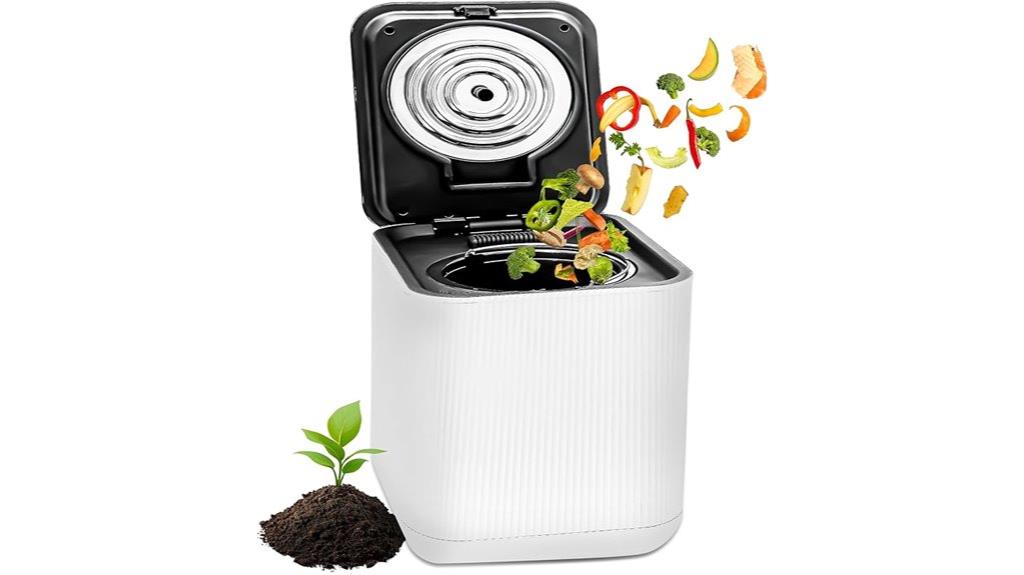
If you’re looking for a compact and easy-to-use composting solution, the NutriChef Electric Kitchen Composter (3 Quart) is a great choice. Its one-button operation makes waste management simple, with no confusing settings or learning curves. It quickly turns food scraps like vegetable peels, coffee grounds, and eggshells into pre-compost in just 6-10 hours, helping you reduce waste efficiently. Its small size (11.02” x 13.5” x 12.5”) fits easily on countertops or in tight spaces. Plus, it features advanced odor filtration, operates quietly, and is made from durable materials, making it a convenient, mess-free addition to any kitchen.
Best For: individuals seeking a compact, easy-to-use kitchen composter to efficiently reduce food waste at home.
Pros:
- One-button operation for simple, hassle-free composting
- Fast processing time of 6-10 hours to produce pre-compost
- Compact size fits easily on countertops or in small kitchens
Cons:
- Limited capacity of 3 quarts may require more frequent emptying
- May not be suitable for large households with high waste volumes
- Requires access to electricity, which might be inconvenient in some setups
Reencle Prime Electric Composter (14L)
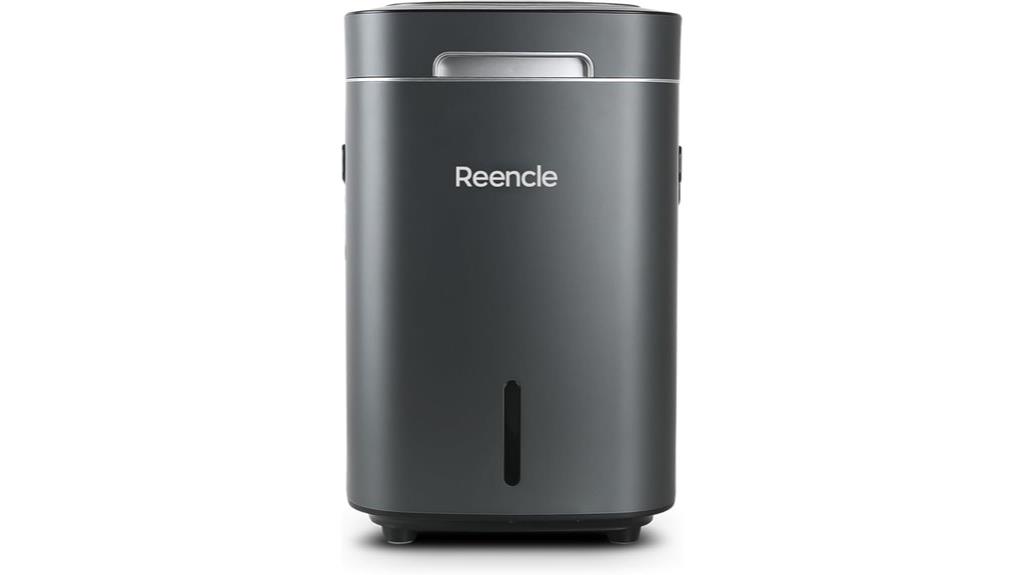
The Reencle Prime Electric Composter (14L) is perfect for anyone seeking an efficient, odor-free way to manage kitchen waste indoors. Its 14-liter capacity transforms up to 2.2 lbs of food scraps daily into nutrient-rich compost, making waste disposal simple and eco-friendly. Using patented microbe technology and aerobic composting, it accelerates decomposition, turning waste into fertilizer within 2-24 hours while reducing food waste by up to 90%. The advanced 3-layer filter guarantees odorless operation, and at just 28 dB, it’s whisper-quiet. Plus, it comes with a complete starter kit, making setup quick and easy for sustainable waste management right in your kitchen.
Best For: households or individuals seeking an efficient, odorless, and eco-friendly indoor composting solution for kitchen waste.
Pros:
- Converts up to 2.2 lbs of food waste into nutrient-rich compost daily, reducing waste by up to 90%
- Operates quietly at as low as 28 dB with advanced odor control through a 3-layer filter system
- Comes with a complete starter kit for easy setup and immediate use
Cons:
- Limited to a 14L capacity, which may require frequent composting for larger households
- Requires electricity, which may not be ideal for off-grid or minimal power setups
- Initial investment may be higher compared to traditional compost bins
Airthereal Revive Electric Kitchen Composter

The Airthereal Revive Electric Kitchen Composter is ideal for anyone seeking a quick, mess-free way to turn food scraps into compost overnight. Its SHARKSDEN Tri-Blade efficiently grinds food waste into dry powder, reducing odor and trash volume. With a 2.5-liter capacity and one-button operation, it’s simple to use and easy to clean, thanks to its durable aluminum body. The device dries and grinds waste in just four hours, so you can start it before bed and wake up to compost ready for your plants. Biodegradable carbon filters keep odors at bay, making it a convenient, hygienic solution for eco-friendly waste management.
Best For: eco-conscious homeowners and busy individuals seeking a quick, hygienic way to compost food scraps overnight.
Pros:
- Efficiently grinds food waste into dry powder, reducing odor and trash volume
- Quick 4-hour cycle allows for overnight composting with minimal effort
- Durable aluminum construction and dishwasher-safe design ease cleaning and maintenance
Cons:
- Limited 2.5-liter capacity may not suit larger households’ needs
- Slightly heavier weight (16.8 pounds) could be less portable for some users
- Moderate customer rating of 4.2 stars suggests some users may experience issues or prefer alternative options
Factors to Consider When Choosing an Electric Compost Bin for Kitchen
When selecting an electric compost bin for my kitchen, I consider factors like capacity and size to fit my space and needs. I also look for odor control features and low noise levels to keep my kitchen comfortable. Additionally, I prioritize ease of cleaning and processing speed to make composting convenient and efficient.
Capacity and Size
Choosing the right electric compost bin size depends on how much food waste your household generates daily. You want a bin that can handle your waste without needing frequent emptying, which keeps your kitchen tidy and efficient. Larger bins offer more capacity, reducing how often you need to empty them, but they also take up more counter or storage space, so consider your kitchen layout. On the other hand, compact sizes are perfect for small kitchens or limited counter space, making them easier to integrate seamlessly. It is crucial to evaluate whether the bin fits comfortably in your designated area, allowing you easy access and handling. Matching the bin’s size to your household’s waste rate helps optimize performance and prevents overflow issues.
Odor Control Features
Effective odor control is crucial when selecting an electric compost bin for your kitchen, as it guarantees your space stays fresh and clean. Advanced filtration systems are key, trapping and neutralizing smells before they escape. Many models feature multi-layer filters with activated carbon, which absorb odors during composting. Sealed lids and airtight designs further prevent unpleasant smells from leaking into your kitchen. Some bins even use odorless technology that actively suppresses odors, maintaining a fresh environment. To keep odor control effective over time, regular filter replacement or maintenance is essential. These features ensure your composting experience remains discreet and odor-free, making your kitchen a more pleasant space while supporting eco-friendly waste management.
Noise Levels
Since odor control features help keep your kitchen fresh, it’s also important to think about how loud the compost bin operates. Most electric compost bins run between 28 dB and 50 dB, similar to a whisper or soft background noise. This quiet operation is key if you want a peaceful kitchen environment, especially if the bin runs often or overnight. The noise level can vary depending on the technology used; models with advanced blades or filtration tend to be quieter. Some units include noise-dampening features or insulated housings to further reduce sound during operation. Knowing the noise level helps prevent disturbances in quiet households and ensures a more comfortable experience. A quieter compost bin makes eco-friendly waste management less intrusive and more convenient.
Ease of Cleaning
When selecting an electric compost bin for your kitchen, ease of cleaning should be a top priority. I recommend choosing models with removable, dishwasher-safe components, which make cleaning less of a chore. Look for bins with smooth, non-porous surfaces that resist residue buildup and are easy to wipe clean. A good unit also features an odorless filtration system, reducing lingering smells and minimizing cleaning efforts. Check if the composter’s blades or grinding mechanisms are accessible and simple to clean—this prevents clogging and bacterial growth. Finally, opt for a design with minimal crevices or hard-to-reach areas, ensuring routine cleaning is quick and hassle-free. Prioritizing these features will keep your compost bin hygienic and maintenance simple.
Processing Speed
Processing speed is a crucial factor to contemplate because it determines how quickly your kitchen waste turns into compost. Faster processing means your food scraps are transformed into nutrient-rich compost within 6-10 hours, reducing trash buildup and keeping your kitchen cleaner. High-speed composters are especially useful for busy households, as they can handle larger quantities of waste daily without delay. Consistent processing times also help you plan your composting schedule more effectively. Advanced models that incorporate microbe technology or aeration can further accelerate decomposition, cutting down the waiting time even more. Ultimately, a rapid composting process ensures your kitchen stays fresh and waste management remains hassle-free, making it easier to maintain an eco-friendly lifestyle.
Safety Mechanisms
Safety mechanisms are essential features to look for when choosing an electric compost bin for your kitchen, as they help prevent accidents and guarantee reliable operation. Many models include automatic shut-off functions that prevent overheating and electrical faults, ensuring safe use. Secure lid locks or safety covers protect against accidental contact with moving parts or electrical components, reducing injury risks. Built-in sensors or indicators alert you when the lid isn’t properly closed or if the device isn’t operating correctly, helping avoid spills or electrical issues. Durable, flame-retardant materials add an extra layer of safety during operation. Additionally, safety features like overload protection and child-proof locks prevent mishandling and accidental injuries, making these bins safer for households with children and active kitchens.
Price and Value
Choosing an electric compost bin involves balancing cost with the features and capacity you need. I recommend comparing prices based on what each model offers—cheaper options might lack advanced odor control or quick processing, which can affect usability. Higher-priced units generally come with extra accessories, longer warranties, or better build quality, making them a better investment over time. Don’t forget to factor in ongoing costs like replacement filters or cleaning supplies to understand the long-term value. It’s crucial to evaluate whether the features align with your budget and composting needs. A more expensive bin might save you money in the long run if it’s more efficient and durable. Ultimately, finding the right balance ensures you get good value without overspending.
Frequently Asked Questions
How Often Should I Empty My Electric Compost Bin?
I usually empty my electric compost bin every 1 to 2 weeks, depending on how much kitchen waste I generate. If I notice a smell or the bin is full, I empty it sooner. It’s best to keep an eye on the level and smell to prevent any odors. Regular emptying keeps the compost fresh and the bin functioning efficiently, making eco-friendly waste management simple and hassle-free.
Are Electric Compost Bins Odor-Proof During Use?
Back in the day, even the sturdiest chests couldn’t hide a smell, and electric compost bins aren’t much different. They’re designed to be odor-proof during use, thanks to sealed lids and filters that trap smells. I’ve found that when I keep up with regular maintenance and use quality filters, my bin stays fresh and odor-free. It’s a game-changer for eco-conscious folks like us who want a clean, green kitchen!
Can Electric Composters Handle Meat and Dairy Waste?
Yes, electric composters can handle meat and dairy waste, but it depends on the model. I’ve found that many high-quality units are designed to process these tougher scraps safely and odorlessly, thanks to their sealed lids and controlled environments. However, I always check the manufacturer’s guidelines to verify they’re suitable. Using the right composter makes managing all kitchen waste easier and more eco-friendly.
What Is the Typical Energy Consumption of These Devices?
Electric composters typically use between 50 to 150 watts, which is quite energy-efficient. I’ve found that they consume about the same as a small light bulb during operation. They’re designed to be eco-friendly, so I don’t worry much about their energy use. Plus, using one helps me reduce waste and create compost faster, all while keeping my energy bills relatively low.
How Long Does Composting Take With an Electric Bin?
Composting in an electric bin typically takes between 24 to 48 hours, though it can vary based on the model and material. I’ve found that most devices accelerate decomposition thanks to consistent temperature and aeration control. Sometimes, tougher scraps like shells or bones take longer. I recommend checking your specific bin’s guidelines, but overall, electric composters offer quick, odorless waste transformation that fits easily into busy schedules.
Conclusion
Choosing the right electric compost bin is like planting a seed for a greener future. Each option is a gentle gardener tending to your waste, transforming scraps into nourishment. As you select your perfect match, picture a small but mighty tree growing from your kitchen—a symbol of sustainability and hope. With the right bin, you’re nurturing not just waste, but a cleaner, healthier world for generations to come.