The most useful difference between facial lamps and masks is their purpose and results. Facial lamps use specific LED wavelengths to promote long-term skin health by stimulating cell regeneration, reducing inflammation, and controlling oil, but require regular sessions over weeks. Masks, on the other hand, provide instant surface nourishment or detoxification, often with quick, targeted effects. Understanding how each works helps you choose what suits your skincare goals—more details await if you want to explore further.
Key Takeaways
- Facial lamps use specific LED wavelengths to promote deep skin regeneration, while masks deliver surface-level nutrients or hydration.
- Lamps require multiple sessions over weeks for long-term benefits, whereas masks provide immediate, short-term skin improvements.
- Lamps are typically used in professional or home treatments for ongoing skin health, masks are quick, weekly at-home skincare routines.
- Light therapy targets deeper skin concerns like inflammation and cell renewal, masks focus on surface concerns like brightness and hydration.
- Combining both methods offers comprehensive skincare, with lamps for long-term health and masks for instant results.
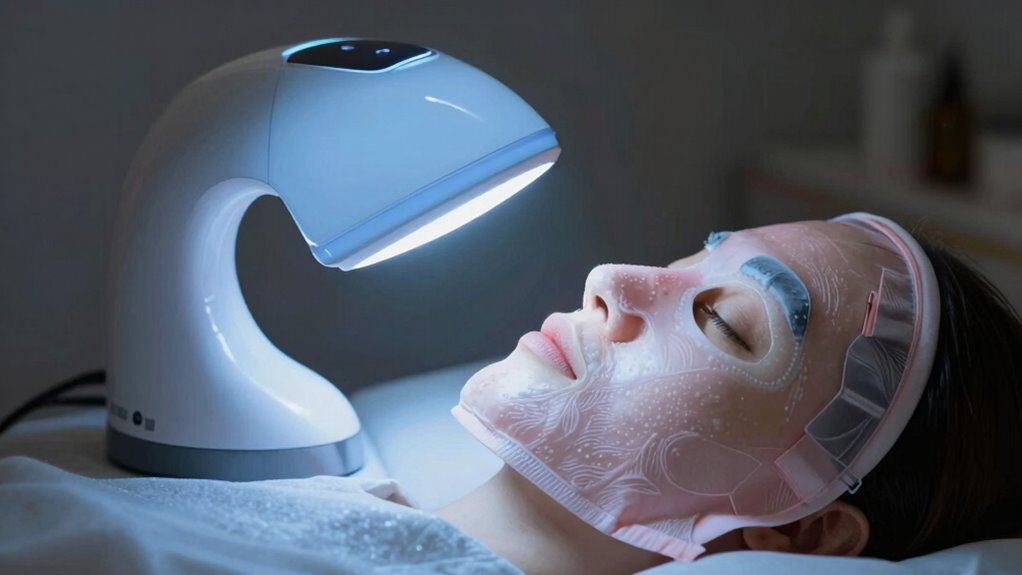
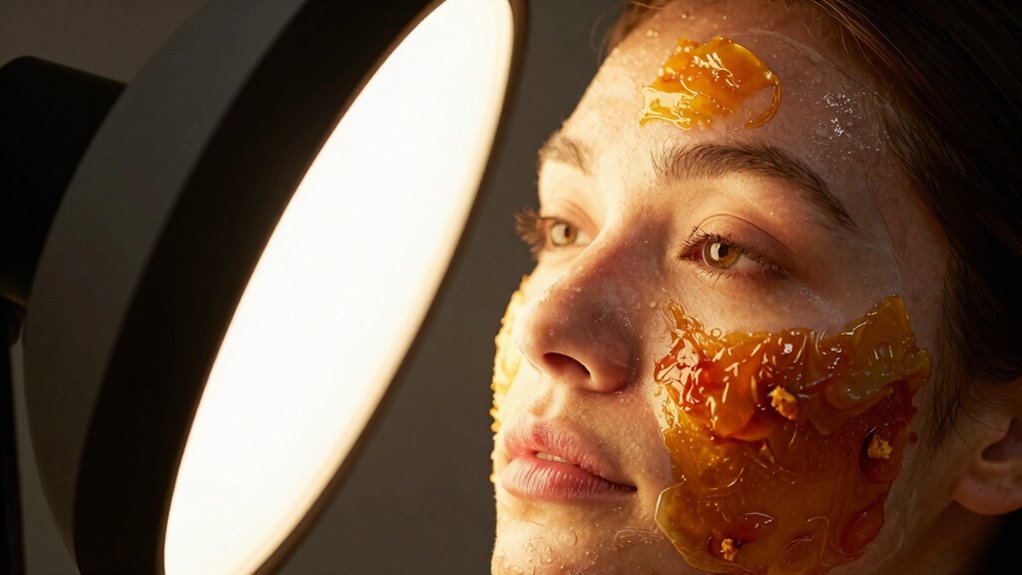
Have you ever wondered how facial lamps and masks differ in skincare? Understanding these differences can help you choose the right treatment for your skin type and goals. Both methods are popular skincare techniques, but they serve distinct purposes and deliver different benefits. Facial lamps, often referred to as light therapy devices, use specific wavelengths of LED light to target various skin concerns. They’re designed to penetrate deep into the skin, encouraging cell regeneration, reducing inflammation, and controlling oil production. Masks, on the other hand, are topical treatments that deliver nutrients, hydration, or detoxification directly to the skin’s surface. They come in many forms—clay, sheet, gel, or cream—and focus more on surface-level improvements like hydration, brightening, or pore tightening.
One of the most important differences lies in their treatment duration. Facial lamps typically require multiple sessions over a period of weeks to see significant results, with each session lasting anywhere from 15 to 30 minutes. The reason for this is that light therapy works gradually, stimulating cellular processes that improve skin health over time. Consistency is key, and most skincare routines involving facial lamps emphasize a series of treatments to maintain progress. Masks, however, are usually used in shorter, more immediate sessions—anywhere from 10 to 30 minutes—often as part of a weekly skincare routine. They provide instant nourishment or detoxification, which makes them ideal for quick skin boosts or specific concerns like dullness or dryness. Additionally, LED light therapy is gaining popularity as a non-invasive method for improving skin health over time. Incorporating professional treatments can enhance the effects of these devices and provide personalized guidance for optimal results.
In terms of skincare techniques, facial lamps tend to be integrated into professional treatments or home devices designed for ongoing use. They are more of a long-term investment, requiring patience and regular sessions to achieve desired results. Masks are more versatile and accessible, easily incorporated into your weekly routine at home without special equipment. They are perfect for quick fixes or targeted treatments, providing immediate visible improvements. For optimal results, some skincare routines combine both approaches, leveraging the benefits of light therapy alongside regular masking.
Ultimately, the choice between facial lamps and masks depends on your skincare goals and the amount of time you’re willing to dedicate. If you’re seeking long-term skin health benefits and are patient enough for a series of treatments, facial lamps might be the better option. If you want quick, visible results and enjoy pampering yourself with weekly treatments, masks are ideal. Both techniques complement each other well and can be used together for a thorough skincare routine. Understanding these key differences ensures you make the best decision tailored to your skin’s needs and your lifestyle.
As an affiliate, we earn on qualifying purchases.
Frequently Asked Questions
Are Facial Lamps Suitable for All Skin Types?
Facial lamps may not be suitable for all skin types, especially if you have skin sensitivity or rosacea. They can cause irritation or discomfort if your skin is sensitive. Always follow safety precautions, such as doing a patch test first and consulting a dermatologist if you’re unsure. If you have skin issues, it’s best to seek professional advice before using facial lamps to guarantee safe and effective treatment.
How Often Should I Use Facial Lamps Versus Masks?
You should use facial lamps about 2-3 times a week and masks 1-3 times, depending on your skin’s needs. Ancient skincare relied on regular routines, but modern technology like facial lamps offers targeted benefits. Think of facial lamps as high-tech treatments that boost your skin’s glow, while masks provide deep hydration. Balance their use to maintain healthy, radiant skin without overdoing it.
Can Facial Lamps Replace Traditional Skincare Routines?
Facial lamps can’t fully replace traditional skincare routines, as they mainly target specific skin concerns like inflammation or brightening. Historically, skincare relied on cultural practices involving natural ingredients and massage techniques. While facial lamps can enhance your routine, they’re best used alongside cleansing, moisturizing, and other treatments. Think of them as a supplement rather than a substitute, helping to optimize your skincare results rooted in cultural wisdom.
What Are the Potential Side Effects of Facial Lamps?
Using facial lamps may cause potential side effects like skin sensitivity or unwanted chemical reactions, especially if you have sensitive skin. You might experience redness, irritation, or inflammation if your skin reacts poorly to the light or any products used during treatment. Always start with a patch test and follow device instructions carefully to minimize risks. If you notice adverse reactions, discontinue use and consult a dermatologist.
Do Masks Provide Longer-Lasting Results Than Facial Lamps?
Masks generally provide longer-lasting results compared to facial lamps because of their extended treatment duration and deeper ingredient absorption. While facial lamps offer quick, immediate benefits, masks work over a longer period, improving skin health and appearance gradually. The longevity comparison favors masks for lasting effects, especially with consistent use, as they target underlying skin issues more thoroughly. So, if you want sustained results, masks are usually the better choice.
Conclusion
Now that you understand the key differences, imagine yourself in a serene spa, feeling the gentle warmth of a facial lamp soothing your skin, or slipping into a mask that wraps your face like a calming cocoon. Both tools offer unique benefits—one brightening your glow, the other nourishing deeply. Choose what fits your mood and skin needs, and let these treatments transform your routine into a blissful escape, leaving you radiant and refreshed with every use.