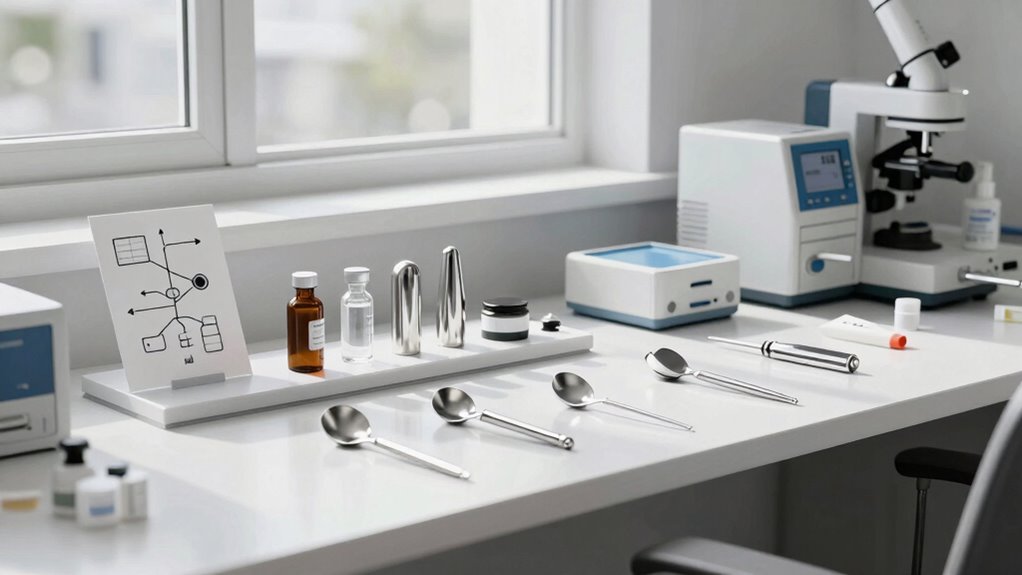

If you’re choosing between “clinic inspired” and clinic practical designs, you’ll notice that the former focuses on creating a calming, inviting atmosphere with aesthetic details like soothing colors and comfortable furniture to promote patient comfort and trust. The practical approach prioritizes efficiency, functional layouts, and quick adaptability for high patient volume and evolving needs. By understanding these differences, you can decide which approach best suits your goals and learn how blending both can enhance your space even further.
Key Takeaways
- “Clinic inspired” prioritizes aesthetic appeal, comfort, and creating a calming, welcoming atmosphere for patient engagement.
- “Clinic practical” emphasizes layout efficiency, workflow optimization, and adaptability for high patient volume.
- “Clinic inspired” uses visual and design elements to foster trust and open communication; “Clinic practical” focuses on operational functionality.
- “Clinic inspired” aims to build strong patient relationships; “Clinic practical” enhances staff efficiency and treatment delivery.
- Combining both approaches creates a balanced space that is inviting, functional, and adaptable for evolving needs.

When designing a clinical space, the choice between a clinic inspired and a clinic practical approach can significantly impact both functionality and patient experience. If you lean toward a clinic inspired design, you’re likely focusing on creating an environment that promotes patient engagement through aesthetic appeal and a welcoming atmosphere. This approach often emphasizes visual elements like soothing colors, comfortable furniture, and modern decor to make patients feel relaxed and cared for from the moment they walk in. By fostering a calming environment, you encourage patients to engage more openly in their treatment journey. This comfort can lead to better communication, higher satisfaction, and an overall sense of trust, which is vital for effective treatment.
On the other hand, a clinic practical approach prioritizes efficiency and usability. You focus on layout and features that facilitate smooth workflows, reduce wait times, and optimize staff movement. The goal here is to enhance functionality so that each element of the space supports quick and effective treatment delivery. While this might mean a more straightforward design, it doesn’t have to compromise patient engagement. You can still incorporate elements like private consultation rooms or soundproof areas to guarantee confidentiality and comfort. This approach supports treatment customization by making it easier for staff to adapt spaces to individual patient needs quickly and efficiently. When your clinic is designed with practicality in mind, you’re better equipped to handle a high volume of patients while maintaining quality care. Additionally, considering biodiversity and sustainability in design choices can improve the overall environment and health outcomes. Incorporating evidence-based design principles can further enhance both patient satisfaction and clinical efficiency. Moreover, integrating flexible design elements allows the space to evolve with changing technological and patient care requirements over time.
Choosing between these two approaches depends on your priorities. If your focus is on building strong patient relationships, a clinic inspired design might be your best bet. It creates an environment that invites patients to participate actively in their care, fostering a sense of partnership. Conversely, if your primary concern is operational efficiency and handling large patient flows without sacrificing care quality, a clinic practical design will serve you well. You can still achieve a personalized treatment experience by ensuring spaces are flexible and staff are trained to adapt quickly to individual patient needs. Furthermore, integrating design flexibility can help accommodate evolving patient and staff requirements over time. Moreover, implementing regular evaluation of the space can ensure it continues to meet both aesthetic and practical needs effectively.
Ultimately, the most successful clinics often blend elements of both approaches. You can create a space that’s visually inviting and patient-centered while maintaining the functionality needed to deliver efficient, customized treatments. Your choice should align with your practice’s goals, but remember that the environment you craft directly influences how patients engage with their care and how effectively their treatments are tailored to their needs.
As an affiliate, we earn on qualifying purchases.
Frequently Asked Questions
How Do I Determine Which Approach Suits My Learning Style?
To determine which approach suits your learning style, consider your learning preferences and study strategies. If you prefer hands-on, real-world applications, a clinic practical approach might work best. If you enjoy visual or theoretical learning, clinic inspired methods could suit you better. Reflect on how you retain information and stay engaged, then try both techniques to see which aligns most with your strengths. Adjusting your study strategies ensures effective learning.
Are There Specific Professions Better Suited for Each Approach?
Certain professions are better suited for each approach based on their professional suitability and skill development needs. For example, healthcare or therapy roles benefit from clinic practical methods, emphasizing hands-on experience. Conversely, fields like research or design might prefer clinic inspired approaches, focusing on conceptual understanding and creativity. You should consider your career goals and the skills you want to develop to choose the approach that aligns best with your professional growth.
Can a Program Combine Both “Clinic Inspired” and “Clinic Practical” Methods?
Yes, you can blend “clinic inspired” and “clinic practical” methods like a symphony, harmonizing theory with action. Your program can weave theoretical applications into hands-on training, creating a rich tapestry of learning. This approach guarantees you’re not just absorbing knowledge but applying it confidently. By integrating both, you cultivate a well-rounded skill set, preparing you for real-world challenges with both understanding and practical expertise.
How Do I Measure Success in Each Approach?
You measure success in each approach through assessment techniques and learning strategies. For clinic-inspired methods, track how well students transfer theoretical knowledge to practical scenarios, using quizzes, reflections, or simulations. In clinic practical settings, observe hands-on skills, patient interactions, and real-world problem-solving. Both require ongoing assessments, like skill checklists or feedback sessions, to guarantee students meet learning objectives and develop confidence in applying their skills effectively.
What Resources Are Recommended for Further Understanding?
Think of learning resources as your toolkit—just like a chef needs the right knives, you need quality educational strategies. To deepen your understanding, explore books like “The Art of Medical Education,” online courses from reputable platforms, and journal articles on clinical teaching methods. Attending workshops or webinars can also be invaluable. These resources help you develop a balanced perspective, blending theory with practical skills, making your approach more effective and confident.
Conclusion
While “clinic inspired” ideas spark your creativity and push boundaries, “clinic practical” solutions keep your feet on the ground, ensuring real-world application. Don’t let the allure of innovation distract you from what works. Picture yourself confidently applying practical methods in a busy clinic, knowing they’re reliable. Balance both approaches, so your work becomes not just inspired but also effective, leaving patients satisfied and your practice thriving. This harmony transforms good intentions into great results.