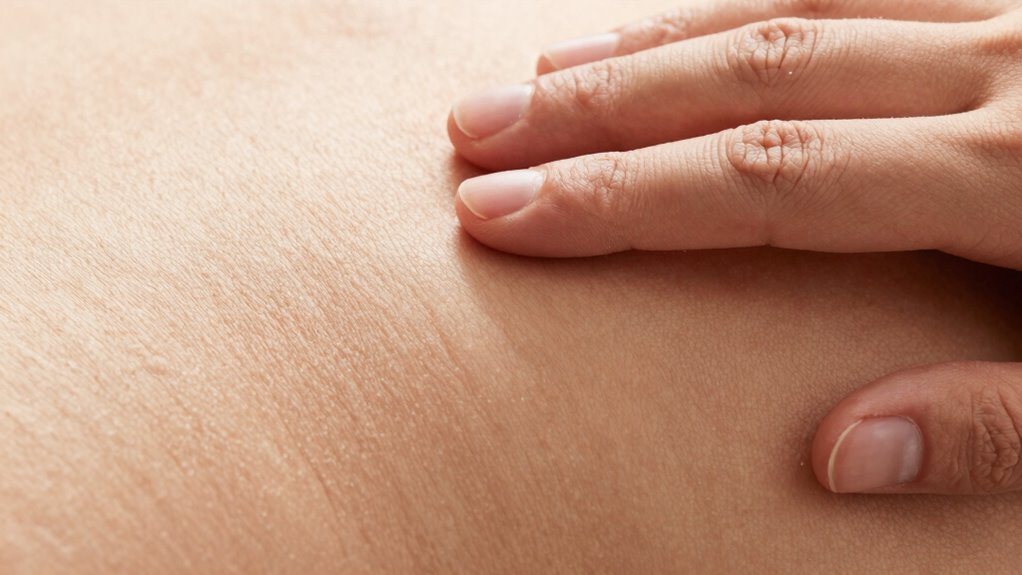

You may notice texture changes before firmness because your skin’s early signs include rough patches, bumps, or dryness caused by loss of elasticity and internal tissue shifts. Nerve endings also become more sensitive to surface irregularities, making texture irregularities more noticeable. Environmental stressors accelerate these early changes, giving you clues about your skin’s internal health before firmness diminishes. Understanding these signs can help you take better care—keep exploring to learn more about what your skin reveals.

Get wellness gear delivered free with Prime
- Fast, free delivery on millions of items
- Prime Video, Amazon Music and more included
- Member-only deals all year
Key Takeaways
- Texture changes often occur early due to loss of skin elasticity, which precedes firmness loss.
- Increased nerve sensitivity makes irregularities more noticeable before changes in firmness.
- External stressors and environmental damage accelerate surface texture alterations prior to internal shifts.
- Internal tissue degradation begins with surface texture changes, signaling early skin aging or damage.
- Recognizing early texture shifts helps in proactive skin care before firmness or swelling become evident.

Have you ever noticed changes in texture before feeling any firmness or swelling? It’s a common experience that can catch you off guard, especially if you’re not sure what’s happening beneath your skin. When you observe these texture shifts first, it often points to subtle changes in your skin’s condition or nerve sensitivity. Your skin’s elasticity plays a significant role here. As you age or encounter environmental stressors, your skin gradually loses its ability to bounce back and maintain a smooth surface. This loss of elasticity can cause your skin to feel rougher or uneven long before you notice any noticeable firmness or swelling. Texture changes might feel like bumps, dryness, or slight rough patches, serving as an early warning sign that your skin is undergoing internal shifts. Additionally, skin elasticity can be influenced by factors such as hydration levels, nutrition, and overall skin health, impacting how early these changes appear. Nerve sensitivity also plays a crucial role in how you perceive these changes. Your skin’s nerve endings are highly responsive to even minor alterations in texture. When nerve endings become more sensitive, you may start to notice irregularities or roughness sooner, long before any visible swelling or firmness occurs. This heightened sensitivity can make you more aware of tiny changes in the surface of your skin, alerting you to underlying issues that might still be invisible to the naked eye. In some cases, increased nerve sensitivity is linked to inflammation, irritation, or early stages of skin conditions, which initially manifest as altered texture rather than noticeable firmness. The interplay between skin elasticity and nerve sensitivity explains why you might first feel texture changes. As the underlying tissue begins to weaken or degrade, your skin’s ability to stay smooth diminishes, leading to roughness or uneven patches. Research shows that environmental factors can also accelerate these internal shifts, emphasizing the importance of protecting your skin from damage. Proper skincare, hydration, and protection from environmental damage can help maintain elasticity and reduce nerve irritation, potentially delaying or minimizing these early texture changes. Understanding how internal skin processes impact surface changes can help you better recognize and address early signs of skin aging or damage. Proper skincare, hydration, and protection from environmental damage can help maintain elasticity and reduce nerve irritation, potentially delaying or minimizing these early texture changes.
Products Worth Considering

Bowflex SelectTech 840 Adjustable Kettlebell

Garmin Forerunner 70 GPS Running Smartwatch, 43 mm, Black

Coway Airmega 250 Air Purifier for Large Rooms
As an affiliate, we earn on qualifying purchases.
Frequently Asked Questions
Can Diet Influence Sensitivity to Texture Changes?
Yes, your diet impact can influence your sensitivity to texture changes. When you consume more processed foods, your texture awareness might decrease because your taste buds and oral tissues become less stimulated. Conversely, eating a variety of fresh, crunchy, and fibrous foods can heighten your sensitivity to texture variations. Over time, this increased exposure helps you better notice subtle texture changes, enhancing your overall eating experience.
Do Age or Gender Affect Texture Perception?
Imagine your senses as a garden whose landscape changes over time. Age-related decline can cause your perception of textures to fade, making certain sensations less vivid. Gender differences also influence this perception, as hormonal variations affect sensory sensitivity. You might notice that as you grow older or based on your gender, your ability to distinguish subtle texture changes diminishes, revealing how biological factors shape your sensory landscape.
How Quickly Do Texture Changes Occur Before Firmness?
Texture fluctuations often occur within seconds to minutes before you notice a change in firmness, depending on factors like skin sensitivity and environmental conditions. Your sensory adaptation plays a role, as your skin becomes less responsive to constant stimuli, making you more aware of subtle texture fluctuations first. This quick detection allows your senses to alert you early, giving you a chance to respond before firmness changes become more apparent.
Are There Medical Conditions Linked to Texture Sensitivity?
Yes, certain medical conditions like neurological disorders and sensory processing issues are linked to texture sensitivity. You might notice heightened awareness or discomfort with textures due to these conditions, which can affect your daily life. Sensory processing differences alter how your nervous system interprets tactile information, making you more sensitive to textures. If this concerns you, consulting a healthcare professional can help identify underlying causes and suggest appropriate interventions.
Can Sensory Training Improve Texture Detection?
Like a sculptor refining their masterpiece, you can use sensory training to enhance texture detection. Through targeted exercises, you stimulate tactile adaptation and leverage neural plasticity, strengthening your body’s ability to perceive subtle surface changes. Consistent practice rewires your brain, sharpening your sense of touch. So, yes, sensory training can improve your ability to detect texture, making even the tiniest variations stand out like brushstrokes on a canvas.
Conclusion
You might find yourself noticing texture changes before firmness because your senses are more attuned to surface details. This heightened sensitivity could be linked to early signs of aging or skin conditions, giving you an advantage in noticing shifts sooner. Trusting your instincts allows you to take action early, potentially improving your skin’s health. So, stay observant—your body’s subtle cues can be valuable guides in maintaining your skin’s robustness longer.