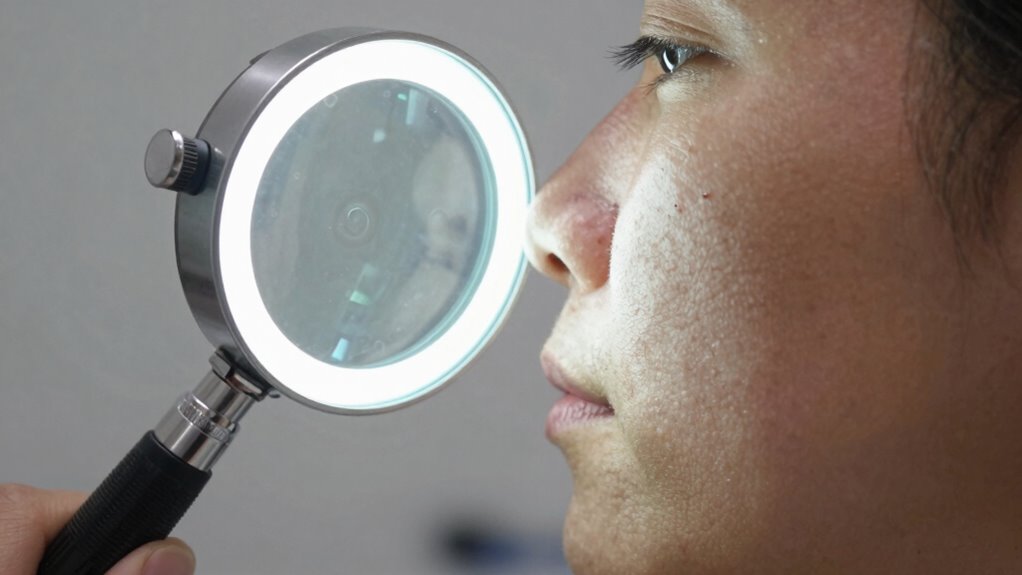
Magnifying lamps can dramatically change how you see your skin, often revealing tiny imperfections that aren’t visible to the naked eye. While they help you spot details like clogged pores or uneven texture, they can also overemphasize minor flaws, making you worry more than necessary. This heightened view might lead to unnecessary self-criticism or seeking treatments. To understand how to use them wisely and avoid misjudging your skin, keep exploring what you need to know.
Key Takeaways
- Magnifying lamps reveal tiny skin details, increasing awareness but potentially exaggerating minor imperfections.
- Close-up views can distort actual skin condition, leading to unnecessary concern or treatment.
- Enhanced visibility may cause skin anxiety by highlighting flaws that are normal or temporary.
- Overuse can foster hyper-scrutiny, affecting self-image and promoting false perceptions of skin health.
- Using magnifying lamps with a balanced perspective helps prevent misinterpretation and promotes healthier self-care.

Magnifying lamps are essential tools for thorough skin examinations because they provide bright, focused illumination combined with magnification, allowing you to see tiny details clearly. When you use them, you might notice your skin’s surface in a way you never have before. The clarity reveals every pore, every bump, and every uneven patch, making your skin’s texture more prominent. For many, this new perspective can be eye-opening — or even unsettling. What once seemed like minor imperfections now look exaggerated, leading to increased concern about skin health.
With magnifying lamps, pore visibility becomes astonishing. You can see the tiny openings on your skin’s surface that are normally hidden from the naked eye. While some pores are natural and unavoidable, others may appear enlarged or clogged, especially if you’re prone to breakouts or excess oil. This heightened awareness can motivate you to adopt better skincare routines, but it can also make you hyper-aware of every flaw. It’s easy to get caught in a cycle of scrutiny, zooming in on imperfections that may be insignificant in everyday life.
The problem is that magnification can distort your perception. What looks like a serious skin problem under the lamp might be perfectly normal upon closer inspection or in natural light. The skin’s texture varies across your face and body, with some areas naturally rougher or more textured. When you focus the lamp on a small area, you might mistake natural roughness for damage or aging. It’s important to remember that close-up views don’t always reflect your overall skin health. Your skin’s appearance under intense magnification can be misleading, causing unnecessary worry or even prompting you to seek treatments that aren’t needed.
Using magnifying lamps shifts how you see your skin, for better or worse. They’re invaluable for identifying issues like clogged pores, blackheads, or irritation, but they also amplify imperfections that might be fleeting or minor. This new perspective can make you overly critical of your skin, especially if you’re prone to skin anxiety. It’s best to use these tools as part of a balanced approach—appreciating the detailed view without letting it dominate your self-image. Remember, your skin’s natural texture and pore size are normal, and what you see under magnification isn’t necessarily a reflection of your overall health. Awareness of skin texture can help prevent unnecessary worry and promote a healthier outlook. Recognizing biodiversity in your skin’s appearance can remind you that variation is natural and healthy. Additionally, understanding the limitations of magnification can help maintain perspective and reduce undue concern. Being mindful of the visual distortions caused by magnification can further help you interpret what you’re seeing more accurately. Being aware of natural skin variation can help you accept your skin’s unique characteristics and avoid unnecessary frustration.
As an affiliate, we earn on qualifying purchases.
Frequently Asked Questions
Are Magnifying Lamps Suitable for Sensitive or Allergy-Prone Skin?
Magnifying lamps may not be ideal if you have sensitive or allergy-prone skin. They can sometimes cause sensitive skin reactions or trigger allergy symptoms due to increased light exposure or dust accumulation. If you have allergy triggers, consider using protective measures like filters or taking breaks. Always test the lamp on a small skin area first and consult with a dermatologist to verify it’s safe for your skin type.
How Often Should I Use a Magnifying Lamp for Skin Exams?
Using a magnifying lamp is like peering through a tiny window into your skin’s secrets. You should limit skin exams with a magnifying lamp to once a month to avoid overanalyzing. Proper magnifying lamp maintenance is essential to keep its clarity, and when choosing the right magnifying lamp, consider adjustable magnification and lighting quality. Regular, cautious use helps you monitor your skin without causing unnecessary concern or irritation.
Can Magnifying Lamps Detect Underlying Skin Conditions?
Magnifying lamps can help you spot surface skin issues, but they can’t reliably detect underlying conditions like skin cancer or deep acne. While they improve visibility for superficial concerns, they aren’t a substitute for professional skin exams. If you notice suspicious moles, irregular spots, or persistent acne, you should see a dermatologist promptly. Relying solely on a magnifying lamp may lead to missed diagnoses of serious skin conditions.
Do Magnifying Lamps Cause Any Harm or Skin Damage?
Magnifying lamps don’t typically cause skin damage directly, but they can lead to eye strain and increased ultraviolet exposure if not used properly. About 60% of users report eye discomfort after prolonged use. While they don’t harm your skin, extended exposure to UV light can cause damage over time. Always use these lamps with proper eye protection and take regular breaks to prevent eye strain and minimize UV risks.
What Features Should I Look for in a Professional Magnifying Lamp?
When choosing a professional magnifying lamp, look for high magnification power to see fine details clearly. Adjustable brightness is essential so you can customize the light intensity for different skin types and conditions. A sturdy, flexible arm offers better control and precision during use. Also, consider energy-efficient LED lighting to reduce heat and eye strain, ensuring comfort during extended periods of examination or treatment.
Conclusion
As you peer into that magnifying lamp, you might think you’ve uncovered every detail of your skin. But beware—what you see might just be the tip of the iceberg. Could that tiny blemish hide something more serious? With every glance, you’re drawn deeper into a world of hidden truths and potential surprises. Stay vigilant, because what you discover under that light could change everything you thought you knew about your skin—forever.