
TL;DR

Get wellness gear delivered free — and shop member deals
- Fast, free delivery on millions of items
- Access to Prime Big Deal Days deals on October 6–7
- Prime Video, Amazon Music and more included
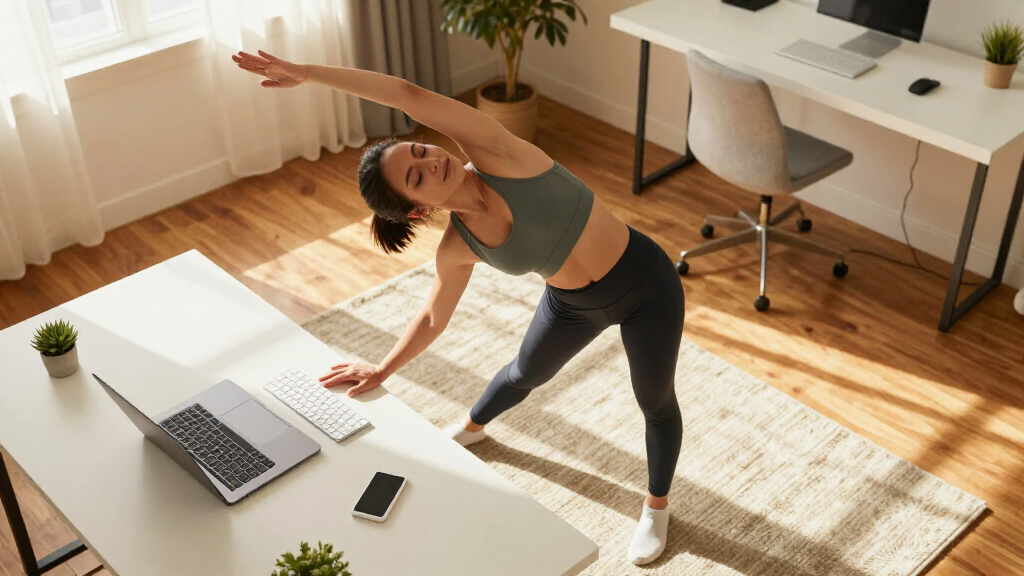
Fit&Well published a 15-minute mobility circuit from David Lloyd Clubs trainer Maxwell Thompson for people who spend long hours at a desk. It includes six movements performed in sequence for three or four rounds; the report describes its intended benefits, but provides no research showing that this specific routine reduces pain or improves posture.
Fit&Well has published a 15-minute mobility workout from David Lloyd Clubs trainer Maxwell Thompson, aimed at people who spend long stretches at a desk. The six-move circuit is intended to take the body through movements often missing during screen work, with Thompson recommending it during a lunch break or when stiffness sets in.
The routine calls for three or four rounds of six exercises: cat-cow, thread the needle, band pull-aparts, wall slides, a half-kneeling hip flexor stretch and a standing chest opener. The listed repetitions range from eight on each side for thread the needle to 15 band pull-aparts; the two final stretches are held for 30 seconds. The instructions include 30 seconds of rest after each movement.
A long-loop resistance band is suggested for the pull-aparts, though the report says a towel can be used to create tension instead. Thompson recommends moving slowly and coordinating movement with breathing. The workout is described as suitable for beginners and people at other training levels, but exercises should be kept within a comfortable range.
The report frames the sequence as a way to address limited movement associated with desk work. Its headline refers to reducing stiffness, easing lower-back tightness and improving posture; those are the workout’s stated aims, not outcomes established by evidence about this particular routine in the supplied material.
Movement Breaks During Desk Work
For people who spend much of the day seated, a short sequence with clear instructions can offer a practical prompt to move the shoulders, spine and hips. It requires little equipment and can be completed in a small space, which may make it easier to fit into a workday than a longer exercise session.
The routine is not a substitute for changing work habits or getting help for persistent symptoms. Thompson’s suggestion to use it at lunch or when stiffness appears is practical guidance from a trainer; the report does not show that one 15-minute session prevents injury, treats back pain or offsets all effects of prolonged sitting. Readers should distinguish those limits from the workout’s intended benefits.
resistance band for upper back exercises
As an affiliate, we earn on qualifying purchases.
As an affiliate, we earn on qualifying purchases.
Six Moves in the Circuit
The exercises combine spinal movement, upper-back and shoulder work, and stretches for the chest and front of the hips. Cat-cow and thread the needle are done on hands and knees; wall slides are performed against a wall; the hip-flexor stretch starts in a half-kneeling position. The chest opener is done standing with fingers interlocked behind the back.
Thompson is identified by Fit&Well as a CIMSPA-certified personal trainer, a mobility specialist certified by Functional Range Conditioning (FRC), and a David Lloyd Academy Trainer. The report says he has worked in mobility, strength and conditioning since qualifying in 2018. It also notes that regular breaks, a standing desk and strengthening exercises may help address some burdens of desk work; the mobility circuit is presented as one possible addition.
“It’s ideal for anyone who spends six-plus hours a day at their desk or screen.”
— Maxwell Thompson, speaking to Fit&Well
Evidence and Individual Limits
The supplied report does not cite a study testing this exact circuit or quantify how much it may affect stiffness, lower-back tightness or posture. It is also unclear whether the routine is appropriate for every person with pain, a mobility limitation or a relevant health condition. A general recommendation that it suits beginners does not establish that every movement is safe for every individual.
Readers should stop or modify a movement that causes pain, rather than pushing deeper into a stretch. People with ongoing or worsening symptoms, an injury, or a health condition affecting movement can ask a qualified health professional for guidance before trying the routine. The source does not report any follow-up findings or participant outcomes.
How to Try the Routine
The next step for readers interested in the workout is to follow the six movements in the order given, using a band or towel for pull-aparts and resting as instructed. Start with a comfortable range of motion and do not treat completion of three or four rounds as more important than controlled movement. The report suggests fitting the circuit into a lunch break or using it when the body feels stiff.
No additional study, expert evaluation or follow-up publication is specified in the source material. Whether the sequence produces lasting changes in comfort or posture, and how often it should be repeated for any particular person, remain unanswered by the report.
Key Questions
What exercises are in the 15-minute routine?
It includes cat-cow, thread the needle, band pull-aparts, wall slides, a half-kneeling hip-flexor stretch and a standing chest opener, performed in that order.
How many rounds should you do?
The Fit&Well instructions say to complete three or four rounds. They list 30 seconds of rest after each exercise.
Do you need a resistance band?
A long-loop resistance band is recommended for the pull-aparts. The report says a towel can be used to create tension as an alternative.
Is the workout proven to relieve back pain?
The source describes easing lower-back tightness as an aim, but provides no study results showing that this specific circuit treats back pain. People with persistent or worsening pain should seek professional advice.
Source: rss
Halloween Picks
halloween
As an affiliate, we earn on qualifying purchases.