
TL;DR

Get wellness gear delivered free with Prime
- Fast, free delivery on millions of items
- Prime Video, Amazon Music and more included
- Member-only deals all year
A Tiny Buddha contributor describes how noticing physical signs of anxiety and taking a pause helped her respond less automatically to perceived threats. The essay offers personal guidance, not research proving the approach works for everyone; the supplied source ends before its advice is complete.
A contributor to Tiny Buddha describes using body awareness and slow breathing to create more time between an anxiety trigger and a response, presenting the approach as a personal account rather than clinical evidence. The essay focuses on recognizing sensations such as a tight chest or shallow breath before acting on anxious assumptions.
The writer says anxiety continued after leaving a marriage in which she felt she had to monitor the mood around her. Later, ordinary events—including a raised voice or a delayed text—could prompt physical alarm and expectations of conflict, even when she was not in immediate danger. She connects this experience to what she learned about attachment theory and nervous-system responses during health-counselor training; those explanations are her account, not a diagnosis of readers.
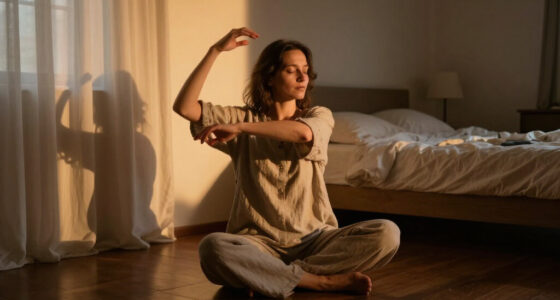
Her described practice begins by noticing a physical response before assigning it a meaning. In one example, when her partner becomes quiet, she notices her chest tightening and shoulders rising, places a hand on her chest, breathes, and names the sensations. She also reminds herself that silence in the present does not necessarily carry the meaning it had in the past. She says the pause between trigger and response gradually lengthened, giving her more opportunity to choose how to respond.
The essay recommends pausing before trying to fix, explain or smooth over a situation. The source material supplied for this article cuts off during the next instruction about breathing, so it does not provide the remainder of the writer’s advice. It also offers no study results, clinical outcome measures or evidence that the technique will have the same effect for others.
Making Space Before Reacting
The account addresses a familiar problem: a physical alarm can prompt a quick response before someone has established what is happening. Pausing to identify sensations may help readers separate what they feel from the explanation their mind attaches to it, and consider whether the current situation calls for immediate action.
That distinction is useful, but the essay should not be treated as a substitute for care or as proof that anxiety can be managed through breathing alone. Anxiety can have different causes and effects, and a brief personal account cannot establish how broadly the approach works. Readers whose anxiety is persistent or disrupting daily life may want to speak with a qualified health professional.
As an affiliate, we earn on qualifying purchases.
From Old Alarms to Present Cues
The writer recounts having learned to monitor sounds and changes in mood during her previous marriage. She says her body continued to react to cues such as silence even after that relationship ended. The essay frames this as a learned response that can persist beyond the circumstances in which it developed; that framing reflects the writer’s understanding of her experience.
Her central suggestion is to start with a concrete observation—such as a tight chest, held breath or urge to apologize—rather than immediately concluding that another person is angry. She describes repeating this pause in everyday moments, not as a quick fix but as a practice that took time. The supplied material does not identify the author by name or give the essay’s publication date.
“My body knew things my mind hadn’t caught up to yet.”
— Tiny Buddha contributor, describing her own experience
Limits of the Personal Account
The source is a first-person essay, not a reported clinical study. It does not establish whether the practice is effective for anxiety generally, identify which readers might benefit, or compare it with professional treatment. The writer’s discussion of attachment and nervous-system regulation should be understood as her interpretation of her experience, not a clinical assessment of readers.
The supplied text ends partway through an instruction to breathe before deciding what to do. It is unclear what additional steps the full essay recommends. The material also omits the author’s name, the publication date and any linked research supporting its broader statements.
A Pause, Then a Choice
For readers trying the described approach, the essay’s available instructions are to notice a physical cue, name it without immediately interpreting it, and take a few slow breaths before deciding how to respond. The account does not set a required breathing pattern or timeframe, and it does not promise a particular result.
The supplied source gives no announced follow-up, research study or clinical guidance tied to the essay. Anyone whose anxiety is severe, ongoing or affecting relationships, work or daily activities can discuss options with a qualified professional rather than relying on this personal technique alone.
Key Questions
What does the Tiny Buddha essay recommend doing when anxiety rises?
It recommends noticing bodily cues such as tightness, shallow breathing or an urge to fix things, naming them without immediately interpreting them, and breathing before choosing a response.
Does the essay show that this method works for everyone?
No. It reports one writer’s experience and provides no clinical study or outcome data establishing how well the approach works for other people.
How long does it take to notice a change?
The writer says the pause between a trigger and her response grew over time, but gives no specific timeline and does not claim that readers will experience the same change.
Is the full breathing advice available in the supplied source?
No. The supplied text ends during the instruction to breathe before deciding what to do, so the remainder of that advice is not available here.
When should someone seek professional support?
If anxiety is persistent, severe or interfering with daily life, consider discussing it with a qualified health professional. The essay is personal guidance, not a replacement for assessment or care.
Source: rss
Halloween Picks
halloween
As an affiliate, we earn on qualifying purchases.