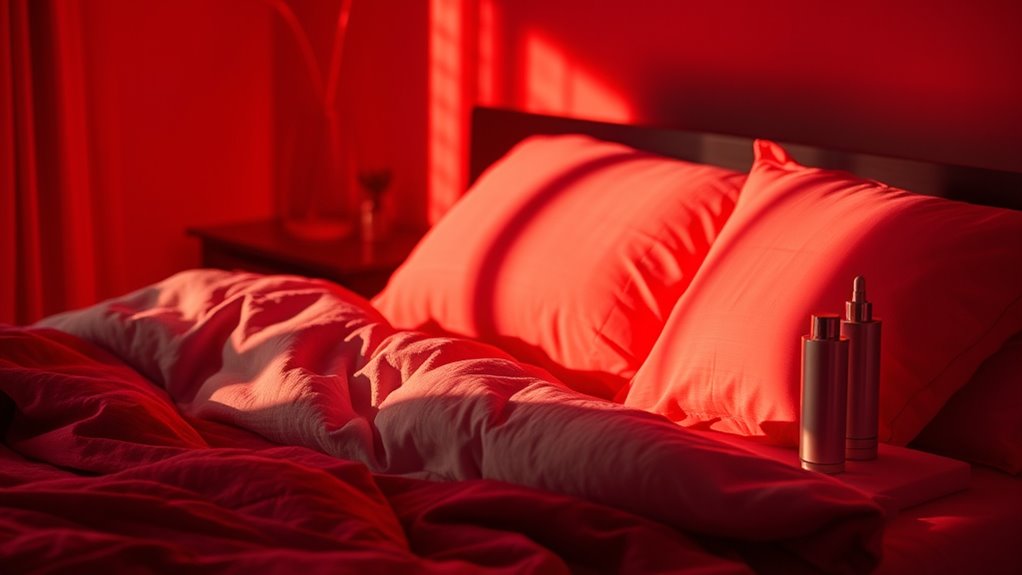

Using red light before bed is a sleep-friendly skincare trend that helps you wind down and promotes better rest. It minimally impacts your circadian rhythm, allowing natural melatonin production to thrive, unlike blue light which can disrupt sleep. Red light also supports skin health by reducing inflammation, boosting collagen, and aiding overnight healing. Incorporating this simple routine can enhance both your sleep and skin glow—discover more benefits as you explore this calming bedtime practice.
Key Takeaways
- Red light therapy before bed supports relaxation and enhances sleep quality by minimally affecting melatonin production.
- It promotes skin healing, reduces inflammation, and boosts collagen for improved skin health overnight.
- Using red light devices creates a calming wind-down routine that aligns with natural circadian rhythms.
- Consistent nightly use helps improve sleep patterns and skin texture without disrupting natural hormonal processes.
- The trend combines sleep-friendly benefits with skincare, making bedtime routines more effective and nourishing.
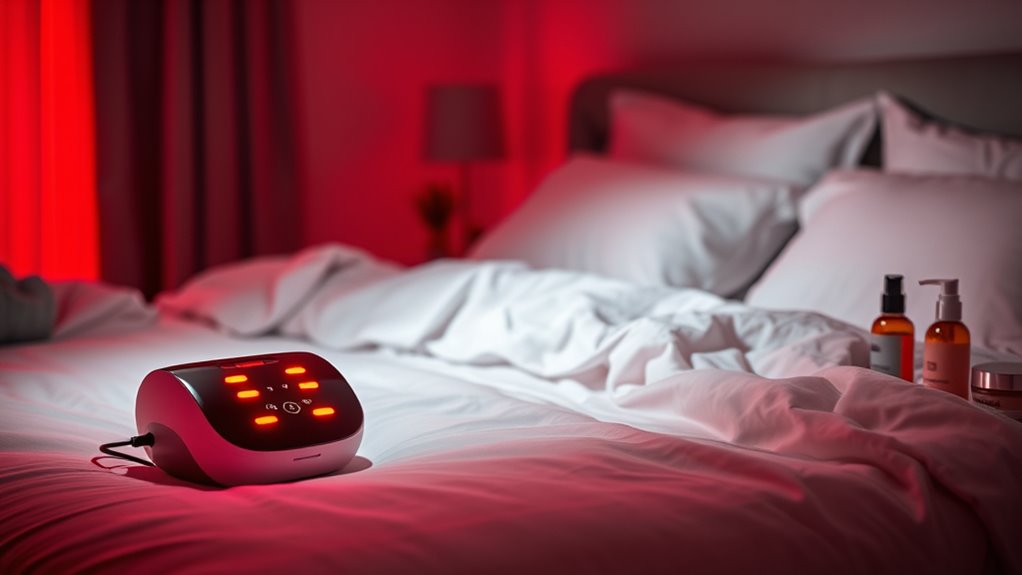
Many people are turning to the red light before bed trend, believing it can improve sleep quality and promote relaxation. You might have noticed that switching to red light in your evening routine helps you unwind more effectively than harsh white or blue lighting. This trend is rooted in the idea that red light has a minimal impact on your circadian rhythm, which regulates your sleep-wake cycle. Unlike blue light, which suppresses melatonin production and disrupts your ability to fall asleep, red light is gentle and less likely to interfere with your natural sleep signals. By incorporating red light into your nightly routine, you could find it easier to wind down after a long day and shift into restful sleep more smoothly.
Red light before bed supports relaxation by minimally affecting your circadian rhythm.
One of the main benefits of red light before bed is its potential to improve your overall sleep quality. When you use red light during your evening activities, you avoid exposing yourself to disruptive blue wavelengths. This means your body can produce melatonin more naturally, helping you fall asleep faster and enjoy deeper, more restorative sleep. Better sleep can lead to increased energy, improved mood, and enhanced cognitive function during the day. If you’ve struggled with falling asleep or wake up feeling groggy, giving red light a try may help reset your sleep patterns without the need for medication or supplements. Additionally, red light’s minimal impact on the circadian rhythm aligns with hormonal regulation principles, supporting your body’s natural processes.
In addition to its sleep benefits, red light is also considered skincare-friendly. Many people use red light therapy for its potential to reduce inflammation, boost collagen production, and promote skin healing. When used before bed, red light therapy can become part of your skincare routine, helping your skin recover and rejuvenate overnight. You might notice improvements in skin texture, tone, and elasticity over time. Because red light penetrates deep into the skin, it can target underlying issues and support cellular repair while you rest. This dual benefit—enhancing sleep and skincare—makes red light an appealing addition to your nightly routine.
Integrating red light into your evening isn’t complicated. You can use specialized red light devices, such as lamps or masks, or install red-tinted bulbs in your bedroom. It’s best to start with short sessions, around 10-15 minutes, to see how your body responds. Consistency is key; practicing this routine nightly can help establish a natural rhythm and maximize the benefits. As you adapt, you may find that red light becomes an essential part of your wind-down process, helping you relax more efficiently and wake up feeling refreshed. Ultimately, this simple shift in lighting can support both your sleep health and skin wellness, making your bedtime routine more effective and enjoyable.
red light therapy device for sleep
As an affiliate, we earn on qualifying purchases.
As an affiliate, we earn on qualifying purchases.
Frequently Asked Questions
Does Red Light Exposure Affect Melatonin Production?
Yes, red light exposure can affect melatonin production. It’s generally considered to have minimal impact on your sleep hormones because red light has a longer wavelength, which doesn’t suppress melatonin like blue or white light does. When you use red light before bed, you may find it easier to fall asleep and stay asleep, making it a popular choice for sleep-friendly skincare routines. Just be mindful of the timing and intensity.
Can Red Light Improve Skin Repair Overnight?
Yes, red light can improve skin repair overnight. When you expose your skin to red light, it stimulates cellular activity and boosts collagen production, which accelerates healing and reduces signs of aging. You’ll notice your skin becoming more radiant and firm over time. Just make sure to use a device designed for skincare, and follow recommended exposure times to get the best results without irritation.
Is Red Light Safe for Sensitive Skin Types?
Yes, red light is generally safe for sensitive skin, but you should proceed with caution. It’s gentle, non-invasive, and reduces inflammation, making it suitable for delicate skin types. However, some individuals might experience mild irritation or redness initially. To stay safe, start with brief sessions, watch for reactions, and consult a dermatologist if you notice any discomfort. With careful use, you can enjoy the benefits without worry.
How Long Should I Use Red Light Before Bed?
You should use red light therapy for about 10 to 20 minutes before bed. This duration is enough to help relax your skin and promote better sleep without causing irritation. Make sure to follow the device’s instructions and avoid overdoing it, as longer exposure isn’t necessarily better. Consistency is key, so incorporate this into your nightly routine to enjoy the best sleep and skin benefits.
Are There Any Side Effects of Red Light at Night?
No, there aren’t many known side effects of using red light at night, but some people might experience mild eye strain or discomfort if they look directly into the light without protection. You should avoid shining it directly into your eyes and limit exposure time. If you notice any irritation, skin changes, or headaches, it’s best to consult a healthcare professional. Overall, red light is generally safe for sleep-friendly skincare routines.
Conclusion
So, seize the soothing secret of the red light before bed. By embracing this bedtime beauty boost, you create a calming, sleep-friendly setting that supports your skin and slumbers. Remember, small shifts can spark significant sleep and skincare success. Don’t underestimate the power of peaceful, post-sunset practices; they’re your passport to a more restful, radiant night. Let the gentle glow guide you to better sleep and brighter skin—beautiful, bedtime breakthroughs begin with just a simple switch.