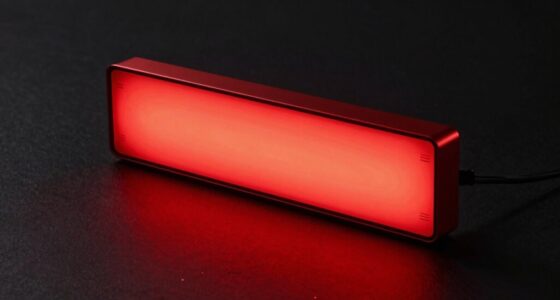
Multi-wavelength LED devices give you the ability to customize light with precise spectral control, creating more vibrant, natural, and dynamic illumination. By combining different colors, you can produce a broad palette of hues, from soft pastels to vivid saturates, and adjust them seamlessly in real-time. This flexibility opens up new creative and practical possibilities for lighting and displays. If you’re interested in understanding how more colors can enhance your lighting projects, there’s more to explore ahead.
Key Takeaways
- More colors enable precise spectral tuning, improving light quality and matching natural or desired lighting conditions.
- Increased color options expand creative possibilities for dynamic, visually engaging displays and environments.
- Additional wavelengths allow for better color mixing, producing a broader and more nuanced color palette.
- Multi-wavelength LEDs support specialized applications like medical lighting, where specific spectra enhance performance.
- Greater color diversity enhances user experience with customizable, expressive lighting and mood-setting capabilities.
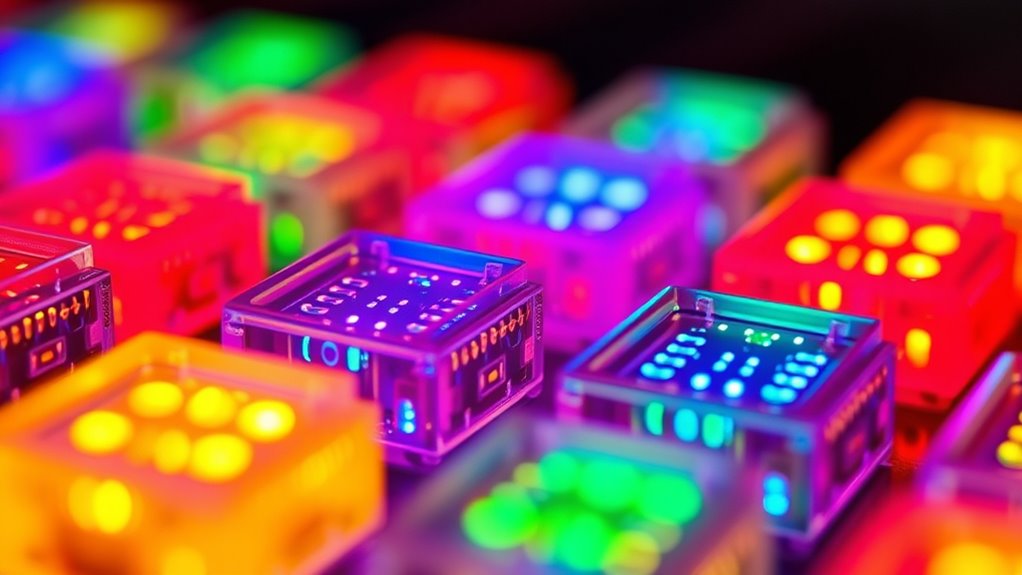
Multi-wavelength LED devices are revolutionizing lighting and display technologies by combining different colored LEDs into a single compact unit. This innovative approach allows for precise spectral tuning, giving you the ability to customize the emitted light’s color spectrum with remarkable accuracy. Instead of relying on a single color source, these devices blend multiple wavelengths, enabling richer and more vibrant lighting solutions. Spectral tuning isn’t just about achieving specific colors; it’s about controlling the quality and nuance of the light itself, making it possible to match natural light more closely or create unique visual effects. This capability enhances applications from high-end displays to architectural lighting, where the quality of light can profoundly influence mood and perception.
At the core of multi-wavelength LED technology is color mixing. By combining different LEDs emitting distinct wavelengths—red, green, blue, and even beyond—you can generate a broad palette of colors. This process involves blending these individual emissions seamlessly, allowing you to produce everything from subtle pastel shades to intense, saturated hues. The precision of color mixing in multi-wavelength devices means you can achieve consistent, repeatable colors, which is vital in settings where visual accuracy matters, such as medical lighting, digital signage, or stage illumination. The ability to manipulate and fine-tune these mixtures opens up new creative possibilities, letting you craft your environment or display with exact color specifications.
Furthermore, multi-wavelength LED systems provide dynamic control over color composition. Using advanced electronic controls, you can adjust the intensity of each wavelength independently, creating smooth transitions and complex color patterns. This flexibility is invaluable for applications like mood lighting or interactive displays, where changing colors in real-time enhances user experience. The combination of spectral tuning and precise color mixing ensures that you’re not limited to static colors; instead, you gain a versatile toolset for designing lighting solutions that are both functional and visually compelling.
In essence, adopting multi-wavelength LED devices empowers you to think beyond traditional lighting methods. By harnessing spectral tuning and mastering color mixing, you *unlock* the potential for more natural, expressive, and customizable illumination. Whether you’re designing a *captivating* display, improving the ambiance of a space, or developing advanced lighting systems, these devices offer a level of control and creativity that simply wasn’t possible before. More colors mean more possibilities, and with multi-wavelength LEDs, you hold the *key* to transforming how we see and experience light.
multi-wavelength LED lighting kit
As an affiliate, we earn on qualifying purchases.
As an affiliate, we earn on qualifying purchases.
Frequently Asked Questions
How Do Multi-Wavelength LEDS Impact Energy Efficiency?
Multi-wavelength LEDs can improve energy efficiency through spectral optimization, allowing you to target specific wavelengths needed for your application, which reduces waste. By optimizing the spectrum, you also enhance power management, ensuring you use only the necessary energy for each color. This precise control minimizes energy consumption and maximizes output, making multi-wavelength LEDs a smarter, more efficient choice for your lighting needs.
What Are the Challenges in Manufacturing Multi-Wavelength LED Devices?
Manufacturing multi-wavelength LED devices is like juggling fiery torches—you need perfect precision. You face challenges with manufacturing complexity and material compatibility, as aligning different LEDs without defects is tricky. Ensuring each wavelength works harmoniously demands advanced techniques and meticulous quality control. If you overlook these factors, the final product may suffer from inconsistency or reduced lifespan. Staying ahead requires innovation and strict standards, but the payoff is a versatile, colorful LED device.
Can Multi-Wavelength LEDS Be Used for Medical Applications?
Yes, you can use multi-wavelength LEDs for medical applications because they offer spectral precision, allowing targeted treatments. By adjusting the specific wavelengths, you can optimize therapeutic outcomes, such as promoting healing or reducing inflammation. This precision helps guarantee that the light interacts effectively with tissues, making multi-wavelength LEDs a versatile tool in medical therapy. Your ability to customize these devices enhances treatment effectiveness and patient recovery.
How Do Multi-Color LEDS Affect Device Lifespan and Durability?
Multi-color LEDs can impact device lifespan and durability by increasing thermal management challenges and accelerating material degradation. As you operate multiple wavelengths, heat builds up more quickly, risking damage if not properly managed. Additionally, the varied materials used for different colors may degrade at different rates, reducing overall longevity. To guarantee durability, you need effective cooling solutions and high-quality materials that withstand thermal stress and resist degradation over time.
Are Multi-Wavelength LEDS Cost-Effective for Commercial Use?
Multi-wavelength LEDs can be cost-effective for commercial use because their cost analysis shows long-term savings through versatility and energy efficiency. You’ll likely find strong market demand for these devices, especially in applications requiring color customization or multi-functional lighting. While initial investment might be higher, the improved durability and reduced replacement costs make multi-color LEDs a smart choice for businesses aiming to enhance their offerings and appeal to a broader audience.
Conclusion
By choosing multi-wavelength LED devices, you open the potential for richer, more versatile lighting. Interestingly, a study shows that multi-color LEDs can reduce energy consumption by up to 20% compared to single-color options. This means you not only enjoy better lighting quality but also save money and help the environment. So, next time you upgrade your lighting, consider multi-wavelength LEDs—you might be surprised how much more they can do for you.