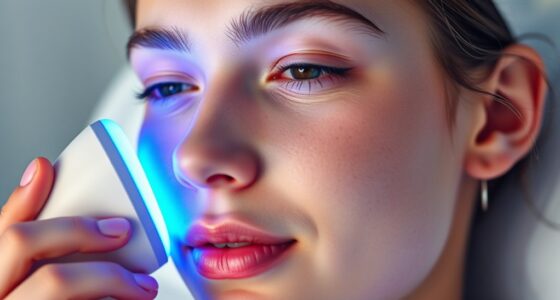
Light therapy can help you manage menopausal symptoms like hot flashes and sleep issues by balancing your hormones and resetting your body’s internal clock. Regular exposure to natural-spectrum light, especially in the morning, boosts serotonin and improves mood while reducing hot flashes and night awakenings. It’s a safe, non-invasive option that supports better sleep and emotional well-being. If you want to discover how to optimize your experience, there’s more helpful information ahead.
Key Takeaways
- Light therapy helps regulate circadian rhythms, reducing hot flashes and improving sleep quality during menopause.
- Morning exposure to full-spectrum light boosts serotonin, enhancing mood and alleviating menopausal depression and irritability.
- Consistent use of light therapy supports hormonal balance, decreasing hot flash frequency and severity.
- It is a safe, non-invasive treatment with no medication side effects, typically requiring 20-30 minute daily sessions.
- Light therapy improves overall well-being by promoting better sleep and mood regulation in menopausal women.
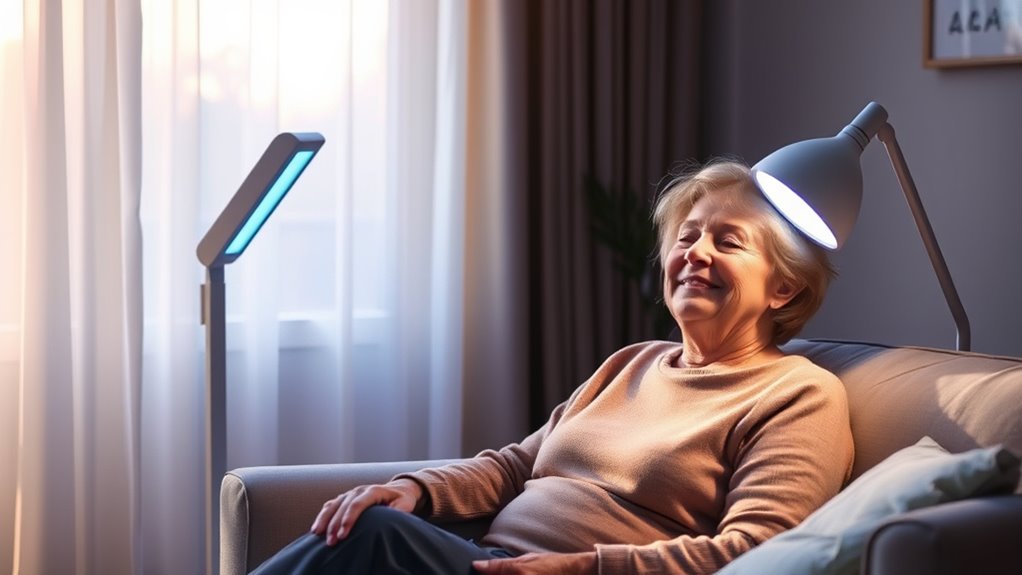
Many women find that menopausal symptoms like hot flashes, sleep disturbances, and mood swings can considerably impact their daily lives. These symptoms often feel overwhelming, but light therapy offers a promising approach to managing some of these challenges. By exposing yourself to specific light patterns, you can help restore hormonal balance, which is vital during menopause. When your hormones are balanced, hot flashes may decrease in severity and frequency, and your overall mood can improve. Light therapy works by influencing your body’s internal clock, or circadian rhythm, which regulates hormone production and sleep cycles. When these are aligned, you’re more likely to experience fewer hot flashes and better quality sleep.
Using light therapy consistently can help boost mood, especially during this transitional phase. Menopause often triggers emotional fluctuations, and improving your mood can substantially enhance your quality of life. Bright light exposure, especially in the morning, can stimulate serotonin production—your brain’s “feel-good” neurotransmitter. Increased serotonin levels are linked to better mood, reduced irritability, and a sense of well-being. This effect is particularly helpful if you’re feeling anxious or depressed, common during menopause. The key is to incorporate daily light therapy sessions into your routine, ideally in the morning, to help set your circadian rhythm for the day ahead.
Another advantage of light therapy is its non-invasive nature. Unlike medications, it doesn’t carry the risk of side effects that some women experience with hormone therapy or antidepressants. Instead, it offers a natural way to support your body’s hormonal balance. You don’t have to spend hours in front of a light box; just 20 to 30 minutes each morning can make a difference. The light boxes used for therapy emit a full spectrum of bright light that mimics natural sunlight, which is often lacking during winter months or in less sunny climates. Regular exposure can help regulate your body’s internal clock, leading to fewer hot flashes, more restful sleep, and a more stable mood.
Incorporating light therapy into your daily routine empowers you to take control of menopausal symptoms without relying solely on medications. As your hormonal balance improves, you’ll likely notice a reduction in hot flashes and night awakenings, alongside an uplift in your mood. When used consistently, light therapy can be a simple yet effective tool to help you navigate menopause more comfortably, restoring a sense of normalcy and well-being to your daily life.
Frequently Asked Questions
Can Light Therapy Replace Hormone Therapy for Menopause?
Light therapy can serve as an alternative treatment, but it doesn’t fully replace hormone replacement for menopause symptoms. While it may help with hot flashes and sleep issues, it doesn’t address all hormonal changes. If you’re seeking non-hormonal options, light therapy could be beneficial, yet it’s important to discuss with your healthcare provider to determine if it’s suitable for your specific needs and to explore all-encompassing menopause management strategies.
What Are the Long-Term Effects of Light Therapy?
You’re curious about the long-term effects of light therapy, right? While research is ongoing, it’s believed that consistent use can positively influence your circadian rhythm and melatonin regulation, potentially reducing menopausal symptoms over time. However, some risks remain, like eye strain or disrupted sleep if misused. Stay vigilant, follow professional guidance, and monitor your body’s responses to make certain of safe, effective results as you explore this promising treatment.
Is Light Therapy Effective for All Menopausal Women?
Light therapy can be effective for many menopausal women, but it doesn’t work equally for everyone. Your response may depend on factors like your overall health, lifestyle modifications, and whether you’ve tried alternative treatments. It’s important to discuss with your healthcare provider to see if light therapy suits your specific needs. Combining it with other strategies could enhance its effectiveness in managing hot flashes and sleep issues.
How Soon Can I Expect Results From Light Therapy?
You might notice symptom improvement from light therapy within a few days to a couple of weeks. Timing expectations vary depending on individual response and the severity of symptoms. Consistent daily use is key, and many women report reduced hot flashes and better sleep after regular sessions. Keep track of your progress, and if you don’t see changes within a few weeks, consider consulting your healthcare provider for adjustments.
Are There Any Risks or Side Effects Associated With Light Therapy?
You should be aware that light therapy may cause potential skin irritation or eye safety concerns if not used correctly. Some people experience redness or discomfort on their skin, and bright light can strain your eyes or cause temporary vision issues. To minimize risks, follow the recommended guidelines, avoid staring directly into the light, and consult a healthcare professional if you notice any adverse effects.
Conclusion
By now, you see how light therapy could ease your menopausal symptoms, from hot flashes to sleep troubles. It’s a simple, non-invasive option that might fit seamlessly into your routine. So, why not give it a try and see if brighter days are ahead? Could this natural approach be the relief you’ve been searching for? Embrace the possibility and take the first step toward feeling better today.