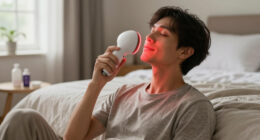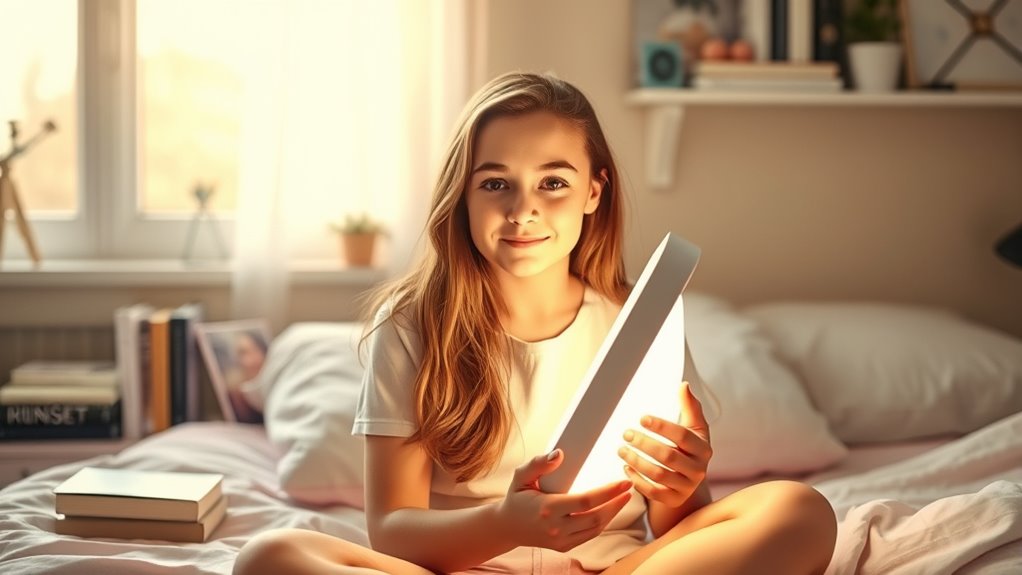

To start light therapy safely, use a light box with about 10,000 lux for 20-30 minutes each morning, keeping it 16-24 inches away at an angle. Talk to a healthcare provider first for personalized advice, and don’t stare directly into the light. Stick to a consistent routine and avoid late sessions to prevent sleep issues. If you want to learn more about safe practices and tips, keep exploring this helpful guide.
Listen free for 30 days with Audible
Thousands of audiobooks and originals — cancel anytime.
As an affiliate, we earn on qualifying purchases.
Key Takeaways
- Consult a healthcare professional before starting light therapy to ensure safety and proper guidance.
- Use a light box with around 10,000 lux, positioned 16-24 inches at an angle, for 20-30 minutes each morning.
- Maintain a consistent routine and avoid late-day sessions to prevent sleep disruption.
- Start with shorter durations and gradually increase, monitoring for side effects like headaches or eye discomfort.
- Ensure the therapy is used in a well-lit environment without staring directly into the light for safety.

Many teens struggle with mood, sleep issues, or energy levels, and light therapy offers a promising, drug-free option to help manage these concerns. If you’re considering trying light therapy, it’s important to approach it safely and effectively. Starting with proper guidance can make all the difference in how well it works for you and in avoiding potential side effects. First, understand that light therapy involves exposure to a bright light that mimics natural sunlight, which can help regulate your body’s internal clock and improve mood. Many teens find that using a light box in the morning can boost alertness and help reset their sleep schedules, especially during darker months or if you’re experiencing seasonal affective disorder.
Before jumping into regular use, talk to a healthcare professional. They can recommend the right type of light box, the appropriate intensity—usually around 10,000 lux—and the best starting duration, which often begins at about 20 to 30 minutes daily. It’s tempting to use the therapy for longer, but too much exposure can cause eye strain, headaches, or irritability. It’s best to stick to the recommended time and gradually increase it if needed, always monitoring how you feel. Position the light box about 16 to 24 inches from your face, at an angle that allows the light to reach your eyes indirectly. You don’t need to stare directly into the light, which can be uncomfortable and counterproductive.
Consistency is key. Make a routine that fits your schedule, ideally using the therapy at the same time every morning. This helps reinforce your body’s internal clock and can lead to more stable mood and sleep patterns over time. Avoid using the light therapy late in the day, as this might interfere with your ability to fall asleep at night. During your sessions, stay engaged in a light activity like reading or eating breakfast—just avoid looking directly into the light, and don’t use it while lying down or in a dark room. If you experience side effects like headaches, eye discomfort, or feelings of agitation, stop the therapy and consult your healthcare provider.
10,000 lux light therapy box for teens
As an affiliate, we earn on qualifying purchases.
As an affiliate, we earn on qualifying purchases.
Frequently Asked Questions
Can Light Therapy Replace Medication for Teen Depression?
Light therapy can’t fully replace medication for teen depression, but it can be a helpful complementary treatment. You should always consult a healthcare professional to determine the best approach for your teen. While light therapy may improve mood and energy levels, it often works best when combined with therapy or medication. Never substitute or stop medication without professional guidance, and make certain any light therapy is used safely and correctly.
Are There Age Restrictions for Teen Light Therapy Sessions?
Think of age restrictions for teen light therapy as guardrails guiding a young traveler. Typically, children under 12 need medical approval before starting treatment, while teenagers aged 13 and above usually can access sessions with a doctor’s recommendation. Always check with a healthcare professional to guarantee safety and appropriateness. These guidelines help ensure the therapy is a helpful map rather than a risky journey.
What Are the Long-Term Effects of Teen Light Therapy?
Long-term effects of teen light therapy are still being studied, but current evidence suggests it’s generally safe when supervised properly. You might experience minor side effects like eyestrain or headaches initially, which usually resolve quickly. Over time, consistent use could improve mood and sleep patterns. However, it’s important to follow your healthcare provider’s guidance to minimize risks and guarantee safe, effective treatment.
How Do I Choose the Right Light Therapy Device for My Teen?
To select the proper light therapy device for your teen, consider their specific needs, like treating seasonal affective disorder or improving sleep. Look for FDA-approved devices with at least 10,000 lux brightness and a UV filter for safety. Check reviews and consult a healthcare professional to ensure it’s suitable. Prioritize ease of use, portability, and adjustable settings to make the therapy effective and comfortable for your teen.
Is Light Therapy Effective for Teens With Seasonal Affective Disorder?
Yes, light therapy can be a beacon of hope for teens with seasonal affective disorder. It works like a burst of sunshine, lifting their mood and energy levels during gloomy months. When used correctly, it’s a safe and effective tool that helps reset their internal clock. Just make sure they follow recommended guidelines, use it consistently, and consult a healthcare professional to guarantee it’s the right fit for their needs.
Conclusion
Remember, light therapy is like a gentle sunrise after a long night—hopeful and revitalizing. As a teen, you can harness this natural glow to boost your mood and energy safely. Just like planting seeds in spring, start small and be consistent. Always listen to your body and consult a professional when needed. With patience and care, you’ll find that the right light can be your guiding star toward brighter days.
Flea & tick season Picks
flea and tick prevention
As an affiliate, we earn on qualifying purchases.