If you have skin conditions like psoriasis, eczema, or recently undergone chemical peels, avoid light therapy without medical advice. People with eye issues such as glaucoma, retinal detachment, or recent eye surgery should also be cautious. Those taking photosensitizing medications or with autoimmune disorders, skin cancer history, or certain health problems should consult a healthcare professional first. Continuing further will help you understand specific contraindications and how to stay safe.
Key Takeaways
- Individuals with autoimmune skin conditions, skin cancer history, or photosensitive epilepsy should avoid light therapy.
- Those with retinal detachment, glaucoma, or recent eye surgery require caution and professional evaluation.
- People with skin disorders like psoriasis or eczema, or recent skin treatments, may experience adverse effects.
- Patients on photosensitizing medications or with irregular circadian rhythms should consult a healthcare provider before use.
- Always seek medical advice to assess personal contraindications and understand proper light intensity and duration.
light therapy lamp with adjustable brightness
As an affiliate, we earn on qualifying purchases.
As an affiliate, we earn on qualifying purchases.
Should You Talk to Your Doctor Before Trying Light Therapy?
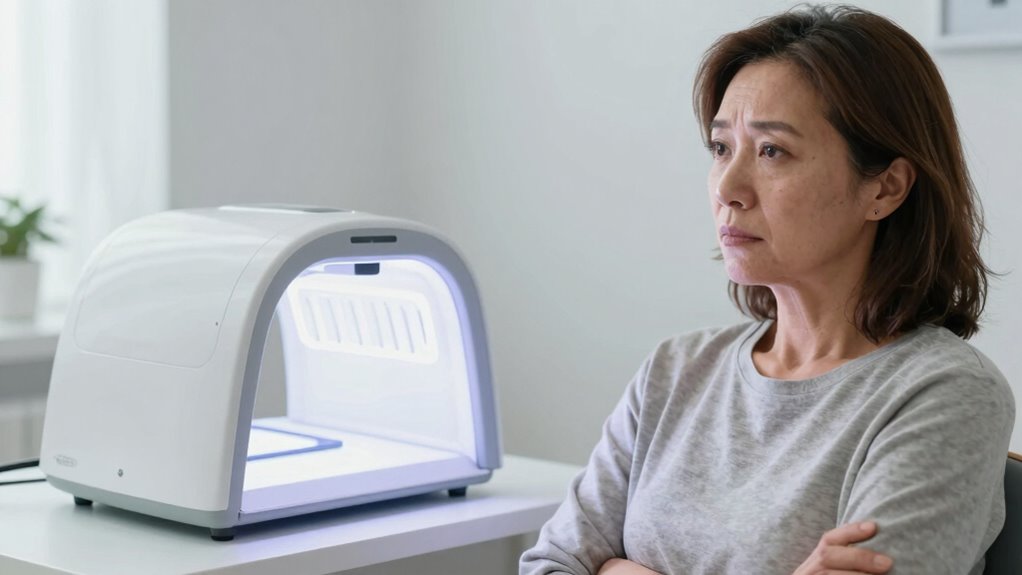
Before trying light therapy, it’s important to talk to your doctor, especially if you have existing health conditions or are taking medications. If you have light sensitivity or a history of eye problems, consulting a healthcare professional is essential. People with seasonal affective disorder often find relief with light therapy, but individual responses vary. Your doctor can assess if this treatment is safe for you and recommend the appropriate intensity and duration. If you’re taking medications that increase photosensitivity, such as certain antibiotics or antidepressants, you might be at higher risk of adverse effects. Always discuss your medical history and current treatments with your doctor to guarantee light therapy won’t cause unwanted side effects or interact negatively with your health. Additionally, understanding the role of light intensity and duration in effective therapy can help tailor the treatment to your needs. Being aware of contraindications related to specific health conditions can further ensure safe usage. Recognizing photosensitivity reactions can help you identify early signs of adverse effects and seek prompt medical advice.
Personal Factors That Might Affect Light Therapy Safety
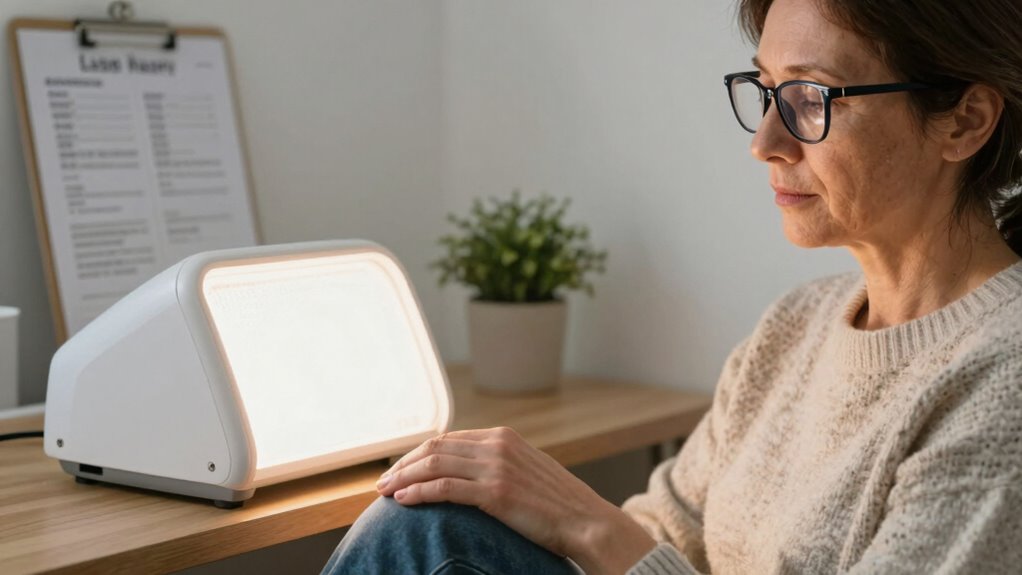
Your personal health factors can considerably influence how safe light therapy is for you. If you have a history of seasonal affective disorder or irregular circadian rhythms, you should approach with caution. These factors can affect how your body responds to light exposure. For example, some people may experience heightened sensitivity or disruptions in sleep patterns. Consider the table below to assess your risk:
| Factor | Impact on Light Therapy |
|---|---|
| Seasonal affective disorder | May benefit but monitor for mood swings |
| Irregular circadian rhythm | Risk of sleep disruption or insomnia |
| Photosensitivity | Increased risk of skin or eye reactions |
| Medication use | Some meds may heighten light sensitivity |
Always consult with a healthcare professional before starting light therapy if these factors apply. Additionally, being aware of underlying emotional dysregulation or mental health conditions can help ensure safe treatment.
Eye Conditions That Warrant Caution With Light Therapy
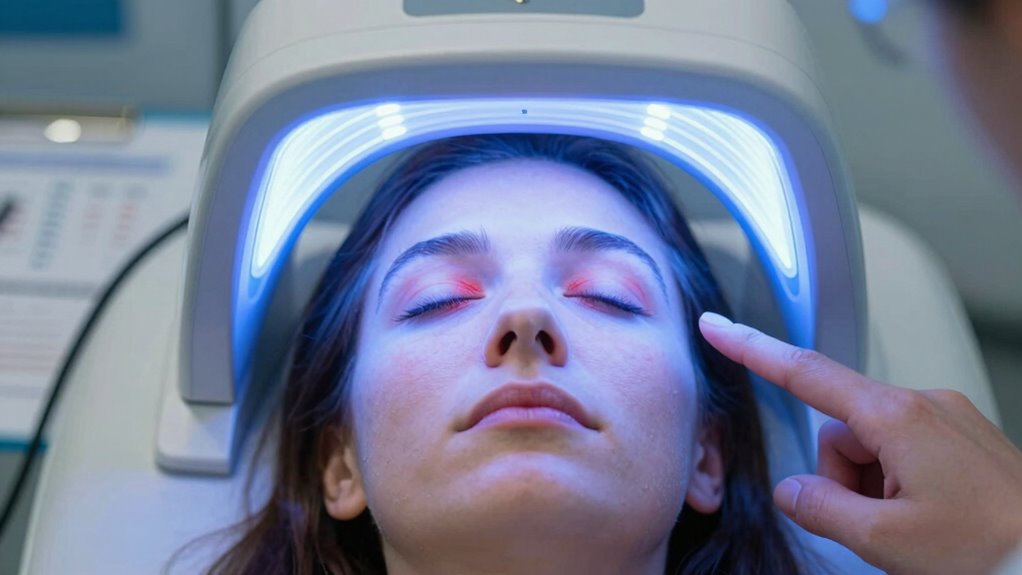
Certain eye conditions can increase the risk of adverse effects during light therapy, so it’s vital to exercise caution. If you have concerns about your retinal health or recent eye surgery, consult your doctor before proceeding. Light therapy’s bright light exposure may harm sensitive eyes or interfere with healing processes. Conditions to watch out for include:
If you have eye issues or recent surgery, consult your doctor before light therapy to prevent potential harm.
- Retinal detachment or tears
- Glaucoma or optic nerve issues
- Macular degeneration
- Recent or ongoing eye surgery
These conditions can make your eyes more vulnerable to damage from intense light. Even if you’ve had eye surgery, light therapy might affect your recovery or worsen existing problems. Additionally, Free Floating eye floaters could be aggravated by bright light exposure. As the retina is crucial for vision, protecting it during treatments is essential. A history of retinal issues can increase the risk of complications from light exposure. It is also important to consider visual acuity when evaluating your suitability for light therapy. Understanding the potential light sensitivity of your eyes can help prevent adverse reactions. Always seek professional advice to protect your eye health and guarantee safe treatment.
Skin Disorders and Recent Treatments to Watch Out For
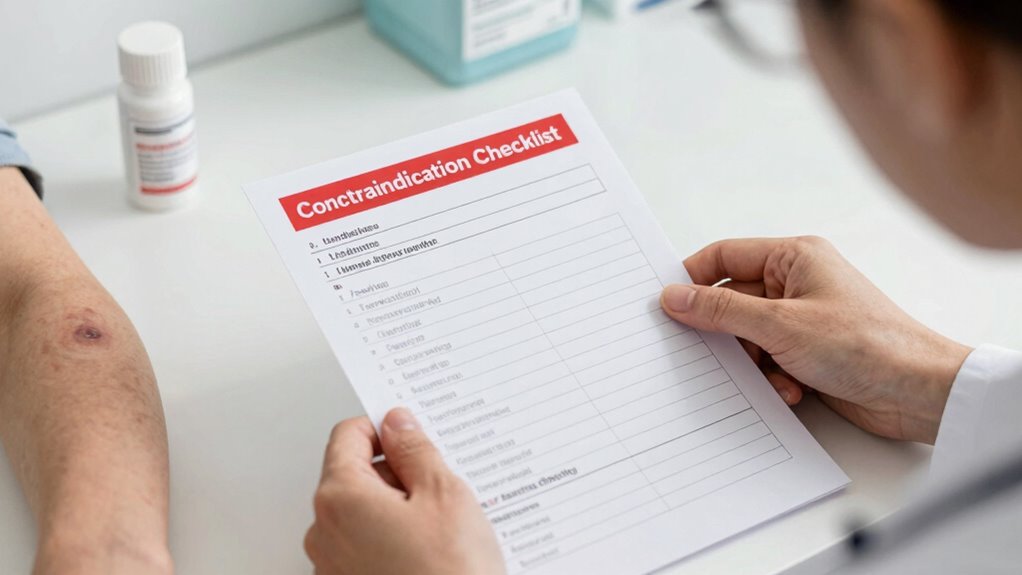
Skin disorders and recent treatments can also influence how your skin responds to light therapy. If you have conditions like psoriasis, eczema, or dermatitis, your skin may be more sensitive, increasing the risk of adverse reactions. Your treatment history is equally important—certain topical medications or photosensitizing drugs can make your skin more vulnerable to light exposure. For example, recent chemical peels or laser treatments can leave your skin temporarily fragile, heightening the risk of irritation or burns. Always inform your provider about any skin disorders or recent treatments you’ve undergone. This way, they can determine whether light therapy is safe for you or if adjustments are necessary to prevent complications. Your skin’s health and history are critical factors in safe light therapy use, especially considering skin sensitivity, and how it can affect treatment outcomes. Additionally, understanding photosensitive reactions can help you better assess the risks associated with light therapy. Recognizing the impact of skin conditions can further guide your decision-making process regarding treatment safety. Being aware of recent skin procedures can also help you avoid potential adverse effects during light therapy sessions.
Medical Conditions and Medications That Make Light Therapy Risky

Medical conditions and medications can substantially increase the risks associated with light therapy. If you have certain health issues, phototherapy contraindications may apply, making treatment unsafe. Some medications can cause medication interactions that heighten photosensitivity or other side effects. Be cautious if you have:
- Lupus or other autoimmune skin conditions
- History of skin cancer or lesions
- Photosensitive epilepsy
- Use of photosensitizing drugs like antibiotics, antihistamines, or certain antidepressants
These factors can make light therapy risky, leading to burns, exacerbated conditions, or adverse reactions. Always consult your healthcare provider to review your medical history and medications before starting light therapy. Understanding these contraindications helps prevent unnecessary complications and ensures safe treatment. Additionally, being aware of somatic therapy options can provide alternative approaches for emotional healing when light therapy is contraindicated. Recognizing medical contraindications early can help you explore suitable alternatives and avoid potential health hazards. It is also important to consider individual health factors, which can influence therapy safety and effectiveness.
Frequently Asked Questions
Can Children Safely Use Light Therapy Devices?
Children can use light therapy devices safely if pediatric precautions and developmental considerations are carefully observed. You should consult a healthcare professional to ensure the device’s suitability for your child’s age and health status. It’s important to monitor your child closely during treatment, avoid overexposure, and follow recommended guidelines. Proper supervision and expert advice help minimize risks and ensure the therapy supports your child’s well-being effectively.
Is Light Therapy Safe During Pregnancy or Breastfeeding?
Imagine basking in gentle, warm light during pregnancy—while it might seem comforting, you should be cautious. Light therapy during pregnancy safety isn’t well established, so it’s best to consult your doctor. Breastfeeding concerns also exist, as the light’s effects on your baby aren’t fully known. To stay safe, get personalized advice before using light therapy, ensuring both you and your baby stay protected and healthy.
Are There Specific Age Restrictions for Light Therapy?
You should be aware that age restrictions exist for light therapy, especially for children and older adults. Devices are generally safe when used correctly, but young children and seniors may have different sensitivities or health concerns. It’s best to consult a healthcare professional to evaluate device safety for your age group. Ensuring proper supervision and following manufacturer guidelines helps minimize risks and maximize the benefits of light therapy.
Can Light Therapy Interfere With Other Treatments or Therapies?
Light therapy can interfere with other treatments, especially if you have photosensitivity concerns or take medications that increase light sensitivity. You might experience adverse effects or reduced effectiveness if combined with certain therapies. Always check with your healthcare provider before starting light therapy to make certain there are no medication interactions or photosensitivity risks, so you can safely benefit from the treatment without unintended side effects.
What Are the Long-Term Risks of Regular Light Therapy Use?
You might wonder about potential risks of long-term light therapy use. While generally safe, potential risks include eye strain or damage, especially if you don’t follow recommended guidelines. Long-term effects are still being studied, but some users report headaches or sleep disturbances with prolonged exposure. To minimize risks, stick to the advised duration and consult a healthcare professional regularly to monitor your response and guarantee safe, effective treatment.
Conclusion
Before trying light therapy, it’s essential to consult your doctor, especially if you have eye issues, skin conditions, or take certain medications. Did you know that nearly 50% of people with eye disorders should avoid it? Skipping this step could worsen your health instead of helping. Stay informed, listen to your body, and get personalized advice. Your safety matters—so don’t hesitate to ask your healthcare provider before starting light therapy.