
TL;DR

Get wellness gear delivered free with Prime
- Fast, free delivery on millions of items
- Prime Video, Amazon Music and more included
- Member-only deals all year
Fit&Well published a five-move, squat-free Pilates sequence designed to work the lower body at home. The routine uses bodyweight movements, with two rounds of 8 to 12 repetitions per side; the report does not provide evidence that it suits everyone or replaces individualized exercise guidance.
Fit&Well has published a five-move Pilates routine for people who want to work their legs without squats, with each exercise performed for two rounds of 8 to 12 repetitions per side. The at-home sequence, attributed to Pilates instructor Lottie Anderson, uses hands-and-knees and kneeling positions and does not require ankle weights.
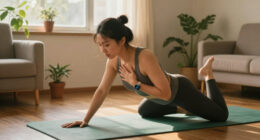
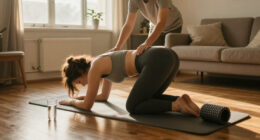
The sequence moves through horse kicks, rainbow kicks and hamstring extensions, followed by two kneeling side-plank variations: lift-and-lower leg raises and side kicks. The instructions start with a stable hands-and-knees position, with wrists under shoulders and knees under hips. For the first three exercises, one leg moves behind the body; the final two add a supported side-facing position.
For horse kicks, raise a straight leg toward hip height and lower it, keeping the hips steady. Rainbow kicks sweep the lifted leg across the body in an arc to tap the floor on either side. Hamstring extensions bend the knee to bring the heel toward the glutes, then straighten the leg. The report advises keeping the thigh lifted during that movement if possible.
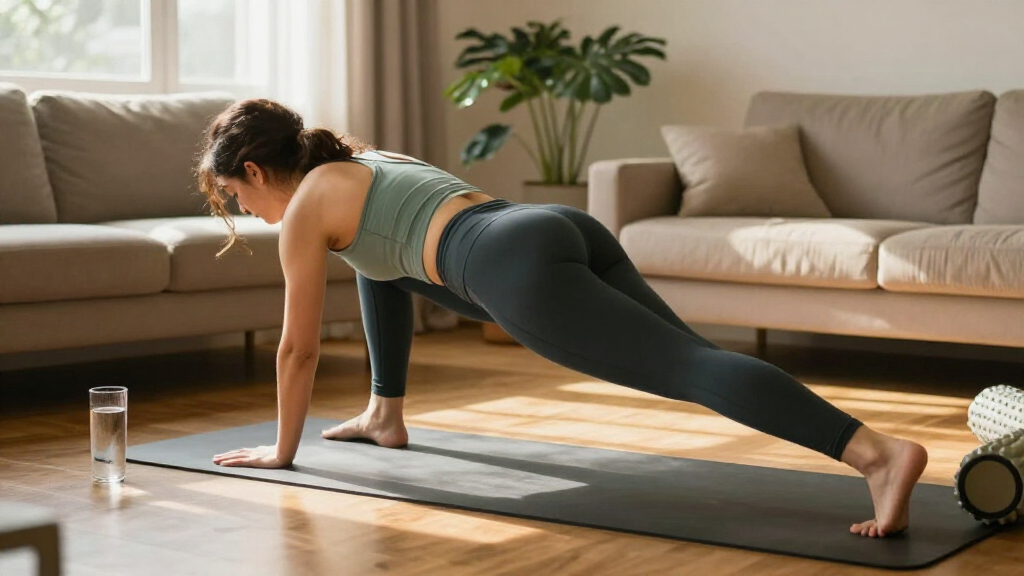
For the final pair, the exerciser turns into a kneeling side plank, supported by one hand and the knee on that side. In the lift-and-lower exercise, extend the other leg and raise and lower it. In the side kick, bend that leg toward the chest and extend it again. Anderson uses ankle weights to make the exercises harder, the report says, but describes them as optional.
A Squat-Free Route to Leg Work
The routine offers an alternative for people who find squats uncomfortable or difficult because of limitations such as restricted ankle movement, tight hamstrings, balance concerns or tender joints. It keeps the focus on leg and hip movements while avoiding a repeated standing squat pattern. That may make the sequence a practical option for someone looking for a home workout, but the report does not establish that it is suitable for every person with pain or mobility limitations.
Anderson says the lower body supports day-to-day activities, including getting up and down, carrying items and climbing stairs. She also emphasizes the glutes, saying they help stabilize the pelvis and support the lower back and knees. These are her explanations of the exercises’ relevance; the source does not include a clinical study or quantify expected strength gains.
Products Worth Considering

Levoit EverestAir-P Smart Air Purifier for Large Rooms

Garmin Venu® 3 Premium Fitness Smartwatch 45mm Black

Oral-B iO Series 3 Rechargeable Electric Toothbrush for Adults, Black
As an affiliate, we earn on qualifying purchases.
How the Five Moves Are Set Up
The article presents the sequence as two sets of 8 to 12 repetitions on each side for every exercise. Its instructions emphasize keeping the hips or waist steady during the leg movements, rather than adding external resistance. Ankle weights are optional in Anderson’s own practice, according to the report, and are not listed as a requirement for completing the routine.
Anderson is identified as a Pilates instructor and founder of Bondi Rise, a London Pilates studio. She says her perspective on leg strength has been shaped by everyday tasks, including caring for her young child. The source provides exercise instructions and her comments, but no independent assessment of the routine’s effectiveness, injury risk or suitability for particular health conditions.
“Your legs carry you through everything.”
— Lottie Anderson, Pilates instructor and founder of Bondi Rise, as quoted by Fit&Well
What the Routine Does Not Establish
The source does not report a trial, measured outcomes or comparisons with squats or other leg exercises. It therefore does not establish how much strength someone may gain, how quickly results might occur, or whether these movements are appropriate for an individual with an injury, pain or a medical condition. It also does not offer modifications for people who cannot kneel or bear weight through their wrists.
Fit&Well describes squats as uncomfortable or inaccessible for some people, but the article does not diagnose why a reader might have difficulty with them. The instructions are not a substitute for tailored advice. Anyone whose symptoms worsen during exercise, or who has a pre-existing condition or injury, should seek guidance from a qualified health professional before trying the routine.
Adjust the Sequence to Your Needs
The report provides no announced follow-up, testing or publication schedule. Readers following the sequence can begin without weights, use the stated repetition range and stop if a movement causes pain or feels unsafe. The article recommends keeping the hips steady and the waist lifted in the relevant exercises, but does not give a warm-up, rest interval or progression plan.
Whether to increase repetitions or add ankle weights is left to the exerciser; Anderson’s use of weights is not presented as necessary. People who need alternatives to kneeling positions or have concerns about their form can ask a Pilates instructor or health professional for individualized guidance.
Key Questions
What are the five exercises in the routine?
The sequence consists of horse kicks, rainbow kicks, hamstring extensions, kneeling lift-and-lowers and kneeling side kicks. The first three begin on hands and knees; the last two use a supported kneeling side-plank position.
How many repetitions should I do?
Fit&Well lists two rounds of 8 to 12 repetitions per side for each exercise. The report does not specify rest periods or a progression schedule.
Do I need ankle weights?
No. The article says Anderson uses ankle weights to make the moves harder, but the routine can be done without added resistance.
Is the workout suitable for people with knee or back pain?
The report does not assess the routine for people with knee or back pain, and it does not provide individualized medical advice. Anyone with pain, an injury or a pre-existing condition should consult a qualified health professional before trying the exercises.
Source: fitandwell.com