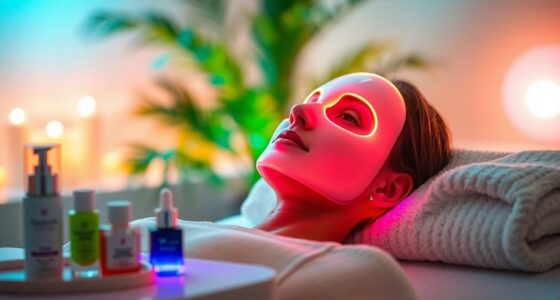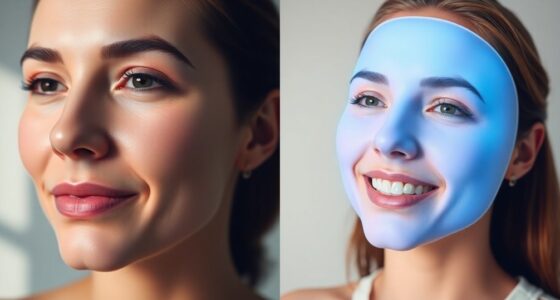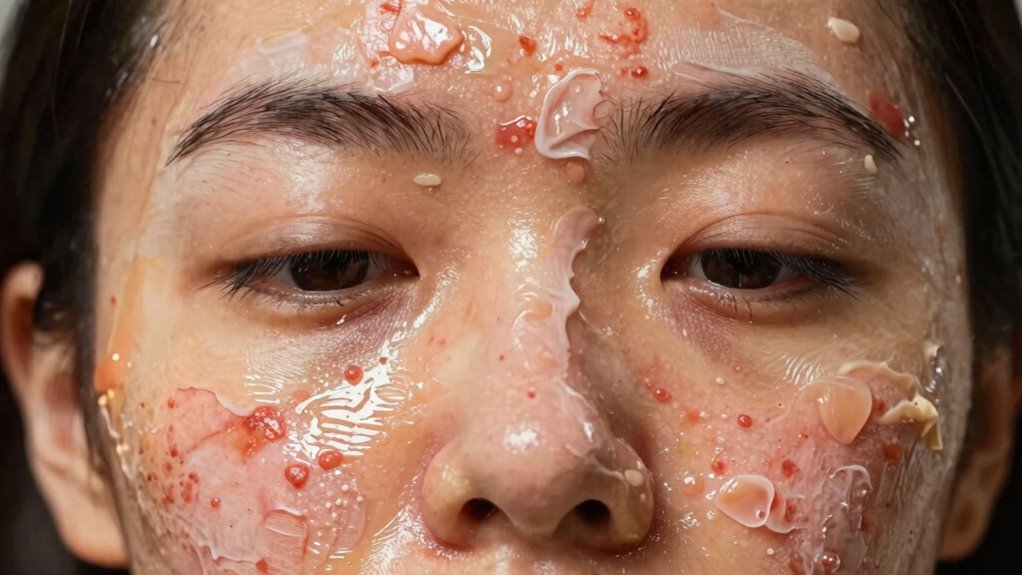
Full coverage acne masks are ideal when you need to treat widespread breakouts and congestion efficiently. They cover large areas and target every pore, helping to unclog them and draw out impurities with ingredients like clay or charcoal. These masks also hydrate your skin, restore balance, and simplify your routine by combining cleansing and moisturizing in one step. When broad coverage is more important than pinpoint accuracy, these masks offer a powerful solution—keep exploring to discover more benefits.
Key Takeaways
- Full coverage masks target widespread acne and congestion, ensuring all affected areas receive treatment.
- They contain ingredients like clay or charcoal to draw out impurities across large skin surfaces.
- Masks hydrate and balance skin, reducing the need for multiple targeted treatments.
- They simplify skincare routines by combining cleansing and hydration in one step.
- Covering more area improves results for inflamed skin and pore congestion compared to precision spot treatments.

Acne face masks have become a popular skincare solution for targeting breakouts and calming inflamed skin. When you’re dealing with acne, it’s tempting to focus on precision—treating each blemish carefully or using masks that target specific spots. But sometimes, full coverage is more effective, especially when your goal is to address widespread issues like pore congestion and skin hydration. These masks are designed to cover large areas of your face, guaranteeing that every pore gets the attention it needs, rather than risking missed spots or uneven treatment.
Full coverage masks ensure every pore receives treatment, addressing widespread breakouts and skin hydration effectively.
You might think that precise application is the way to go, but in reality, acne face masks that cover your entire face can do a better job of unclogging pores. Pore congestion is a major cause of breakouts, and by applying a mask over the whole face, you help clear out the debris, excess oil, and dead skin that clog your pores. This broad approach prevents the buildup that leads to pimples and blackheads, giving each pore a chance to breathe and heal. Plus, many full-coverage masks contain ingredients like clay or charcoal, which draw out impurities from all areas of your skin, making sure you’re not just treating one spot while neglecting others.
Another vital benefit of full coverage masks is skin hydration. Acne-prone skin often becomes dehydrated because your skin tries to compensate for the excess oil and inflammation. When you use a mask that covers your entire face, you’re not only fighting pore congestion but also replenishing moisture. Many masks are infused with hydrating ingredients like hyaluronic acid or aloe vera, which penetrate deep into your skin, restoring its natural barrier. This helps keep your skin balanced—neither too oily nor too dry—which is essential for preventing future breakouts and maintaining a healthy glow. Incorporating skincare ingredients that promote both cleansing and hydration can significantly enhance the effectiveness of your treatment. Additionally, full coverage masks can help create a protective barrier that shields your skin from environmental stressors, supporting overall skin resilience.
Full coverage masks also simplify your skincare routine. Instead of fussing over pinpoint treatments or multiple products, you can apply a single mask that addresses multiple concerns at once. This approach saves time, reduces the chance of missing spots, and ensures your entire face benefits from the active ingredients. When your goal is to calm inflamed skin while keeping pores clear, broad application makes more sense than trying to be overly precise.
In addition, using broad coverage masks can be more effective in managing the overall health of your skin, especially since a comprehensive approach can help improve the skin’s ability to resist future breakouts. When your goal is to calm inflamed skin while keeping pores clear, broad application makes more sense than trying to be overly precise. Moreover, this method encourages consistent treatment, which is key to long-term skin health.
In the end, if you’re aiming for effective acne treatment, full coverage masks often win because they focus on the big picture. They give you a way to combat pore congestion and boost skin hydration across your entire face, rather than risking uneven results. Sometimes, covering more gives you better results—especially when dealing with widespread breakouts or inflamed skin—and that’s where full coverage masks truly shine.

Full Face Pimple Patches (5 Pack, 25 Patches),XL Hydrocolloid Acne Patches for Whole Face,Nose,Chin,Forehead,Cheeks w/Tea Tree Oil&Salicylic Acid,Large Invisible Zit Patches for Overnight Blemish Care
- Full-Face Coverage: Covers forehead, nose, chin, cheeks
- Natural Ingredients: Contains tea tree oil, salicylic acid, Centella
- Deep Absorption: Pulls out impurities and fluids
As an affiliate, we earn on qualifying purchases.
As an affiliate, we earn on qualifying purchases.
Frequently Asked Questions
Are Acne Face Masks Suitable for All Skin Types?
Acne face masks aren’t suitable for all skin types, especially if you have skin sensitivity. You need to check ingredient compatibility to avoid irritation or breakouts. If your skin is sensitive or prone to allergies, opt for masks with gentle, soothing ingredients. For oily or acne-prone skin, masks with clay or salicylic acid work well, but always test a small patch first to guarantee they don’t cause adverse reactions.
How Often Should I Wear an Acne Face Mask?
You should wear an acne face mask 2-3 times a week. Think of it like watering a plant—you don’t want to overdo it and drown the roots; instead, you provide just enough for growth. Too frequent use can diminish mask longevity and reduce ingredient efficacy, possibly irritating your skin. Stick to this routine, and you’ll notice clearer skin without risking the balance.
Can Acne Masks Cause Irritation or Worsen Breakouts?
Yes, acne masks can cause irritation or worsen breakouts if you’re sensitive to certain ingredients or mask materials. If you have ingredient sensitivity, look for masks with soothing, non-comedogenic ingredients. Avoid masks with harsh chemicals or rough materials that can irritate your skin. Always patch-test new masks before full application, and choose gentle, breathable fabrics to minimize the risk of irritation or breakouts.
Do Acne Face Masks Work Faster Than Spot Treatments?
When it comes to clearing breakouts fast, acne face masks can often act quicker than spot treatments. They target multiple pores at once, offering pore cleansing and oil absorption that help reduce inflammation and unclog pores. While spot treatments focus on individual spots, masks provide full coverage, making them effective for speeding up results when you need a rapid solution. Think of it as hitting two birds with one stone.
Are There Natural Ingredients in Effective Acne Face Masks?
Yes, many effective acne face masks include natural ingredients like herbal remedies. You’ll find ingredients such as tea tree oil, aloe vera, and witch hazel, which are known for their ingredient efficacy in reducing inflammation and fighting bacteria. These natural remedies work well because they target acne-causing factors gently yet effectively, making them a good choice if you’re seeking a more holistic approach. Just guarantee you choose masks suited to your skin type.
Conclusion
If full coverage is your main priority, acne face masks are a solid choice. They help hide blemishes effectively, giving you confidence in any situation. Did you know that 60% of people feel more comfortable wearing masks during breakouts? That’s a huge boost for self-esteem. So, if you want reliable concealment and don’t mind sacrificing precision, acne face masks are your best bet. Embrace the coverage and feel better about your skin today.